
News
Schoolchildren Abduction: Nationwide Protests Erupt as NASS Pushes for State Police

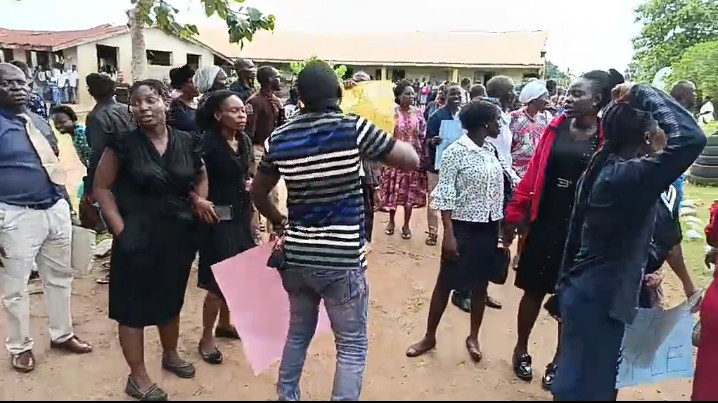
The abduction of dozens of pupils and teachers from schools in Oriire Local Government Area of Oyo State has triggered nationwide outrage, with protests spreading across several states and renewed calls by lawmakers for state police and broader security reforms.
Demonstrations were held in the Federal Capital Territory, Edo, Rivers, Cross River, Benue, Adamawa, Taraba, Anambra, Akwa Ibom, Abia, Osun, Lagos, Niger, Kano, and other states as teachers, labour unions, students, and civil society groups demanded urgent government action.
The protests followed the May 15 attack in Ahoro-Esinle and Yawota communities of Oriire Local Government Area, where armed men stormed three schools and abducted pupils and teachers, leaving families in distress.
The incident has revived memories of the Chibok and Dapchi school kidnappings, raising fresh concerns over the safety of schools across Nigeria.
Resuming plenary after the Sallah recess, the Senate on Tuesday observed a one-minute silence in honour of two teachers and a pupil killed during the attack.
Senate President Godswill Akpabio described the incident as an assault on Nigeria’s future and collective humanity.
“We resume our work under the mournful shadow of a tragedy that has shaken our nation. The abduction of schoolchildren and teachers in Oyo State is not merely an attack on innocent citizens; it is an assault on our collective humanity,” he said.
Akpabio said the country’s future was threatened when children and teachers could no longer be protected.
“We mourn because if we cannot protect our children, we imperil our future. We mourn because a nation that cannot guarantee the safety of its teachers weakens the very foundations upon which education rests,” he added.
The Senate President paid tribute to mathematics teacher Michael Oyedokun, who reportedly died in captivity, Adesiyan Adegboye, who was killed during the attack, and a pupil who also lost his life.
Despite the tragedy, Akpabio expressed hope that security agencies would secure the release of those still in captivity and cautioned politicians against politicising the incident.
Meanwhile, the House of Representatives called on the Federal Government and security agencies to ensure the immediate release of 42 students abducted from Mussa Ward in Askira-Uba Local Government Area of Borno State.
The lawmakers also demanded the urgent implementation of a comprehensive national Safe Schools Security Framework to protect educational institutions across the country.
The resolution followed a motion sponsored by Midala Balami, representing Askira-Uba/Hawul Federal Constituency.
“The safety of our children and the protection of education must remain a national priority. Our children deserve to learn in an environment free from fear,” Balami said.
The House further renewed calls for the decentralisation of policing, with lawmakers insisting that state police had become necessary to tackle growing insecurity.
Leading the debate, Ayodeji Alao-Akala, representing Ogbomosho North/Ogbomosho South/Orire Federal Constituency, described the killing of teacher Michael Oyedokun as barbaric and alarming.
He warned that forests around the Old Oyo National Park had become safe havens for criminal groups operating across state and international borders.
In Abuja, teachers protesting at the Federal Capital Territory Administration Secretariat demanded urgent government intervention.
Addressing the demonstrators, the Minister of the Federal Capital Territory, Nyesom Wike, assured them that security agencies were working to rescue the abducted victims.
“We are all concerned about this security situation. The government is on its toes to ensure that those who are kidnapped are rescued,” Wike said.
He, however, urged Nigerians not to politicise insecurity, stressing that the challenge affected everyone.
In Lagos, teachers marched to the State House of Assembly where Speaker Mudashiru Obasa renewed calls for state policing, insisting that localised policing would improve security response.
Governor Seyi Makinde of Oyo State also appealed for unity, describing the abduction as a moment of national distress.
“This is a time of national distress. It is not the time to trade blame. It is not the time to play politics,” Makinde said while addressing protesters led by the Nigeria Union of Teachers, Nigeria Labour Congress, Trade Union Congress, and National Association of Nigerian Students.
He disclosed that security forces and intelligence agencies were working to track the abductors and rescue the victims.
Across the country, teachers and labour unions intensified pressure on the government through solidarity rallies and advocacy campaigns.
In Ogun State, protesters carried placards with inscriptions such as “Set our teachers, pupils free from captivity” and “Nigeria, our blackboards are turning into graveyards.”
The National Vice-President of the Nigeria Union of Teachers, Titilope Adebanjo, warned that insecurity was threatening the future of education.
“Teachers are in the classes with fear, students are in the classes with fear. This is not supposed to be,” she said.
In Edo State, teachers marched through Benin City carrying placards reading “Teachers’ Lives Matter” and “The Classroom Must Not Become a Battlefield.”
The Edo NUT chairman, Lucky Imaruagheru, criticised what he described as government silence over the killings and kidnappings.
Teachers in Benue, Adamawa, Niger, Kano, and other states also joined the nationwide demonstrations, demanding immediate rescue of the abducted pupils and teachers.
Meanwhile, the National Association of Proprietors of Private Schools in Ogbomoso intensified advocacy efforts, insisting that the prolonged captivity of the victims was unacceptable.
The association said it had mobilised stakeholders for prayers, awareness campaigns, and engagement aimed at securing the release of the abducted victims.
The growing fear over school safety also triggered panic in Osun State after rumours of a bandit invasion spread across parts of the state, forcing many parents to withdraw their children from school temporarily.
Governor Ademola Adeleke later dismissed the reports as false and assured residents that schools remained safe.
The wave of protests came as the Nigeria Police Trust Fund urged the Senate to increase its statutory allocation from 0.5 per cent to one per cent to support modern policing infrastructure, including drones, surveillance systems, forensic laboratories, and digital intelligence tools.
The Executive Secretary of the Fund, Mohammed Sheidu, said the investment was necessary to combat kidnapping, terrorism, and organised crime across the country.

By Aga Samuel Imoter, Jalingo
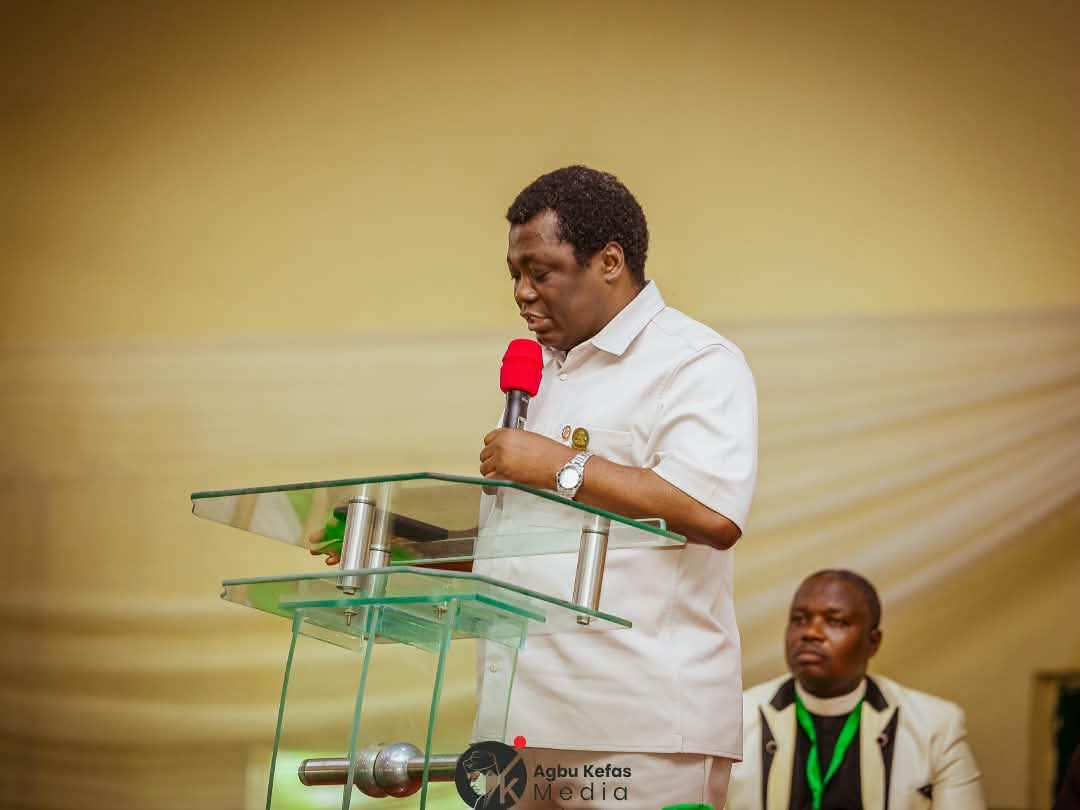
Taraba State Governor Agbu Kefas has urged Christian leaders to defend truth, speak to political authorities when necessary and promote peace and moral values amid the social, economic and security challenges facing the country. Kefas made the call on Wednesday, August 19, 2026, while addressing participants at the Ministers’ Conference organised by the Christian Association of Nigeria (CAN), Taraba State Chapter, in Jalingo.
The conference, themed “The Church and the State: Partners in God’s Plan in a Changing World,” brought together Christian ministers and leaders to discuss the role of the Church in nation-building, peacebuilding and good governance. The governor said government and the Church have distinct constitutional and spiritual responsibilities but could collaborate in areas that promote peace, development and social stability.
He urged Christian leaders to uphold truth, compassion, justice and moral discipline while advising political authorities without allowing partisan interests to compromise the Church’s independence. “The Church must not become an extension of any political party,” Kefas said, urging ministers to provide constructive guidance and resist divisions based on politics, ethnicity or personal interests.
Kefas also called on religious leaders to use their platforms to discourage corruption, drug abuse, violence, hatred and injustice, while encouraging young people to pursue legitimate opportunities. He assured residents that his administration would continue to promote fairness, justice and peaceful coexistence while protecting citizens’ rights and freedom of worship.
The governor also expressed readiness to deepen collaboration with religious institutions in education, peacebuilding, community development and efforts to address drug abuse. He appealed to citizens and religious leaders to embrace unity and forgiveness, saying the development of Taraba required collective responsibility.
By Achadu Gabriel, Kaduna
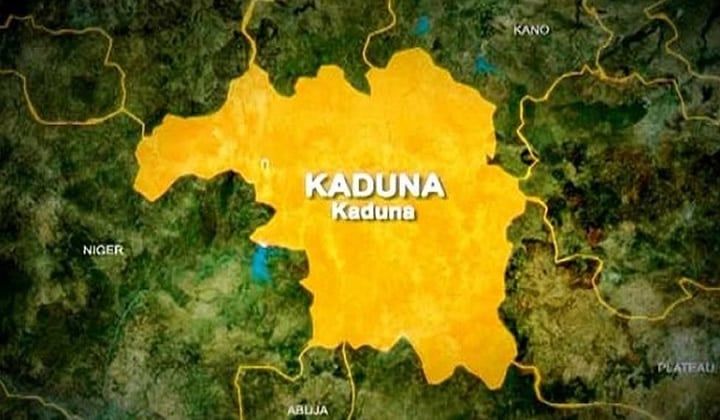
The Kaduna State Police Command will hold a three-day Police–Youth Engagement Programme from Thursday, August 20, to Saturday, August 22, 2026, as part of activities to mark International Youth Day and strengthen community efforts to prevent crime and promote peace.
The programme, themed “Different Contexts, Common Aspirations,” will bring together police officers, youths, community leaders, youth organisations and other stakeholders.In a statement issued on Wednesday, the Police Public Relations Officer, DSP Mansir Hassan, said the initiative was in line with a directive by the Inspector-General of Police, IGP Olatunji Rilwan Disu, to deepen engagement between the police and young people.
According to the Command, activities will include a Walkathon/Peace Walk aimed at promoting unity, healthy living and responsible citizenship. A medical outreach will also provide basic healthcare services and health awareness to young people and community members.
The programme will conclude with a lecture and interactive session addressing crime prevention, cultism, drug abuse, political and digital thuggery, responsible social media use, youth participation in community policing and emerging security challenges.
The Commissioner of Police, Kaduna State Command, CP Rabiu Muhammad, urged youths, community leaders and other stakeholders to participate actively in the programme. He called on participants to support efforts to promote peace, unity, responsible citizenship and a safer Kaduna State.
From Noah Ocheni, Lokoja
The Federal University Lokoja (FUL) has matriculated 900 postgraduate students for the 2025/2026 academic session, with the Vice-Chancellor, Prof. Ggenga Solomon Ibileye, reaffirming the institution’s commitment to expanding postgraduate opportunities and strengthening its research culture. Ibileye made the commitment during the postgraduate matriculation ceremony held at the university’s permanent site in Lokoja.
The Vice-Chancellor said research remained central to the value of postgraduate education and stressed the university’s commitment to maintaining and improving its academic standards.
He said postgraduate students would undergo prescribed coursework and examinations, while their projects, theses and dissertations would be subjected to originality and similarity checks. According to him, students would also be required to defend research proposals, participate in internal seminars and submit their work to external examiners.
“These processes ensure that the certificate eventually conferred by the university is worth the years a candidate will spend earning it,” he said. Ibileye said the university currently offers postgraduate programmes at the Postgraduate Diploma, Master’s and Doctor of Philosophy levels, covering both professional and academic disciplines.
He commended the Provost of the postgraduate college, Prof. Matthew Ola-Rotimi Ajayi, for his leadership and expressed confidence that the institution’s academic standards would continue to improve. The Vice-Chancellor congratulated the new students and welcomed them to the postgraduate scholarly community of the university.


Kefas Urges Church Leaders to Defend Truth and Promote Peace in Taraba

Kaduna Police to Hold Three-Day Youth Engagement Programme on Crime and Drug Abuse

FUL Matriculates 900 Postgraduate Students, Reaffirms Commitment to Research
-
 News15 hours ago
BUDGET OFFICE OF THE FEDERATIONRESPONSE TO THE 2026 U.S. DEPARTMENT OF STATE FISCAL TRANSPARENCY REPORT ON NIGERIA
-

 News17 hours ago
Beyond the ECOWAS–AES Divide: Rethinking Regional Cooperation, Peace and Security in West Africa
-
 Crime14 hours ago
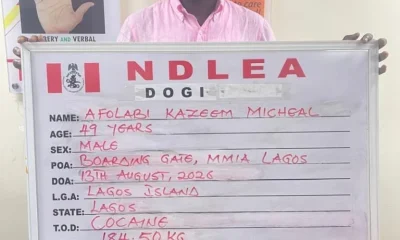
NDLEA Arrests Alleged Cocaine Trafficking Kingpin at Lagos Airport
-
 News18 hours ago
Mangu Killings: ADC Governorship Candidate Calls for Immediate Security Action
-

 News18 hours ago
Tinubu Committed to Transforming Nigeria’s Electricity Sector, Says Power Minister
-

 News17 hours ago
Tinubu Urges Politicians to Avoid Divisive Politics Ahead of 2027 Elections
-

 News18 hours ago
Delta to Train 1,000 Youths in Agribusiness to Boost Agriculture
-
 News18 hours ago
24 Killed, Three Injured in Fresh Attack on Plateau Community
You must be logged in to post a comment Login