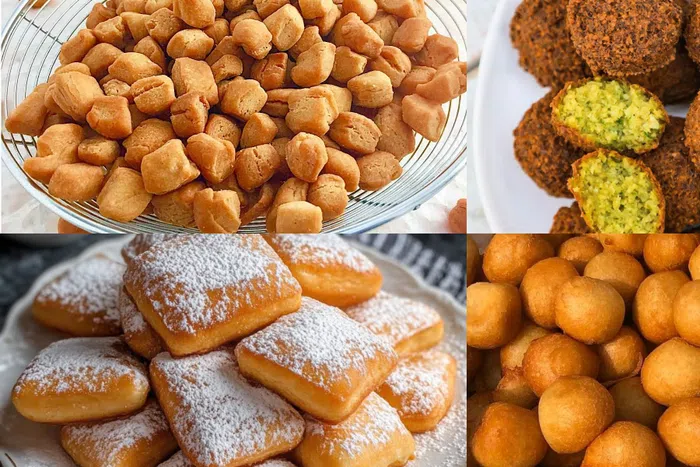

From puff-puff to suya, many beloved Nigerian street snacks have close cousins around the world, proving that food truly speaks a universal language.
Food offers one of the easiest ways to explore different cultures without leaving home. Every bite carries stories of history, tradition and shared human experiences.
In Nigeria, snacks are more than quick bites. They are woven into childhood memories, bustling street corners, long bus journeys and festive gatherings. Interestingly, many of these familiar treats have striking similarities to snacks enjoyed in other parts of the world.
Here are seven popular Nigerian snacks and their global twins.
Puff-puff and Beignets (France)
Puff-puff, Nigeria’s golden fried dough balls, are soft, fluffy and irresistibly sweet. Sold by roadside vendors and enjoyed across generations, they are a staple snack.
Their global counterpart is the beignet, popular in France and New Orleans. Both are deep-fried dough treats with crisp exteriors and soft centres. While beignets are often square-shaped and buttery, puff-puff remains round and bite-sized. Nigerians may pair puff-puff with pepper sauce, while beignets are commonly served with coffee.
Chin chin and Churros (Spain/Mexico)
Crunchy and lightly sweet, chin chin is a favourite Nigerian snack, especially during road trips, weddings and festive seasons.
Churros, popular in Spain and Mexico, share similar qualities. Though longer in shape and often dipped in chocolate, churros and chin chin are both fried dough snacks made for sharing and indulgence.
Suya and Kebab (Middle East)
Suya is an iconic Nigerian evening snack—grilled meat skewers coated in spicy yaji seasoning and served with onions and cabbage.
Its closest global relative is the Middle Eastern kebab. While kebabs rely more on herbs and mild spices, suya stands out for its intense heat and bold flavours.
Akara and Falafel (Middle East)
Akara, deep-fried bean cakes, are a breakfast favourite in Nigeria, commonly eaten with bread or pap.
Falafel, made from chickpeas or fava beans, is widely enjoyed across the Middle East. Both are legume-based fried snacks, but akara is simpler and spicier, while falafel is more herb-forward.
Boli (Roasted Plantain) and Roasted Bananas (Caribbean/Latin America)
Boli, roasted plantain often served with groundnuts and pepper sauce, is a popular Lagos street food.
In the Caribbean and Latin America, roasted bananas or plantains are prepared in similar ways. The difference lies in Nigeria’s signature pepper sauce, which adds a spicy contrast to the sweetness.
Egg Roll and Scotch Egg (United Kingdom)
The Nigerian egg roll features a boiled egg wrapped in dough and deep-fried until golden. It is filling and widely available at roadside kiosks.
The Scotch egg follows the same concept but uses sausage meat instead of dough, coated in breadcrumbs and fried or baked.
Kilishi and Beef Jerky (United States)
Kilishi is thinly sliced beef marinated in a spicy peanut-and-chilli paste, dried and grilled until crisp.
Its global twin is American beef jerky. Both are preserved meat snacks designed for storage, though kilishi is notably spicier and more intensely seasoned.
A shared taste of home
From puff-puff to kilishi, Nigerian snacks reflect a broader global story. While names and preparation styles may differ, the essence remains the same: comfort, flavour and shared enjoyment.
These similarities serve as a reminder that across continents and cultures, food connects people—different twists, familiar tastes, and the same joy in every bite.