
By Adefolarin A.Olamilekan
In recent times the argument about whether Nigerian tax laws of today are archaic tax laws or colonial character has given way to a robust argument that is now well-received and calls to modernize the tax law and the nation’s tax system. At least to bring about crucial fiscal stability and alignment with global best practices.
No wonder, when President Bola Ahmed Tinubu in October 2024 transmitted four bills that included, the Nigeria Tax Bill 2024, the Nigeria Tax Administration Bill 2024, the Nigeria Revenue Service Establishment Bill 2024, and the Joint Revenue Board Bill 2024.
It received applause from many Nigerians has the pursuit of promoting equitable and progressive taxation in Nigeria. Expectedly, many Nigerians express concerns about the bills, even as the tax bill’s progress at the National Assembly. One such question that has been majorly asked is what is the level of stakeholders’ engagement on the tax reform bill?
Not surprisingly, the bills also received a wide wind mounting opposition colored in religious and ethnic variations of tension, as well as professional misconception and deliberate falsehood amongst business owners and associations. While the opposition to the bills was not in its entirety, some sections and subsections cluases were considered as threatening the interest and survival of these groups and individuals. After all, we live in a world where interest and survival instinct are what matter, that is you don’t expect another person to deny you your daily bread or as we do say in local parlance, poor sand for my garri.
Having said that, the tax bill itself comes with its controversy, as it takes serious breakdown analysis and persuasive arguments from Mr Taiwo Oyedele chairman of the Presidential Committee on Fiscal Policy and Tax Reform. And a very mature argument with respect and decorum, Mr Oyedele attracted many to fully understand the tax bills, one has to appreciate the intelligence in what he and the committee have to put together.
The National Assembly pledged to incorporate concerns raised by stakeholders during its recent public hearings on the proposed tax bills.
The chairman of the Presidential Committee on Fiscal Policy and Tax Reform believes that tax reforms, once passed, would serve the interests of all Nigerians, ensuring a fair and efficient tax regime.
Fundamentally, these bills aim to modernize Nigeria’s tax system, streamline collection processes, and adjust tax rates across various sectors. The bill’s proposed increase in the Value Added Tax (VAT) allocation to sub-national governments from 50% to 55% has sparked debates among the major provisions.
The federal government’s share would be reduced to 10%, while the remaining 35% would go to local governments.
Additionally, the bills propose VAT exemptions for exports and essential goods, a reduction in corporate income tax from 30% to 25% for two years, and input VAT credit on assets and services to lower production costs.
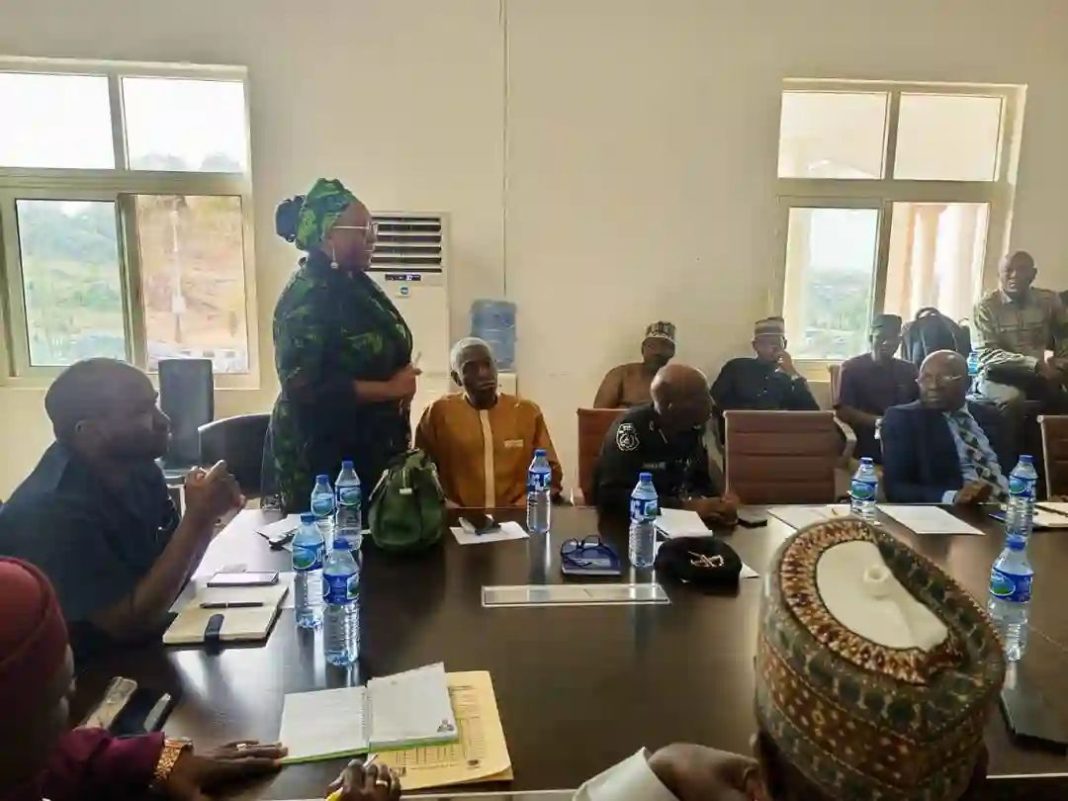
The Presidential Committee on Fiscal Policy and Tax Reform on their part has declared that consultations were made across the country on the tax bills. The PCFPTR met with critical stakeholders as a medium to carry everybody along on the national assignment.
Arguably, the beauty of all the scenarios witnessed in the period of tax laws was given room for opposition from various quarters and continues to shape the legislative process. A look at some of the opposition and alignment going forward is crucial for future national assignment policy.
For instance, the Nigeria Governors’ Forum (NGF) and Northern Governors labeled it anti-democratic, later the NGF reversed its stance and recommended a revised VAT-sharing formula: 50% based on equality, 30% on derivation, and 20% on population.
On the part of the Nigeria Customs Service (NCS), it objected to some specific clauses in the bills, which it claimed conflicted with the Nigerian Customs Act of 2023. Meanwhile, the Petroleum and Natural Gas Senior Staff Association of Nigeria (PENGASSAN) warned that tax reforms should not jeopardize job security or discourage investment in oil and gas.
Academic Staff Union of Universities (ASUU), warned that removing the education tax funding TETFunds would have dire consequences. Especially, the bill’s provision phasing out TETFund’s funding by 2030. And we all know that TETFund is crucial in developing infrastructure and research in public tertiary institutions.
On the other, some groups and individuals opposed the proposed VAT increase from 7.5% to 10% in 2025, with gradual increments to 12.5% between 2026 and 2029, and 15% from 2030 onwards.
Instructively, highlighted disapproval and position showcase our intelligent Nigerians are committed to better tax laws, acknowledging the crux of the matter.
Lest we forget, in all, the brouhaha that greeted the tax reform bills. One aspect that remains unchallenged but received commendation is the provisions granting tax exemptions for collective investment schemes and reducing corporate income tax rates. Even the business community welcomes it with all intent and purpose.
The focus of this piece is balancing concerns raised by different stakeholders on the tax reform bill, even as legislative priorities take center stage now.
The philosophy and principle of tax and taxation suggest that it should be fair, transparent, and justifiable, balancing the need for public revenue with the burdens it imposes on individuals and businesses.
With President Tinubu expecting the tax reform bills to be passed by March 2025, the coming days will be crucial in determining the final shape of Nigeria’s new tax regime.
However, as both chambers of the National Assembly work towards harmonizing the bills, lawmakers are expected to finalize deliberations and present the revised versions for a third reading.
Although, the legislature stresses that the reforms are essential for Nigeria’s economic growth and revenue generation.
The national assembly stresses that all decisions will be made in the best interest of the nation, ensuring that fiscal policies drive economic stability without imposing undue burdens on citizens.
We wait and count on the national assembly, work the talk, and give Nigerians acceptable and business and socially functional tax laws.
Against the backdrop, we advise the government to engage critical stakeholders on future national and sensitive policy of this magnitude.