
News
THE MONEY THAT NEVER MOVEDHow Nigeria’s Expenditure Controls Prevented the PEAC/PFIPC Appropriation from Becoming Public Expenditure

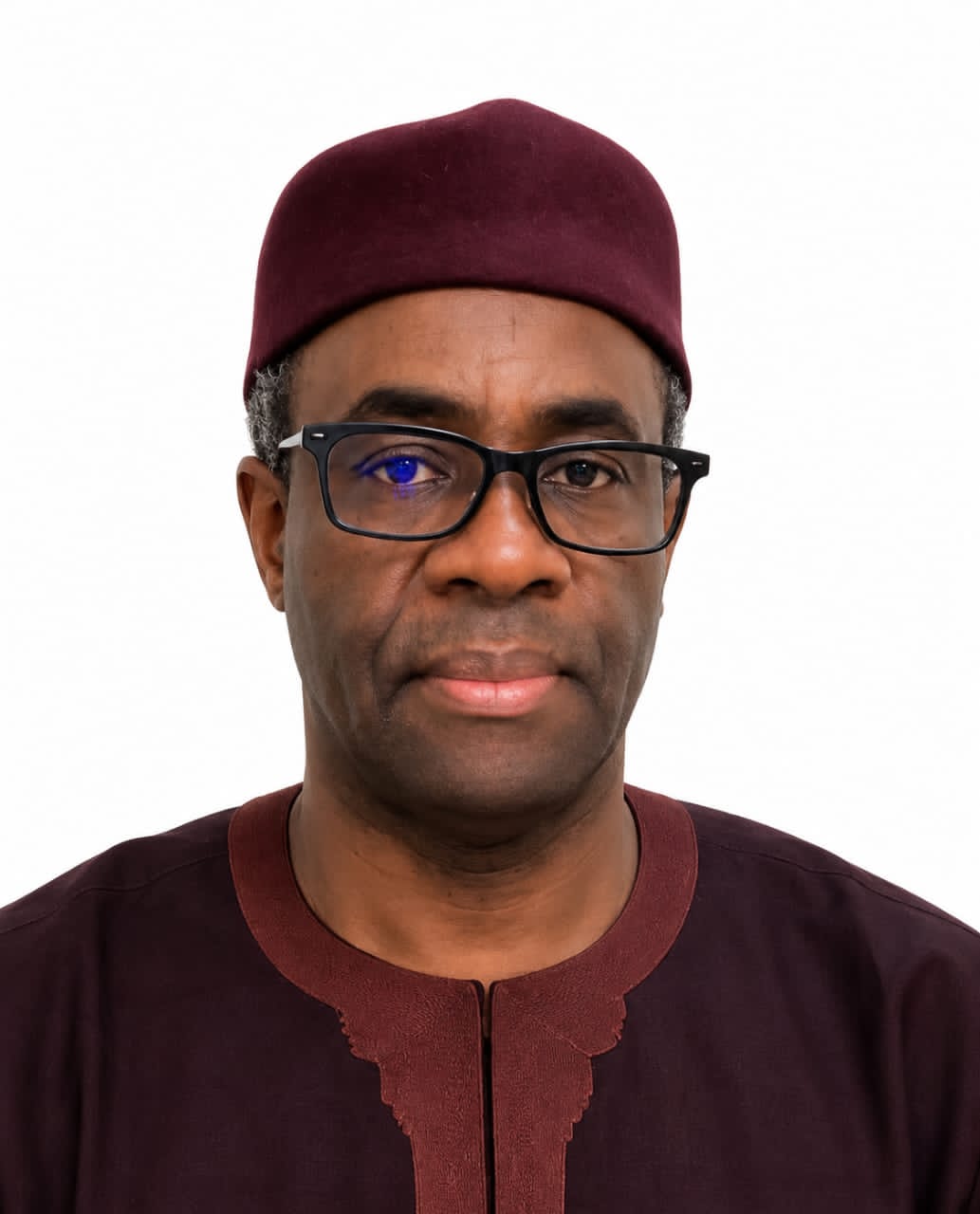
A MEDIA STATEMENT BY
TANIMU YAKUBU
Director-General,
Budget Office of the Federation
24 July 2026
THE ISSUE WAS NEVER THE APPROPRIATION
The National Assembly appropriated funds for the Presidential Economic Advisory Council/Presidential Foreign Intervention Promotion Council, known as PEAC/PFIPC. That is a matter of record. The issue, however, was never merely whether Parliament had appropriated funds. It was whether the law permitted those funds to become expenditure. An appropriation is not expenditure; it is only the beginning of a legal process.
Public money does not move because a figure appears in an Appropriation Act. It moves only when the conditions prescribed by law have been met. Those conditions include Financial Clearance, lawful recruitment, payroll enrolment, Treasury warranting, cash backing and, where capital expenditure is involved, the required procurement approvals. None of those conditions arose in the case of PEAC/PFIPC. The appropriation therefore remained an appropriation. It never became expenditure.
Between appropriation and expenditure lies a chain of controls, with each link assigned to a different institution. The Budget Office is one part of that chain. The Office of the Head of the Civil Service of the Federation approves establishment and recruitment. The National Salaries, Incomes and Wages Commission regulates remuneration. The Federal Ministry of Finance and the Office of the Accountant-General of the Federation control warrants, releases, cash backing and payment. The procurement authorities govern capital spending.
No one institution can carry public money from appropriation to expenditure. Each control must hold before the next stage can open. That institutional division of responsibility is the safeguard upon which the integrity of the expenditure-control system depends. In the case of PEAC/PFIPC, the safeguard held.
HOW THE COUNCIL ENTERED THE BUDGET
PEAC/PFIPC did not enter the 2026 Budget merely because it asked for funds. The Council had its origin in the Presidential Economic Advisory Council inaugurated during the administration of the late President Muhammadu Buhari, GCFR. By the time preparation of the 2026 Budget began, official instruments had already been issued by the institutions charged with those functions.
The Office of the Accountant-General of the Federation had assigned an administrative code. The Office of the Head of the Civil Service of the Federation had approved an authorised establishment and a recruitment waiver. The applicable public-service salary structure also existed. These instruments did not come from the Budget Office. They came to it.
The Budget Office did not create the Council. It did not assign its code. It did not approve its establishment. It did not grant its recruitment waiver. It received official instruments and did what the law required of it: it measured their fiscal effect.
The Council later submitted a personnel estimate of ₦3,850,935,000.00. That estimate did not form the basis of the Budget Office’s recommendation. The Budget Office disregarded it and made an independent calculation using only the authorised establishment, the approved recruitment waiver, the applicable public-service salary structure and the extant costing methodology.
That calculation produced ₦802,978,783.00. This was not a concession to the Council. It was the Budget Office’s own fiscal judgment. It was the amount placed in the Executive Budget proposal and later appropriated.
FINANCIAL CLEARANCE WAS THE CLOSED GATE
Financial Clearance is the point at which a personnel provision may begin to acquire legal force as expenditure. It is not a routine letter. It is the confirmation that the fiscal and regulatory conditions for recruitment have been met.
Until it is issued, the figure remains in the budget. It does not create staff. It does not open payroll. It does not produce salary.
The Budget Office did not issue Financial Clearance for PEAC/PFIPC because the conditions were incomplete.
The 2026 Appropriation Bill did not become law until Presidential Assent on 31 March 2026. Before that date, the Budget Office could cost the proposal. It could not grant final Financial Clearance against a bill that had not yet become law.
After assent, a further condition remained outstanding. The National Salaries, Incomes and Wages Commission had not confirmed that the proposed staffing and remuneration arrangements complied with its prescribed template and the approved public-service compensation framework.
The Budget Office could calculate the cost. It could not open the gate.
There was therefore no Financial Clearance. There was no lawful recruitment. There was no payroll enrolment. There was no salary payment.
THE PERSONNEL PROVISION WAS NEVER MONEY IN THE HANDS OF THE COUNCIL
The personnel provision was ₦802,978,783.00. It represented 61.63 per cent of the total appropriation of ₦1,302,978,783.00. It has sometimes been described as though the Council could have received the whole amount and spent it at will. That description is false.
Personnel appropriations are not paid to agencies as lump sums. After every legal condition has been met, salaries are paid month by month. The money moves electronically into the designated bank accounts of verified employees enrolled on the Federal Government payroll.
The institution does not receive the annual personnel provision as cash under its control. Even in a lawful process, the Council would not have received ₦802,978,783.00 in one payment. The money would have gone over twelve months to individual employees.
That process never began. No Financial Clearance was issued. No recruitment took place. No payroll record was created. No salary became due.
Not one kobo of the personnel provision could lawfully have been drawn. Not one kobo was drawn. There is no personnel expenditure to recover because there was no personnel expenditure.
THE OVERHEAD PROVISION NEVER BECAME A RIGHT TO CASH
The overhead provision was ₦200,000,000.00, or 15.35 per cent of the appropriation. It was not payable as one annual sum. Overhead is released month by month after assent, and only when the Treasury issues the required warrant and provides cash backing.
The annual figure translated to ₦16,666,666.67 a month. During the period under review, the Treasury generally released between 25 per cent and 50 per cent of monthly provision. The amount that might have become available therefore ranged between ₦4,166,666.67 and ₦8,333,333.33 a month. Even that depended on the cash position of Government.
Then the legal question changed the course of events. In June 2026, doubts arose about the status of the Council. The Budget Office formally notified the Federal Ministry of Finance and the Office of the Accountant-General of the Federation to withhold every instrument that could support payment.
That instruction closed the route to release. The ₦200,000,000.00 remained a provision in law. It did not become money in the hands of the Council.
THE CAPITAL PROVISION NEVER REACHED PROCUREMENT
The capital provision was ₦300,000,000.00, representing 23.02 per cent of the total appropriation. It was a standard start-up provision for new, reinstated or reactivated public bodies. It was meant for basic operational assets. It was not a cash award.
Capital expenditure follows another chain. There must be a procurement plan. The appropriate Ministerial Tenders Board must act. The Public Procurement Act must be obeyed. Where the threshold requires it, the Bureau of Public Procurement must issue a Certificate of No Objection. After that, the expenditure must still be warranted, released and cash-backed.
None of these stages was completed.
No procurement reached the point at which expenditure could arise. No Ministerial Tenders Board approved a transaction. No Certificate of No Objection was issued. No warrant followed. No Treasury cash backing followed.
The capital provision remained where Parliament had placed it: in the Appropriation Act, subject to law. It never became capital expenditure.
THE SYSTEM DID NOT CHASE A LOSS. IT PREVENTED ONE.
The three provisions tell one story. The personnel provision stopped at Financial Clearance. The overhead provision stopped before warranting and cash backing. The capital provision stopped before procurement approval and release.
Each met a different control. Each control held.
The Budget Office rejected an unsupported estimate and made its own calculation. It withheld Financial Clearance when the conditions were incomplete. When doubts arose about the legal status of the Council, it asked the Federal Ministry of Finance and the Office of the Accountant-General of the Federation to stop all payment instruments.
The wider system then did what it was designed to do. Payroll was never activated. Overhead was not converted into an annual cash release. Procurement did not commence. Treasury instruments did not mature into payment.
The result was measurable. The ₦802,978,783.00 personnel provision never became payroll expenditure. The ₦200,000,000.00 overhead provision never became a cash entitlement. The ₦300,000,000.00 capital provision never became procurement or capital expenditure.
The law did not recover money after it had gone. It prevented the money from going.
THE BROADER LESSON
This matter is larger than one council and one appropriation. It shows why appropriation and expenditure must be kept apart in law and in public understanding.
Appropriation gives authority subject to conditions. Expenditure arises only when those conditions have been met. The system divides power because public finance cannot rest on one office, one letter or one decision. It rests on sequence, proof and restraint.
In the PEAC/PFIPC case, that sequence did not fail. It stopped the expenditure before it began.
What has been called weakness is better understood as resilience. The controls did not identify a loss after the event. They prevented the event. They did not pursue money after it had left the Treasury. They kept it from moving.
The conclusion is firm. Not one kobo of the personnel provision could lawfully have been drawn, and not one kobo was drawn. The overhead provision never matured into a lawful release. The capital provision never matured into procurement or expenditure. The conditions for spending were not met and were not close to being met.
There is therefore no personnel expenditure to recover. The money never moved because the controls held.
The Budget Office of the Federation will continue to cooperate with every lawful inquiry and will provide the records, computations, correspondence and system evidence required to establish the facts.

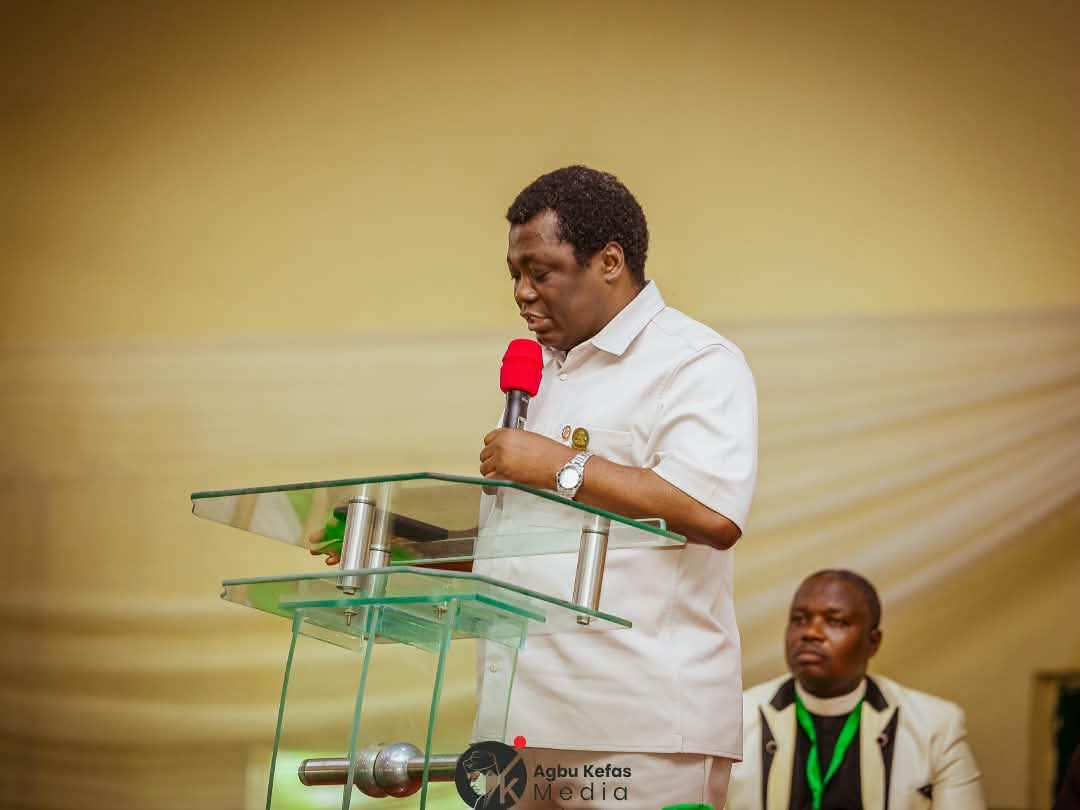
By Aga Samuel Imoter, Jalingo
Taraba State Governor Agbu Kefas has urged Christian leaders to defend truth, speak to political authorities when necessary and promote peace and moral values amid the social, economic and security challenges facing the country. Kefas made the call on Wednesday, August 19, 2026, while addressing participants at the Ministers’ Conference organised by the Christian Association of Nigeria (CAN), Taraba State Chapter, in Jalingo.
The conference, themed “The Church and the State: Partners in God’s Plan in a Changing World,” brought together Christian ministers and leaders to discuss the role of the Church in nation-building, peacebuilding and good governance. The governor said government and the Church have distinct constitutional and spiritual responsibilities but could collaborate in areas that promote peace, development and social stability.
He urged Christian leaders to uphold truth, compassion, justice and moral discipline while advising political authorities without allowing partisan interests to compromise the Church’s independence. “The Church must not become an extension of any political party,” Kefas said, urging ministers to provide constructive guidance and resist divisions based on politics, ethnicity or personal interests.
Kefas also called on religious leaders to use their platforms to discourage corruption, drug abuse, violence, hatred and injustice, while encouraging young people to pursue legitimate opportunities. He assured residents that his administration would continue to promote fairness, justice and peaceful coexistence while protecting citizens’ rights and freedom of worship.
The governor also expressed readiness to deepen collaboration with religious institutions in education, peacebuilding, community development and efforts to address drug abuse. He appealed to citizens and religious leaders to embrace unity and forgiveness, saying the development of Taraba required collective responsibility.
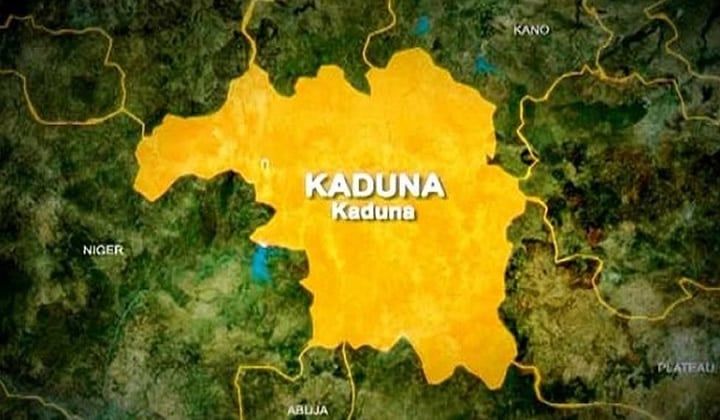
By Achadu Gabriel, Kaduna
The Kaduna State Police Command will hold a three-day Police–Youth Engagement Programme from Thursday, August 20, to Saturday, August 22, 2026, as part of activities to mark International Youth Day and strengthen community efforts to prevent crime and promote peace.
The programme, themed “Different Contexts, Common Aspirations,” will bring together police officers, youths, community leaders, youth organisations and other stakeholders.In a statement issued on Wednesday, the Police Public Relations Officer, DSP Mansir Hassan, said the initiative was in line with a directive by the Inspector-General of Police, IGP Olatunji Rilwan Disu, to deepen engagement between the police and young people.
According to the Command, activities will include a Walkathon/Peace Walk aimed at promoting unity, healthy living and responsible citizenship. A medical outreach will also provide basic healthcare services and health awareness to young people and community members.
The programme will conclude with a lecture and interactive session addressing crime prevention, cultism, drug abuse, political and digital thuggery, responsible social media use, youth participation in community policing and emerging security challenges.
The Commissioner of Police, Kaduna State Command, CP Rabiu Muhammad, urged youths, community leaders and other stakeholders to participate actively in the programme. He called on participants to support efforts to promote peace, unity, responsible citizenship and a safer Kaduna State.

From Noah Ocheni, Lokoja
The Federal University Lokoja (FUL) has matriculated 900 postgraduate students for the 2025/2026 academic session, with the Vice-Chancellor, Prof. Ggenga Solomon Ibileye, reaffirming the institution’s commitment to expanding postgraduate opportunities and strengthening its research culture. Ibileye made the commitment during the postgraduate matriculation ceremony held at the university’s permanent site in Lokoja.
The Vice-Chancellor said research remained central to the value of postgraduate education and stressed the university’s commitment to maintaining and improving its academic standards.
He said postgraduate students would undergo prescribed coursework and examinations, while their projects, theses and dissertations would be subjected to originality and similarity checks. According to him, students would also be required to defend research proposals, participate in internal seminars and submit their work to external examiners.
“These processes ensure that the certificate eventually conferred by the university is worth the years a candidate will spend earning it,” he said. Ibileye said the university currently offers postgraduate programmes at the Postgraduate Diploma, Master’s and Doctor of Philosophy levels, covering both professional and academic disciplines.
He commended the Provost of the postgraduate college, Prof. Matthew Ola-Rotimi Ajayi, for his leadership and expressed confidence that the institution’s academic standards would continue to improve. The Vice-Chancellor congratulated the new students and welcomed them to the postgraduate scholarly community of the university.


Kefas Urges Church Leaders to Defend Truth and Promote Peace in Taraba

Kaduna Police to Hold Three-Day Youth Engagement Programme on Crime and Drug Abuse

FUL Matriculates 900 Postgraduate Students, Reaffirms Commitment to Research
-
 News16 hours ago
BUDGET OFFICE OF THE FEDERATIONRESPONSE TO THE 2026 U.S. DEPARTMENT OF STATE FISCAL TRANSPARENCY REPORT ON NIGERIA
-
 News18 hours ago
Beyond the ECOWAS–AES Divide: Rethinking Regional Cooperation, Peace and Security in West Africa
-

 News19 hours ago
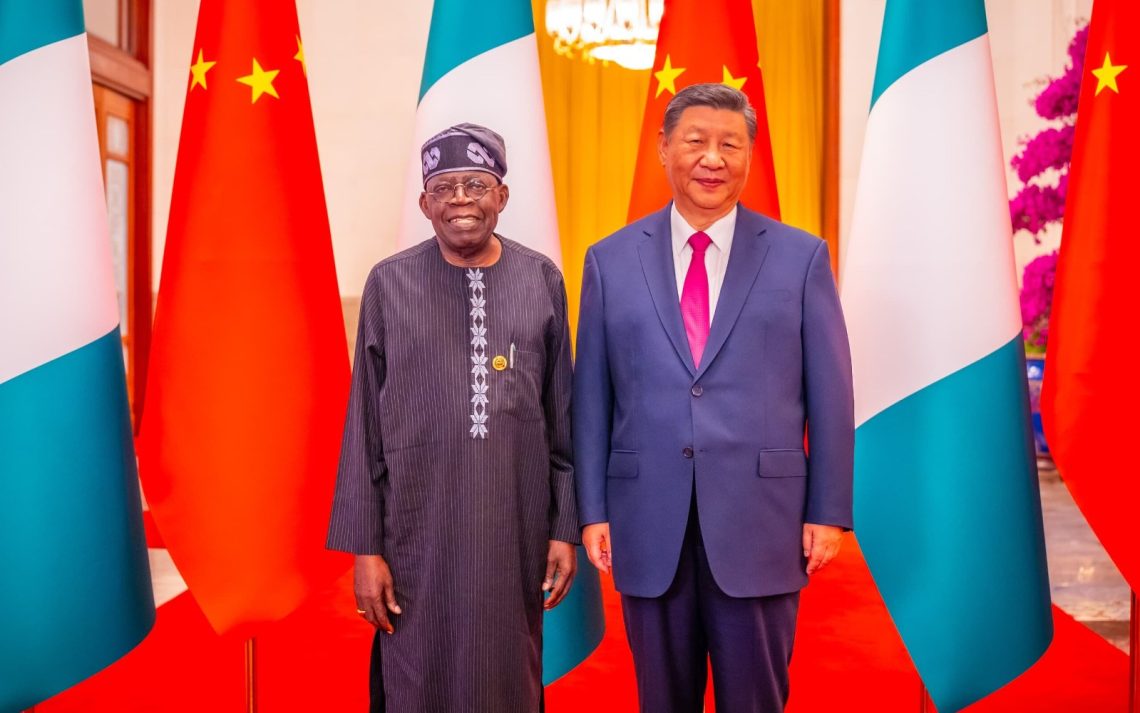
Tinubu Committed to Transforming Nigeria’s Electricity Sector, Says Power Minister
-
 Crime15 hours ago
NDLEA Arrests Alleged Cocaine Trafficking Kingpin at Lagos Airport
-

 News19 hours ago
Mangu Killings: ADC Governorship Candidate Calls for Immediate Security Action
-
 News18 hours ago
Tinubu Urges Politicians to Avoid Divisive Politics Ahead of 2027 Elections
-

 News19 hours ago
Delta to Train 1,000 Youths in Agribusiness to Boost Agriculture
-
 News19 hours ago
24 Killed, Three Injured in Fresh Attack on Plateau Community
You must be logged in to post a comment Login