
Politics
WHY 2027 MAY BE PDP’S EASIEST BENUE VICTORY YET

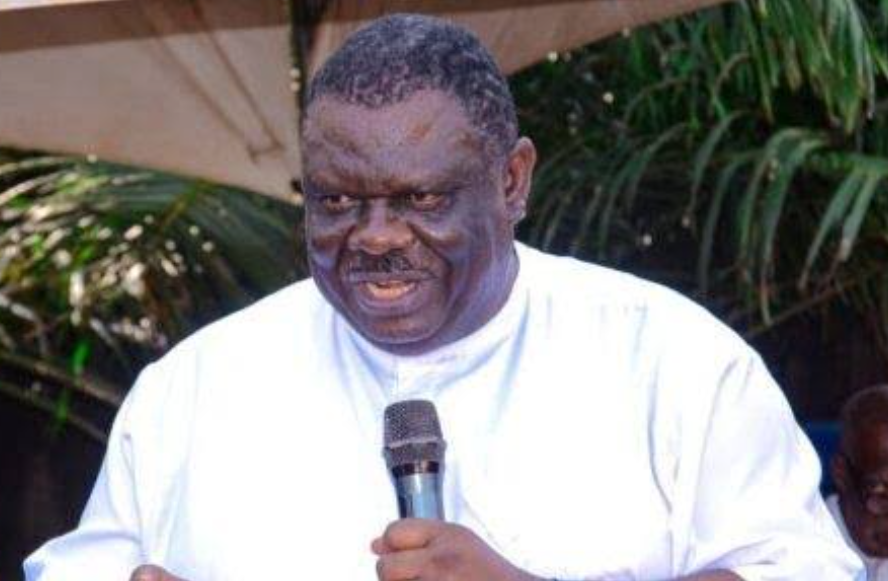
By: Aondoakaa Tersugh Daniel | 04/06/2026
Benue State has a political record that deserves more honest attention than it usually receives. Three gubernatorial elections stand out, not because they were routine contests, but because they were fought at moments when the stakes went far beyond who would occupy the Government House in Makurdi. In 2003, the PDP faced down a strong ANPP challenge and won. In 2011, the ACN came with considerable momentum and the PDP held. In 2019, in what remains perhaps the most ideologically charged election the state had seen in years, the PDP defeated the APC under circumstances where the outcome carried a meaning that ordinary ballot arithmetic alone could not capture.
What connects those three victories is not campaign funding or party structure, at least not primarily. What connects them is something the Benue electorate appeared to understand at a gut level at each of those moments: the PDP candidate was, whether perfectly or imperfectly, standing between the state and forces that had no interest in Benue’s survival as a territorial and human reality. Voters did not simply choose a party. They chose a shield. That is a distinction worth sitting with.
The configuration going into 2027 is not new. It is, to a degree that should unsettle anyone paying attention, a near replication of the exact conditions that produced those three victories. And this is where the commentary has to be direct.
The allegation that Governor Hyacinth Iormen Alia received substantial Fulani sponsorship ahead of the 2023 election, on an informal understanding that their settlement on Benue land would be facilitated, remains unproven. No court has established it, and fairness requires that distinction to be stated plainly. But what requires no court is what has been happening in Benue communities under this administration.
Under former Governor Samuel Ortom, the herdsmen attacks were vicious and frequent, but they followed a pattern of strike and retreat. The attackers came, killed, and left. There was no lingering. Under Alia, something in the character of these attacks has changed in a way that is difficult to explain away. Communities are not merely raided anymore. They are emptied. People are not just killed. They are displaced, and then the land they fled is occupied. The attackers are staying. They are settling. And the man whose constitutional duty it is to stop all of this has stood before cameras and described what is happening as mere skirmishes, denying with apparent comfort that genocide is taking place inside his own state. That is not a political disagreement. That is a moral catastrophe delivered in a press statement.
That posture alone recreates the precise condition that pushed Benue voters toward the PDP in every previous difficult election: a leading candidate whose relationship with the enemies of Benue territory was, at the very best, one of suspicious ease.
Chief Michael Kaase Aondoakaa SAN enters this race carrying two arguments simultaneously, and both of them are strong. The first is the territorial argument just described. The second is less dramatic but equally felt by ordinary people: the Benue civil service is in a state of near collapse. The bureaucracy is paralysed and the basic machinery of governance is grinding rather than running. This political argument that does not need embellishment.
The arithmetic of Benue political history points in one direction. Every time the conditions aligned to make the PDP the obvious defender of Benue interests against external threat or internal abandonment, the PDP won. The conditions in 2027 are not merely similar to those moments. They are, in critical respects, starker. The administrative failure is not a campaign claim. It is four years of lived reality. The state’s indifference to mass killings and occupation is not a rumour. It is documented in satellite images, funeral photographs, and the testimonies of the displaced.
The PDP does not need to invent a crisis to campaign on. The crisis is already governing the state. And if the Benue pattern holds, and this particular pattern has not broken once in the three elections that mattered most, then 2027 may not be the party’s most gruelling fight. It may, quietly and almost without precedent, be its most straightforward one.

By Abigail David
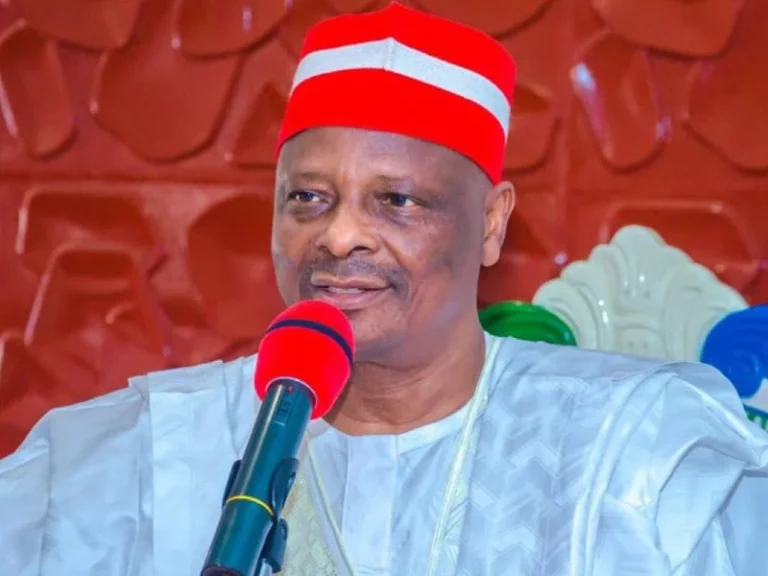
Former Kano State governor, Rabiu Kwankwaso, has explained his decision to run on the same presidential ticket with Peter Obi ahead of the 2027 general elections, saying their partnership is driven by the need for a different approach to governance.
Kwankwaso, who is seeking the vice-presidential ticket alongside Obi on the platform of the Nigeria Democratic Congress, stated this in a statement released on Thursday as political activities for the 2027 elections intensify.
He said Nigeria had reached a critical point, citing rising food costs, unemployment, high business operating costs and insecurity as major challenges confronting citizens.
“As the 2027 presidential campaign officially begins, I call on every Nigerian to reflect deeply on the state of our nation and the kind of country we want to leave for the next generation,” he said.
Kwankwaso said insecurity had continued to threaten communities, with terrorism, banditry, kidnapping and other forms of violence affecting families and livelihoods. He added that farmers needed adequate security to return to their farms, while children required safe schools and Nigerians deserved to live without fear.
“Our farmers need security to return to their farms, our children need safe schools, and every Nigerian deserves to live without fear,” he said.
Beyond the economy and security, the former governor identified education, healthcare, infrastructure and institutional reform as areas requiring urgent government attention.
“Our education and healthcare systems require urgent investment. Our infrastructure must be improved, our institutions strengthened, and public resources managed with greater transparency and accountability,” he said.
Explaining his decision to work with Obi, Kwankwaso said the partnership was not based on regional, religious or personal considerations but on a shared vision for the country.
“This is why I have chosen to work with His Excellency, Peter Obi, on the Obi-Kwankwaso ticket. Our partnership is not about region, religion or personal ambition. It is about Nigeria,” he said.
He said the proposed partnership was focused on accountable governance, economic opportunity and inclusiveness. He also urged Nigerians, particularly young people, women, workers, farmers, entrepreneurs and professionals, to participate actively in the political process.
Kwankwaso called for issue-based campaigns, urging politicians and supporters to avoid divisive politics and demand accountability and competence from public office holders.
“Let us move beyond politics of division and focus on the issues that affect our daily lives. Let us demand accountability, competence and results from those entrusted with public office,” he said.
He described the 2027 election as an opportunity for Nigerians to determine the country’s future direction and urged supporters of the Obi-Kwankwaso ticket to campaign peacefully and responsibly.
“I therefore call on all Nigerians to support the Obi-Kwankwaso ticket and all candidates of the NDC and join us in the task of rebuilding our nation,” he said.
By Abigail David
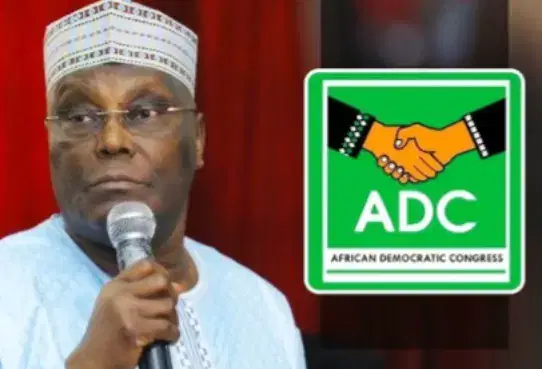
Former Vice President Atiku Abubakar has declared that the 2027 presidential election will be his final attempt to become Nigeria’s president, ruling out any plan to contest the office again in 2031.
Atiku, the presidential candidate of the African Democratic Congress, ADC, made the declaration in a Hausa-language interview on Wednesday while responding to a question on whether he would seek another presidential bid if he failed to win the 2027 election.
“No, I have said it before, right from this election, I will not contest again,” he said.
Atiku, who has sought the presidency several times, also urged Nigerians with Permanent Voter Cards, PVCs, to turn out in large numbers to vote in the 2027 election, describing active participation as critical to changing the country’s situation.
He advised voters to remain at their polling units after casting their ballots and follow the counting process to ensure that their votes were properly recorded.
“First of all, I appeal to those who have voter cards, for their own sake, their families, and their future, to go out and vote. That is the solution to the problems they are facing.
“After going out to vote, they should also stay, escort, and ensure that those votes are counted,” Atiku said.
The ADC candidate also dismissed concerns about his ability to cope with the demands of the presidency, insisting that he remained physically fit and capable of governing the country.
“No doctor has declared that I am unfit in terms of health. I know my body, I know I am healthy, and I do not have a single defect,” he said.

By Abigail David
The All Progressives Congress (APC) has scheduled Saturday, August 22, 2026, for its primary elections to select candidates for four restored State House of Assembly constituencies and legislative bye-elections across five states.
The party announced the timetable in a statement signed by its National Organising Secretary, Sulaiman Argungu, and released on Wednesday.
The primaries will cover three restored constituencies in Delta State — Abraka, Isoko North II and Ughelli South II — and Yagba West II in Kogi State.
The exercise will also produce APC candidates for legislative bye-elections in Gombe, Bauchi, Delta and Kano states.
According to the timetable, the sale of expression-of-interest and nomination forms will run from August 18 to 20, while the submission deadline is August 20.
Screening of aspirants, publication of results and screening appeals will take place on August 21, ahead of the primaries on August 22. Election appeals are scheduled for August 24.
The APC fixed the expression-of-interest fee for State House of Assembly aspirants at N1 million and the nomination fee at N5 million, while House of Representatives aspirants will pay N1 million and N9 million respectively.
Female, youth and physically challenged aspirants are required to pay the expression-of-interest fee and 50 per cent of the prescribed nomination fee.
The timetable follows the Independent National Electoral Commission’s restoration of the four previously suppressed constituencies after court judgments.
SEO Keywords:

Gov Sule Commends DSS, Other Security Agencies Over Rescue of Kidnapped Victims in Nasarawa State

7th China-Africa Media Cooperation Forum Opens in Beijing
ASUU Commends Kaduna Govt Over KASU Funding Amid Face-Off
-

 News22 hours ago
Jigawa Governor Namadi Deserves More Recognition, Says Dr Hafiz Muktar
-
 News8 hours ago
Hon. Jafaru Yakubu Commends President Tinubu’s Approval of Mutum Biyu–Garba Chede Road Reconstruction
-
 News22 hours ago
Middle Belt Forum Says 2031 Presidency Should Return to Region
-
 News22 hours ago
Kefas Urges Church Leaders to Defend Truth and Promote Peace in Taraba
-
 Uncategorized17 hours ago
ADP Presidential Candidate Aliyu Bin Abbas Signs National Peace Accord
-
 News22 hours ago
Benue Assembly Elects Peter Ipusu as New Majority Leader
-

 News22 hours ago
PAAU Vice-Chancellor Attends 37th CVCNU Annual General Assembly at Unilorin
-
 News22 hours ago
Kaduna Police to Hold Three-Day Youth Engagement Programme on Crime and Drug Abuse
You must be logged in to post a comment Login