
… 338 m Africans may suffer hearing loss by 2050- WHO
By Joyce Remi-Babayeju
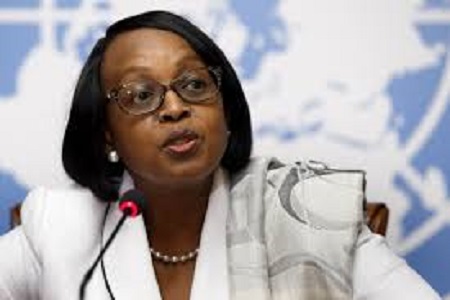
As the world marks the 2023 World Hearing Day today, the World Health Organization, WHO, Regional Director for Africa, Dr. Matshidiso Moeti has said owing to the rising rate of ear problems Africa loses nearly $30 billion yearly to hearing loss.
She said, ” In the African Region, nearly US$ 30 billion are lost due to the collective failure to address hearing loss adequately.”
Also, she disclosed that in Africa, about 338 million people are likely to suffer ear and hearing loss by 2050 if steps are not taken to integrate ear and hearing health care into the primary health care system.
Dr. Matshidiso Meoti disclosed this in a message to mark the 2023 World Hearing Day today. with the theme, ” “Ear and hearing care for all! Let’s make it a reality.”
She noted, ” It is a favourable day to reiterate the message on preventing and addressing common ear and hearing problems.”
She said, “In Africa, an estimated that an alarming 135 million people have and hearing problems while 1.5 million people globally are suffering the same”, with nearly 80% living in low and middle income countries.
Furthermore, she explained that WHO is concerned with the burden of ear and hearing issues affecting a marginalized population as she said that there is an ongoing support to Kenya to establish a Centre of Excellence for Eye Health Clinic, Eye Health and Oral Health for its citizens.
“Also, with our support, countries are developing and implementing national strategies for ear health. In 2022, Kenya, Malawi, and Guinea launched and started to implement national ear and hearing care strategies.”
“In 2022, Kenya, Malawi, and Guinea launched and started to implement national ear and hearing care strategies.”
This WHO explained is because many people with hearing loss do not know how and where to find help or do not have access to the needed services.
Meanwhile, WHO said it has developed a WHO PEN packages to integrate hearing care management for primary health care workers through training and capacity building of specialist workforce that serve as the first point of contact for the communities to address the challenges.
To facilitate such integration, we have launched a “Primary ear and hearing care training manual” that is intended to inform doctors, nurses, and other health workers. We have no doubt this manual will benefit people and help countries move towards the goal of universal health coverage, she said.
The global health organization also laments that the burden of ear and hearing on the lives of families and
communities is compounded due to
the limited number of ear, nose, and throat specialists and audiologists available in the countries.
According to the health organization, in most places, access to ear and hearing care continues to be limited to highly specialized centers and clinics, noting that it is necessary to address these conditions of care for people needing these services who seek specialized services, often in distant hospitals.
“Therefore, I encourage governments to prioritize ear and hearing care health programmes as part of their noncommunicable diseases and universal healthcare agendas and increase their campaign, political and financial commitment.”
Increasing newborn hearing screening services, as well as the effective accessibility of hearing aid technology, are critical starting points, she urged.
“To patients suffering from ear and hearing conditions and the public, I recommend that you learn more about these conditions and seek care when needed, including promoting hearing screening services.”
Moeti urged all stakeholders to unite and act on the above recommendations, integrating ear and hearing care services into district health systems and primary health care.
Daybreak reports that the World Hearing Day was developed in response to the World Health Assembly resolution, adopted in 2017 as a means of providing guidance for Member States to integrate ear and hearing care into their national health plans