
By Abu Jemimah Lami
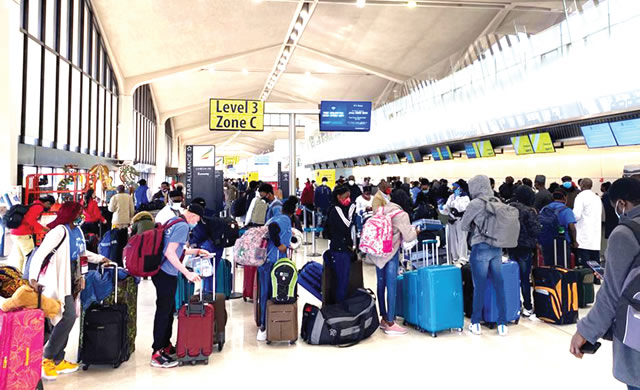
These days, whenever you enter any major airport in Nigeria, you will notice something that has become almost normal. Young people dragging big suitcases, holding one-way tickets, looking both excited and worried at the same time. If you listen closely, you will hear the same word whispered again and again, “I wan japa.” What used to be small slang among young people has now turned into a national story.
For me, the reality of Japa became clear the day I escorted a close friend, and brilliant doctor to the airport. He was leaving for UK. He told me quietly, “I love naija, but I cannot keep struggling like this.” That sentence stayed with me. It reminded me that this Japa movement is not just statistics, it is personal stories, broken dreams, and tough decisions.
The truth is that many young Nigerians are tired. They are battling unemployment, high cost of living, insecurity, and a system that does not seem to reward hard work. Even when you manage to get a job, the salary often cannot match the rising prices of food, housing, and transportation. Many graduates spend years searching for work, moving from one aptitude test to another, with nothing to show for it. Insecurity also adds to the fear. When people are not sure if they can sleep peacefully at night or travel safely on the road, the idea of leaving becomes more appealing.
This is why the number of people migrating is increasing, especially skilled workers. Doctors, nurses, lecturers, tech experts, and even artisans are leaving in large numbers. Hospitals are losing their best people. Universities are losing researchers and experienced lecturers. Companies complain that they train people for years, only to watch them leave because the environment does not support growth.
The social impact is heavy. Some families are now scattered across different continents. Children are growing up without seeing one parent for long periods. Communities are losing their most active and creative young members. Yes, remittances help the economy, but money cannot replace human beings. No country grows without its people.
And then there is our international image. Whether we like it or not, the world is watching. When thousands of young professionals are leaving every month, it sends a message that Nigeria is a place where talent struggles to survive. Investors read these patterns. Foreign media reports paint a picture of desperation, sometimes focusing on irregular migration, trafficking, or asylum stories. These stories make Nigeria look weak and unstable.
But interestingly, Nigerians abroad continue to shine. I have met people who left the country with little and today they are excelling in medicine, technology, sports, the arts, and business. Many of the world’s top universities and companies have Nigerians in leadership and innovation roles. This shows that the problem is not the Nigerian youth, it is the environment at home. Our young people succeed anywhere they find structure, fairness, and opportunity.
If Nigeria truly wants to change its image, we must fix the issues that push people out. Better governance, improved security, steady jobs, honest leadership, and stronger institutions are the foundation. No amount of rebranding can hide the truth. Image repair must begin with real progress inside the country.
We also need a better way to engage our diaspora community. Countries like India and the Philippines have shown that their citizens abroad can contribute massively to development. Nigeria can create real programmes that connect the diaspora to innovation funds, investment opportunities, mentorship networks, and short-term return initiatives for knowledge transfer.
At the end of the day, the Japa movement is a mirror. It reflects the pain young Nigerians are feeling, but it also reflects the greatness they carry. If we want to slow down this movement, Nigeria must become a place where people believe their dreams can come true without crossing an ocean.
Until then, the airports will remain full, good talent will continue to slip away, and our global image will keep telling the world what many Nigerians already know deep inside. We are a people with great potential, but our systems must rise to meet that potential.
Abu Jemimah Lami is a graduate of History and International Studies from IBB University, Lapai, and a Corps Member serving with the Institute for Peace and Conflict Resolution (IPCR), Abuja. She can be reached via jemimahabu36@gmail.com.