
News
CHIEF AMB. EKA DICKSON A’ADU SALUTES GOVERNOR ALIA AT 60


Chief Ambassador Eka Dickson A’adu, the Chief Executive Officer of Ekason Groups of Companies — a reputable conglomerate with diverse interests spanning commerce, real estate, trade, and community development — and a distinguished community leader of Benue State extraction, has risen with a heart full of gratitude and admiration to celebrate His Excellency, Rev. Fr. Dr. Hyacinth Iormem Alia, the Executive Governor of Benue State, as he marks his 60th birthday — a golden milestone in the life of a man who has become synonymous with transformation, courage, and servant leadership. Chief Amb. Eka, a man who has long held the conviction that a governor who builds roads builds futures and a leader who bridges divides builds a people, found in Governor Alia the living proof of that conviction — a builder and a bridge-maker in the truest and most literal sense of both words.
In a heartfelt tribute made available to this publication, Chief Amb. Eka described Governor Alia as a rare breed of leader — one whose footprints are not found in the pages of press releases alone, but etched permanently in the concrete of roads, the steel of bridges, and the grateful hearts of millions of Benue people who can today travel with dignity, conduct business with ease, and look upon their state capital with well-deserved pride.
When Governor Alia assumed office on the 29th of May, 2023, the streets of Makurdi told a tale of neglect — potholed, waterlogged, and weary. Yet with the single-minded focus of a man on a divine assignment, he wasted no time. He simultaneously flagged off the construction of sixteen township roads within the Makurdi metropolis, a feat that stunned critics into silence and set the tone for what was to become a legacy of unparalleled infrastructure renewal. That number has since grown to over fifty road projects cascading across Benue State like arteries of progress — connecting communities, opening markets, and restoring the dignity of a people who had long navigated the indignity of impossible terrain. As a businessman whose operations span multiple sectors and who travels regularly across the length and breadth of the state, Chief Amb. Eka affirmed with firsthand authority that the roads now being laid in Makurdi, Gboko, and beyond are a testament to a governor who truly means business.
Beyond the roads themselves, Chief Amb. Eka was emphatic that the construction of modern underpasses and overhead bridges in both Makurdi and Gboko represents the boldest expression yet of Governor Alia’s transformative vision. The flyover at the High-Level roundabout in Makurdi and the underpass at Gyado Junction in Gboko were not merely engineering projects — they were declarations. They declared that Benue State had arrived on the map of modern infrastructure, that its cities deserved the same dignity afforded to any other state capital in the federation, and that the era of traffic gridlock strangling commerce and daily life was firmly over. For a state that had languished in infrastructural stagnation for years, these structures stand as enduring monuments to what becomes possible when leadership is purposeful, courageous, and unafraid to dream big. Every morning that motorists ease through those underpasses and over those bridges, they move through a corridor built from a governor’s sacrifice, commitment, and unyielding love for his people.
Chief Amb. Eka equally praised Governor Alia for understanding that great governance does not stop at the gates of the state capital. The Governor’s administration has pursued an ambitious programme to link virtually all Local Government Area headquarters across Benue State to Makurdi through quality, durable roads — roads that do not surrender to the first rains but are built to serve generations yet unborn. Of particular note, and one that Chief Amb. Eka described as touching his heart most deeply, is the ongoing reconstruction of the Oju-Awajir road. This vital corridor, which had for years condemned the people of Oju and surrounding communities to near-isolation, is being transformed into a modern thoroughfare worthy of the industrious people it serves. Its completion, he noted, will not only ease the movement of goods and persons but will unlock the enormous agricultural and economic potential of those communities, weaving them permanently into the fabric of Benue’s development story. “This,” he declared, “is governance with a conscience.”
To understand Governor Alia the builder, Chief Amb. Eka noted, one must first appreciate Governor Alia the man. Born on the 15th of May, 1966, in the quiet hills of Mbangur, Mbadede in Vandeikya Local Government Area, and educated across some of the finest institutions in Nigeria and the United States of America — including a Master’s degree in Religious Education from Fordham University, Bronx, New York, and a Master’s in Biomedical Ethics from Duquesne University, Pennsylvania — Governor Alia is a leader shaped by intellectual rigour, spiritual discipline, and a lifetime of humanitarian service. He did not arrive at Government House as a career politician seeking personal comfort. He arrived as a servant leader carrying the full and solemn weight of a people’s hope. His inaugural declaration — “You were waiting for Hope” — was not political theatre. It was a covenant. And on this, his 60th birthday, that covenant is being honoured visibly and verifiably on every newly tarred road, every standing bridge, and in every community now within reach of Makurdi and of opportunity.
Chief Amb. Eka Dickson A’adu himself is no stranger to the weight of responsibility and the demands of leadership. Hailing from a family with deep roots in the commercial and philanthropic life of Benue State, he has built Ekason Groups of Companies into a reputable institution serving the people of the state and beyond across multiple sectors. His business philosophy has always been anchored on one conviction: when the land prospers, its people prosper, and when its people prosper, enterprise thrives. It is from this vantage point — as a businessman, a community leader, and a proud Benue son — that he stands to celebrate Governor Alia, affirming that the Governor’s developmental strides have not only transformed the state’s infrastructure but have improved the business climate, reduced logistics costs, and opened fresh corridors of opportunity for entrepreneurs, traders, farmers, and small business owners across Benue State.
In his own words, Chief Amb. Eka closed with a solemn, public, and unequivocal pledge:
“Your Excellency, on this milestone birthday, I make this pledge publicly and unequivocally: I stand fully behind you. I pledge my unwavering support — moral, social, and material — for your re-election bid in 2027. Benue State cannot afford to interrupt a journey that has only just found its stride. The roads you are building must be completed. The bridges you have raised must be maintained. The vision you carry must be seen to its fullest fruition. May God Almighty grant you many more years of health, wisdom, and the strength to serve. Happy 60th Birthday, Your Excellency. The Heart of the Nation beats proudly because of you.”
— Chief Amb. Eka Dickson A’adu
Chief Executive Officer, Ekason Groups of Companies
Community Leader & Philanthropist, Benue State
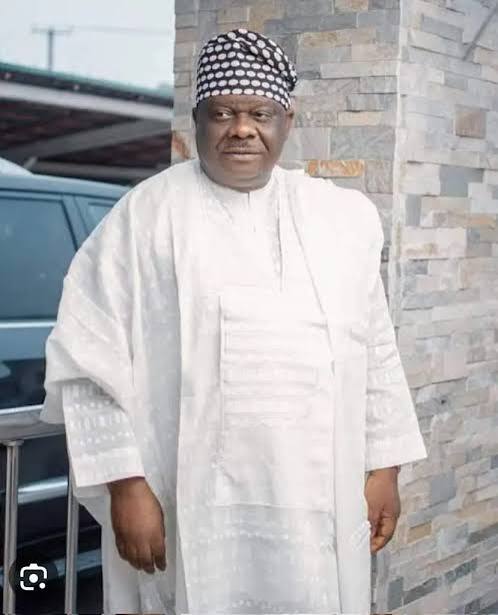
…Campaign of Mischief Has No Legal or Political Foundation
The Peoples Democratic Party (PDP) in Benue State has watched with amusement the sustained campaign of misinformation and mischief being orchestrated by political opponents and desperate politician against its governorship candidate for the 2027 election, Chief Michael Kaase Aondoakaa, SAN.
The latest falsehood being peddled is the baseless claim that our candidate disqualified hold office of Governor of Benue State as enshrined in the 1999 Constitution (as amended). This narrative has no constitutional base and only legally bankrupt. It a betrays the desperation of those who have become terrified by the overwhelming acceptance Chief Aondoakaa continues to enjoy across Benue State.
For the avoidance of doubt, the PDP states unequivocally that Chief Michael Kaase Aondoakaa, SAN, remains eminently qualified to contest the 2027 governorship election and to hold the office of Governor of Benue State if elected by the people.
Chief Aondoakaa’s record in public service is well known. As Attorney General of the Federation and Minister of Justice, he served Nigeria at the highest level with distinction. Throughout his long career in public life, no court has convicted him of any crimes involving dis honesty within ten years preceding 2027 to disqualified him from holding office of Governor of Benue State .Indeed Chief Aondoakaa has never been arraigned on criminal charges before any court of law or Tribunal since he left office in 2010. Similarly he has never been indicted by any administrative panel or Tribunal established by law.
Indeed, Chief Aondoakaa contested the PDP governorship primary in 2015. He also conested APC Governorship primary 2022 with Governor Alia and several . On each occasion, every aspirant and interested party had the opportunity to challenge his qualification if there had been any legal basis for doing so. None did. No lawsuit was filed. No court was invited to pronounce him disqualified because there was simply no legal basis for such a claim. Rather Chief Aondoakaa challenged the 2022 APC Governorship that produced Governor Alia as it then candidate in court up to the Court of Appeal. He then declined to file an appeal to the Supreme Court of Nigeria against the 2022 APC Governorship primariy due to the intervention of the leadership of APC
The PDP therefore finds it curious that individuals who remained silent throughout those electoral cycles have suddenly discovered imaginary legal impediments only after Chief Aondoakaa emerged as the Party’s candidate for the 2027 governorship election.
Even more ruinous to their propaganda is the clear provision of the Constitution of the Federal Republic of Nigeria, 1999 (as amended).
Section 285 (14)(9) of the Constitution leaves no room for speculation.It define disqualification to contest election into political offices created by the Constitution for electoral contest as pre-election dispute. It provides further that every pre-election matter shall be filed not later than fourteen (14) days from the date of the occurrence of the event, decision or action complained of. That constitutional timeline is mandatory, immutable and jurisdictional. Once the 14 period expires, every court in Nigeria is stripped of jurisdiction to entertain such claims.
Chief Aondoakaa emerged as the PDP governorship candidate following the party’s primary election conducted on 24 May 2026. The constitutional window for instituting any pre-election action challenging his nomination has long closed. No amount of media propaganda, social media campaigns or politically motivated commentary can revive a cause of action that has already become statute-barred by the Constitution itself.
Furthermore, Sections 177 and 182 of the Constitution comprehensively set out the qualification and disqualification for election as Governor and the grounds upon which a person may be disqualified. The law is settled that where the Constitution expressly provides the conditions for qualification or disqualification, no individual, political party or pressure group can manufacture additional grounds outside those constitutional provisions.
The Constitution is supreme. Political propaganda cannot amend it.
The PDP therefore urges members of the public to disregard the avalanche of false narratives being circulated by individuals whose only strategy appears to be character assassination in place of meaningful political engagement.
The 2027 governorship election will not be determined by social media propaganda or wishful legal theories. It will be decided by the people of Benue State through the ballot.
Those who believe they have better candidates should present their candidates, articulate their programmes and allow the electorate to make a democratic choice. Resorting to manufactured allegations against a candidate whose qualification is firmly rooted in the Constitution only exposes the bankruptcy of their political arguments.
The Peoples Democratic Party remains solidly confident in its confidence in Chief Michael Kaase Aondoakaa, SAN. The party is convinced that he possesses the integrity, competence, experience and constitutional qualification required to provide the purposeful leadership that Benue State urgently needs.
No amount of sponsored falsehood, intimidation or propaganda will distract our candidate or our party from engaging the people of Benue State with our vision for security, economic recovery, agricultural transformation, industrial development and good governance.
The PDP is ready for the 2027 election and Chief Michael Kaase Aondoakaa, SAN, is the party’s governorship candidate in Benue State!
Signed:
Bright Yima Antyo
State Publicity Secretary
PDP, Benue State
July 25, 2026
News
THE MONEY THAT NEVER MOVEDHow Nigeria’s Expenditure Controls Prevented the PEAC/PFIPC Appropriation from Becoming Public Expenditure

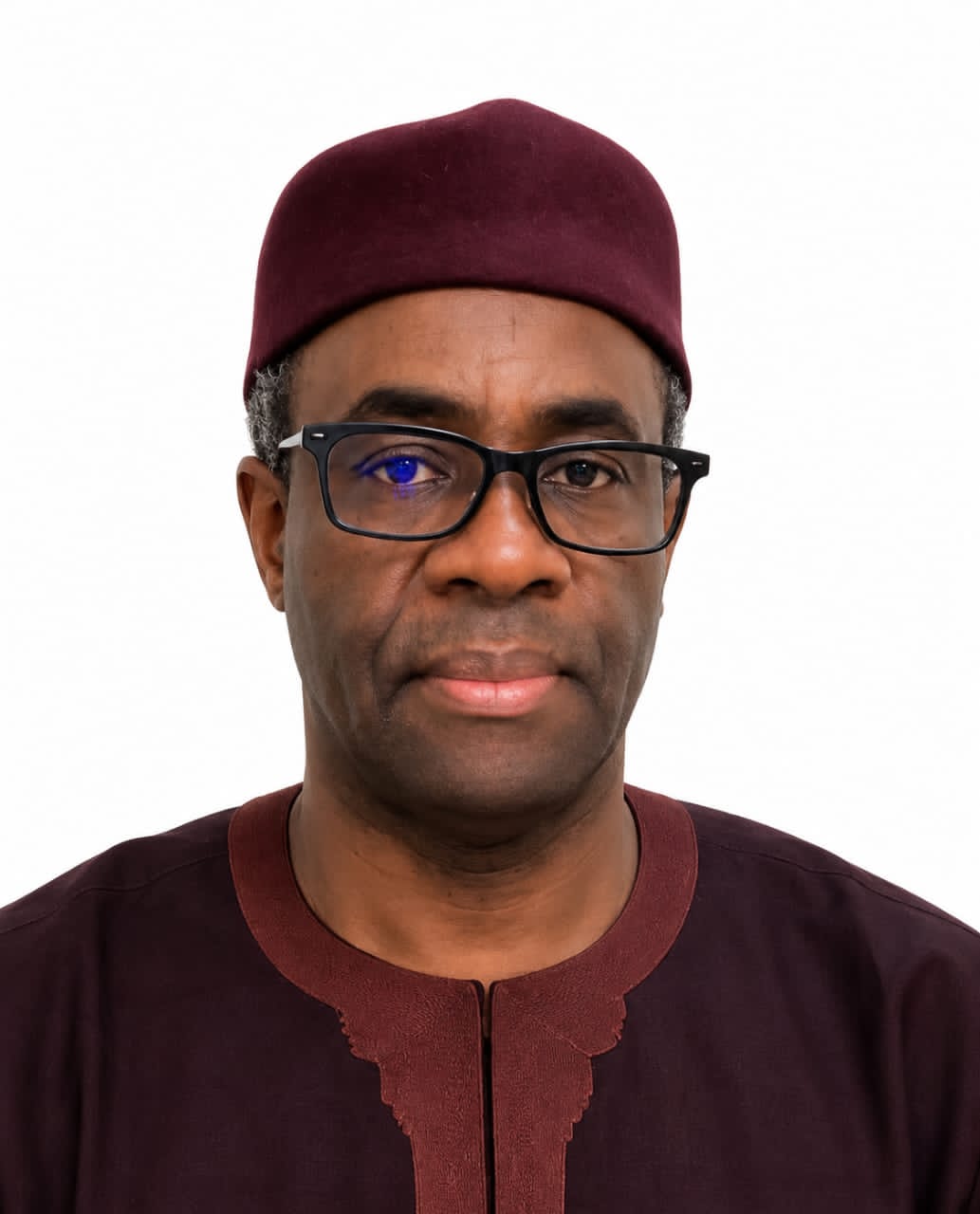
A MEDIA STATEMENT BY
TANIMU YAKUBU
Director-General,
Budget Office of the Federation
24 July 2026
THE ISSUE WAS NEVER THE APPROPRIATION
The National Assembly appropriated funds for the Presidential Economic Advisory Council/Presidential Foreign Intervention Promotion Council, known as PEAC/PFIPC. That is a matter of record. The issue, however, was never merely whether Parliament had appropriated funds. It was whether the law permitted those funds to become expenditure. An appropriation is not expenditure; it is only the beginning of a legal process.
Public money does not move because a figure appears in an Appropriation Act. It moves only when the conditions prescribed by law have been met. Those conditions include Financial Clearance, lawful recruitment, payroll enrolment, Treasury warranting, cash backing and, where capital expenditure is involved, the required procurement approvals. None of those conditions arose in the case of PEAC/PFIPC. The appropriation therefore remained an appropriation. It never became expenditure.
Between appropriation and expenditure lies a chain of controls, with each link assigned to a different institution. The Budget Office is one part of that chain. The Office of the Head of the Civil Service of the Federation approves establishment and recruitment. The National Salaries, Incomes and Wages Commission regulates remuneration. The Federal Ministry of Finance and the Office of the Accountant-General of the Federation control warrants, releases, cash backing and payment. The procurement authorities govern capital spending.
No one institution can carry public money from appropriation to expenditure. Each control must hold before the next stage can open. That institutional division of responsibility is the safeguard upon which the integrity of the expenditure-control system depends. In the case of PEAC/PFIPC, the safeguard held.
HOW THE COUNCIL ENTERED THE BUDGET
PEAC/PFIPC did not enter the 2026 Budget merely because it asked for funds. The Council had its origin in the Presidential Economic Advisory Council inaugurated during the administration of the late President Muhammadu Buhari, GCFR. By the time preparation of the 2026 Budget began, official instruments had already been issued by the institutions charged with those functions.
The Office of the Accountant-General of the Federation had assigned an administrative code. The Office of the Head of the Civil Service of the Federation had approved an authorised establishment and a recruitment waiver. The applicable public-service salary structure also existed. These instruments did not come from the Budget Office. They came to it.
The Budget Office did not create the Council. It did not assign its code. It did not approve its establishment. It did not grant its recruitment waiver. It received official instruments and did what the law required of it: it measured their fiscal effect.
The Council later submitted a personnel estimate of ₦3,850,935,000.00. That estimate did not form the basis of the Budget Office’s recommendation. The Budget Office disregarded it and made an independent calculation using only the authorised establishment, the approved recruitment waiver, the applicable public-service salary structure and the extant costing methodology.
That calculation produced ₦802,978,783.00. This was not a concession to the Council. It was the Budget Office’s own fiscal judgment. It was the amount placed in the Executive Budget proposal and later appropriated.
FINANCIAL CLEARANCE WAS THE CLOSED GATE
Financial Clearance is the point at which a personnel provision may begin to acquire legal force as expenditure. It is not a routine letter. It is the confirmation that the fiscal and regulatory conditions for recruitment have been met.
Until it is issued, the figure remains in the budget. It does not create staff. It does not open payroll. It does not produce salary.
The Budget Office did not issue Financial Clearance for PEAC/PFIPC because the conditions were incomplete.
The 2026 Appropriation Bill did not become law until Presidential Assent on 31 March 2026. Before that date, the Budget Office could cost the proposal. It could not grant final Financial Clearance against a bill that had not yet become law.
After assent, a further condition remained outstanding. The National Salaries, Incomes and Wages Commission had not confirmed that the proposed staffing and remuneration arrangements complied with its prescribed template and the approved public-service compensation framework.
The Budget Office could calculate the cost. It could not open the gate.
There was therefore no Financial Clearance. There was no lawful recruitment. There was no payroll enrolment. There was no salary payment.
THE PERSONNEL PROVISION WAS NEVER MONEY IN THE HANDS OF THE COUNCIL
The personnel provision was ₦802,978,783.00. It represented 61.63 per cent of the total appropriation of ₦1,302,978,783.00. It has sometimes been described as though the Council could have received the whole amount and spent it at will. That description is false.
Personnel appropriations are not paid to agencies as lump sums. After every legal condition has been met, salaries are paid month by month. The money moves electronically into the designated bank accounts of verified employees enrolled on the Federal Government payroll.
The institution does not receive the annual personnel provision as cash under its control. Even in a lawful process, the Council would not have received ₦802,978,783.00 in one payment. The money would have gone over twelve months to individual employees.
That process never began. No Financial Clearance was issued. No recruitment took place. No payroll record was created. No salary became due.
Not one kobo of the personnel provision could lawfully have been drawn. Not one kobo was drawn. There is no personnel expenditure to recover because there was no personnel expenditure.
THE OVERHEAD PROVISION NEVER BECAME A RIGHT TO CASH
The overhead provision was ₦200,000,000.00, or 15.35 per cent of the appropriation. It was not payable as one annual sum. Overhead is released month by month after assent, and only when the Treasury issues the required warrant and provides cash backing.
The annual figure translated to ₦16,666,666.67 a month. During the period under review, the Treasury generally released between 25 per cent and 50 per cent of monthly provision. The amount that might have become available therefore ranged between ₦4,166,666.67 and ₦8,333,333.33 a month. Even that depended on the cash position of Government.
Then the legal question changed the course of events. In June 2026, doubts arose about the status of the Council. The Budget Office formally notified the Federal Ministry of Finance and the Office of the Accountant-General of the Federation to withhold every instrument that could support payment.
That instruction closed the route to release. The ₦200,000,000.00 remained a provision in law. It did not become money in the hands of the Council.
THE CAPITAL PROVISION NEVER REACHED PROCUREMENT
The capital provision was ₦300,000,000.00, representing 23.02 per cent of the total appropriation. It was a standard start-up provision for new, reinstated or reactivated public bodies. It was meant for basic operational assets. It was not a cash award.
Capital expenditure follows another chain. There must be a procurement plan. The appropriate Ministerial Tenders Board must act. The Public Procurement Act must be obeyed. Where the threshold requires it, the Bureau of Public Procurement must issue a Certificate of No Objection. After that, the expenditure must still be warranted, released and cash-backed.
None of these stages was completed.
No procurement reached the point at which expenditure could arise. No Ministerial Tenders Board approved a transaction. No Certificate of No Objection was issued. No warrant followed. No Treasury cash backing followed.
The capital provision remained where Parliament had placed it: in the Appropriation Act, subject to law. It never became capital expenditure.
THE SYSTEM DID NOT CHASE A LOSS. IT PREVENTED ONE.
The three provisions tell one story. The personnel provision stopped at Financial Clearance. The overhead provision stopped before warranting and cash backing. The capital provision stopped before procurement approval and release.
Each met a different control. Each control held.
The Budget Office rejected an unsupported estimate and made its own calculation. It withheld Financial Clearance when the conditions were incomplete. When doubts arose about the legal status of the Council, it asked the Federal Ministry of Finance and the Office of the Accountant-General of the Federation to stop all payment instruments.
The wider system then did what it was designed to do. Payroll was never activated. Overhead was not converted into an annual cash release. Procurement did not commence. Treasury instruments did not mature into payment.
The result was measurable. The ₦802,978,783.00 personnel provision never became payroll expenditure. The ₦200,000,000.00 overhead provision never became a cash entitlement. The ₦300,000,000.00 capital provision never became procurement or capital expenditure.
The law did not recover money after it had gone. It prevented the money from going.
THE BROADER LESSON
This matter is larger than one council and one appropriation. It shows why appropriation and expenditure must be kept apart in law and in public understanding.
Appropriation gives authority subject to conditions. Expenditure arises only when those conditions have been met. The system divides power because public finance cannot rest on one office, one letter or one decision. It rests on sequence, proof and restraint.
In the PEAC/PFIPC case, that sequence did not fail. It stopped the expenditure before it began.
What has been called weakness is better understood as resilience. The controls did not identify a loss after the event. They prevented the event. They did not pursue money after it had left the Treasury. They kept it from moving.
The conclusion is firm. Not one kobo of the personnel provision could lawfully have been drawn, and not one kobo was drawn. The overhead provision never matured into a lawful release. The capital provision never matured into procurement or expenditure. The conditions for spending were not met and were not close to being met.
There is therefore no personnel expenditure to recover. The money never moved because the controls held.
The Budget Office of the Federation will continue to cooperate with every lawful inquiry and will provide the records, computations, correspondence and system evidence required to establish the facts.
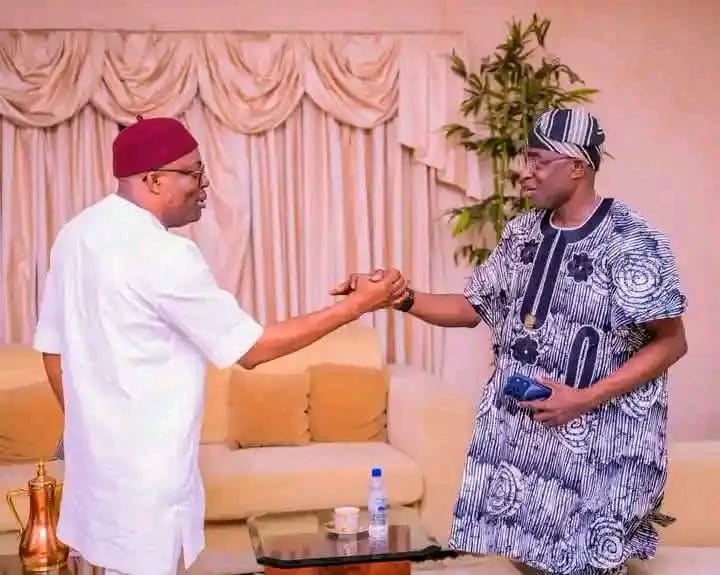
By Aondoakaa Tersugh Daniel 25/07/2026
The Nigerian constitution grants every President and Governor the chance to seek a second term. It does not grant them victory. That distinction has humbled some of the biggest names in Nigerian politics, and it is about to humble another.
If a second term were automatic, Adebayo Alao Akala would still have been governor of Oyo State beyond 2011. Olusegun Mimiko would not have exited Ondo State in 2016. Mukhtar Ramalan Yero, who inherited Kaduna’s seat after the death of Patrick Yakowa, would not have lost his bid for a first full term in 2015. And Goodluck Jonathan, sitting President of the Federal Republic, would not have watched his re election bid collapse in 2015. Power does not renew itself. It is renewed by the people, or it is withdrawn.
Chief Hyacinth Iormem Alia is walking straight into that history. He will not be the first governor to discover that incumbency is not insurance. The comfortable myth in Nigerian politics, that every sitting governor eventually wins a second term, has never been true, and 2027 is shaping up to be the latest proof.
Consider Rivers State. Governor Siminalayi Fubara once spoke with the same swagger Alia now carries, insisting no force could deny him a second term. Days ago, that ambition was quietly shelved. He will not be on the ballot. The man who boasted the loudest is the man who stepped aside first.
The parallel to Benue is impossible to ignore. Fubara is a political product of Nyesom Wike who turned around and went to war with the very benefactor who built him. Alia is a political product of the Bokoti, the structure built around Senator George Akume, and he has chosen the same path, turning his fire on the hand that raised him. A governor who wages war on his own foundation should not be shocked when that foundation declines to carry him back to office.
Alia may already have done to himself what Fubara only recently admitted out loud. The difference is that Fubara had the sense to read the writing on the wall before the ballot forced him to. Whether Alia reads it in time, or waits for 2027 to read it for him, is now the only open question.


PDP REAFFIRMS ABSOLUTE CONFIDENCE IN CHIEF AONDOAKAA
NDVC Dismisses Claims Linking Amagbein to ADC, Reaffirms Support for Tinubu
DSS Untreads The Old Path
-
 News15 hours ago
THE MONEY THAT NEVER MOVEDHow Nigeria’s Expenditure Controls Prevented the PEAC/PFIPC Appropriation from Becoming Public Expenditure
-

 News18 hours ago
SECOND TERM IS NOT A BIRTHRIGHT: ALIA SET TO JOIN THE LIST OF GOVERNORS WHO FELL
-
Uncategorized4 hours ago
NDVC Dismisses Claims Linking Amagbein to ADC, Reaffirms Support for Tinubu
-
Uncategorized14 hours ago
DSS Untreads The Old Path
-
 News4 hours ago
PDP REAFFIRMS ABSOLUTE CONFIDENCE IN CHIEF AONDOAKAA
You must be logged in to post a comment Login