
Business
Sahara Group Foundation Expands Recycling Network with New Hubs in Kaduna and Jigawa


By Abo
By Abigail David
Sahara Group Foundation has commissioned two new Sahara Go Recycling hubs in Kaduna and Jigawa states, expanding its waste management and recycling network in Northern Nigeria.
In a statement issued on Sunday, the Foundation said the facilities, located in Gidan Hakimi, Shuwarin Local Government Area of Jigawa State, and Asharami Retail Station in Badiko, Kaduna South Local Government Area, are its 21st and 22nd recycling hubs nationwide, and the second and third in Northern Nigeria.
According to the Foundation, the Jigawa hub was established in partnership with the King’s Council of Shuwarin, while the Kaduna facility was developed in collaboration with Asharami Synergy.
The Foundation said the initiative aims to transform waste into income-generating opportunities for households while promoting environmental sustainability.
Director of Sahara Group Foundation, Chidilim Menakaya, said the project reflects the organisation’s commitment to building community-driven recycling systems through strategic partnerships.
Community leaders and government officials attended the commissioning ceremonies, including Jigawa State Commissioner for Environment, Dr. Nura Doka, and Chairman of Shuwarin Local Government Area, Abdulhamid Balago.
The Foundation also announced plans to open another recycling hub in Kano State in the coming weeks following discussions with the Emir of Kano, Muhammadu Sanusi II.
According to Sahara Group Foundation, the Sahara Go Recycling initiative has facilitated the recycling of more than 1,000 tonnes of waste materials and has directly or indirectly supported over 2,000 livelihoods across Nigeria.

By Abigail David
The Nigerian Electricity Regulatory Commission (NERC) has concluded a three-day capacity-building workshop for energy correspondents and media practitioners aimed at improving public understanding of Nigeria’s electricity sector and promoting accurate, evidence-based reporting.
The workshop, held in Uyo, Akwa Ibom State, brought together journalists from across the country for training on electricity market reforms, consumer protection, stakeholder engagement and the transition to subnational electricity markets under the Electricity Act 2023.
In a statement issued on Thursday, NERC said the programme was designed to deepen journalists’ understanding of regulatory activities in the Nigerian Electricity Supply Industry (NESI) and strengthen the quality of electricity reporting.
The commission said participants received technical training on interpreting industry data, statutory reports and performance trends, alongside interactive sessions with NERC officials on regulatory developments, market reforms and consumer issues.
Speaking at the opening ceremony, the Commissioner for Research and Data Analytics, Dr. Fouad Animashaun, emphasised the importance of effective stakeholder engagement in supporting the ongoing transformation of Nigeria’s electricity sector.
According to NERC, the workshop also focused on strategic communication and evidence-based reporting to equip journalists with practical skills for covering the evolving electricity industry.
The commission urged participants to apply the knowledge gained to improve public understanding of electricity reforms and reaffirmed its commitment to strengthening collaboration with the media to promote transparency and consumer education.
By Abigail David
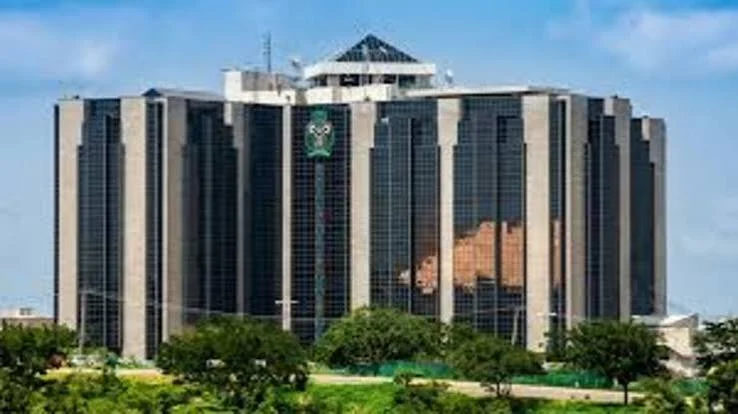
ABUJA — The Central Bank of Nigeria (CBN) has directed banks, Payment Service Banks and other financial institutions to immediately freeze the accounts and assets of individuals and entities designated for terrorism and terrorism financing.
The directive was contained in a circular dated June 24, 2026, issued by the apex bank’s Compliance Department to all institutions regulated under the Banks and Other Financial Institutions Act (BOFIA) 2020.
According to the CBN, the action follows updated sanctions issued by the Nigeria Sanctions Committee and the United States Department of the Treasury’s Office of Foreign Assets Control (OFAC) under Executive Order 13224, as amended.
The regulator said the updated Nigeria Sanctions List, released on June 18, 2026, contains binding measures that require immediate implementation by all regulated entities.
Six individuals named on the sanctions list are Muktar Muhammad Adamu, Babangida Muhammed Adamu Hammajam, Abdullahi Umar Usman, Ibrahim Abubakar, Adamu Chiroma and Yakubu Ogirima Ibrahim.
The CBN also identified four Bureau de Change operators allegedly owned or controlled by the designated individuals. They include Generation Currency Bureau de Change Limited, Manhattan Bureau de Change Limited, Nine to Nine Exchange Bureau de Change Limited and Abbal Bako & Sons Bureau de Change Limited.
As part of the directive, financial institutions were ordered to screen customers, beneficial owners and all transactions against the updated sanctions list and immediately freeze, without prior notice, all funds, assets and economic resources linked directly or indirectly to the designated persons and entities.
The apex bank further instructed institutions to prevent the provision of funds, financial services or economic resources to the sanctioned individuals and organisations.
Banks were also directed to file Suspicious Transaction Reports with the Nigerian Financial Intelligence Unit (NFIU) for any confirmed or attempted matches and submit compliance reports to the CBN within 48 hours, detailing actions taken and any assets frozen. Institutions with no matching accounts were required to file nil returns.
In addition, the CBN urged financial institutions to strengthen monitoring systems for terrorism-financing indicators, including unusual fund movements, the use of money service businesses, bureaux de change and transactions involving high-risk jurisdictions.
The regulator warned that false or misleading compliance reports would attract sanctions under BOFIA 2020 and other applicable laws, adding that it would conduct supervisory reviews and examinations to ensure full compliance.
The directive takes immediate effect.

By Abigail David
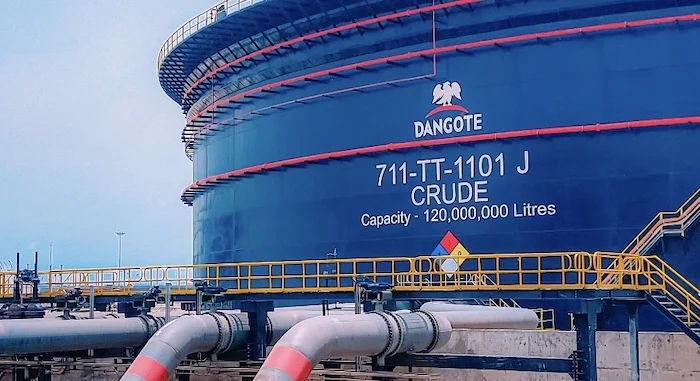
Dangote Petroleum Refinery has reduced the gantry price of Premium Motor Spirit (PMS), commonly known as petrol, by N75 per litre, citing easing tensions in the Middle East and declining global energy prices.
In a circular issued to fuel marketers on Monday, the refinery announced that the new gantry price had been lowered from N1,250 to N1,175 per litre, while the coastal price per metric tonne was reduced from N1,595,790 to N1,495,215.
The refinery said the revised prices would take effect from midnight and that all outstanding unloaded gantry volumes would be repriced accordingly.
According to the company, the adjustment followed the de-escalation of geopolitical tensions in the Middle East, which had driven up crude oil and fuel prices over the past three months.
“We have reviewed our premium motor spirit gantry and coastal prices following the de-escalation of tensions in the Middle East, which has impacted energy prices,” the refinery stated.
Market data from Petroleumprice.ng indicated that Dangote Refinery’s petrol is now among the cheapest available to marketers, with many outlets previously selling the product at around N1,240 per litre.
The price cut comes as global oil prices decline amid reports of a ceasefire agreement and renewed diplomatic efforts between the United States and Iran, raising hopes for the full reopening of the Strait of Hormuz, a critical global oil shipping route.
Crude oil prices had surged during months of regional tensions, pushing domestic fuel prices higher. In Nigeria, petrol prices climbed from about N830 per litre to around N1,300 per litre, while diesel and aviation fuel also recorded significant increases.
With crude prices retreating, industry observers expect further reductions in domestic fuel prices, although refinery officials have noted that existing stocks of higher-priced crude could moderate the pace of future price cuts.


POLAC Commandant Patrick Atayero Marks Send-Off, Birthday and Wedding Anniversary With Thanksgiving Service

Bayelsa United Begin Pre-Season Training Ahead of Nigeria National League Campaign
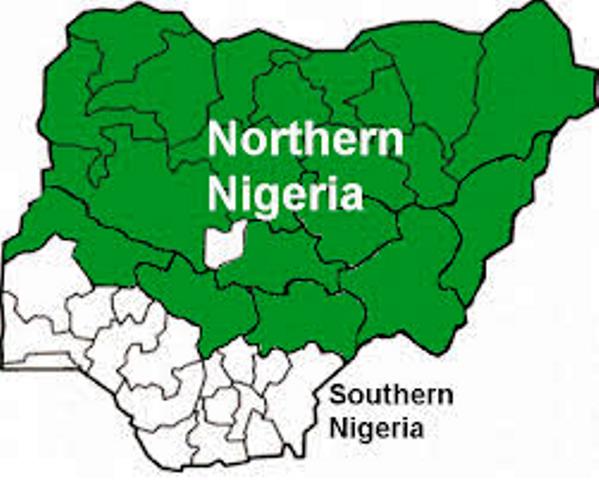
Northern Christian Association Seeks FG’s Explanation Over Religious Project Allocations in 2026 Budget
-
Uncategorized13 hours ago
DSS Set To Appeal Life Sentence On Ansaru Terror Commanders*Seeks Maximum Penalty On Behalf of Murdered Oriire Teachers
-
 News19 hours ago
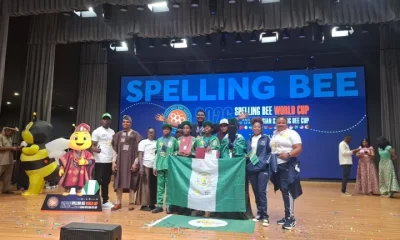
Nigerian Students Win Gold at 2026 Spelling Bee World Cup in China
-
Uncategorized23 hours ago
Tosin Ajayi and the Humanity Behind the Badge
-
Uncategorized11 hours ago
Ex-CDS Petinrin Lauds DSS On Oriire Rescue
-

 News4 hours ago
CONGRATULATION TO HON. GINIKA FLORENCE TOR ON HER APPOINTMENT AS FEDERAL COMMISSIONER, NATIONAL SALARIES, INCOMES AND WAGES COMMISSION
-

 News2 hours ago
EFCC Arraigns Former MD Of Warri Refinery for Alleged N1.339bn Fraud
-
News2 hours ago
Northern Christian Association Seeks FG’s Explanation Over Religious Project Allocations in 2026 Budget
-
 News1 hour ago
Bayelsa United Begin Pre-Season Training Ahead of Nigeria National League Campaign
You must be logged in to post a comment Login