
Business
Ultimate Health Pushes Affordable Insurance for Nigeria’s Informal Sector

By Abigail David
Ultimate Health Management Services has intensified efforts to expand affordable health insurance coverage for Nigeria’s largely uninsured informal sector through strategic partnerships and awareness campaigns.
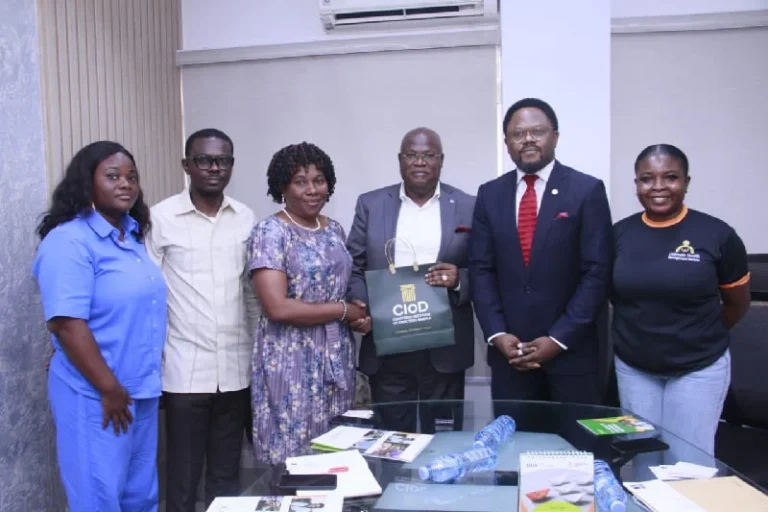
The initiative was highlighted during a meeting in Lagos with a delegation from the Chartered Institute of Directors (CIoD) Nigeria, led by Assistant Director Adekemi Parker, where both organisations explored collaboration to improve health insurance penetration and governance standards in the sector.
At the centre of the initiative is a new health insurance package designed for artisans, traders, transport operators, ICT professionals and small business owners. According to Ultimate Health Managing Director, Lekan Ewenla, the scheme costs N38,000 annually per enrollee and is structured to provide accessible healthcare for workers outside the formal employment sector.
Ewenla said the programme aims to reduce the heavy reliance on out-of-pocket medical expenses, noting that inadequate awareness and limited access to information remain major barriers to health insurance adoption in Nigeria.
He added that the company is working with organised informal sector groups and institutional partners to drive enrolment and improve access to timely healthcare services.
Official data from the 2025 State of Health of the Nation Report shows that health insurance coverage in Nigeria increased from 19.2 million people in 2024 to 21.7 million in 2025, representing about 13 per cent of the population.
CIoD said the collaboration aligns with its commitment to strengthening corporate governance and improving service delivery in critical sectors, including healthcare.

By Abigail David
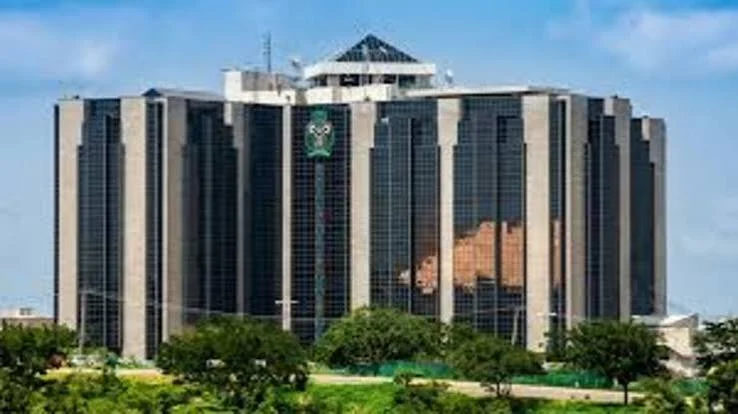
ABUJA — The Central Bank of Nigeria (CBN) has directed banks, Payment Service Banks and other financial institutions to immediately freeze the accounts and assets of individuals and entities designated for terrorism and terrorism financing.
The directive was contained in a circular dated June 24, 2026, issued by the apex bank’s Compliance Department to all institutions regulated under the Banks and Other Financial Institutions Act (BOFIA) 2020.
According to the CBN, the action follows updated sanctions issued by the Nigeria Sanctions Committee and the United States Department of the Treasury’s Office of Foreign Assets Control (OFAC) under Executive Order 13224, as amended.
The regulator said the updated Nigeria Sanctions List, released on June 18, 2026, contains binding measures that require immediate implementation by all regulated entities.
Six individuals named on the sanctions list are Muktar Muhammad Adamu, Babangida Muhammed Adamu Hammajam, Abdullahi Umar Usman, Ibrahim Abubakar, Adamu Chiroma and Yakubu Ogirima Ibrahim.
The CBN also identified four Bureau de Change operators allegedly owned or controlled by the designated individuals. They include Generation Currency Bureau de Change Limited, Manhattan Bureau de Change Limited, Nine to Nine Exchange Bureau de Change Limited and Abbal Bako & Sons Bureau de Change Limited.
As part of the directive, financial institutions were ordered to screen customers, beneficial owners and all transactions against the updated sanctions list and immediately freeze, without prior notice, all funds, assets and economic resources linked directly or indirectly to the designated persons and entities.
The apex bank further instructed institutions to prevent the provision of funds, financial services or economic resources to the sanctioned individuals and organisations.
Banks were also directed to file Suspicious Transaction Reports with the Nigerian Financial Intelligence Unit (NFIU) for any confirmed or attempted matches and submit compliance reports to the CBN within 48 hours, detailing actions taken and any assets frozen. Institutions with no matching accounts were required to file nil returns.
In addition, the CBN urged financial institutions to strengthen monitoring systems for terrorism-financing indicators, including unusual fund movements, the use of money service businesses, bureaux de change and transactions involving high-risk jurisdictions.
The regulator warned that false or misleading compliance reports would attract sanctions under BOFIA 2020 and other applicable laws, adding that it would conduct supervisory reviews and examinations to ensure full compliance.
The directive takes immediate effect.
By Abigail David
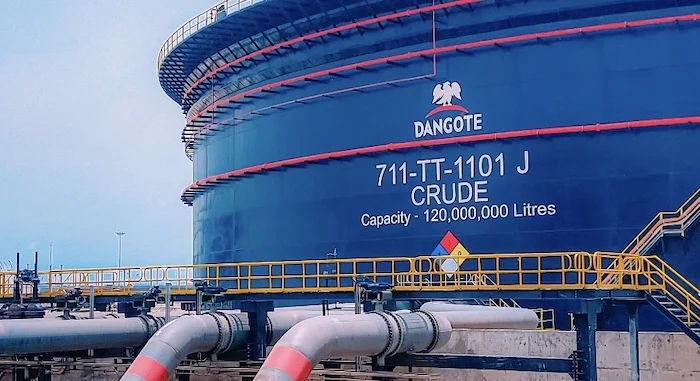
Dangote Petroleum Refinery has reduced the gantry price of Premium Motor Spirit (PMS), commonly known as petrol, by N75 per litre, citing easing tensions in the Middle East and declining global energy prices.
In a circular issued to fuel marketers on Monday, the refinery announced that the new gantry price had been lowered from N1,250 to N1,175 per litre, while the coastal price per metric tonne was reduced from N1,595,790 to N1,495,215.
The refinery said the revised prices would take effect from midnight and that all outstanding unloaded gantry volumes would be repriced accordingly.
According to the company, the adjustment followed the de-escalation of geopolitical tensions in the Middle East, which had driven up crude oil and fuel prices over the past three months.
“We have reviewed our premium motor spirit gantry and coastal prices following the de-escalation of tensions in the Middle East, which has impacted energy prices,” the refinery stated.
Market data from Petroleumprice.ng indicated that Dangote Refinery’s petrol is now among the cheapest available to marketers, with many outlets previously selling the product at around N1,240 per litre.
The price cut comes as global oil prices decline amid reports of a ceasefire agreement and renewed diplomatic efforts between the United States and Iran, raising hopes for the full reopening of the Strait of Hormuz, a critical global oil shipping route.
Crude oil prices had surged during months of regional tensions, pushing domestic fuel prices higher. In Nigeria, petrol prices climbed from about N830 per litre to around N1,300 per litre, while diesel and aviation fuel also recorded significant increases.
With crude prices retreating, industry observers expect further reductions in domestic fuel prices, although refinery officials have noted that existing stocks of higher-priced crude could moderate the pace of future price cuts.

By Abigail David
The Nigerian Communications Commission (NCC) says telecommunications operators have compensated more than 75 million subscribers for poor network service, marking one of the largest consumer redress initiatives in Africa’s telecom sector.
The disclosure was made in a communiqué issued after the commission’s 109th board meeting held on May 25, 2026. The compensation followed an NCC directive requiring mobile operators to automatically credit affected customers with airtime for service disruptions and substandard network performance.
According to the regulator, the compensation programme reflects significant progress in enforcing quality-of-service standards across the industry. The NCC, however, said it is independently verifying operators’ claims to ensure that all eligible subscribers receive the compensation due to them.
The commission also reviewed compliance by telecom infrastructure providers, including tower companies, directing them to fully implement network upgrade commitments funded through regulatory fines. It noted that while progress had been made, full compliance remained necessary to improve service quality sustainably.
The NCC identified infrastructure vandalism, growing data demand and limited fibre deployment as key challenges affecting the sector. It added that efforts to expand fibre networks and strengthen telecom infrastructure security are ongoing, including plans for a Communications Industry Security Trust Fund.
Nigeria’s telecom industry invested about N2.13 trillion in network infrastructure in 2025, with operators projecting an additional N1.86 trillion investment in 2026 to expand coverage and improve service delivery.


NCC Reaffirms Partnership With NIPR to Strengthen Nigeria’s Telecom Sector

Bayelsa Governor’s Aide Calls for Community Policing to Strengthen Nigeria’s Security

Bayelsa Governor Diri Commends Epie-Atissa Community for Backing Urban Renewal Programme
-
 Crime19 hours ago
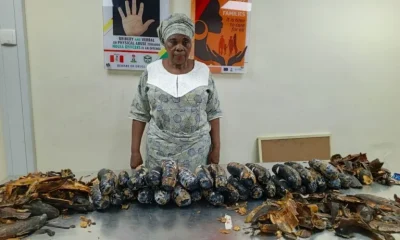
NDLEA arrests Nigerian-British grandmother with 13kg cocaine disguised as plantain at Lagos airport
-
 News21 hours ago
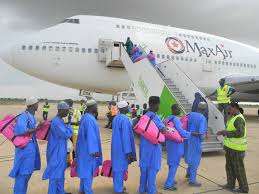
CSO Commends DSS, Security Agencies For Proactive Measures During 2026 Hajj.
-

 News18 hours ago
Citizens’ support key to achieving national security goals, COAS says
-
 News21 hours ago
CACOL Calls for Chief of Staff to Step Aside Over Alleged Fake Government Agency Scandal
-
News21 hours ago
Governor Sule Approves Five Mini Sports Complexes Across Nasarawa
-

 News19 hours ago
Mixed reactions greet six-week NYSC orientation, other reforms
-

 Entertainment18 hours ago
Ray Emodi apologises to fans, says burnout prompted acting break
-
News21 hours ago
PAAU Appoints Chief Security coordinator to Strengthen Campus Security
You must be logged in to post a comment Login