
Opinion
The CPC at 105: Staying True to Its Founding Mission, Opening a New Chapter in China-Nigeria Friendship

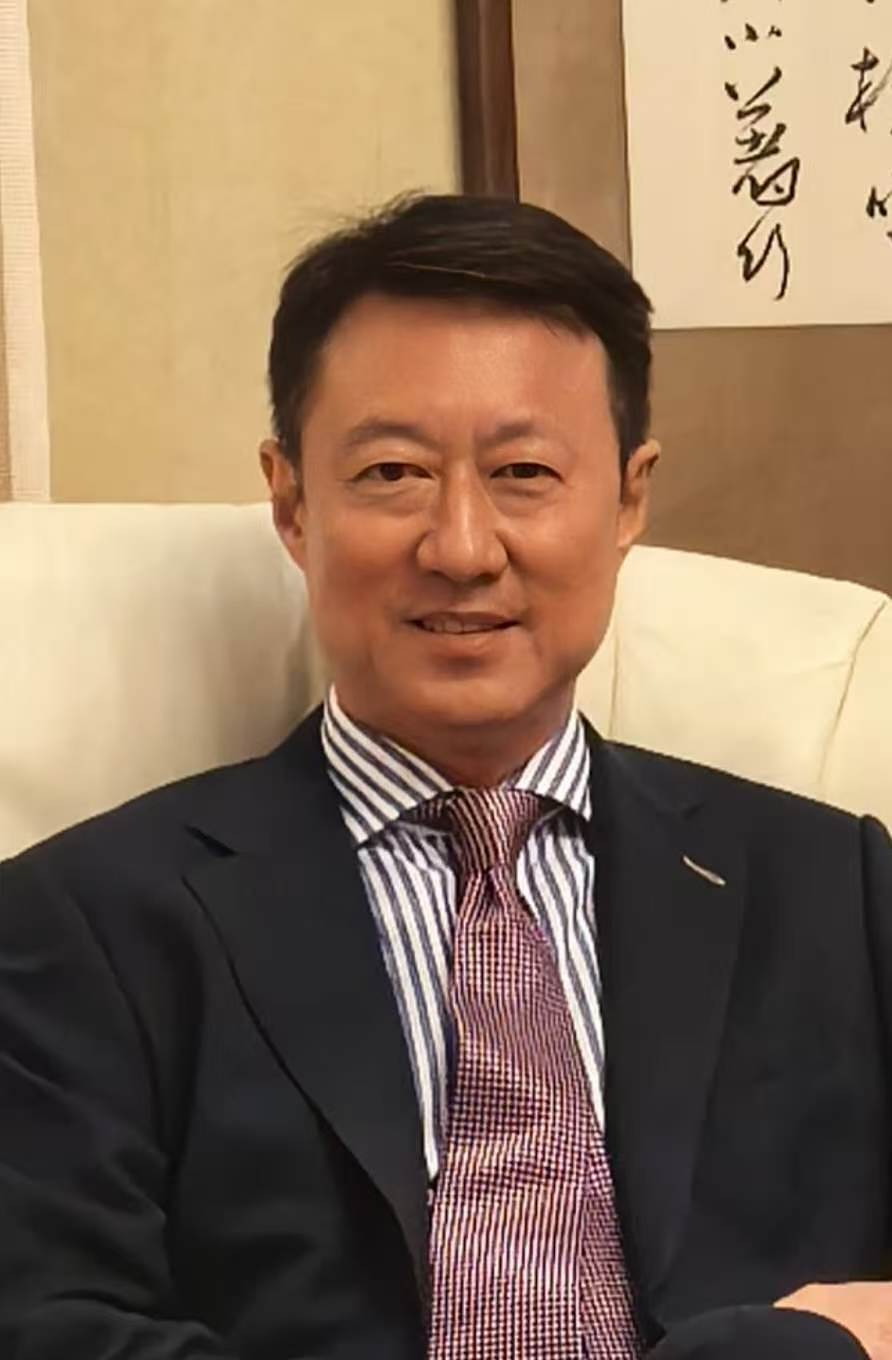
By Ambassador Yu Dunhai
July 1, 2026 marks the 105th anniversary of the founding of the Communist Party of China (CPC). Under the Party’s strong leadership, China has achieved the twin miracles of rapid economic growth and long-term social stability. In just a few decades, it has accomplished a development transformation unprecedented in human history, becoming the world’s second-largest economy and a key engine of global growth. Many international friends often ask what lies behind China’s remarkable success. The answer, above all, is the leadership of the Communist Party of China.
At the beginning of the twentieth century, China was plunged into national humiliation, internal turmoil and foreign aggression. The country was weak, its people suffered greatly, and the future of the Chinese nation appeared bleak. Founded in 1921 at this critical moment, the CPC courageously took on the historic mission of national rejuvenation. Since its founding, the Party has remained committed to seeking happiness for the Chinese people and rejuvenation for the Chinese nation. United under the CPC leadership, the Chinese people have overcome immense hardships, transformed the country’s future, and fundamentally rewritten the course of modern Chinese history.
Over the past 105 years, the CPC has led China through an extraordinary transformation from standing up, growing prosperous, and becoming strong, creating one of the greatest epics in the thousands of years of Chinese civilization. Today, China continues to advance high-quality development. Its modern industrial system is becoming increasingly sophisticated, emerging industries are flourishing, and major scientific and technological breakthroughs continue to emerge. As the 14th Five-Year Plan for Economic and Social Development concludes successfully and the 15th Five-Year Plan begins, Chinese modernization is gathering unstoppable momentum toward the long-range objectives set for 2035.
History and reality have fully demonstrated that the leadership of the CPC is the fundamental reason for China’s success in revolution, development and reform. Grounded in China’s national realities, the CPC has led the Chinese people in forging a unique path to modernization that differs from the Western model, thereby breaking the notion that modernization equals Westernization, expanding the choices available to developing countries in pursuing modernization, and providing practical, replicable Chinese experience for those seeking independent paths to development.
First, the CPC has consistently upheld independence and self-reliance, firmly keeping China’s future in its own hands. The Party has always insisted that the Chinese people should determine their own development path. China’s experience demonstrates that there is no one-size-fits-all model for modernization; simply copying another country’s model or relying on external forces cannot deliver lasting success.
Second, the CPC has always put the people first, laying the foundation for lasting stability and prosperity. The Party remains committed to a people-centered philosophy of development, with improving people’s well-being as its fundamental goal. China has eradicated absolute poverty, lifting more than 700 million rural residents out of poverty. It has established the world’s largest education system and social security system, with the enrollment rate for compulsory education approaching 100 percent, basic medical insurance covering more than 1.3 billion people, and basic old-age insurance benefiting nearly 1 billion people. These tangible improvements have enabled the Chinese people to enjoy an ever-growing sense of fulfillment, happiness and security.
Third, the CPC has maintained its vitality through self-reform. The courage to reform itself is one of its defining characteristics and greatest strengths. By turning the blade inward, exercising rigorous self-governance, and maintaining an unrelenting fight against corruption, the Party has fostered a clean political environment and a healthy social ethos. In the process, it has continued to grow stronger and more mature, remaining the strong leadership core of the cause of socialism with Chinese characteristics.
Fourth, the CPC has consistently pursued theoretical innovation. On the occasion of its 105th anniversary, the Party has established Xi Jinping Thought on Party Building as another major theoretical innovation in the new era, which provides important guidance for advancing Chinese modernization and realizing national rejuvenation. Guided by a global vision and drawing on both the successes and failures of political parties around the world, while offering profound reflections on the challenges of long-term party governance, this thought provides a Chinese solution for political party building and national governance. Guided by the vision of building a community with a shared future for mankind, the CPC and the Chinese Government have put forward the Global Development Initiative, the Global Security Initiative, the Global Civilization Initiative, and the Global Governance Initiative, and have published a white paper on reform of the global governance system. Together, these efforts contribute Chinese wisdom and solutions to addressing the profound changes unseen in a century and the common challenges facing humanity.
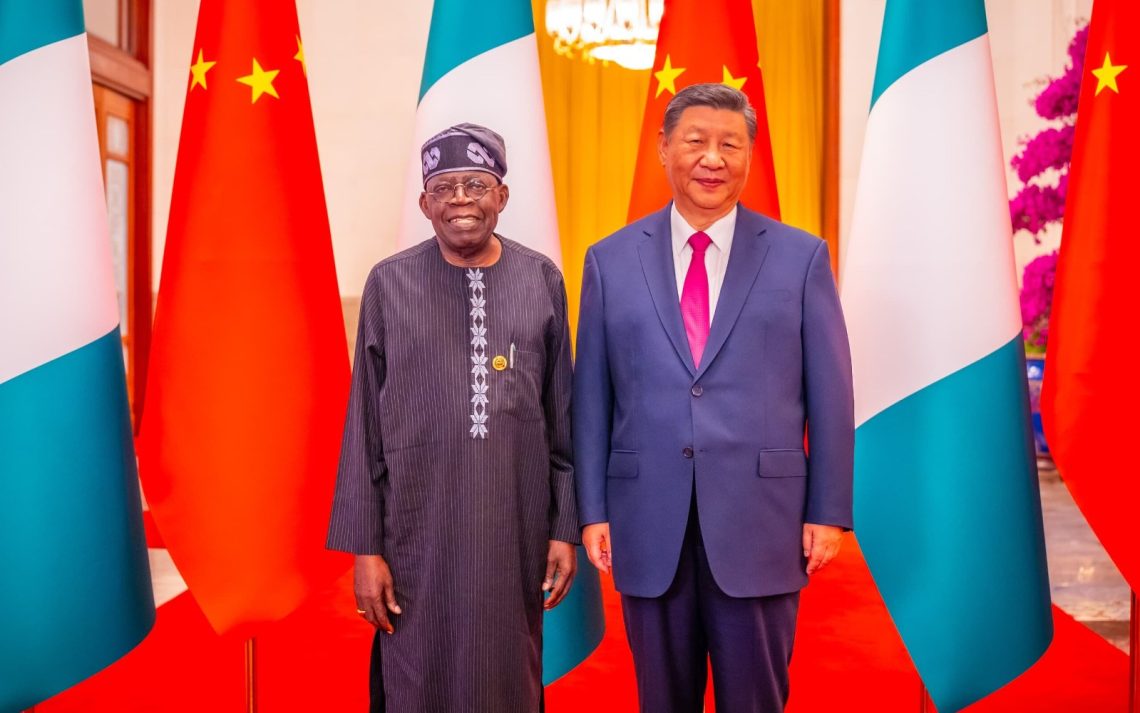
For 105 years, the CPC has remained true to its founding mission. For 55 years, China and Nigeria have stood together through thick and thin as good friends and trusted partners. Since the establishment of diplomatic relations in 1971, our two countries have weathered changes in the international landscape by standing firmly with each other in solidarity and mutual support. Our political mutual trust has continued to deepen, practical cooperation has flourished across a wide range of fields, and our partnership has brought ever greater tangible benefits to both our peoples. No matter how the international landscape evolves, the CPC and the Chinese Government have remained unwavering in their commitment to long-term friendship with Nigeria, steadfast in supporting Nigeria in pursuing a modernization path suited to its own national conditions, and resolute in promoting practical cooperation that improves the well-being of the Nigerian people. China and Nigeria have consistently supported each other’s core interests and major concerns. Through institutional platforms such as the Forum on China-Africa Cooperation (FOCAC), we have strengthened exchanges on governance experience, promoted the alignment of China’s 15th Five-Year Plan with Nigeria’s Renewed Hope Agenda, and ensured the steady and sustained development of bilateral relations, bringing more tangible benefits to the peoples of both countries.
Standing at a new historical starting point, the CPC and the Chinese Government stand ready to work with Nigeria to carry forward our traditional friendship, deepen exchanges on party building and state governance, strengthen strategic communication, and further consolidate political mutual trust. By translating political consensus into practical cooperation, drawing on mutual learning between political parties to support national development, and building an even stronger partnership for mutual benefit, we will continue to advance the China-Nigeria Comprehensive Strategic Partnership to new heights and work together to promote the shared prosperity of China and Africa, as well as lasting peace and common development of the world.







…As forum recounts real reasons in crisis
…Alleges leadership control, administrative mistakes, others
By Kaduna Correspondent
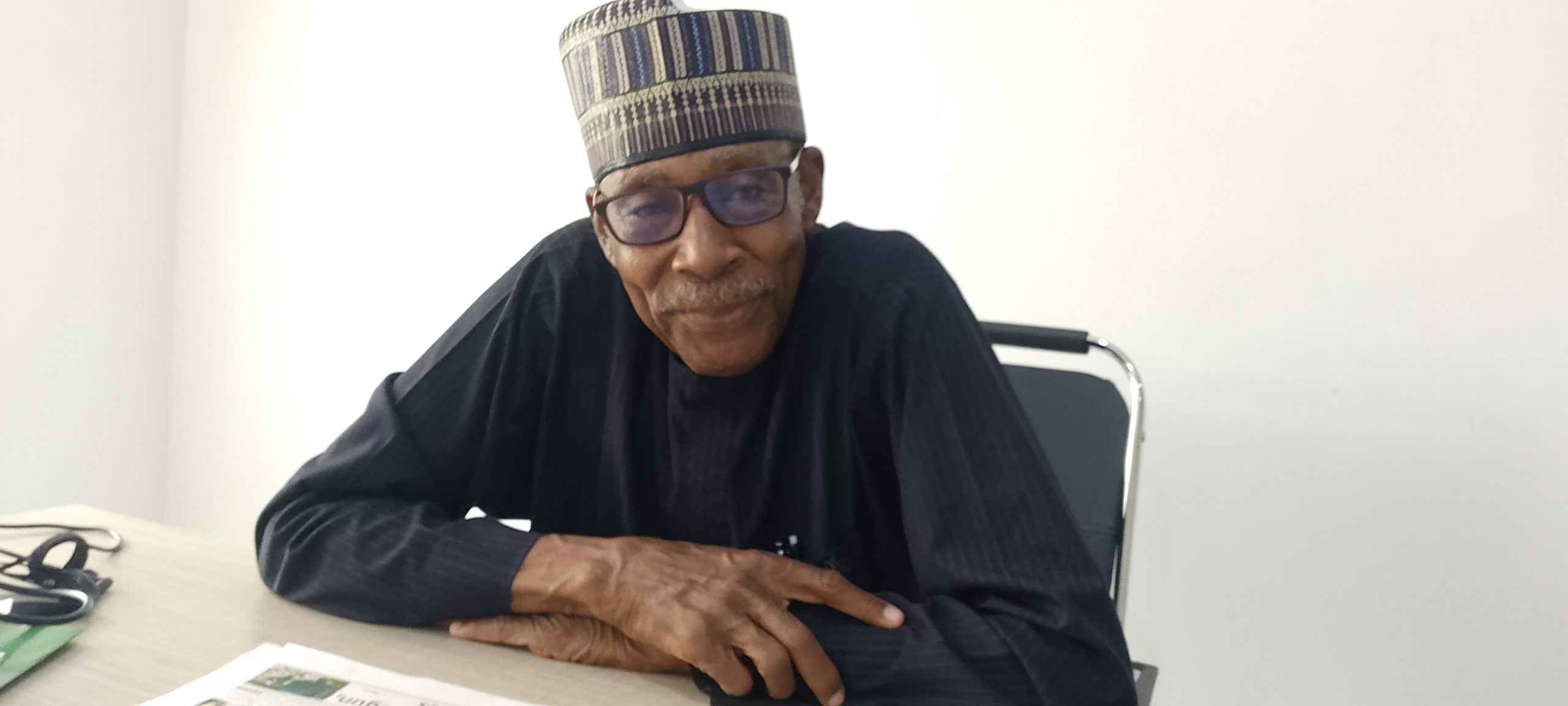
As the raging disputes in the Arewa Consultative Forum (ACF), the socio-cultural umbrella organization of northern Nigeria, has continue to deepened, allegations of leadership control tussle, administrative breaches, and mismanagement of about ₦4 billion endowment fund, amongst other reasons, have been enumerated.In this interview with our Kaduna State Correspondent, Gabriel Udeh, the National Publicity Secretary of the ACF, Prof. Tukur Muhammad-Baba, a retired professor of sociology, broke silence on the internal wrangling that recently led to the sealing of the Forum’s headquarters by police in kaduna.
Prof. Muhammad-Baba traced the crisis to attempts to usurp the powers of the National Executive Committee (NEC), disputes over tenure, and violation of the ACF constitution in the management of the Fund. He also spoke on the status of the suspended Board of Trustees Chairman, Alhaji Bashir Dalhatu, and the Forum’s position on insecurity in the North. Excerpts:
Q: Let’s know you fully and your position Sir?
A: Okay, I am Tukur Muhammad-Baba. I am a retired university lecturer. I am a scholar for life. That is, I am a professor of sociology. I was the former dean of the Faculty of Social and Management Sciences at the Federal University of Technology, Minna, among others, just before I retired. But basically, I am Tukur Muhammad-Baba. Currently, National Publicity Secretary of the Arewa Consultative Forum. I am a scholar by calling and a sociologist. Thank you so much.
Q: ACF is one of the most respected organizations in Nigeria. There are serious concerns about the recent crisis that went viral and led to police invasion. What are the real reasons ACF is neck deep in this crisis?
A: ACF is a foremost socio-cultural organization in the country. One reason it has retained credibility is because it is not ethnic-based, not religious-based. It’s political, but not partisan. We consult among various groups in the north to come up with a platform of common interest – roads, education, economic development. The north has over 300 ethnic groups. We are united by geography and sociology. For example, in Benue and in Kogi states, we have northerners who are Igbo. In Kwara state, we have northerners who are Yoruba. They are indigenous to the area. But like every modern organization, conflict is inevitable. It is how you handle disagreement that defines the organization. We’ve had personality differences over the years. If you ask me to summarize, the bone of contention is not so much ACF, it’s control of the ACF. Unprecedentedly, individuals emerged and want to control this organization in their own image. During the 25th anniversary, we launched an endowment fund for the first time because we realized there was too much political interference with governors’ contributions. The target was ₦100 billion. Pledges were about ₦7 billion, out of which a little less than ₦4 billion was generated.
Q: What exactly went wrong with the management of that fund?
A: The constitution is clear. There are five organs: Patrons, General Assembly, Board of Trustees, NEC, and NWC. NEC and NWC are the management. BoT is to advise and oversee. There has been a persistent attempt to usurp NEC’s powers by a functionary of BoT, in particular the then chairman, who assumed functions outside the constitution. The fund was moved out of Kaduna, against the constitution which says management must be at the head office. It was moved to a financial institution in Kano offering 8%. We had institutions offering 20% and 21%. By our calculation, we would have earned about ₦113 million in three months at 21%, but at 8% we earned just over ₦17 million. We also discovered part of the money was moved from one bank branch to another where an individual had a personal account, without EXCO approval, without the financial secretary or treasurer.
Q: There is also the issue of tenure of officers and leadership. What happened?
A: The constitution says the Secretary-General serves three years, renewable once. In 2023 there was a lacuna of 6-9 months with no NWC. The ex-Secretary-General continued. His letter of appointment for the second term said tenure begins from inauguration. But BoT said no, he had overstayed. Legal experts said the interim period cannot count. NEC was sidelined. We read in the papers that the SG was asked to go. Nobody wrote to NEC. The Leadership Selection Committee, which is ad hoc, had been in place for nine years. We told them they stood dissolved. They refused
.Q: The crisis led to the headquarters being sealed by police. How did that happen?
A: Disagreement over interpretation led some to invite police to seal the headquarters. It had never happened before. I told the media: when the police get bored of staying at the gate, they will leave. And within 10 days, they left. EXCO had to meet elsewhere. The chairman of BoT also intervened and said nobody should come to the meeting, but he has no power to do that under the constitution.
Q: What about Alhaji Bashir Dalhatu, the BoT Chairman? Is he still in office?
A: A petition was received that he was interfering in functions not his, moving money, and directing staff. The Code of Conduct Committee invited him. He refused to appear. The committee recommended suspension and forensic audit. EXCO endorsed it. Bashir Dalhatu was suspended as a member of ACF. By implication, he cannot be BoT Chairman because only a member can hold that position. The BoT should have appointed a new chairman. He has continued to act as if he is CEO. As of now, Bashir Dalhatu is not a member of ACF. He is a suspended member. Any action he takes as chairman is null and void.
Q: Some people are calling it fraud. Is it fraud or administrative mistake?
A: Fraud can only be established by proper investigation. It is under investigation. There is a forensic review going on. The Code of Conduct and Ethics Committee is still waiting to hear from those accused. What I can say now is there have been serious administrative lapses that violate the ACF Constitution. The money shouldn’t have been moved. The organization is losing money by keeping it at 8% instead of 20%. Whether there is fraud or not will be established after investigations.
Q: What is ACF’s position on the rising insecurity in the North?
A: Government seems more interested in politics than security. The most existential threat to Nigeria is insecurity: kidnapping, banditry, rape, inter-communal clashes. It’s not a question of capacity. Our armed forces are trained in the best military colleges worldwide. We think it’s a question of political will. Governors are chief security officers but have no control over police or military deployment. That’s a serious lacuna. We are also not in support of amnesty without accountability. You cannot have your sister raped and government surrenders your right to justice. We must decapitate these criminals and their enablers.
Q: Are there efforts to resolve the crisis?
A: Yes. Elders are intervening. Lawyers have submitted legal positions. We are hoping it will be resolved soon because the North needs to articulate its position within Nigeria. When we are united, ACF has been impactful. We reviewed the four tax bills and 80% of our recommendations were reflected. We galvanized opposition to military intervention in Niger Republic and to foreign military bases in Nigeria. Our position is simple:let everybody abide by the provisions of the constitution.
Opinion
From the Silk Road to the Sahara: Why the Dikwa–Gamboru/Ngala and Bama–Banki Roads Could Transform Africa’s Trade Future
By Mukhtar Imam
When historians recount the world’s greatest trade networks, two ancient corridors stand out. The first is the Old Silk Road, which connected China to Europe through an intricate web of commercial routes stretching from Beijing to the United Kingdom. The second is the Trans-Saharan trade route, the historic artery that connected West Africa with North Africa and the Mediterranean, making it one of the greatest engines of commerce on the African continent.
Today, China is writing a new chapter in economic history through President Xi Jinping’s Belt and Road Initiative (BRI), an ambitious programme that seeks to revive the ancient Silk Road by investing in roads, railways, ports, industrial parks, and logistics hubs across Asia, Europe, and Africa. The initiative is founded on a simple but powerful principle: connectivity drives prosperity. Nations linked by efficient transport infrastructure enjoy increased trade, greater investment, stronger regional integration, and sustained economic growth.
Nigeria now has an opportunity to embrace a similar vision within its own historical and geographical context.
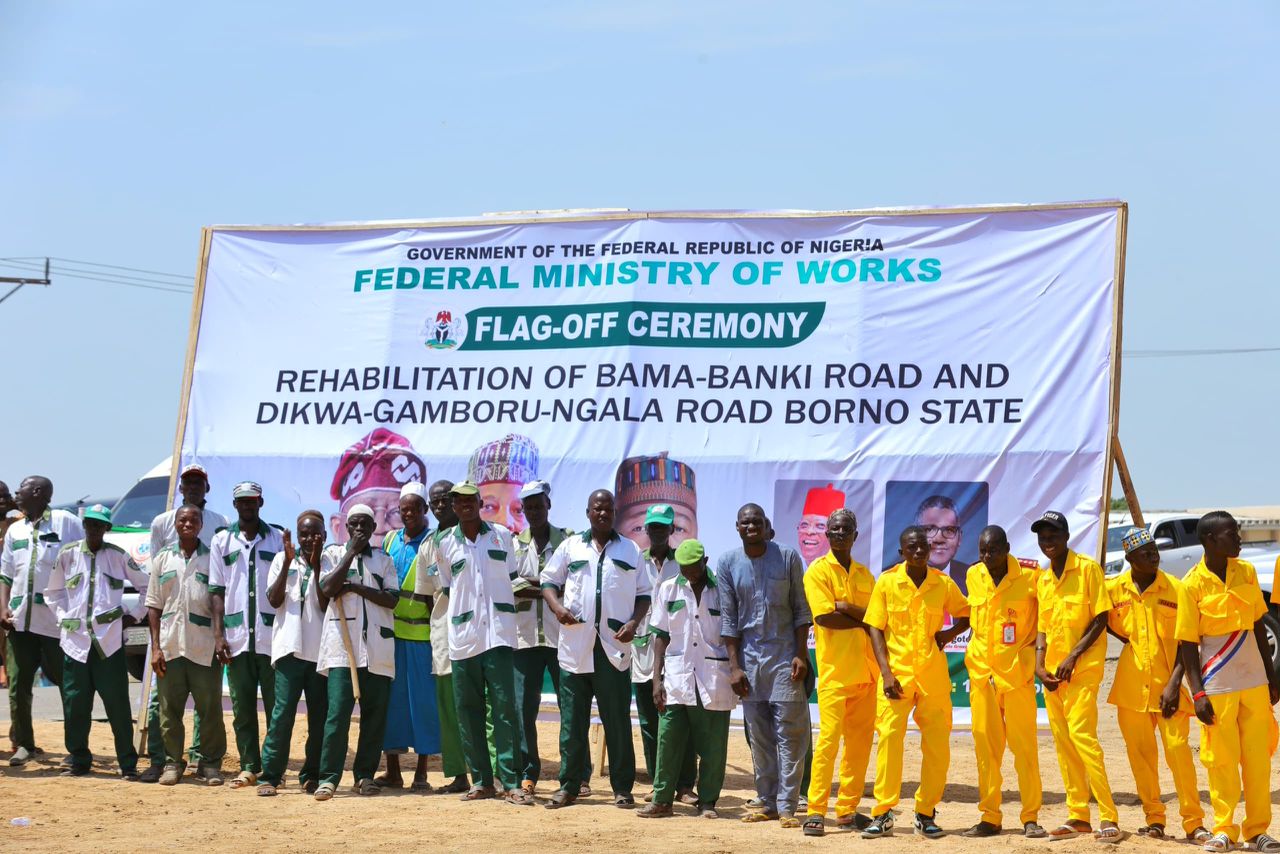
The ongoing construction of the Dikwa–Gamboru/Ngala and Bama–Banki roads in Borno State should not be viewed merely as infrastructure projects designed to improve transportation. Rather, they represent strategic economic corridors capable of reopening one of Africa’s oldest and most important commercial routes—the Trans-Saharan trade network.
For centuries, caravans traversed this route carrying gold, salt, leather, textiles, livestock, grains, and other valuable commodities between the kingdoms of West Africa and the markets of North Africa and beyond. These exchanges not only enriched economies but also facilitated the movement of knowledge, technology, religion, and culture across continents. The Trans-Saharan trade corridor became the second-largest historical trading network in the world, surpassed only by the ancient Silk Road.
Like the Belt and Road Initiative, the reconstruction of the Dikwa–Gamboru/Ngala and Bama–Banki roads is fundamentally about restoring connectivity. These roads reconnect Nigeria with Cameroon and neighbouring markets, creating vital gateways into the Lake Chad Basin and linking commercial activities across West and Central Africa. They also hold the promise of restoring trade flows that have been disrupted by years of conflict and insecurity.
The economic implications are enormous.
Efficient transport corridors reduce the cost of moving goods, improve access to domestic and international markets, attract private investment, encourage industrial development, expand agricultural value chains, and create employment opportunities. Border communities that once thrived as centres of commerce can once again become vibrant hubs of economic activity, while manufacturers, farmers, livestock traders, transporters, and exporters benefit from improved market access.
More importantly, infrastructure of this nature strengthens regional integration under the African Continental Free Trade Area (AfCFTA), positioning northeastern Nigeria as a strategic gateway for commerce between West, Central, and North Africa. As trade expands, so too does the potential for peace, stability, and shared prosperity.
China’s Belt and Road Initiative demonstrates what is possible when infrastructure is aligned with long-term economic strategy. By rejuvenating the Old Silk Road, China has created an extensive network of economic activities that spans continents, connecting Beijing with major commercial centres across Asia and Europe, ultimately reaching the United Kingdom. The objective extends beyond transportation; it is about creating interconnected economies capable of generating sustained growth and development.
The same philosophy can inspire Nigeria’s approach to rebuilding the northeast. The Dikwa–Gamboru/Ngala and Bama–Banki roads can become the backbone of a renewed Trans-Saharan economic corridor—one that restores the region’s historical significance while unlocking new opportunities for commerce, investment, and regional cooperation.
This vision, however, must extend beyond road construction. Modern border infrastructure, efficient customs administration, enhanced security, logistics parks, agro-processing zones, dry ports, and industrial clusters should accompany these transport corridors. Together, these investments would transform roads into engines of development rather than mere passageways.
History teaches that, great civilizations are built around great trade routes. The Silk Road transformed Asia and Europe. The Trans-Saharan trade route shaped the political and economic fortunes of Africa for centuries. Reviving this historic corridor through strategic infrastructure investment offers Nigeria an opportunity not simply to rebuild roads, but to reconnect economies, restore livelihoods, and reposition the country as a central player in continental trade.
The Dikwa–Gamboru/Ngala and Bama–Banki roads therefore represent something far greater than civil engineering projects. They are pathways to economic renewal, symbols of regional integration, and foundations for a more prosperous future. Just as the Belt and Road Initiative is breathing new life into the world’s greatest historical trade corridor, these roads can herald the renaissance of Africa’s second-greatest trading network—the Trans-Saharan route—and, in doing so, contribute meaningfully to the economic transformation of Nigeria and the African continent.
By Salihu Abdulhamid
As political consultations and alliances begin to emerge ahead of Nigeria’s 2027 general elections, discussions about the influence of political godfatherism are resurfacing in Kogi State. Although campaigns have not officially started, political observers say early alignments have renewed debate over how candidates may emerge and what this could mean for the state’s democratic process.
Godfatherism describes a political system in which influential figures use their networks, resources, and party influence to support candidates or shape political outcomes. While political mentorship is common in democratic systems, analysts argue concerns arise when elite influence is perceived to outweigh transparent party competition and voter choice.
Kogi State has witnessed several high-profile political transitions that have fuelled debate over the role of influential political actors. Following the death of governorship candidate Abubakar Audu during the 2015 election process, Yahaya Bello emerged as governor under decisions taken by the political party and the electoral authorities. The development generated national constitutional and political debate.
Similarly, the 2023 governorship election attracted attention after Ahmed Usman Ododo secured victory with the public backing of former Governor Yahaya Bello. Supporters described the transition as political continuity, while critics argued it highlighted the influence of powerful political actors in candidate selection.
Political analysts say the 2027 elections will test political parties’ commitment to transparent primaries, internal democracy and inclusive participation. They also note that electoral outcomes will depend on multiple factors, including candidate popularity, party organisation, voter behaviour and prevailing socio-economic conditions.
Observers say strong democratic institutions, credible elections and active citizen participation remain essential to ensuring that electoral outcomes reflect the will of voters.


PDP REAFFIRMS ABSOLUTE CONFIDENCE IN CHIEF AONDOAKAA
NDVC Dismisses Claims Linking Amagbein to ADC, Reaffirms Support for Tinubu
DSS Untreads The Old Path
-
 News14 hours ago
THE MONEY THAT NEVER MOVEDHow Nigeria’s Expenditure Controls Prevented the PEAC/PFIPC Appropriation from Becoming Public Expenditure
-

 News16 hours ago
SECOND TERM IS NOT A BIRTHRIGHT: ALIA SET TO JOIN THE LIST OF GOVERNORS WHO FELL
-
Uncategorized3 hours ago
NDVC Dismisses Claims Linking Amagbein to ADC, Reaffirms Support for Tinubu
-
Uncategorized13 hours ago
DSS Untreads The Old Path
-
 News3 hours ago
PDP REAFFIRMS ABSOLUTE CONFIDENCE IN CHIEF AONDOAKAA
You must be logged in to post a comment Login