
Tech
29 Countries Sign Agreement to Establish World AI Cooperation Organization


Twenty-nine countries on Thursday signed an agreement in Shanghai to establish the World Artificial Intelligence Cooperation Organization (WAICO), marking a significant step toward strengthening international cooperation and governance in artificial intelligence.
According to China’s state-run Xinhua News Agency, Chinese Foreign Minister Wang Yi joined representatives from the 29 participating countries, including Kazakhstan, Laos, Pakistan, Russia and Indonesia, in signing the agreement, making them the founding members of the new organization.
Under the agreement, WAICO will operate as an independent intergovernmental international organization with its headquarters in Shanghai.
United Nations Secretary-General António Guterres attended the signing ceremony, underscoring the international significance of the initiative.
The agreement states that the organization will uphold the purposes and principles of the United Nations Charter while promoting extensive consultation, joint contribution and shared benefits among member states. It also commits to a people-centered approach in the development and governance of artificial intelligence.
WAICO aims to strengthen international cooperation and global governance on AI by promoting the development and application of the technology in ways that are safe, fair and beneficial. The organization also seeks to ensure the healthy and orderly advancement of AI for the benefit of all humanity.
China first proposed the establishment of WAICO in July last year as part of its efforts to foster greater international collaboration on emerging technologies amid the rapid global expansion of artificial intelligence.
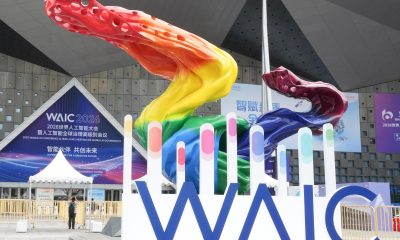
The signing of the agreement comes ahead of the opening of the four-day World Artificial Intelligence Conference (WAIC), which is scheduled to begin on Friday in Shanghai. The conference is expected to bring together government officials, technology leaders, researchers and industry experts from around the world to discuss the latest developments in AI innovation, governance and international cooperation.









Source: Xinhua
Artificial intelligence (AI) is reshaping economies, industries and daily life at breakneck speed. The question that matters now is not who builds the most powerful system, but whether AI becomes a weapon in geopolitical rivalry or an engine of shared global progress.
The 2026 World Artificial Intelligence Conference (WAIC), opening in Shanghai on Friday, arrives just as that question is becoming harder to avoid. Beyond the breakthroughs on display, the event’s real message is simpler: AI advances through openness, not isolation.
On the eve of the 2026 WAIC, Shanghai hosted the signing ceremony of the Agreement on the Establishment of the World Artificial Intelligence Cooperation Organization, a timely reminder that global AI governance is advancing through dialogue and cooperation rather than division.
Unilateral restrictions and protectionist policies are straining the global AI ecosystem, tightening restrictions on technology flows and investment. The real danger is not that innovation slows, but that a more fragmented AI landscape leaves many countries — developing economies above all — on the margins of the next technological revolution.
A widening AI divide is already one of the most pressing challenges facing global development — and if left to grow, AI risks entrenching inequality rather than narrowing it.
This is precisely why openness and cooperation matter more than ever.
China upholds a people-centered approach and the principle of AI for good and for all. Rather than treating it as a strategic asset to be hoarded, Beijing frames AI as a driver of shared development — one whose gains ought to be spread widely, not walled off.
That vision plays out both at home and abroad. Through platforms like WAIC, open-source initiatives, joint research, talent exchanges and capacity-building programs, China has sought to expand access to AI technologies and help other countries, notably developing economies, build up their own capacity to innovate.
China has also pushed for international cooperation on AI governance, through a string of initiatives — among them the AI Capacity-Building Action Plan for Good and for All, the Global AI Governance Action Plan, and the AI+ International Cooperation Initiative — all calling for AI to be developed in a people-centered, safe and inclusive way, with developing countries given a greater voice and greater access.
The underlying rationale is simple: a country’s technological leadership is measured not by how much it hoards, but by how much progress it helps others achieve.
Openness, of course, must be matched by responsible governance. As AI systems grow more powerful, concerns — over safety, privacy, ethics and misuse — require closer international coordination, rather than unilateral action. No single country can manage them alone.
This is why forums like WAIC matter: beyond the technology on display, they give governments, businesses, researchers and international organizations a place to deepen cooperation, trade lessons learned and build consensus on where AI should go next.
The future of AI should not be dictated by monopolies or geopolitical rivalry, but by how widely its innovations are shared and how broadly its benefits are felt. In championing openness, cooperation and common development, China is helping point the way forward.

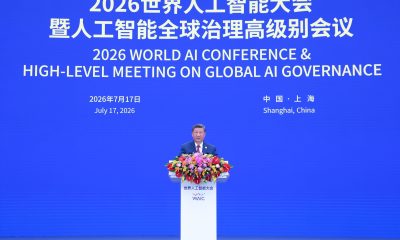
Chinese President Xi Jinping has presented a broad roadmap for international cooperation on artificial intelligence (AI), introducing four guiding principles for global AI governance and announcing a package of initiatives aimed at expanding access to the technology in developing countries.
Speaking at the opening of the World Artificial Intelligence Conference (WAIC) 2026 in Shanghai, Xi said AI is reshaping the global economy and society at an unprecedented pace, making international collaboration essential to harness its benefits while addressing emerging risks.
He urged governments, technology companies and researchers to work together to ensure artificial intelligence contributes to sustainable development, shared prosperity and global security instead of widening inequality or creating new divisions.
Central to his address was a proposal for four principles that should underpin future global AI governance.
The first advocates openness and mutually beneficial cooperation. Xi called for greater collaboration in AI research, innovation and industrial development, encouraging countries to share knowledge and promote wider adoption of AI technologies across different sectors of the economy.
His second principle focused on safety and oversight. While acknowledging AI’s enormous potential, Xi stressed the need for robust legal frameworks, effective regulation and stronger risk management systems to guard against misuse and ensure the technology remains under human control. He also cautioned against using national security concerns to unnecessarily restrict international AI cooperation.
The third principle emphasized inclusiveness and respect for cultural diversity. According to Xi, AI should strengthen dialogue among nations and reflect humanity’s shared values without eroding the unique traditions and identities of different societies.
His fourth proposal called for stronger multilateral cooperation in AI governance. Xi reaffirmed support for the United Nations as the primary platform for developing international AI rules, standards and governance mechanisms, while urging greater assistance for developing countries to narrow the growing AI and digital gaps.
As part of China’s contribution to global AI capacity building, Xi announced that the country will offer 5,000 training and seminar opportunities to participants from developing nations over the next five years.
He also disclosed plans to establish AI application cooperation centres with regional organisations, including the Association of Southeast Asian Nations (ASEAN), the League of Arab States, the African Union (AU), the Community of Latin American and Caribbean States (CELAC), the Shanghai Cooperation Organisation (SCO) and BRICS.
In another major initiative, Xi said China will extend access to its AI-powered MAZU Meteorological Warning System to 30 countries, helping improve disaster preparedness and early warning capabilities.
Highlighting China’s domestic achievements, the President said the country’s AI sector has become a major driver of economic growth, with the value of its core smart economy industries surpassing one trillion yuan. He added that AI technologies are increasingly being deployed in manufacturing, public services and everyday life, while China continues to strengthen legal, regulatory and ethical safeguards for responsible AI development.
Xi also highlighted China’s growing role in shaping global AI governance through initiatives such as the Global AI Governance Initiative, support for the United Nations resolution on strengthening international cooperation in AI capacity building, and the establishment of the World Artificial Intelligence Cooperation Organization (WAICO), headquartered in Shanghai.
He described WAICO as an important platform for promoting inclusive AI development and expanding international cooperation, particularly in response to the needs of developing countries.
Concluding his address, Xi called for closer global partnerships to ensure artificial intelligence advances peace, innovation and human well-being, stressing that the future of AI should be built on cooperation, shared responsibility and common progress.

Nigeria’s digital economy is expanding rapidly, but major structural gaps continue to limit its impact. Reports on connectivity, cybersecurity, and digital infrastructure show that while internet coverage has reached over 90 per cent in some areas and 5G networks are gradually expanding, actual usage remains low due to affordability challenges, limited device ownership, and uneven rural access. Feature phones still dominate mobile usage in sub-Saharan Africa, reflecting the income barrier that keeps millions offline despite available infrastructure.
At the same time, cybersecurity risks are increasing across critical sectors. The Nigerian Communications Commission warned that thousands of cyberattacks and fibre cuts were recorded in 2025, alongside rising threats from AI-powered attacks, ransomware, and data breaches. With most national data still hosted outside Africa, concerns over data sovereignty and system vulnerability continue to grow, especially as more services move online.
Across industries, experts are also pointing to a widening gap between digital ambition and real-world execution. Although most organisations prioritise digital ecosystems, only a small fraction are effectively sharing and integrating data. Legacy systems, weak governance, and poor coordination between stakeholders continue to slow progress, limiting the value of investments in digital transformation.
In response, regulators and institutions are introducing reforms aimed at improving efficiency and trust in the system. These include the rollout of Nigeria’s e-invoicing framework to improve tax compliance and transparency, foreign exchange market reforms designed to create clearer rules and reduce uncertainty, and new cybersecurity frameworks to strengthen resilience across the telecoms sector.
Despite these efforts, stakeholders say the core challenge remains the same: infrastructure is improving, but affordability, security, and execution capacity are still lagging behind. Without stronger coordination and broader inclusion, experts warn that the digital divide could widen further even as technology adoption accelerates.


POLAC Commandant Patrick Atayero Marks Send-Off, Birthday and Wedding Anniversary With Thanksgiving Service

Bayelsa United Begin Pre-Season Training Ahead of Nigeria National League Campaign

Northern Christian Association Seeks FG’s Explanation Over Religious Project Allocations in 2026 Budget
-
Uncategorized17 hours ago
DSS Set To Appeal Life Sentence On Ansaru Terror Commanders*Seeks Maximum Penalty On Behalf of Murdered Oriire Teachers
-
 News6 hours ago
POLAC Commandant Patrick Atayero Marks Send-Off, Birthday and Wedding Anniversary With Thanksgiving Service
-

 News6 hours ago
Kano Governorship Candidate Urges Yusuf, Gwarzo to Embrace Reconciliation
-

 Business23 hours ago
Sahara Group Foundation Expands Recycling Network with New Hubs in Kaduna and Jigawa
-

 News24 hours ago
Nigerian Students Win Gold at 2026 Spelling Bee World Cup in China
-

 News9 hours ago
CONGRATULATION TO HON. GINIKA FLORENCE TOR ON HER APPOINTMENT AS FEDERAL COMMISSIONER, NATIONAL SALARIES, INCOMES AND WAGES COMMISSION
-
News6 hours ago
Northern Christian Association Seeks FG’s Explanation Over Religious Project Allocations in 2026 Budget
-

 News7 hours ago
EFCC Arraigns Former MD Of Warri Refinery for Alleged N1.339bn Fraud
You must be logged in to post a comment Login