
China
Nigeria, China Strengthen Cultural Relations Through Panda Art Experience

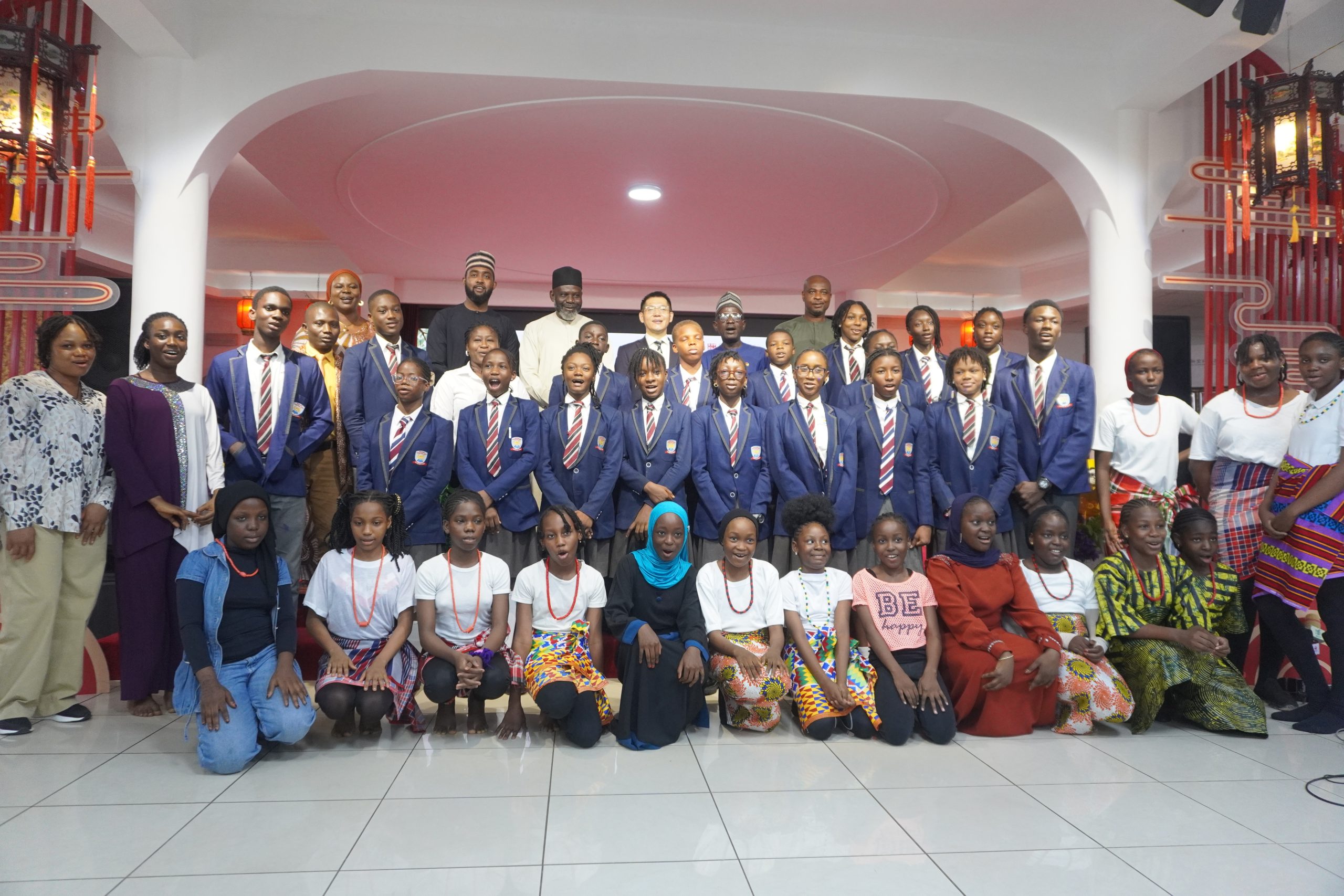
Nigeria and China have reiterated their shared commitment to strengthening cultural diplomacy and people-to-people relations through expanded artistic and educational exchanges.
This renewed pledge was made on Monday during the 2026 Panda Painting Interactive Experience, held at the China Cultural Centre in Abuja, under the theme “Hello Nigeria, 2026 Panda Painting Interactive Experience.”
The programme brought together pupils from schools across the Federal Capital Territory (FCT), alongside representatives of government institutions, members of the diplomatic corps, and stakeholders in the cultural and creative sectors.
Speaking at the event, Minister at the Chinese Embassy in Nigeria, Zhou Hongyou, said the giant panda remains a global emblem of peace, harmony, and friendship, noting that the initiative was designed to deepen mutual understanding between the peoples of Nigeria and China through creative engagement.
He explained that the event blended art, education, and cultural interaction, providing a platform for young Nigerians to explore Chinese cultural heritage while expressing their own artistic creativity.
Zhou further noted that the 2026 edition carries added significance, as it coincides with the 55th anniversary of diplomatic relations between Nigeria and China, as well as the China-Africa Year of People-to-People and Cultural Exchanges.
According to him, sustainable bilateral relations are built not only on economic and political cooperation but also on sustained cultural understanding and interpersonal connections.
He added that the Chinese Embassy, in collaboration with the China Cultural Centre, would continue to promote youth-focused cultural initiatives, language programmes, artistic collaborations, and educational exchanges aimed at nurturing future ambassadors of Nigeria–China friendship.
“The youth represent the future of our relationship. Through cultural interaction and mutual learning, we can build lasting friendships that will strengthen cooperation between our two countries for generations to come,” he said.
In his goodwill message, the Permanent Secretary of the Federal Ministry of Arts, Culture and the Creative Economy, Abdulkarim Ozi Ibrahim, commended the organisers for leveraging art as a tool for cultural diplomacy and international engagement.
He observed that artistic expression remains one of the most effective channels for bridging cultural and geographical divides, adding that the panda symbol resonates globally as a representation of peace, friendship, and environmental consciousness.
Ibrahim reiterated that cultural initiatives such as the Panda Art Experience complement diplomatic and economic relations by fostering mutual respect and deeper understanding among citizens of both countries.
He also reaffirmed the ministry’s commitment to supporting programmes that promote intercultural dialogue, creative innovation, and global partnerships within the creative economy.
Also speaking, the Director-General of the National Gallery of Art, Ahmed Bashir Sodangi, described the initiative as a strong example of how the arts can be deployed to strengthen international friendship and cooperation.
He noted that the panda has evolved into a global cultural icon symbolising goodwill, environmental awareness, and cultural diversity.
Sodangi commended the Chinese Embassy for consistently using cultural platforms to deepen bilateral relations, stressing that such engagements extend diplomacy beyond formal political and economic interactions.
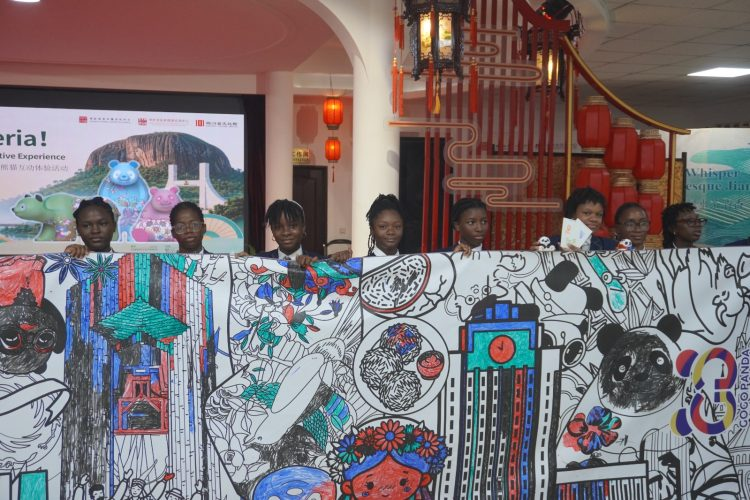
The event featured a range of interactive activities, including panda-themed painting sessions, a cultural creative market, collaborative graffiti art, craft workshops, and an interactive postcard and stamp collection tour.
See more photos below:








The Lagos State Government has partnered with a Chinese-led consortium to expand access to potable water across the state through the development of critical water infrastructure projects.
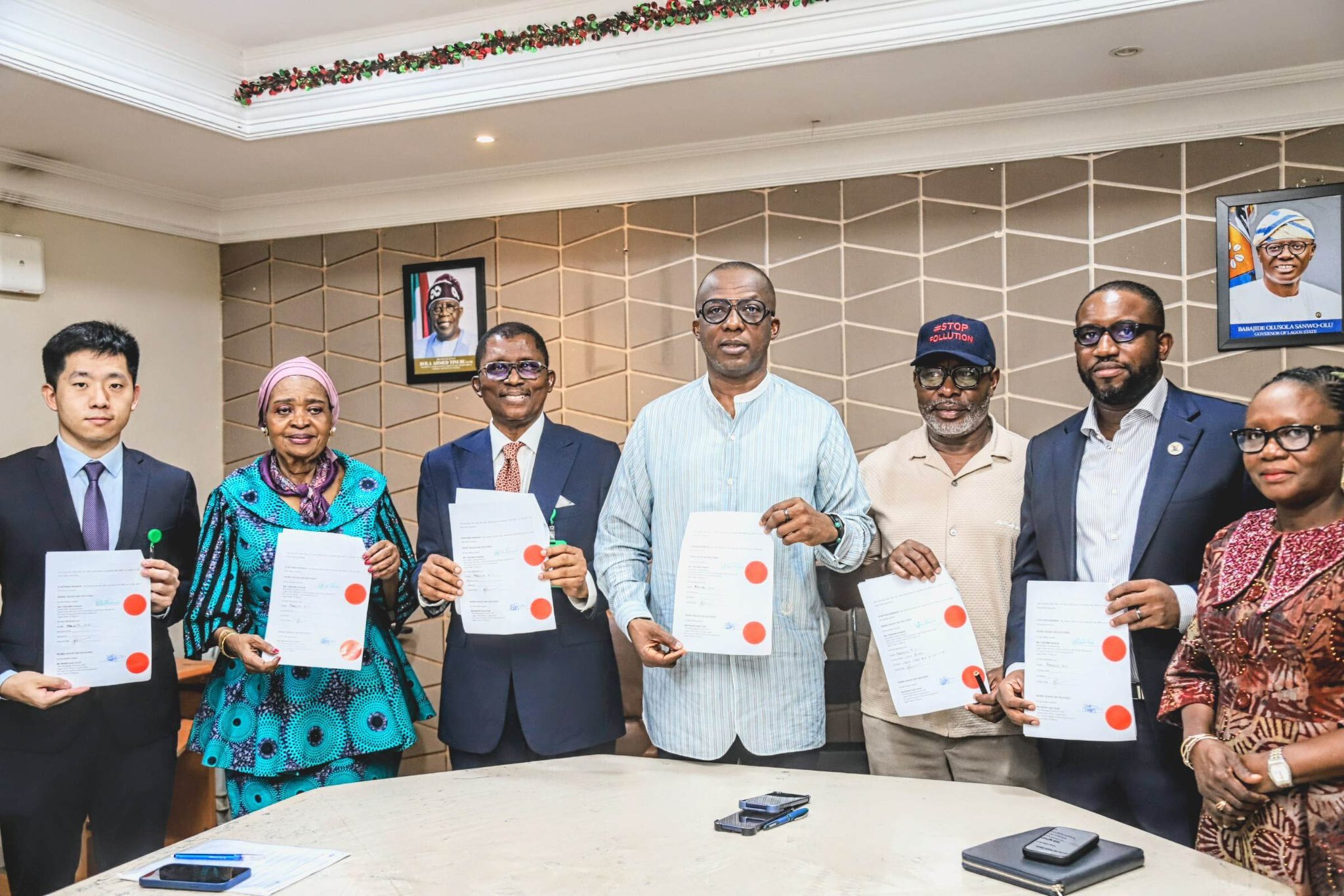
The partnership was formalised with the signing of a Memorandum of Understanding (MoU) between the Lagos State Government, China Harbour Engineering Company (CHEC) and Naston Engineering Nigeria Limited on Thursday, July 9, 2026, marking the commencement of the scoping and definition of key components of the state’s water infrastructure development.
According to a statement published by the Lagos State Government, the Commissioner for the Environment and Water Resources, Mr. Tokunbo Wahab, described the agreement as a significant milestone in the state’s efforts to strengthen water supply infrastructure and provide sustainable, safe and reliable potable water for its rapidly growing population.
Wahab explained that the one-year MoU establishes a collaborative framework for the development of two strategic project lots that will serve as the foundation for the next phase of water infrastructure expansion across Lagos.
He said the first project lot will focus on the installation of a water transmission pipeline beneath the Lagos Lagoon into the Lekki Concession Area, while the second will define downstream distribution activities, including metering and last-mile water connections within the concession area.
According to the commissioner, the engagement is expected to produce a comprehensive technical report and implementation framework that will guide the execution of the projects and facilitate the preparation of a concession agreement between the Lagos State Government and the consortium.
He noted that the exercise would also provide the technical and commercial framework required to move the projects into the implementation phase.
Speaking on behalf of Naston Engineering Nigeria Limited, the company’s Managing Director, Mr. Kole Funsho, expressed appreciation to the Lagos State Government for its confidence in the consortium, describing the MoU as the beginning of a process that would culminate in the delivery of a robust and bankable water infrastructure project.
Funsho said the agreement clearly outlines the scope of the proposed concession and reaffirmed the consortium’s commitment to delivering the required technical studies within the stipulated timeframe, or even ahead of schedule.
He disclosed that the consortium would prepare detailed engineering designs, project cost estimates and tariff structures needed to support the final concession agreement with the state government.
According to him, successful execution of the assignment will require close collaboration with the Ministry of the Environment and Water Resources and other relevant government agencies to obtain critical drainage and infrastructure data necessary to properly align the proposed transmission pipelines without disrupting existing roads, drainage systems and other public infrastructure.
Funsho expressed optimism that the partnership would pave the way for the successful implementation of the projects, significantly improving potable water supply and strengthening water infrastructure for residents across Lagos State.
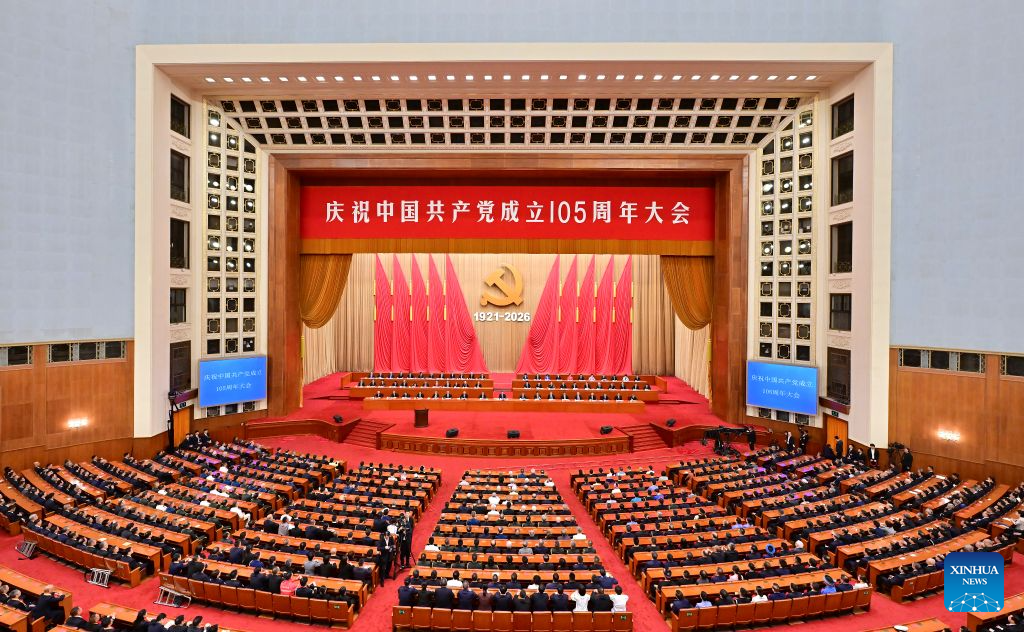
Chinese President Xi Jinping on Wednesday described the 105-year history of the Communist Party of China (CPC) as the “most magnificent epic” of the Chinese nation, urging Party members to remain steadfast in their convictions and press ahead with efforts to build China into a modern socialist country on schedule.
Speaking at a gathering commemorating the 105th anniversary of the founding of the CPC, Xi, who also serves as General Secretary of the CPC Central Committee and Chairman of the Central Military Commission, called on Party members to work tirelessly to fulfill the Party’s missions in the new era and on the new journey.
Founded in 1921 at a time when China faced foreign aggression, national weakness, and widespread poverty, the CPC has grown from just over 50 members into the world’s largest governing political party, with nearly 101.29 million members and more than 5.43 million primary-level Party organizations, according to the latest Party census.
Xi emphasized that the Party must remain committed to its basic theory, basic line, and fundamental policies while pursuing the goal of fully realizing socialist modernization by the middle of the century.
“Time stops for no one, and neither does history,” Xi said, urging Party members to “remain undaunted by passing clouds and stay on course through wind and waves.”
He stressed that the Party’s strength lies in its close ties with the people and called for renewed determination and enterprise in delivering on development goals.
“The whole Party must rely closely on the people to create new historical feats,” Xi said, encouraging members to “further reinvigorate the enterprising spirit for getting things done.”
Acknowledging the increasingly complex domestic and international environment, Xi warned that China must remain vigilant against growing risks and uncertainties.
“China’s development is now in a period where strategic opportunities coexist with risks and challenges, and where uncertain and unpredictable factors are on the rise. We must always be prepared to withstand major tests of high winds and raging waves, and even violent storms,” he said.
On the global stage, Xi noted that profound changes unseen in a century are accelerating, with the world entering a new period of turbulence and transformation. He reaffirmed China’s commitment to promoting the building of a community with a shared future for humanity through greater international cooperation.
Xi also underscored the importance of advancing full and rigorous Party self-governance and sustaining the fight against corruption, describing it as a “tough, protracted and all-out battle.”
“It is imperative that all of us in the Party never forget our original aspiration and founding mission, that we always stay modest, prudent, and hard-working, and that we have the courage and ability to carry on our fight,” he said.
As part of the anniversary celebrations, Xi presented the July 1 Medal, the Communist Party of China’s highest honor, to outstanding Party members in recognition of their exemplary contributions to the Party and the nation.
The event marked a significant milestone in the CPC’s history as it reaffirmed its commitment to national rejuvenation, modernization, and continued leadership in guiding China’s development amid evolving global challenges.
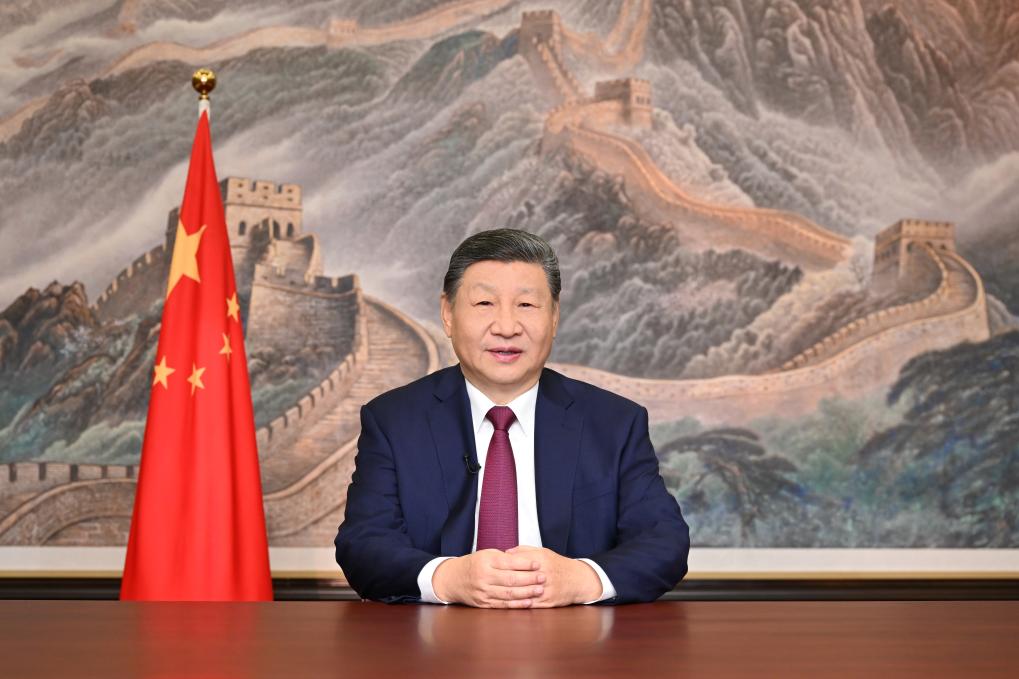
China’s State Council Information Office on Wednesday released a white paper titled “More Just and Equitable Global Governance: China’s Principles, Proposals and Actions,” outlining Beijing’s vision for reforming the international governance system and promoting a more inclusive global order.
The document presents China’s approach to addressing global challenges through multilateralism, international cooperation, and stronger representation for developing countries, particularly those in the Global South.
According to the white paper, the world is facing profound transformations marked by geopolitical tensions, economic fragmentation, climate change, technological disruptions, and widening development gaps. It argues that existing global governance mechanisms are increasingly struggling to respond effectively to these challenges.
The 36-page document emphasizes that the international system centered on the United Nations should remain the foundation of global governance, while calling for reforms to make international institutions more representative, equitable, and effective.
Central to the white paper is China’s Global Governance Initiative (GGI), introduced by Chinese President Xi Jinping in 2025. The initiative seeks to answer two key questions: what kind of global governance system the world needs, and how existing structures can be reformed and improved.
According to the document, the initiative has received support from nearly 160 countries and international organizations, with more than 60 countries joining the Group of Friends of Global Governance.
The white paper identifies five core principles underpinning China’s vision for global governance: sovereign equality, adherence to international law, multilateralism, a people-centered approach, and concrete action.
It stresses that all countries, regardless of size, strength, or level of development, should have equal rights to participate in global affairs. The document also advocates strict adherence to the purposes and principles of the UN Charter and opposes unilateralism, protectionism, and hegemonism.
China argues that global governance should not be dominated by a small number of developed countries and calls for stronger voices and greater representation for developing nations. The paper notes that the Global South now accounts for over 60 percent of the global economy based on purchasing power parity and contributes around 80 percent of global economic growth.
The white paper highlights China’s contributions to international peace and development, describing the country as a builder of world peace, contributor to global development, defender of international order, and provider of public goods.
Among the initiatives highlighted are the Global Development Initiative, Global Security Initiative, and Global Civilization Initiative, which together with the Global Governance Initiative form what China describes as a comprehensive framework for addressing global challenges.
The document points to China’s participation in United Nations peacekeeping operations, support for conflict mediation, promotion of high-quality Belt and Road cooperation, and efforts to advance sustainable development.
It also highlights China’s role in climate governance, noting the country’s commitment to peak carbon emissions before 2030 and achieve carbon neutrality before 2060. The white paper further emphasizes China’s efforts in artificial intelligence governance, biodiversity conservation, public health cooperation, and digital governance.
On international reform, the paper advocates greater representation for developing countries in institutions such as the UN Security Council, the International Monetary Fund, and the World Bank. It specifically calls for addressing what it describes as historical injustices faced by Africa through enhanced representation in global decision-making bodies.
The white paper underscores China’s support for true multilateralism and its opposition to bloc politics and power-based international relations. It argues that global affairs should be discussed by all countries, governance systems built collectively, and development outcomes shared by all.
In the document, China calls on countries to work together to build a community with a shared future for humanity, emphasising that cooperation, dialogue, and mutual respect remain the most effective pathways for addressing the complex challenges facing the world.


PDP REAFFIRMS ABSOLUTE CONFIDENCE IN CHIEF AONDOAKAA
NDVC Dismisses Claims Linking Amagbein to ADC, Reaffirms Support for Tinubu
DSS Untreads The Old Path
-

 News18 hours ago
THE MONEY THAT NEVER MOVEDHow Nigeria’s Expenditure Controls Prevented the PEAC/PFIPC Appropriation from Becoming Public Expenditure
-

 News20 hours ago
SECOND TERM IS NOT A BIRTHRIGHT: ALIA SET TO JOIN THE LIST OF GOVERNORS WHO FELL
-
Uncategorized7 hours ago
NDVC Dismisses Claims Linking Amagbein to ADC, Reaffirms Support for Tinubu
-
Uncategorized17 hours ago
DSS Untreads The Old Path
-
 News7 hours ago
PDP REAFFIRMS ABSOLUTE CONFIDENCE IN CHIEF AONDOAKAA
You must be logged in to post a comment Login