
Business
Consumers Can Sell Excess Solar Power to Discos Under New NERC Regulation


By Abigail David
The Nigerian Electricity Regulatory Commission (NERC) has commenced implementation of the Net Billing Regulations 2026, a policy that allows eligible electricity consumers with renewable energy systems to sell surplus power generated from their installations to electricity distribution companies (Discos).
The new framework is designed to encourage the adoption of renewable energy, attract private investment in power generation, and increase electricity supply through distributed generation.
In a public notice issued on Wednesday, NERC said the regulation enables eligible customers, referred to as “prosumers,” to generate electricity for their own consumption and export excess energy to the distribution network under a net billing arrangement.
According to the commission, participants must operate renewable energy systems with installed capacities ranging from 50 kilowatt peak (kWp) to 1.5 megawatt peak (MWp), making the scheme primarily suitable for medium- and large-scale consumers.
Under the arrangement, electricity generated from solar installations will first be used by the customer. Any excess power can then be supplied to the distribution network through bidirectional meters that record both imported and exported electricity.
NERC stated that exported energy will be credited based on tariffs approved by the commission, creating an opportunity for businesses and institutions with large solar installations to earn revenue from unused electricity.
The commission said the initiative aims to promote renewable energy adoption, improve energy security, encourage private sector participation in power generation, reduce greenhouse gas emissions, and support the integration of renewable energy into distribution networks.
Experts believe the scheme could benefit factories, universities, hospitals, shopping malls, telecommunications facilities, industrial estates, and other large organisations that often generate surplus solar power during periods of low demand.
To participate, customers must be connected to a Disco’s network, meet technical and regulatory requirements, obtain approval from their distribution company, sign a net billing agreement, and register with NERC.
Applicants will also undergo a technical feasibility assessment before approval. Successful participants will be provided with bidirectional metering infrastructure required for the programme.
The regulation comes as households and businesses increasingly turn to alternative energy sources amid persistent challenges in Nigeria’s electricity sector, including inadequate generation, transmission bottlenecks, and distribution constraints.
NERC said the framework is expected to unlock private investment in renewable energy while supporting Nigeria’s broader energy transition objectives.



By Abigail David
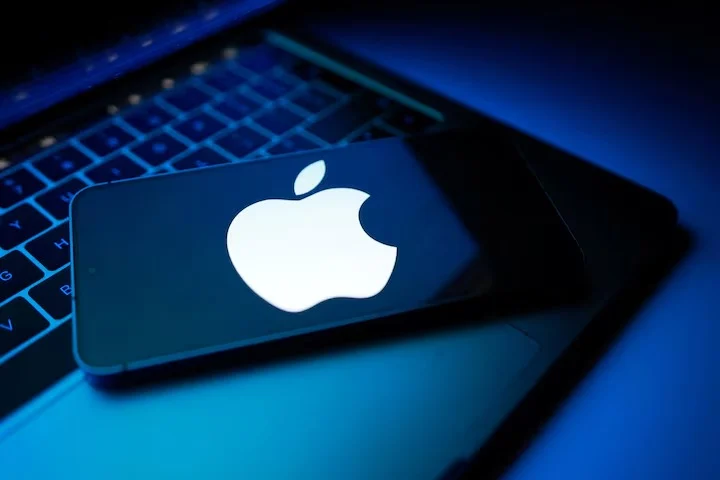
Apple will change how third-party apps seek users’ consent for personalised advertising on iPhones and iPads after Germany’s competition regulator raised concerns about the company’s treatment of competing apps.
The Bundeskartellamt said Apple had offered binding commitments to address the concerns, bringing its competition investigation to an end.
The regulator said Apple’s App Tracking Transparency framework required third-party app providers to obtain additional consent through Apple-designed prompts for certain types of cross-company data use. However, the requirements did not apply in the same way to Apple’s own services.
Bundeskartellamt President Andreas Mundt said Apple could provide strong privacy protections, but its rules should not give its own products an advantage over competitors.
Under the new commitments, Apple will make consent prompts for its own services and third-party apps more similar. It will also remove wording and symbols that could discourage users from granting consent to third-party apps.
App developers will have greater flexibility to combine Apple’s consent requests with those required under data protection laws, provided the process remains clear to users.
The regulator stressed that the changes are not intended to increase consent rates for personalised advertising but to ensure users can make free and informed choices.
Apple has four months to implement the changes. The commitments will remain in force for seven years and will be monitored by an independent trustee.
The investigation began in June 2022 after the regulator found Apple held a position of paramount significance across markets. Germany’s Federal Court of Justice confirmed the finding in March 2025.

By Abigail David
The Nigerian National Petroleum Company Limited (NNPC Ltd) has deployed more than 1,000 young professionals into its workforce following the successful completion of a one-year internship, training and evaluation programme.
The Group Chief Executive Officer of NNPC Ltd, Bayo Ojulari, announced the development in a post shared on the company’s official social media platforms, describing it as a significant milestone for the national energy company.
According to Ojulari, the new employees were selected after completing a rigorous programme that combined practical internships, intensive training and performance assessments.
He said the recruitment process reflected the company’s commitment to merit-based employment, stressing that competence and performance, rather than personal connections or background, determined successful candidates.
Ojulari noted that while the participants initially joined the organisation through offer letters, their permanent deployment was earned through consistent performance during the internship period.
He encouraged the newly deployed employees to contribute innovative ideas, take ownership of their professional development and actively support the company’s growth.
The NNPC chief also urged them to remember the opportunities they had received and, in the future, help create similar opportunities for others.
The deployment is part of NNPC Ltd’s ongoing efforts to strengthen its workforce and build capacity following its transition into a commercially driven national energy company under the Petroleum Industry Act.
The recruitment exercise began in July 2024 during the tenure of former Group Chief Executive Officer Mele Kyari.

Billionaire businessman Femi Otedola has increased his ownership in First HoldCo Plc after acquiring an additional 1.77 billion shares through his investment company, Calvados Global Services Limited.
According to a regulatory filing on the Nigerian Exchange (NGX), the transaction, valued at N222.20 billion, was completed on Thursday.
The latest purchase raises Otedola’s shareholding from 9.99 billion shares to 11.77 billion shares, increasing his stake in the financial institution from 21.96 percent to 25.88 percent.
The acquisition follows another major investment made on July 22, when Otedola purchased 706.13 million shares worth N77.58 billion, further strengthening his position as the bank’s largest shareholder.
With the latest transaction, his total investment in First HoldCo is now estimated at approximately N1.47 trillion, making him the institution’s single largest investor.
Under the Investments and Securities Act and the Securities and Exchange Commission’s merger and acquisition regulations, any shareholder who acquires 30 percent or more of the voting shares in a publicly listed company is required to make a mandatory takeover offer to other shareholders.
The increased investment comes weeks after First HoldCo became Nigeria’s most valuable listed banking stock by market capitalisation, surpassing Zenith Bank following sustained gains in its share price on the Nigerian Exchange.


Police Academy Wudil Gets New Commandant

Nigerian Farmers Commend Gettado’s Leadership of AFAN

Kogi Government Commends Foundation for Rebuilding Community Secondary School
-
 Business23 hours ago
Apple to change app consent rules after German regulator’s concerns
-
 News23 hours ago
Nigerian Farmers Commend Gettado’s Leadership of AFAN
-

 News17 hours ago
Security Collaboration Boosts Delta’s Peace, Economic Growth, Oborevwori Says
-

 News12 hours ago
Use Ugwuele Artefacts to Promote Igbo Unity, Prof Madubuike Urges Ohanaeze
-

 News23 hours ago
Gov Kefas Sends Taraba Lawmakers, LG Chairmen to Jaji for Leadership Course
-

 Lifestyle22 hours ago
What Can You Become After Studying Political Science in Nigeria? 15 Career Paths to Consider
-
 News18 hours ago
Foreign Affairs Minister Appoints Elesho, Oni as New Media Aides
-

 News20 hours ago
Group Threatens Legal Action Against Akutah Over Alleged Breach of Presidential Directive
You must be logged in to post a comment Login