
Lifestyle
What Can You Become After Studying Political Science in Nigeria? 15 Career Paths to Consider


By Abigail David
A Political Science degree in Nigeria can open doors to far more careers than politics and government. Graduates can work in banking, policy, media, law, consulting, NGOs, risk management, research, corporate affairs and other sectors.
Political Science teaches students about government, public policy, society and decision-making. It also develops transferable skills such as research, critical thinking, communication, analysis and problem-solving.
Here are 15 career paths Political Science graduates can consider:
- Policy Analyst: Research policies and provide recommendations to governments, NGOs, think tanks and consulting firms.
- Political Analyst: Analyse elections, government decisions, public opinion and political developments for media organisations and research institutions.
- Government Relations and Public Affairs: Help companies understand regulations and manage relationships with government agencies and other stakeholders.
- Risk and Political Risk Analyst: Assess how elections, policy changes, regulations and political developments could affect businesses and investments.
- Intelligence Analyst: Examine information and assess political, security and geopolitical risks.
- Legislative Assistant or Political Adviser: Support lawmakers and government officials with research, policy analysis and briefing materials.
- Corporate Affairs and Communications: Handle public relations, stakeholder engagement, corporate communications and government relations.
- NGO and Development Work: Build careers in advocacy, governance, human rights, education, research, programme management and community development.
- Journalism and Media: Political Science graduates can work as reporters, researchers, editorial writers and political commentators.
- Research and Think Tanks: Work on research involving governance, elections, security, public policy and development.
- Political Consulting: Support campaigns through public opinion research, strategy, political communication and voter analysis.
- Law: A Political Science degree can provide a foundation for further legal education and careers in areas such as constitutional, corporate and public-interest law.
- Banking and Financial Services: Graduates can pursue roles in customer relations, business development, compliance, research, operations and corporate affairs.
- International Relations and Diplomacy: Opportunities exist in government institutions, embassies, international organisations and development agencies.
- Data, Research and Market Intelligence: Additional skills in Excel, Power BI, SQL and statistical tools can help graduates move into data-driven research and market intelligence roles.
How to make a Political Science degree more valuable
The degree itself may not be enough to guarantee employment. Graduates can improve their prospects by developing practical skills in data analysis, research, communication, project management, digital tools and professional writing.
Political Science graduates can find opportunities across government agencies, banks, telecommunications companies, oil and gas firms, consulting companies, NGOs, media organisations, technology companies and multinational corporations.
Ultimately, studying Political Science does not mean you must become a politician. The degree provides a foundation that can be combined with practical skills to build a career in both the public and private sectors.
BY Abigail David
Many indigenous Nigerian fruits are gradually becoming difficult to find due to deforestation, urbanisation, climate change and changing farming practices. Once common in villages, forests and local markets, several of these fruits are now disappearing from everyday life, leaving many younger Nigerians unfamiliar with them.
As forests continue to shrink and more land is cleared for housing and agriculture, experts warn that many native fruit trees are at risk. Here are 12 indigenous Nigerian fruits that are slowly disappearing.
1. Black Tamarind


Unlike the common tamarind, black tamarind is a rare local variety with a sweet-and-sour flavour. It was once a favourite childhood snack in many parts of Nigeria but is now becoming increasingly scarce.
2. Hog Plum (Ogogo)


Known as Ogogo in some communities, hog plum produces juicy, tangy fruits that grow on tall trees. Urban development and widespread tree felling have greatly reduced its availability.
3. Bush Mango (Ugiri)


Bush mango is highly valued across southern Nigeria for both its fruit and seeds. While the fruit is eaten fresh, its seeds are widely used to prepare traditional soups.
4. Rose Apple


Rose apple is recognised by its bell-shaped appearance, crisp texture and refreshing taste. Although it still grows in some areas, it has become increasingly rare.
5. Mbembe (Wild Black Plum)


Mbembe is a seasonal fruit popular in southern Nigeria. Its naturally sweet taste makes it a favourite among children, but the trees are becoming harder to find.
6. African Bush Pear (Ube)


Also known as African pear or ube, this fruit is usually roasted or softened in warm water before eating. Habitat destruction has reduced the number of wild trees.
7. Yellow Monkey Kola


Yellow monkey kola is a bright yellow fruit known for its nutritional value and mildly sweet taste. It was once common in local markets but is now much less available.
8. Bush Cherry (Ubene)


Ubene produces small fruits with a unique flavour and is commonly found in forested areas. As forests continue to disappear, so do the trees that bear this fruit.
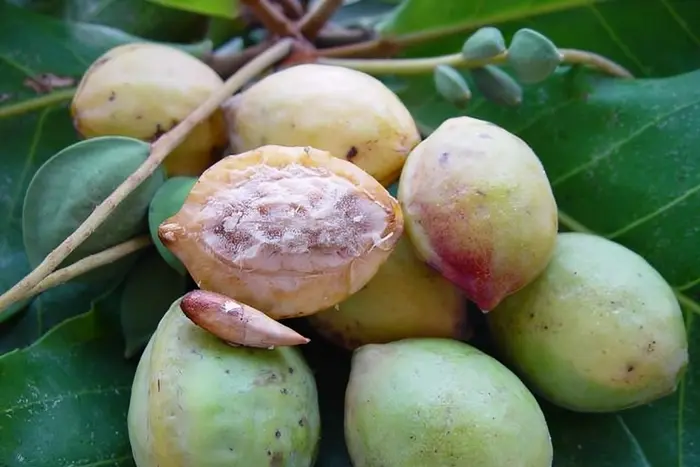
9. Tropical Almond (Ebelebo)


The tropical almond tree is widespread across tropical regions, but indigenous varieties known locally as Ebelebo are becoming increasingly uncommon.
10. Red Monkey Kola


Red monkey kola is closely related to the yellow variety and has long been enjoyed as a nutritious snack. However, fewer trees are now being cultivated.
11. Pepper Fruit (Dennettia)


Pepper fruit has a distinctive spicy taste and is commonly eaten fresh or used in traditional medicine. It remains popular in parts of southeastern Nigeria but is gradually becoming less common.
12. African Walnut (Tetracarpidium conophorum)


African walnut is prized for its nutritious seeds, which are usually boiled before consumption. Although still cultivated in some regions, production has declined due to habitat destruction and reduced cultivation.
Preserving Nigeria’s Indigenous Fruits
Nigeria’s indigenous fruits are an important part of the country’s cultural and agricultural heritage. Protecting these species through conservation, tree planting and sustainable farming practices will help ensure that future generations can continue to enjoy these unique native fruits rather than only hearing stories about them.


What Can You Become After Studying Political Science in Nigeria? 15 Career Paths to Consider

Ronaldo Says 2026 Will ‘Probably’ Be His Final Year in Football

Why I Married Cristiano Ronaldo in Our Living Room – Georgina Rodriguez

-
News17 hours ago
ZACCH ADEDEJI, AND THE COMMON MAN’S WELFARE
-

 News6 hours ago
Benue Attack: Three Killed, Four Injured in Ukum Community
-

 News7 hours ago
Ibeno Traditional Council Tasks New Village Heads on Peace, Unity
-
News4 hours ago
Peace Returns to Benue’s Agatu as Residents Resume Farming
-

 News7 hours ago
FG Prioritises Security, Diaspora Partnerships for Nigeria’s Development
-
News5 hours ago
GENERAL OLUYEDE: MIRRORING THE INTERPLAY OF COOPERATION AND SYNERGY IN NIGERIAN ARMED FORCES’ SUCCESSES
-
News6 hours ago
EYESAN: THE RETURN OF THE NATIVES
-

 News7 hours ago
SWAN: Christina Bawa Assumes Leadership of Women Accountants in Jos
You must be logged in to post a comment Login