
Opinion
The Evaluation of National Security in this 21st Century


By Abu Jemimah Lami
National security in the 21st century has become far more complex than the traditional idea of defending a country from external military attack. In earlier centuries, national security was mainly measured by the strength of a nation’s army, weapons, and territorial control.
Today, however, security challenges are broader, interconnected, and often unpredictable. Modern national security now includes economic stability, cyber protection, food security, energy supply, intelligence gathering, public health, environmental safety, and social cohesion.One of the major features of 21st-century national security is the rise of asymmetric threats.
Many countries are no longer facing only conventional wars between states. Instead, they confront terrorism, insurgency, banditry, cybercrime, transnational organized crime, piracy, and misinformation campaigns. Non-state actors now possess the ability to destabilize nations using technology, propaganda, and irregular warfare.
Groups with limited military power can still create massive fear and economic disruption through attacks on civilians, critical infrastructure, or digital systems.Technology has significantly transformed the security landscape. The internet and digital communication have improved intelligence sharing and military coordination, but they have also created new vulnerabilities.
Cybersecurity has become one of the most important aspects of national security because governments, banks, military institutions, hospitals, and power systems depend heavily on digital networks. Cyberattacks can disrupt elections, steal classified information, damage economies, and weaken public trust in government institutions. The growing use of artificial intelligence, drones, and surveillance systems has also changed the way nations detect and respond to threats.
Another defining issue in modern security is the connection between economic conditions and insecurity. Poverty, unemployment, inequality, and poor governance often create fertile ground for violence and criminality. In many developing countries, frustrated youths are easily recruited into extremist groups, militias, kidnapping networks, or cybercrime activities. This means that national security can no longer rely solely on military force. Governments must combine kinetic measures with non-kinetic approaches such as job creation, education, social inclusion, and community engagement.
Globalization has further complicated national security. Events in one region can quickly affect countries thousands of kilometers away. Conflicts, pandemics, and economic crises now have international ripple effects. The COVID-19 pandemic demonstrated that public health is also a national security issue.
Many countries experienced economic shutdowns, social unrest, and pressure on healthcare systems. Similarly, conflicts such as the Russo-Ukrainian War and tensions in the Middle East have affected global food prices, fuel costs, and supply chains. These realities show that national security today requires strategic planning beyond military defense alone.Climate change has also emerged as a serious security concern in the 21st century.
Desertification, flooding, droughts, and resource scarcity contribute to migration, communal clashes, and humanitarian crises. In parts of Africa, competition over land and water has intensified farmer-herder conflicts. Environmental degradation therefore has direct implications for peace and stability.For countries like Nigeria, national security challenges are multidimensional.
The country faces terrorism in the North-East, banditry and kidnappings in the North-West, communal violence in the Middle Belt, separatist agitations in the South-East, oil theft in the Niger Delta, and urban crime in major cities. These threats reveal weaknesses in intelligence coordination, border management, law enforcement, and socio-economic development.
Military operations remain necessary, but they are insufficient on their own. Effective security in the modern era requires stronger intelligence systems, improved policing, youth empowerment, regional cooperation, and trust between citizens and the state.The role of intelligence has become increasingly important in modern security architecture.
Human intelligence, signal intelligence, satellite monitoring, and data analysis help governments prevent attacks before they occur. Nations that invest in early warning systems and information sharing are often more successful in countering threats. However, intelligence efforts must also respect human rights and the rule of law to avoid creating further grievances among citizens.
International cooperation is another major pillar of 21st-century security. Terrorism, cybercrime, arms trafficking, and illegal migration often cross borders. No nation can effectively address these threats in isolation. Regional organizations and international alliances therefore play important roles in intelligence sharing, peacekeeping, and coordinated responses to crises.
In evaluating national security in the 21st century, it is clear that security can no longer be viewed only through the lens of military strength. A nation may possess powerful weapons yet remain vulnerable because of economic instability, weak institutions, unemployment, corruption, or social division. True national security in this century depends on the ability of a state to protect both its territory and the well-being of its people.
Ultimately, the most secure nations in the modern world are not necessarily those with the largest armies, but those with resilient institutions, informed citizens, technological capacity, economic opportunities, and inclusive governance. The 21st century has shown that national security is no longer only about defending borders; it is about securing the future of society as a whole.
Abu Jemimah Lami is a graduate of History and International Studies from IBB University, Lapai, and a Corps Member serving with the Institute for Peace and Conflict Resolution (IPCR), Abuja. She can be reached via jemimahabu36@gmail.com.






By Amjad M. Nyei
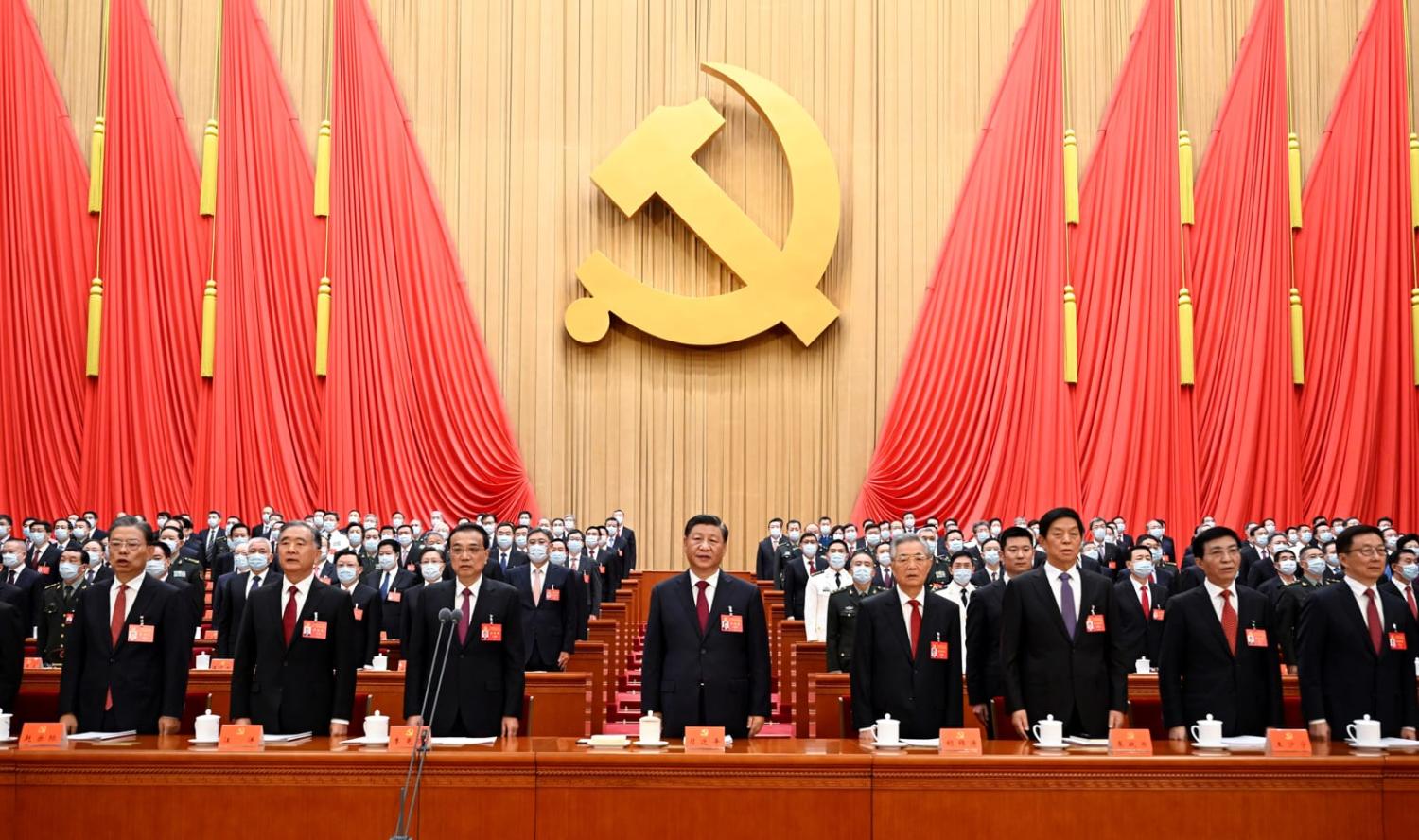
I studied in China from 2008 to 2016, attending universities in Jiangxi and Hubei Provinces—two regions closely associated with the Chinese Revolution that ultimately gave birth to the People’s Republic of China. Those eight years were both academically enriching and personally transformative. I witnessed firsthand the deep sense of patriotism among the Chinese people, as well as the respect they generally accorded to their governing institutions. Many of my classmates were committed members of the Communist Party of China (CPC) or actively participated in Party-related activities. The CPC’s presence was visible throughout university campuses. Red banners displaying educational slogans were common sights, carrying messages such as, “China’s Civilization Starts with Me,” “At the national level: Democracy, Civility, and Harmony; at the social level: Freedom, Equality, and Justice; at the individual level: Dedication, Integrity, and Friendliness.” These slogans constantly reminded citizens of their civic responsibilities while reinforcing the government’s commitment to national development and social cohesion.
One memorable experience during my stay in China was the celebration of the 60th anniversary of the founding of the People’s Republic of China at Nanchang University. The entire campus was filled with excitement, pride, and patriotism. Students devoted countless hours to rehearsing for the university’s grand gala, eager to contribute to the national celebration. On the evening of the event, the atmosphere was electric. The audience was treated to breathtaking cultural dances, moving poetry recitals, and theatrical performances depicting key moments of the Chinese Revolution. It was more than a celebration of history; it was a powerful expression of national identity and collective purpose. Witnessing such a profound display of unity and patriotism gave me a deeper appreciation of the values that have shaped modern China and continue to influence its remarkable development.
A party committed to state and its people has been diligently carrying out its responsibilities in spite numerous competing priorities.
A brief Historical Context and Modern Realities
The Chinese Communist Party (CPC) is the largest and one of the most powerful political organizations in the world and has played a crucial role in initiating most of the major reforms in China, especially during the period after 1970. Political party system is imported to China; the CPC is a Chinese cultural product: it is an entirely different breed of political party from those in the West. However, since the 1970s, reforms and open-door policy, the CPC has been enabled to accommodate various elements of democracy. This is termed, democracy with Chinese characteristics.
Founded in 1921 in the eastern Chinese city of Shanghai, the CPC has gone through dramatic transformation in its century of existence. With an initial membership of 53 people, the party has survived the political onslaughts of the KTM in the 1920s and 1930s and expanded drastically in subsequent decades1. Under the astute leadership of leadership Mao Zedong, the CPC became the ruling party of the People’s Republic of China (PRC) in 1949.
The party can be credited for unification and sovereignty of the China- ending the decades-long warlordism and civil war; established a centralized state controlling the mainland. The CPC has pushed for institutional continuity- building durable party-state institutions, including, party committees, the People’s Liberation Army (PLA), and the bureaucracy which has governed a population over a billion for seven plus decades. More importantly asserting territorial integration has been of major achievement of the party, integrating (e.g., Tibet and Xinjiang) into the PRC control and negotiated the return of Hon Kong and Macau in 1997 and 1999 respectively.
Meanwhile, economic and transformation and development, as well as science and technology innovation has been on the double in China, all thanks to the intentional plans and reforms of the CPC. China has sustained rapid GDP growth and poverty reduction orchestrated through high-growth policies since the late 1970s that lifted hundreds of millions out of extreme poverty. Industrialization and urbanization coupled with infrastructure built out has been strongly emphasised and implemented through competent structures of the CPC. China’s development journey is inseparable from the Party’s leadership. Over the past century, the Party has consistently renewed and strengthened itself, enabling it to lead the Chinese people through revolutions, construction and reform, and to usher in the historic achievements and transformations of the new era.
The CPC in 1921 vs the CPC in 2026: a Journey in Time
The Communist Party of China (CPC) has undergone one of the most remarkable transformations in modern political history. Organised by a small group of intellectuals and revolutionaries, the Party emerged during a period of profound national crisis characterized by political fragmentation, foreign intervention, and socioeconomic instability. With fewer than one hundred members at its inception, the CPC was primarily concerned with promoting Marxist ideology and mobilizing support for revolutionary change. Its early years were marked by political struggle, organizational development, and efforts to establish itself as a viable force within a rapidly changing China.
By contrast, the CPC of 2026 stands is the governing party of the People’s Republic of China and one of the largest political organizations in the world, with a membership exceeding one hundred million. Over the course of a century of existence, the Party evolved from an underground revolutionary movement into a highly institutionalized governing body responsible for administering the affairs of a nation of more than 1.4 billion people. Through successive historical phases—including the revolutionary era, socialist construction, reform and opening-up, and modernization—the CPC has adapted its policies and structures to address changing domestic and international realities while maintaining its central leadership role.
The differences between the CPC of 1921 and that of 2026 extend beyond scale and political influence. The Party’s principal objective in 1921 was the pursuit of revolutionary transformation and the overthrow of existing political structures. In 2026, however, its responsibilities encompass economic management, technological innovation, environmental sustainability, social governance, national security, and international affairs. China’s emergence as a major global economic and diplomatic actor has significantly expanded the Party’s role, requiring it to navigate complex challenges associated with globalization, development, and geopolitical competition.
Despite these profound changes, certain elements of continuity remain evident throughout the CPC’s historical journey. The Party continues to emphasize national development, political stability, and the pursuit of long-term strategic goals. While the CPC of 1921 sought to transform China through revolution, the CPC of 2026 seeks to advance national rejuvenation through governance and modernization. The century-long evolution from a small gathering of revolutionary activists to the leadership of a global power illustrates not only the adaptability of the Party but also the broader transformation of China itself, making the CPC’s development one of the most significant political narratives of modern times.
Western scholarship False Prediction of the CPC
A substantial body of Western political science literature has, at different intervals, forecasted the potential collapse or fragmentation of the Communist Party of China (CPC). Among the most cited voices in this baseless discourse are Gordon G. Chang, David Shambaugh, Roderick MacFarquhar, and Susan Shirk. Though differing in analytical depth and predictive certainty, their works collectively reflect a recurring “fragility thesis” in China studies—namely, that the structural contradictions of governance, economic imbalance, and elite political stress could culminate in regime breakdown. Gordon G. Chang’s 2001 argument remains the most direct collapse prediction, asserting that China’s entry into global capitalism would destabilize the Party-state and lead to imminent systemic failure. In contrast, Shambaugh and Shirk adopt more cautious tones, emphasizing erosion, fragility, and governance strain rather than immediate collapse.
David Shambaugh’s 2015 essay “The Coming Chinese Crackup,” argues that the CPC had entered a late-stage decline characterized by ideological decay, elite disunity, pervasive corruption, and diminishing governance capacity. While he later moderated his claims, Shambaugh maintained that the Chinese political model was not guaranteed indefinitely and that internal contradictions could eventually overwhelm institutional control. Susan Shirk similarly highlights the paradox of a strong yet brittle state, arguing that China’s centralized authority coexists with deep structural vulnerabilities, particularly in bureaucratic accountability, corruption control, and crisis responsiveness. Her analysis frames China as a “fragile superpower,” suggesting that external strength may conceal internal institutional stress. In today’s China, however, it is difficult that these arguments would be sustained. There has been massive improvement in the fight against corruption since President Xi took the helm of power in China. The Party has disciplined millions of officials and high-ranking elites to ensure the elimination of institutional graft. China has the quickest crisis responsiveness amongst the UNSC members. The 2008 devastating earthquake in Sichuan and the rapid response to the 2020 COVID-19 virus are evidence of China preparedness to combat challenges both at home and abroad. This speaks contrarily to Western criticism.
Another western writer on the issue is Roderick MacFarquhar. His contributions are more historical and structural than predictive, focusing on elite politics, ideological struggle, and the volatility of Maoist governance—especially during the Cultural Revolution period. His work underscores how factionalism, ideological radicalism, and leadership instability have historically threatened systemic coherence within the CPC. While MacFarquhar does not explicitly predict imminent collapse, his analysis of recurring elite conflict and ideological turbulence is often incorporated into broader arguments about regime fragility and potential systemic breakdown.
Despite these influential arguments, the contemporary reality of China in 2026 presents a striking counterpoint. Far from collapse, the CPC remains the central governing institution of a highly consolidated political system and the steward of the world’s second-largest economy. China has achieved sustained industrial upgrading, technological advancement in sectors such as artificial intelligence and green energy and expanded global economic influence through initiatives such as the Belt and Road framework. Politically, the CPC has strengthened internal discipline through extensive anti-corruption campaigns and reinforced centralized leadership under President Xi Jinping. Globally, China has emerged as a major strategic actor shaping trade networks, infrastructure investment, and multilateral diplomacy. This trajectory does not suggest systemic fragmentation, but adaptive resilience and institutional consolidation.
The juxtaposition between collapse-oriented scholarship and China’s contemporary trajectory highlights a central tension in political discourse: the difficulty of projecting the party-state durability systems undergoing rapid transformation. The CPC’s continued survival and expansion of state capacity suggest a more glaring reality- i.e., the purposeful leadership and rejuvenation agenda of the party and government. Rather than collapsing under internal contradictions, the Chinese political system has demonstrated a capacity for adaptation, institutional learning, and reform. This divergence between prediction and outcome underscores the importance of distinguishing between structural vulnerability and actual regime performance in comparative political analysis.
Lesson for African Development and Political Leadership
The developmental track record of the Communist Party OF China (CPC) offers a significant comparative reference for understanding state-led transformation in the Global South. From its emergence in 1921 to its consolidation of power and subsequent economic reforms, the CPC has demonstrated how long-term political continuity can shape developmental outcomes. For many African states, which continue to grapple with colonial legacies, institutional fragility, and uneven economic growth, China’s experience presents both an analytical model and a policy reference point. Scholars of comparative politics often highlight the importance of governance structures in explaining divergent development paths between East Asia and Africa.
A central lesson from the Chinese experience is the role of state capacity and political stability in enabling sustained development. The CPC has maintained a strong, centralized governing structure capable of implementing long-term development strategies with relatively high policy continuity. This has allowed China to pursue infrastructure expansion, industrialization, and poverty alleviation programs over multiple decades without major disruption. In contrast, many African countries face challenges of policy discontinuity due to electoral turnover, bureaucratic inefficiency, and political instability, and most recently, the wave of military takeovers. All of these put together hinder long-term planning and implementation. Strengthening institutions that ensure continuity in development planning may therefore be a critical priority for governance systems in Africa.
Another important lesson lies in China’s strategic use of state-led market reforms. Rather than adopting a rapid transition to liberal market capitalism, the CPC implemented gradual economic reforms under strong political control, particularly after 1978. This hybrid model enabled China to integrate into the global economy while maintaining domestic political stability and directing investment toward priority sectors such as infrastructure, manufacturing, and technology. For African economies, this suggests that selective state intervention—particularly in strategic sectors—may complement private sector development rather than oppose it. However, such an approach requires effective institutions, competent bureaucracy, and mechanisms to reduce corruption and inefficiency.
In conclusion, the Communist Party of China experience offers both practical insights and normative challenges for African development and political leadership. It underscores the importance of political stability, strategic planning, and strong state institutions in achieving sustained economic transformation. Contrary to West political thoughts and arguments, the CPC has no internal risk of collapse but strong well and determination to provide the basic needs for the state and people. For Africa, the most productive lesson is not imitation of the Chinese model, but the selective adaptation of its developmental strengths in ways that align with local political realities and democratic aspirations. This 105th anniversary of the CPC, come with greater opportunity for broader cooperation and for China-Africa cooperation within the framework of FOCAC and the Belt and Road Initiative.
Long live the CPC and the People of China.
Amjad M. Nyei is a China-trained scholar

When we talk about security in Nigeria, the images that flash across our minds are almost always kinetic. We think of columns of military trucks kicking up dust in the Northeast, police checkpoints along our expressways, and bold newspaper headlines detailing the latest tactical operations against bandits and secessionists.
For decades, our national strategy has been to fight fire with fire. But as any fire chief will tell you, if you don’t douse the embers and fix the faulty wiring, the building will eventually catch fire again.This is exactly where the Institute for Peace and Conflict Resolution (IPCR) comes in.
Nestled in Abuja but operating silently across all six geopolitical zones, IPCR is Nigeria’s official peacebuilding think-tank. While our brave armed forces are trained to suppress violence after it erupts, IPCR is designed to stop it from happening in the first place.If we are ever going to break the cycle of insecurity in Nigeria, we must stop treating the IPCR as an obscure government agency and start positioning it as the ultimate focal point of our national security strategy.
Established in the year 2000 under the Ministry of Foreign Affairs, the IPCR is mandated to research the root causes of conflicts, provide policy roadmaps for the government, and directly intervene to broker peace.To understand why the IPCR is so vital today, look no further than its recent rollouts and strategic partnerships. The agency has been upgrading Nigeria’s National Conflict Early Warning System (NEWS). Think of this system as a digital weather forecast, but for human conflict. By monitoring structural triggers, such as local governance deficits, youth unemployment, and the intersection of transnational organized crime with community tensions, IPCR tries to alert authorities before minor disputes turn into bloody communal clashes.
The Director-General of the IPCR, Dr. Joseph Ochogwu, recently hit the nail on the head when he pointed out that armed groups and insurgencies do not thrive in a vacuum; they are funded by shadow illicit economies like weapons trafficking and resource smuggling.
The military might eliminate a criminal, but it cannot eliminate the broken system that breeds them. The IPCR’s job is to fix the system.Right now, there is a massive disconnect. The government often underfunds the IPCR in favor of hardware spending, and the average Nigerian on the street barely knows it exists. To change this and make the Institute the heartbeat of Nigerian peacebuilding, we need a deliberate, multi-pronged approach:
1. The Government Must Move IPCR to the “Inner Room” of Security Briefings
Currently, when the National Security Council meets, it is dominated by military commanders and intelligence chiefs. IPCR needs a permanent seat at that table. Its data-driven research and structural recommendations should form the baseline of national security policies. If the federal government relies on the IPCR to map “ungoverned spaces” and design local policing frameworks, we will spend far less money buying fighter jets and much more energy reinforcing community resilience.
2. Take Peace to the Streets (and Classrooms)
The IPCR cannot just be an Abuja-centric bureau of scholars. The Institute recently signed several strategic Memoranda of Understanding (MOUs) focused on peace education and youth empowerment. This needs to go viral. The School Track: Partnering with the Ministry of Education to inject conflict resolution modules into primary and secondary civic education. Imagine a generation of Nigerian kids taught how to mediate peer disputes instead of resorting to ethnic or religious slurs. The “Peace Ambassador” Network: Deploying IPCR-trained community mediators to every local government area (LGA) across the 36 states, serving as local watchdogs and grassroots peace brokers.
3. A Digital, Citizen-Centric Approach
Citizens need to feel like they are part of the peace process. IPCR should launch a highly accessible, anonymous citizen-reporting mobile app tied directly to its Early Warning System. If a farmer in Benue or a trader in Kaduna notices unusual movements or rising ethnic tensions, they should be able to report it directly to the IPCR. When citizens see that their tips lead to proactive dialogue rather than sudden military curfews, trust in the state will skyrocket.Peace is not the absence of conflict, but the ability to cope with it by peaceful means.
If we want a stable Nigeria, we must fund the peacebuilders at least as much as we fund the peacekeepers.We must face an uncomfortable truth: military action alone has not cured Nigeria’s security woes. It has only managed them. Real, lasting safety is built on a foundation of social justice, grassroots mediation, economic inclusion, and early intervention. IPCR holds the keys to this alternative kingdom. By backing the Institute with political will, adequate funding, and active citizen participation, Nigeria can finally shift its focus from fighting wars to winning a sustainable, lasting peace.
Opinion
The CPC at 105: Staying True to Its Founding Mission, Opening a New Chapter in China-Nigeria Friendship


By Ambassador Yu Dunhai
July 1, 2026 marks the 105th anniversary of the founding of the Communist Party of China (CPC). Under the Party’s strong leadership, China has achieved the twin miracles of rapid economic growth and long-term social stability. In just a few decades, it has accomplished a development transformation unprecedented in human history, becoming the world’s second-largest economy and a key engine of global growth. Many international friends often ask what lies behind China’s remarkable success. The answer, above all, is the leadership of the Communist Party of China.
At the beginning of the twentieth century, China was plunged into national humiliation, internal turmoil and foreign aggression. The country was weak, its people suffered greatly, and the future of the Chinese nation appeared bleak. Founded in 1921 at this critical moment, the CPC courageously took on the historic mission of national rejuvenation. Since its founding, the Party has remained committed to seeking happiness for the Chinese people and rejuvenation for the Chinese nation. United under the CPC leadership, the Chinese people have overcome immense hardships, transformed the country’s future, and fundamentally rewritten the course of modern Chinese history.
Over the past 105 years, the CPC has led China through an extraordinary transformation from standing up, growing prosperous, and becoming strong, creating one of the greatest epics in the thousands of years of Chinese civilization. Today, China continues to advance high-quality development. Its modern industrial system is becoming increasingly sophisticated, emerging industries are flourishing, and major scientific and technological breakthroughs continue to emerge. As the 14th Five-Year Plan for Economic and Social Development concludes successfully and the 15th Five-Year Plan begins, Chinese modernization is gathering unstoppable momentum toward the long-range objectives set for 2035.
History and reality have fully demonstrated that the leadership of the CPC is the fundamental reason for China’s success in revolution, development and reform. Grounded in China’s national realities, the CPC has led the Chinese people in forging a unique path to modernization that differs from the Western model, thereby breaking the notion that modernization equals Westernization, expanding the choices available to developing countries in pursuing modernization, and providing practical, replicable Chinese experience for those seeking independent paths to development.
First, the CPC has consistently upheld independence and self-reliance, firmly keeping China’s future in its own hands. The Party has always insisted that the Chinese people should determine their own development path. China’s experience demonstrates that there is no one-size-fits-all model for modernization; simply copying another country’s model or relying on external forces cannot deliver lasting success.
Second, the CPC has always put the people first, laying the foundation for lasting stability and prosperity. The Party remains committed to a people-centered philosophy of development, with improving people’s well-being as its fundamental goal. China has eradicated absolute poverty, lifting more than 700 million rural residents out of poverty. It has established the world’s largest education system and social security system, with the enrollment rate for compulsory education approaching 100 percent, basic medical insurance covering more than 1.3 billion people, and basic old-age insurance benefiting nearly 1 billion people. These tangible improvements have enabled the Chinese people to enjoy an ever-growing sense of fulfillment, happiness and security.
Third, the CPC has maintained its vitality through self-reform. The courage to reform itself is one of its defining characteristics and greatest strengths. By turning the blade inward, exercising rigorous self-governance, and maintaining an unrelenting fight against corruption, the Party has fostered a clean political environment and a healthy social ethos. In the process, it has continued to grow stronger and more mature, remaining the strong leadership core of the cause of socialism with Chinese characteristics.
Fourth, the CPC has consistently pursued theoretical innovation. On the occasion of its 105th anniversary, the Party has established Xi Jinping Thought on Party Building as another major theoretical innovation in the new era, which provides important guidance for advancing Chinese modernization and realizing national rejuvenation. Guided by a global vision and drawing on both the successes and failures of political parties around the world, while offering profound reflections on the challenges of long-term party governance, this thought provides a Chinese solution for political party building and national governance. Guided by the vision of building a community with a shared future for mankind, the CPC and the Chinese Government have put forward the Global Development Initiative, the Global Security Initiative, the Global Civilization Initiative, and the Global Governance Initiative, and have published a white paper on reform of the global governance system. Together, these efforts contribute Chinese wisdom and solutions to addressing the profound changes unseen in a century and the common challenges facing humanity.
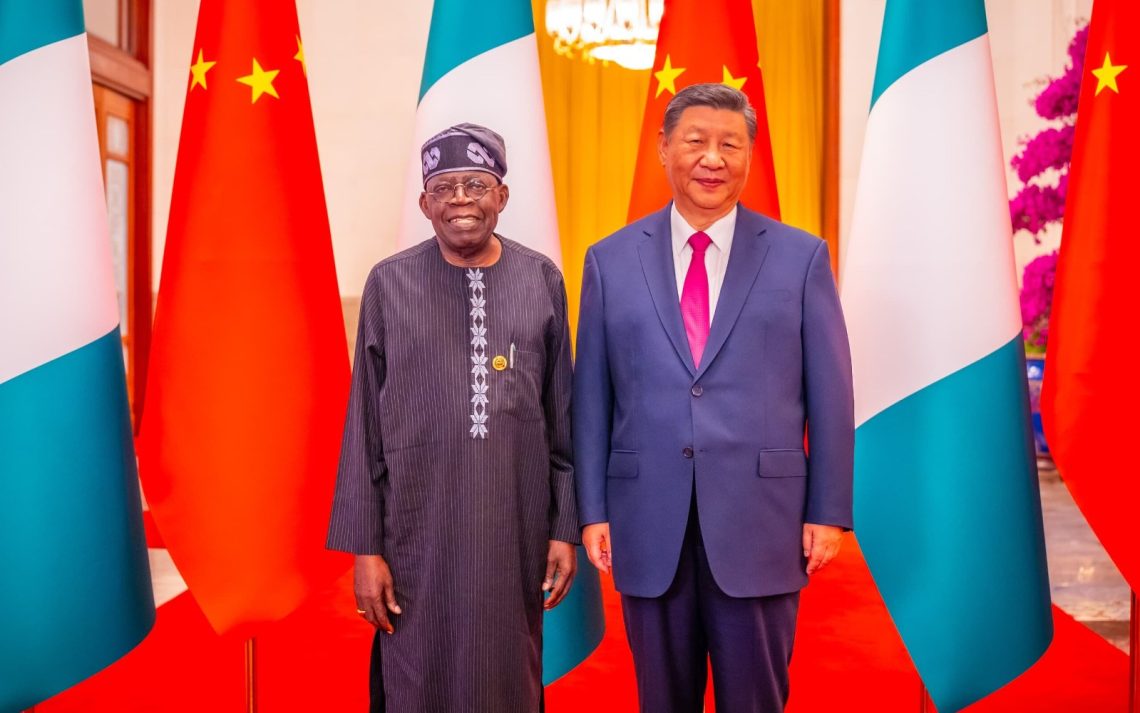
For 105 years, the CPC has remained true to its founding mission. For 55 years, China and Nigeria have stood together through thick and thin as good friends and trusted partners. Since the establishment of diplomatic relations in 1971, our two countries have weathered changes in the international landscape by standing firmly with each other in solidarity and mutual support. Our political mutual trust has continued to deepen, practical cooperation has flourished across a wide range of fields, and our partnership has brought ever greater tangible benefits to both our peoples. No matter how the international landscape evolves, the CPC and the Chinese Government have remained unwavering in their commitment to long-term friendship with Nigeria, steadfast in supporting Nigeria in pursuing a modernization path suited to its own national conditions, and resolute in promoting practical cooperation that improves the well-being of the Nigerian people. China and Nigeria have consistently supported each other’s core interests and major concerns. Through institutional platforms such as the Forum on China-Africa Cooperation (FOCAC), we have strengthened exchanges on governance experience, promoted the alignment of China’s 15th Five-Year Plan with Nigeria’s Renewed Hope Agenda, and ensured the steady and sustained development of bilateral relations, bringing more tangible benefits to the peoples of both countries.
Standing at a new historical starting point, the CPC and the Chinese Government stand ready to work with Nigeria to carry forward our traditional friendship, deepen exchanges on party building and state governance, strengthen strategic communication, and further consolidate political mutual trust. By translating political consensus into practical cooperation, drawing on mutual learning between political parties to support national development, and building an even stronger partnership for mutual benefit, we will continue to advance the China-Nigeria Comprehensive Strategic Partnership to new heights and work together to promote the shared prosperity of China and Africa, as well as lasting peace and common development of the world.


Flash Flood Displaces Thousands in Uyo as Akwa Ibom Orders Emergency Response

Plateau High Court Adjourns Jos North Indigeneship Case to October 29 Over Counsel Dispute

Herders Allege Harassment After Security Operation in Plateau Community
-

 News12 hours ago
Taraba Assembly Confirms TSIEC Chairman, Seven Commissioners to Strengthen Electoral Administration
-

 News11 hours ago
Morning Recap: Tinubu Meets Security Chiefs, Rejects Two Bills, Troops Arrest Terrorists’ Drug Courier
-

 News5 hours ago
Aniekan Bassey Reaffirms Senate’s Commitment to Healthcare Reform at National Assembly Public Hearing
-

 News10 hours ago
UK-Based Nigerian Lawyer Applies to Renounce Nigerian Citizenship
-

 Uncategorized21 hours ago
Court gives Al-Qaeda-affiliated Terrorist Group Commander Arrested By DSS July 20 Deadline To Change Plea
-

 China7 hours ago
Lagos Partners China Harbour to Expand Access to Potable Water
-

 Sports7 hours ago
World Cup Quarter-Final Ticket Prices Drop After USA and Portugal Exits
-

 News5 hours ago
ALIA’S DESPERATE ATTEMPT TO REWRITE HISTORY, SMEAR DANGOTE AND AKUME IS RECKLESS, DISHONEST AND UNACCEPTABLE
You must be logged in to post a comment Login