
Uncategorized
Taraba Police Engage Stakeholders on Collaborative Strategies for Peace and Public Safety


By Aga Samuel Imoter(Jalingo)
The Taraba State Command of the Nigeria Police Force has convened a stakeholders’ consultative meeting aimed at strengthening collaboration in crime prevention and enhancing public peace and safety across the state.
The engagement, held at the Command Headquarters in Jalingo, was themed “Crime Fighting Initiative: Sustaining Community Partnership.” It brought together top security officials, traditional rulers, community leaders, government representatives, and members of various trade unions to deliberate on practical strategies for addressing security challenges in the state.
Among the dignitaries present were the Deputy Inspector-General of Police, Ibrahim Baba Zango, Department of Research and Planning, and Zachariah Fera Achinyan, Department of Force Intelligence. Representatives of the Nigerian Army, the National Drug Law Enforcement Agency (NDLEA), the Department of State Services (DSS), the Nigerian Immigration Service, the Nigerian Customs Service, as well as traditional and community leaders, also attended the meeting.
In his opening remarks, the Commissioner of Police, Taraba State Command, Moorkwap Sebastine Dongshal, welcomed the visiting Deputy Inspectors-General of Police on their operational assessment visit to the state.
He commended the Inspector-General of Police, Olatunji Rilwan Disu, for his visionary leadership and commitment to strengthening policing through policy implementation, security assessments, stakeholder engagement, and effective crime-fighting strategies across commands nationwide.
CP Dongshal briefed the visiting officers on the prevailing security challenges confronting Taraba State, including communal clashes, farmer-herder conflicts, kidnapping, armed robbery, and trans-border crimes. He noted that despite these challenges, the command has remained resolute in its mandate of safeguarding lives and property through intelligence-led policing, community engagement, strategic deployment of personnel, and close collaboration with sister security agencies and stakeholders.
The Commissioner also highlighted some of the operational constraints affecting the command, including inadequate operational vehicles, poor barrack accommodation, shortage of manpower, and an insufficient number of police divisions across the state.
Despite these challenges, he assured stakeholders that the command remains focused and committed to maintaining peace, security, and public order throughout Taraba State.
The meeting provided an opportunity for stakeholders to exchange ideas, identify emerging security concerns, and strengthen partnerships aimed at promoting sustainable peace and public safety across the state.
In his response, the Deputy Inspector-General of Police, Ibrahim Baba Zango, commended the Commissioner of Police, Taraba State Command, CP Moorkwap Sebastine Dongshal, for his comprehensive briefing and the command’s unwavering commitment to tackling the state’s security challenges despite operational constraints.
The DIG lauded the command’s proactive adoption of intelligence-led policing, community engagement, and inter-agency collaboration, describing them as critical components in addressing contemporary security threats. He assured the command that the concerns raised, particularly those relating to inadequate logistics, manpower shortages, and accommodation, would be conveyed to the Inspector-General of Police for necessary attention.
He emphasized that effective policing cannot be achieved by the police alone, stressing that sustainable peace and security require the active participation of traditional institutions, community leaders, youth groups, religious organizations, and other stakeholders.
According to him, the Inspector-General of Police remains committed to strengthening community policing, enhancing operational capacity, and fostering stronger partnerships between the police and the public to ensure a safer and more secure Nigeria.
The DIG urged residents of Taraba State to continue supporting security agencies by providing timely and credible information that would assist in preventing crime and apprehending criminal elements. He also called on community leaders to promote peaceful coexistence and dialogue in resolving disputes, particularly in areas prone to communal and farmer-herder conflicts.
Stakeholders at the meeting commended the Nigeria Police Force for creating a platform for open dialogue on security issues affecting the state. They pledged to strengthen collaboration with security agencies through intelligence sharing, community sensitization, and collective efforts aimed at preventing crime and promoting lasting peace.
The stakeholders further appealed for sustained engagement between security agencies and communities, expressing optimism that the resolutions reached during the consultative meeting would significantly enhance public safety, strengthen trust between citizens and law enforcement, and contribute to lasting peace and development across Taraba State
Uncategorized
EXCLUSIVE INTERVIEW: “Nigeria Must Become a Manufacturing Nation”-Gen. Danbazzau Nigeria’s Ambassador to China
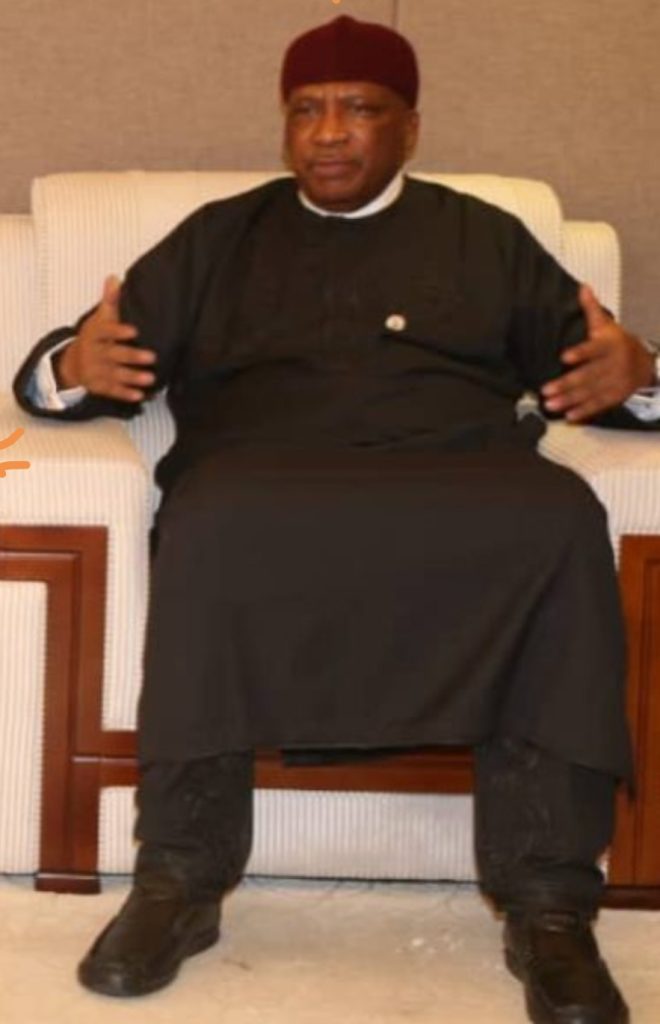
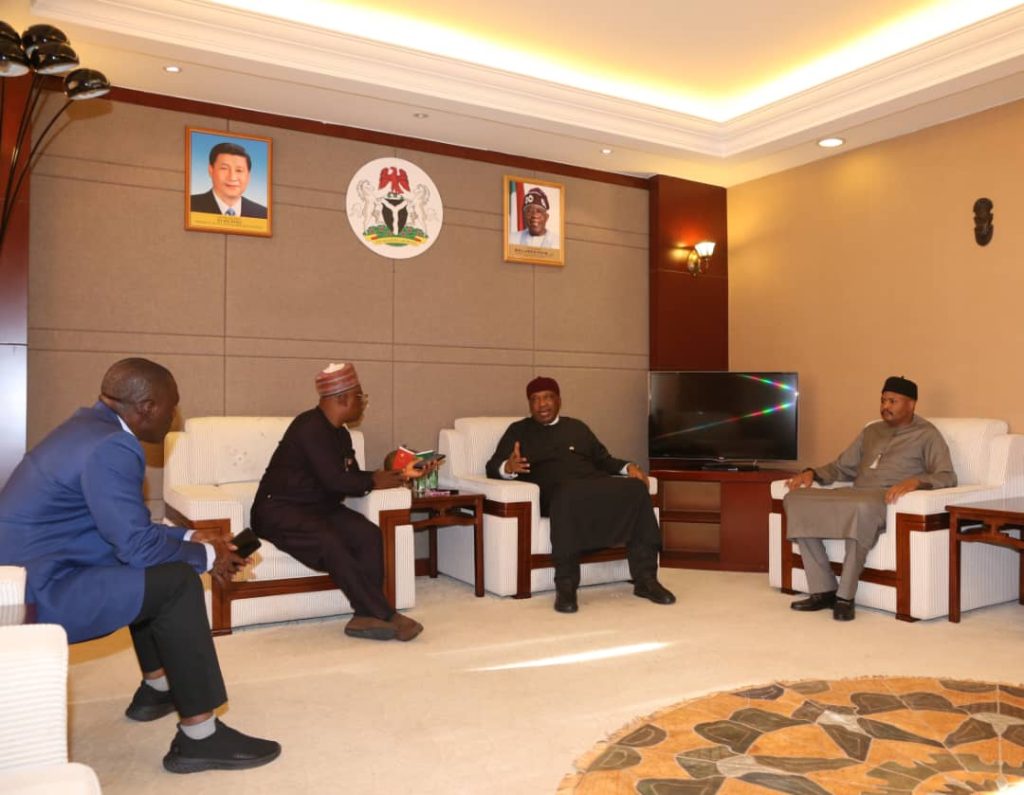
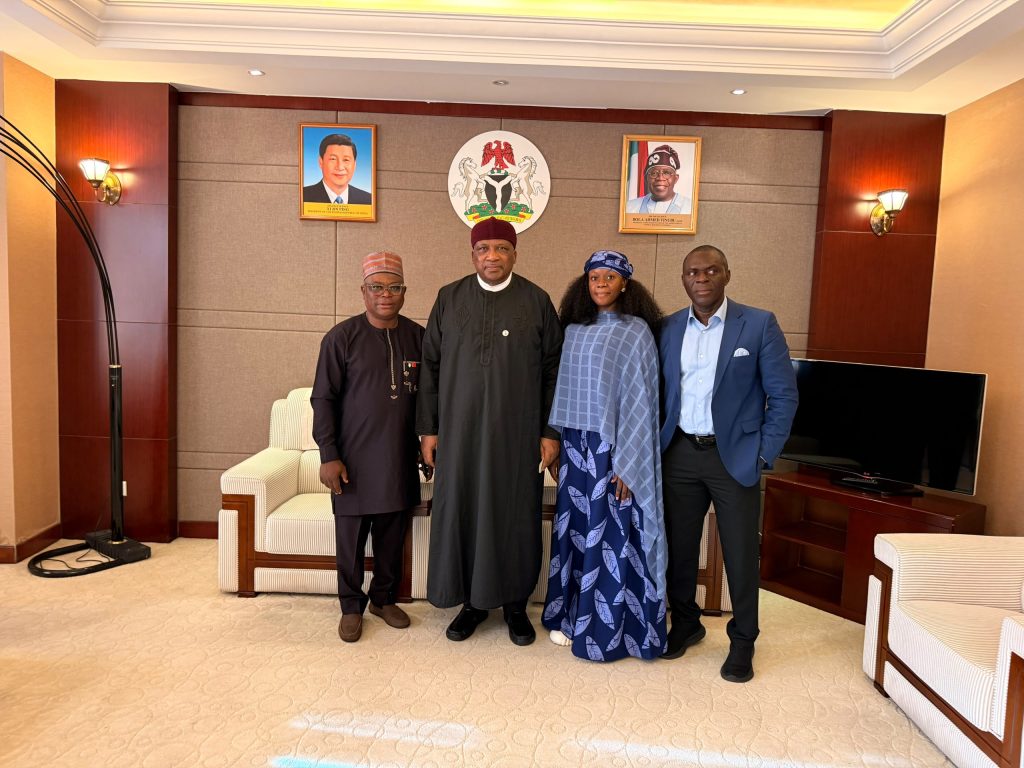
In an exclusive media engagement since assuming office, Nigeria’s Ambassador to China, Rtd. Gen. Abdulrahman Danbazzau, received three senior Nigerian journalists in his office in Beijing. The interview, conducted by Sarafina Christopher, Fred Idehei and Dr. Austin Maho, centered on how to turn Nigeria’s 55-year diplomatic and commercial relationship with China into tangible prosperity for Nigerians at home and abroad. Gen. Danbazzau spoke with the calm authority of a soldier and the detail of a policymaker. At the heart of his message was one goal: industrialization. From Raw Materials to Manufacturing On Nigeria-China economic ties, the Ambassador was direct. China remains one of Nigeria’s largest trading and infrastructure partners, but the relationship must evolve. Excerpts:
NIGERIA MUST LEARN FROM CHINA
“China’s rapid development over the last four to five decades has been remarkable, transforming it into one of the most technologically advanced countries in the world,” he said. “Nigeria must leverage this relationship to learn from China’s experience to develop our own nation.” His core priority, he explained, is moving Nigeria up the value chain. “As former President Buhari stated a few years ago, Nigeria should no longer simply be a provider of raw materials; we must transition into a manufacturing nation. This is my core focus. More industries mean more youth employment and a significant reduction in poverty.” He pointed to lithium as a test case. With large deposits in Nasarawa, Kebbi and Sokoto, “we are encouraging them to establish manufacturing plants so Nigeria can become the hub for lithium battery manufacturing in Africa, serving both the continent and Europe.”
TRADE IMBALANCE/ZERO TARIFF POLICY
The trade imbalance was also in the front burner. General Danbazzau noted that out of a $28 billion trade volume, “only about $3 billion comes from the Nigerian side.” To address this, he is studying China’s new zero-tariff policy for African goods that took effect on May 1st this year. “We need to study its conditions, criteria, and requirements thoroughly so that our local farmers and traders can actually benefit from it. In fact, I held meetings this afternoon specifically to dissect this policy.” Beyond trade, he wants Nigeria to borrow China’s planning discipline. “One important lesson from China is how it manages its massive population of over 1.4 billion people. We are studying how they manage this diversity. In Nigeria, people often waste time fighting over primordial sentiments, religion, and ethnic differences. China stays strictly focused on its goals through structured five-year development plans.”
AGRICULTURE/ENERGY
For agriculture and energy, he cited irrigation and localized power as priorities. “Nigeria has an abundance of surface and groundwater that we must tap into via large-scale irrigation schemes, we are encouraging localized energy solutions for rural communities to power Small and Medium Enterprises to boost local manufacturing.”
NIGERIANS IN CHINA
With thousands of Nigerians in China for business and study, consular protection was the second major theme. “We have a significant number of Nigerian students in China—some on scholarships and others studying privately. This embassy is duty-bound to provide consular services, ensure they respect local Chinese laws, and encourage them to focus strictly on their studies,” Gen. Danbazzau said.When issues arise, the mission moves fast. “Whenever a student encounters an issue, such as visa expiration, we intervene immediately by writing to the immigration departments across the various provinces. We monitor their welfare closely through student leadership networks.” He also urged business travelers to coordinate with the mission. “We are collaborating with major trade organizations to help coordinate the movements of their members traveling here for business. We encourage everyone to notify us when they arrive so we can better support them. Protecting Nigerians is our fundamental duty, not a favor.”The embassy, he added, works closely with consulates in Guangzhou, Shanghai and Hong Kong to ensure “the welfare of Nigerians is never taken for granted.”
PARTNERSHIP IS NOT CONCESSION
“Products manufactured in Nigeria can easily travel globally, even back into China,” he noted. Under FOCAC, the next meeting of which will be in Congo next year, he wants African challenges like climate change and the receding Lake Chad to be addressed collectively. But he was clear that partnership does not mean concession. “Whether in bilateral or multilateral partnerships, we must actively protect our own interests… While we speak of ‘shared prosperity,’ the reality of global politics means China will protect its interests, and we must aggressively protect ours. I never take anything for granted; I study their strategies so that I can implement a counter-strategy that maximizes the benefits for Nigeria.”
MESSAGE FOR NIGERIANS AT HOME AND ABROAD
He closed with a message to Nigerians on both sides. To those in China: “Please recognize the immense distance you travelIed to get here and make sure your stay is positive and impactful. Ensure your actions advance both your personal goals and the reputation of Nigeria. Be an excellent ambassadors for your country opportunity knocks but once, so grab it when it does. ”To those back home: “Know that the embassy is here to protect your interests 24/7. It is our job, not a favor. If you are coming to China for business, do not come blindly. Take time to understand the Chinese environment, their strict rules, and their laws… Our doors are always open.”
By Our Correspondent
The Niger Delta Voices for Change (NDVC) has dismissed reports linking former militant leader, self-styled General Endurance Amagbein, with the African Democratic Congress (ADC), describing the publications as false and the product of malicious propaganda.
The group was reacting to reports circulated online by unnamed groups alleging that the former agitator had aligned with former Vice President Atiku Abubakar ahead of the 2027 general elections.
In a statement issued in Port Harcourt on Saturday, NDVC said Amagbein remains a committed supporter of President Bola Tinubu and the administration’s Renewed Hope Agenda, questioning why his name continues to feature in anti-Tinubu narratives.
The statement, signed by the group’s Chairman, Chief Preye Timini Anderson, and Secretary, Comrade Ubong Etim Joel, maintained that Amagbein’s commitment to President Tinubu’s re-election bid in 2027 remains unwavering. According to the group, the recurring media attacks are part of an old campaign by his detractors, allegedly driven by disputes over pipeline surveillance contracts.
The NDVC stated that Amagbein, popularly known as “Adaka Boro the Second,” has consistently campaigned for President Tinubu, even during periods when he faced what the group described as false allegations intended to silence him.
The group further alleged that individuals behind the campaign against Amagbein are the same people whose associates have been linked to plots against President Tinubu. It also accused some surveillance contractors of engaging in oil theft while operating under the cover of pipeline surveillance activities.
According to the statement, the alleged contractors have supplied gunboats to security agencies under the guise of charitable donations, claiming the gesture is intended to facilitate the movement of stolen crude oil under official protection.
The NDVC further alleged that some surveillance contractors provide luxury houses and vehicles to security personnel in exchange for support in arresting, detaining and intimidating Amagbein’s supporters.
The group said it has closely monitored recent developments and believes those allegedly responsible for Amagbein’s previous ordeals have renewed efforts to sabotage pipelines through their associates, with the aim of implicating him in fresh controversies and triggering the arrest of innocent citizens.
Despite these alleged actions, the NDVC insisted that Amagbein remains committed to supporting President Tinubu’s Renewed Hope Agenda.
“Amagbein has passed a vote of confidence in President Tinubu and remains committed to supporting the Renewed Hope Agenda now and in the future,” the statement read.
The group further claimed that the Tinubu administration has created more opportunities for people in the Niger Delta than previous administrations.
It called on those responsible for what it described as “senseless media attacks” to desist, describing Amagbein as a philanthropist and peace advocate who has contributed significantly to peace and stability in the Niger Delta, as well as to the promotion of the All Progressives Congress (APC) and the policies of the Tinubu administration.
The NDVC also commended the Chief of Defence Staff, General Christopher Musa (Rtd), other service chiefs, and the Minister of Defence for their efforts in promoting peace and security in the Niger Delta.
However, the group urged the security leadership to conduct a discreet investigation into the allegations it raised in the statement.
By Simon Reef
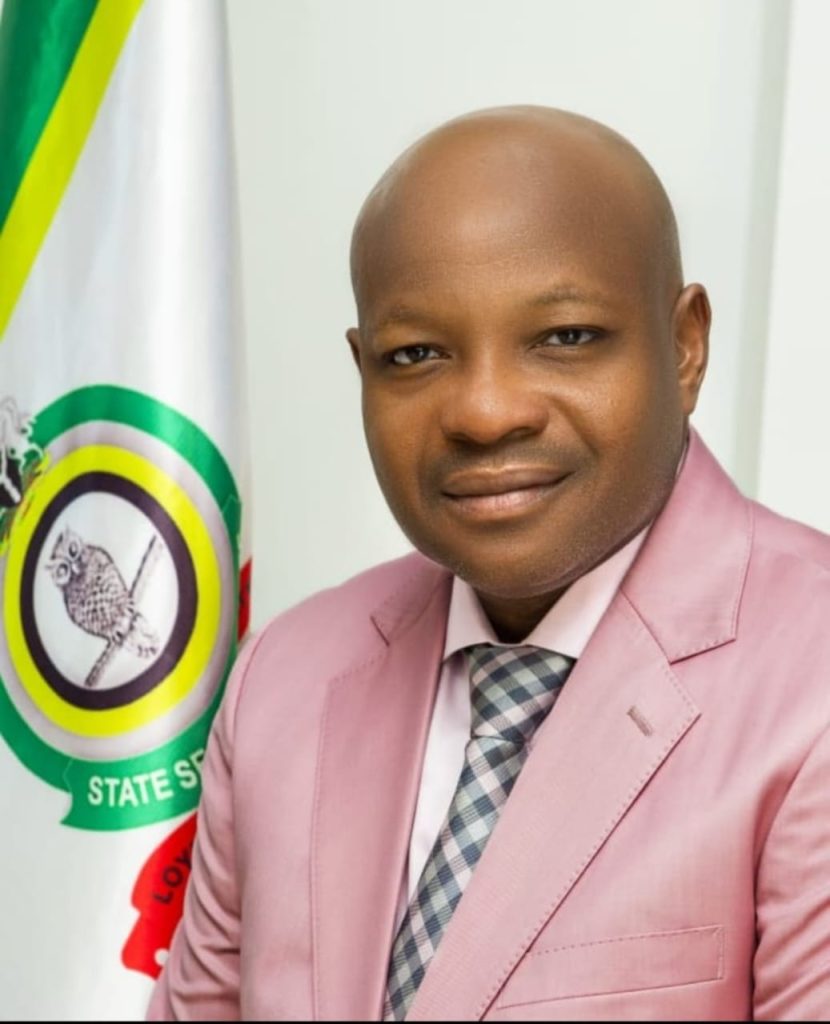
The appointment of Mr. Oluwatosin Adeola Ajayi as the Director-General of the Department of State Services (DSS) in August 2024 marked the beginning of a new era for the secret police, which members of the public then saw as operating beyond the rule of law. As the successor to Alhaji Yusuf Bichi, who led the DSS for six years under the administration of President Muhammadu Buhari, Ajayi’s appointment was seen as a square peg in a square hole, poised to align the agency’s operations with the imperatives of the nation’s democratic setting. Nearly two years since he became the DG, Ajayi has focused on operational shifts, including implementing institutional changes. Ajayi has turned the DSS into a security agency that has prioritised intelligence operations, with the secret police becoming more focused on intelligence-led operations, including building stronger ties with members of civil society to realise new essentials of a reformed security outfit.
Tackling The Past
Under the human rights reform policy introduced by the DSS boss, the agency publicly approved financial compensation for at least 13 people who were victims of wrongful detention, mistaken identity, or operational errors. Among those compensated was a Sokoto-based trader who was erroneously shot during a 2016 gunrunning raid in Jos. He was awarded ₦20 million, comprising ₦10 million court damages plus an additional ₦10 million goodwill payout, alongside lifetime free DSS healthcare.
An Abuja-based businesswoman, wrongfully arrested on oil bunkering suspicions during a raid, got compensated with the sum of N10 million. Five other individuals who were co-detained over the same oil bunkering investigation were awarded ₦10 million to share among themselves. In approving these rewards to compensate for wrongful treatment by the agency in the past, Ajayi was owning up to past mistakes and assuring Nigerians of the agency’s new resolve never to allow such mistakes to recur. In the past, the secret police were a metaphor for unconcealed coercion for the violation of human rights. The Ajayi-led DSS now operates within the confines of the law as it should be under a democratic setting.
Civil Relations
The DSS does not operate in exclusion of society. For the Service to succeed, encouraging collaborative relations with members of the public in the performance of its job is critical. Religion is becoming one of the nation’s fault lines, thereby widening the gulf of negative partisanship working against the country’s growth and unity among citizens. When Ajayi, the son of a Christian cleric, last year donated an Islamic school named Darul Ilm Centre for Islamic Studies, discordant tunes ripped through the airwaves, arguing that the DSS boss had no business donating Islamic schools to religious groups.
The centre, which provides a hybrid curriculum on Islamic knowledge, Western education, and vocational skills, is in the Danbushiya community, Millennium City of Chikun Local Government Area. With the support of Ajayi’s friends and allies, the school was built by the secret police boss to cater to orphans and other vulnerable people. Since the Islamic school was donated by the DSS boss, who is a Christian, the project was celebrated as an act of religious tolerance, peace-building, and national unity.
The secret police boss was not done, as he further donated a school named Kaduna Christian Academy, Sabon Tasha in Chikun LGA. Governor Uba Sani described the Academy as the best of ‘Non-Kinetic Warfare’, made possible through investing in a safe environment for youth education. The essence of the donated schools, according to Sani, is to counter the root causes of radicalisation and violent crime in violence-prone areas. The Minister of Defence, Gen. Christopher Musa (retd), who commissioned the project last month at the Kaduna Christian Academy, designated the academy as a “critical military asset without a single rifle”.
For an agency that once evoked fear on account of its past, the institutionalisation of periodic humanitarian outreaches to orphanages by Ajayi across the 36 states has gone a long way to engendering community-level intelligence gathering. Within less than two years of assuming headship of the agency, Ajayi ensured the recruitment of 27 orphans and other less-privileged members, providing them with the platforms to contribute their quota in the service of Nigeria.
More than anything, the DSS DG has transformed the traditionally strained relationship between it and the media. This singular feat has earned the DSS boss the ‘Man of the Year’ award from the Nigeria Union of Journalists (NUJ) in June 2026; Press Freedom Commendation by the International Press Institute (IPI), as well as the award of ‘Friend of the Media’ by the Broadcasting Organisations of Nigeria (BON), among other awards.
More On Prevention
In nearly two years as boss of the secret police, Ajayi has spearheaded a strategic shift that harps on intelligence-led and preventive security measures. Instead of turning the force into a retroactive force, the DSS is focused on neutralising perpetrators of violent crimes before they strike. Inter-agency collaboration has expanded tactical cooperation between the DSS, the Nigerian Armed Forces, and the Office of the National Security Adviser (ONSA). The fallouts of these collaborative endeavours, recently leading to the rescue of abductees in Oyo State, are linked to the intelligence framework built under Ajayi’s leadership.
Unlike in the past, when the DSS was too preoccupied with blowing its trumpet and making more noise than doing its job of securing the country, the DSS boss has closed the information directorate and only responds to issues when necessary. With vast field experience in the Niger Delta and many states in the North, Ajayi’s leadership of the secret police is intensifying efforts at combating economic saboteurs engaged in crude oil theft, pipeline vandalism, and activities of terrorists. Ajayi has refused to embrace the old style of indefinite detention, but has now resorted to legal fireworks for adjudication on matters handled by his agency’s investigators.
Nigeria is yet to defeat its many security challenges, but Ajayi’s headship of the secret police has largely succeeded in turning the tables on negative perceptions that the DSS is incapable of being reformed. More than any security agency in the country, Nigeria’s secret police has become friendlier, devoid of the excessive intimidation it was famed for in the past. That is the legacy of Ajayi, whose headship of the secret police, in collaboration with the nation’s armed forces, is leaving no stone unturned to smoke out perpetrators of terror from their hidden caves and make them face the full wrath of the law.

EXCLUSIVE INTERVIEW: “Nigeria Must Become a Manufacturing Nation”-Gen. Danbazzau Nigeria’s Ambassador to China

PDP REAFFIRMS ABSOLUTE CONFIDENCE IN CHIEF AONDOAKAA
NDVC Dismisses Claims Linking Amagbein to ADC, Reaffirms Support for Tinubu
-
 News22 hours ago
THE MONEY THAT NEVER MOVEDHow Nigeria’s Expenditure Controls Prevented the PEAC/PFIPC Appropriation from Becoming Public Expenditure
-
Uncategorized11 hours ago
NDVC Dismisses Claims Linking Amagbein to ADC, Reaffirms Support for Tinubu
-
Uncategorized21 hours ago
DSS Untreads The Old Path
-
 News11 hours ago
PDP REAFFIRMS ABSOLUTE CONFIDENCE IN CHIEF AONDOAKAA
-
Uncategorized35 minutes ago
EXCLUSIVE INTERVIEW: “Nigeria Must Become a Manufacturing Nation”-Gen. Danbazzau Nigeria’s Ambassador to China
You must be logged in to post a comment Login