
Business and Economy
FG Directs Fuel Marketers to Cut Petrol Prices Amid Falling Crude Oil Costs


By Abigail David
The Federal Government has directed the Nigerian Midstream and Downstream Petroleum Regulatory Authority (NMDPRA) to ensure petroleum marketers do not exploit consumers through excessive fuel pricing despite the deregulated downstream market.
Minister of State for Petroleum Resources (Oil), Senator Heineken Lokpobiri, gave the directive on Monday in Abuja during the NMDPRA General Counsel and Legal Advisers Forum.
Lokpobiri said the recent decline in global crude oil prices following eased tensions in the Middle East should be reflected in lower pump prices for Premium Motor Spirit (PMS), commonly known as petrol. He noted that marketers have yet to reduce prices despite crude oil falling from about $120 to around $72 per barrel.
He stressed that while market forces determine prices under deregulation, the regulator has a statutory duty under the Petroleum Industry Act (PIA) to prevent profiteering and protect consumers. He also directed the NMDPRA to intensify monitoring to ensure motorists receive the exact quantity of fuel paid for at filling stations.
The minister credited fuel supply stability during recent geopolitical tensions to the deregulated downstream sector and increased domestic refining capacity, while urging regulators to promote transparency, regulatory certainty and investment confidence.
NMDPRA Chief Executive Rabiu Umar said the agency remains committed to creating a predictable regulatory environment that supports investment and industry growth.
Meanwhile, depot petrol prices recorded slight reductions across Lagos, Port Harcourt, Calabar and Warri, with adjustments ranging between ₦1 and ₦6 per litre, indicating gradual moderation in the downstream market.
Reacting to the pricing situation, Managing Director of 11 Plc, Osagie Ogedegbe, said the Dangote Refinery currently exerts significant influence on petrol pricing because it is the primary supplier to marketers.
The Nigeria Labour Congress (NLC) also called on the Federal Government to strengthen regulatory oversight, dismantle monopolistic practices and promote genuine competition to ensure Nigerians benefit from lower international crude oil prices.


Business and Economy
Tinubu Says Economic Reforms Are Delivering Results as Deloitte Africa Backs Agenda

By Abigail David
President Bola Tinubu says Nigeria’s economy is making “serious foundational progress” despite the challenges associated with the economic reforms introduced by his administration.
The President made the remarks while receiving a delegation from Deloitte Africa, led by its Chief Executive Officer for Africa, Ruwayda Redfearn, at the State House in Abuja, according to a statement issued on Wednesday by the Special Adviser to the President on Information and Strategy, Bayo Onanuga.
Tinubu acknowledged that the reforms had been difficult but said they were beginning to strengthen the country’s fiscal and revenue systems and lay the foundation for long-term economic growth.
“Yes, reforms are difficult, but they are working well. For the economy, Nigeria is making serious foundational progress,” the President said.
He also encouraged Deloitte to expand its investment in Nigeria by supporting youth development through training and employment opportunities.
Redfearn reaffirmed Deloitte Africa’s commitment to supporting the Federal Government’s reform agenda, stating that the firm’s local and global teams were ready to provide expertise to advance Nigeria’s economic transformation.
Also speaking, Deloitte West Africa Chief Executive Officer Yomi Olugbenro said the reforms had created a solid foundation but stressed the need to ensure their benefits reached ordinary Nigerians. He said the firm was prepared to leverage its global experience to support the country’s development.
The meeting was attended by the Minister of Finance and Coordinating Minister of the Economy, Wale Edun, Chairman of the Presidential Committee on Fiscal Policy and Tax Reforms Taiwo Oyedele, and the Executive Chairman of the Nigeria Revenue Service, Zacch Adedeji.
By Abigail David
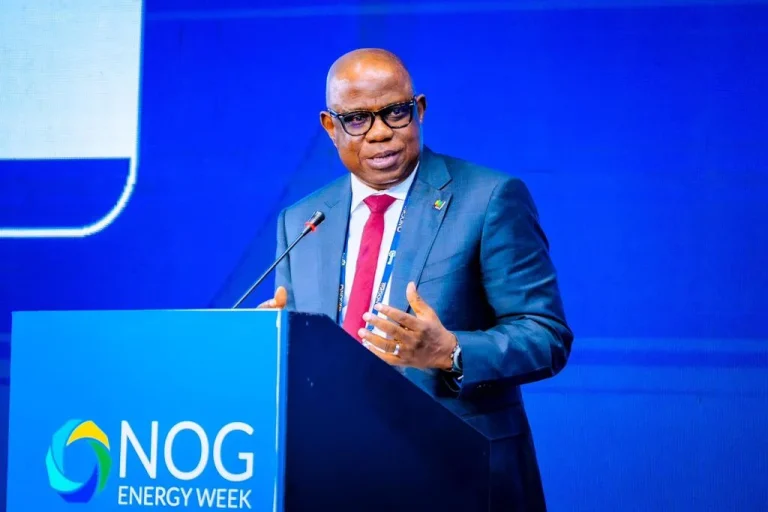
The Nigerian National Petroleum Company Limited (NNPC Ltd.) says it is repositioning itself beyond oil and gas production to become a platform that connects investment, technology, policy and talent to support sustainable energy development across Nigeria and Africa.
Group Chief Executive Officer Bayo Ojulari stated this while reflecting on the company’s participation at the 2026 Nigeria Oil and Gas (NOG) Energy Week, according to a statement issued on Monday.
Ojulari said NNPC Ltd.’s transformation is driven by a broader vision of creating long-term value through strategic partnerships and investment across the energy value chain.
“We no longer view NNPC Limited as merely an energy producer, but as an ecosystem builder, connecting capital, technology, policy, talent and markets to create lasting value for Nigeria and Africa,” he said.
He added that the company’s new direction would strengthen collaboration within the energy industry and contribute to Africa’s energy growth.
The 2026 NOG Energy Week brought together policymakers, regulators, investors, energy companies and technology providers to discuss investment opportunities, energy security, gas development and the future of Africa’s energy sector.
Since its transition into a commercially oriented company under the Petroleum Industry Act, NNPC Ltd. has continued to pursue operational efficiency and strategic partnerships as part of its long-term growth strategy.
Business and Economy
Breaking: Senate Rejects Motion to Probe Alleged ₦1.3bn PFIPC Budget Allocation
By Abigail David
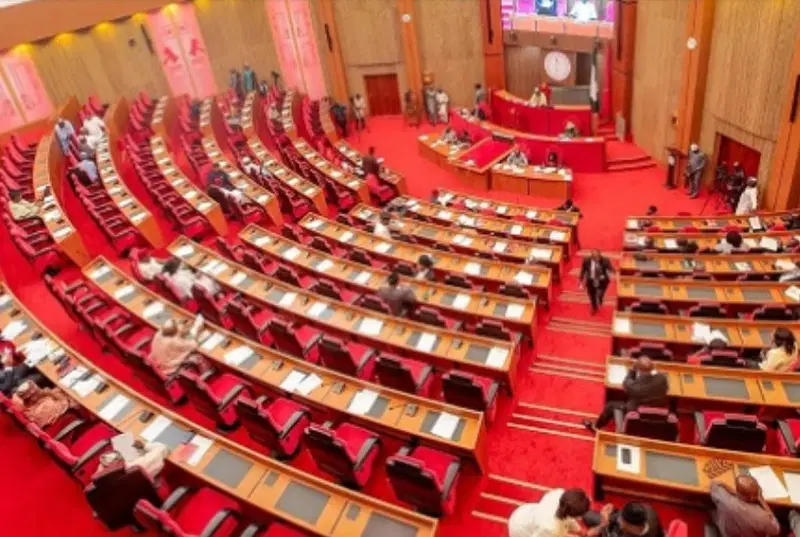
The Senate of Nigeria on Wednesday rejected a motion seeking a comprehensive investigation into the budgetary allocation, operations and controversy surrounding the purported Presidential Foreign Intervention Promotion Council (PFIPC).
The motion was sponsored by Senator Suleiman Kawu, who raised the matter during plenary under the Senate Standing Orders.
Kawu argued that the controversy surrounding the PFIPC threatened the integrity of the Senate, the credibility of the National Assembly and the legislature’s constitutional oversight and appropriation responsibilities.
He called on the Senate to condemn the alleged administrative lapses or fraudulent actions that led to the inclusion of the purported council under Budget Code 0111062001 in the 2026 Appropriation Act.
The lawmaker also sought a probe into how the budgetary allocation of ₦1,302,978,784 was proposed, scrutinised and approved, the officials and agencies responsible for its inclusion in the national budget, and whether any funds had been released or spent under the budget line.
However, the Deputy President of the Senate, Barau Jibrin, who presided over the session, declined to allow debate on the motion.
Jibrin said the Executive had already taken action on the matter, noting that President Bola Ahmed Tinubu had directed the Independent Corrupt Practices and Other Related Offences Commission (ICPC) to investigate the alleged scandal.
He urged senators to allow the Executive’s investigation to run its course rather than commence a separate legislative probe.


PDP REAFFIRMS ABSOLUTE CONFIDENCE IN CHIEF AONDOAKAA
NDVC Dismisses Claims Linking Amagbein to ADC, Reaffirms Support for Tinubu
DSS Untreads The Old Path
-

 News18 hours ago
THE MONEY THAT NEVER MOVEDHow Nigeria’s Expenditure Controls Prevented the PEAC/PFIPC Appropriation from Becoming Public Expenditure
-

 News21 hours ago
SECOND TERM IS NOT A BIRTHRIGHT: ALIA SET TO JOIN THE LIST OF GOVERNORS WHO FELL
-
Uncategorized7 hours ago
NDVC Dismisses Claims Linking Amagbein to ADC, Reaffirms Support for Tinubu
-
Uncategorized17 hours ago
DSS Untreads The Old Path
-
 News7 hours ago
PDP REAFFIRMS ABSOLUTE CONFIDENCE IN CHIEF AONDOAKAA
You must be logged in to post a comment Login