
Uncategorized
HURIWA Backs DSS Appeal, Condemns ‘Disturbingly Lenient’ Life Sentence for Convicted Ansaru Terror Chiefs

The Human Rights Writers Association of Nigeria (HURIWA) strongly condemns what it considers a disturbingly lenient sentence imposed on two convicted senior commanders of the Ansaru terrorist organisation and wholeheartedly endorses the decision of the Department of State Services (DSS) to challenge the judgment before the Court of Appeal.
The life imprisonment handed to Mahmud Usman, also known as Abu Bara’a, Abbas and Mukhtar, and his deputy, Abubakar Abba, alias Mahmud al-Nigeri (Malam Mamuda), after they pleaded guilty to a 32-count terrorism charge, has raised profound questions about whether the punishment adequately reflects the scale of the atrocities linked to the terrorist network they led.
For HURIWA, this case goes far beyond the fate of two convicted terrorists. It is about justice for thousands of Nigerian families whose lives have been shattered by terrorism. It is about the countless citizens murdered in cold blood, communities devastated by insurgent violence, and brave members of the armed forces and other security agencies who paid the ultimate sacrifice defending the nation.
The position of HURIWA is reinforced by the disclosures made by the DSS that kidnappers who abducted pupils and teachers in Oriire Local Government Area of Oyo State reportedly demanded the release of these same Ansaru commanders as a condition for freeing their victims. According to the service, two teachers were allegedly murdered during the ordeal in an attempt to force the government’s hand.
Equally compelling are the public remarks by former Assistant Director of the Department of State Services, Dennis Amachree, who described the convicted men as senior members of a terrorist organisation allegedly responsible for some of the most barbaric acts committed in Nigeria’s recent history. According to Amachree, the group filmed the killing of a teacher and circulated the footage to terrorise Nigerians. He further alleged that the same terrorist network was responsible for deadly attacks that claimed the lives of senior Nigerian military officers, including generals engaged in the defence of the country.
If these allegations formed part of the factual basis underlying the convictions, they portray crimes of exceptional cruelty and calculated terror directed at both civilians and security personnel. Such acts strike at the very foundation of the Nigerian state and offend every principle of humanity.
HURIWA therefore believes that the appeal announced by the DSS is not only legally justified but morally imperative. The appellate courts now have a solemn responsibility to determine whether the sentence imposed truly reflects the enormity of the offences for which the convicts accepted responsibility and whether it sufficiently serves the objectives of justice, accountability, deterrence and protection of society.
A nation fighting a relentless terrorist insurgency cannot afford to project ambiguity in its response to those found guilty, after due process, of participating in acts designed to spread fear through mass violence and murder. The justice system must send a clear and unmistakable message that terrorism attracts the full consequences prescribed by law.
HURIWA wishes to emphasise that this position is not driven by vengeance but by an unwavering commitment to justice under the Constitution and Nigeria’s anti-terrorism laws. Respect for due process requires that those convicted after a fair trial receive punishments that are proportionate to the gravity of their crimes. Anything less risks diminishing public confidence in the administration of justice and compounds the anguish of victims’ families.
The organisation urges the Court of Appeal to give expedited consideration to the DSS appeal in the overriding public interest. Justice must not only be done; it must be seen to be commensurate with the devastating consequences of terrorism on innocent Nigerians and on the nation’s collective security.
Signed: Comrade Emmanuel Nnadozie OnwubikoNational Coordinator
By Our Correspondent
The Niger Delta Voices for Change (NDVC) has dismissed reports linking former militant leader, self-styled General Endurance Amagbein, with the African Democratic Congress (ADC), describing the publications as false and the product of malicious propaganda.
The group was reacting to reports circulated online by unnamed groups alleging that the former agitator had aligned with former Vice President Atiku Abubakar ahead of the 2027 general elections.
In a statement issued in Port Harcourt on Saturday, NDVC said Amagbein remains a committed supporter of President Bola Tinubu and the administration’s Renewed Hope Agenda, questioning why his name continues to feature in anti-Tinubu narratives.
The statement, signed by the group’s Chairman, Chief Preye Timini Anderson, and Secretary, Comrade Ubong Etim Joel, maintained that Amagbein’s commitment to President Tinubu’s re-election bid in 2027 remains unwavering. According to the group, the recurring media attacks are part of an old campaign by his detractors, allegedly driven by disputes over pipeline surveillance contracts.
The NDVC stated that Amagbein, popularly known as “Adaka Boro the Second,” has consistently campaigned for President Tinubu, even during periods when he faced what the group described as false allegations intended to silence him.
The group further alleged that individuals behind the campaign against Amagbein are the same people whose associates have been linked to plots against President Tinubu. It also accused some surveillance contractors of engaging in oil theft while operating under the cover of pipeline surveillance activities.
According to the statement, the alleged contractors have supplied gunboats to security agencies under the guise of charitable donations, claiming the gesture is intended to facilitate the movement of stolen crude oil under official protection.
The NDVC further alleged that some surveillance contractors provide luxury houses and vehicles to security personnel in exchange for support in arresting, detaining and intimidating Amagbein’s supporters.
The group said it has closely monitored recent developments and believes those allegedly responsible for Amagbein’s previous ordeals have renewed efforts to sabotage pipelines through their associates, with the aim of implicating him in fresh controversies and triggering the arrest of innocent citizens.
Despite these alleged actions, the NDVC insisted that Amagbein remains committed to supporting President Tinubu’s Renewed Hope Agenda.
“Amagbein has passed a vote of confidence in President Tinubu and remains committed to supporting the Renewed Hope Agenda now and in the future,” the statement read.
The group further claimed that the Tinubu administration has created more opportunities for people in the Niger Delta than previous administrations.
It called on those responsible for what it described as “senseless media attacks” to desist, describing Amagbein as a philanthropist and peace advocate who has contributed significantly to peace and stability in the Niger Delta, as well as to the promotion of the All Progressives Congress (APC) and the policies of the Tinubu administration.
The NDVC also commended the Chief of Defence Staff, General Christopher Musa (Rtd), other service chiefs, and the Minister of Defence for their efforts in promoting peace and security in the Niger Delta.
However, the group urged the security leadership to conduct a discreet investigation into the allegations it raised in the statement.
By Simon Reef
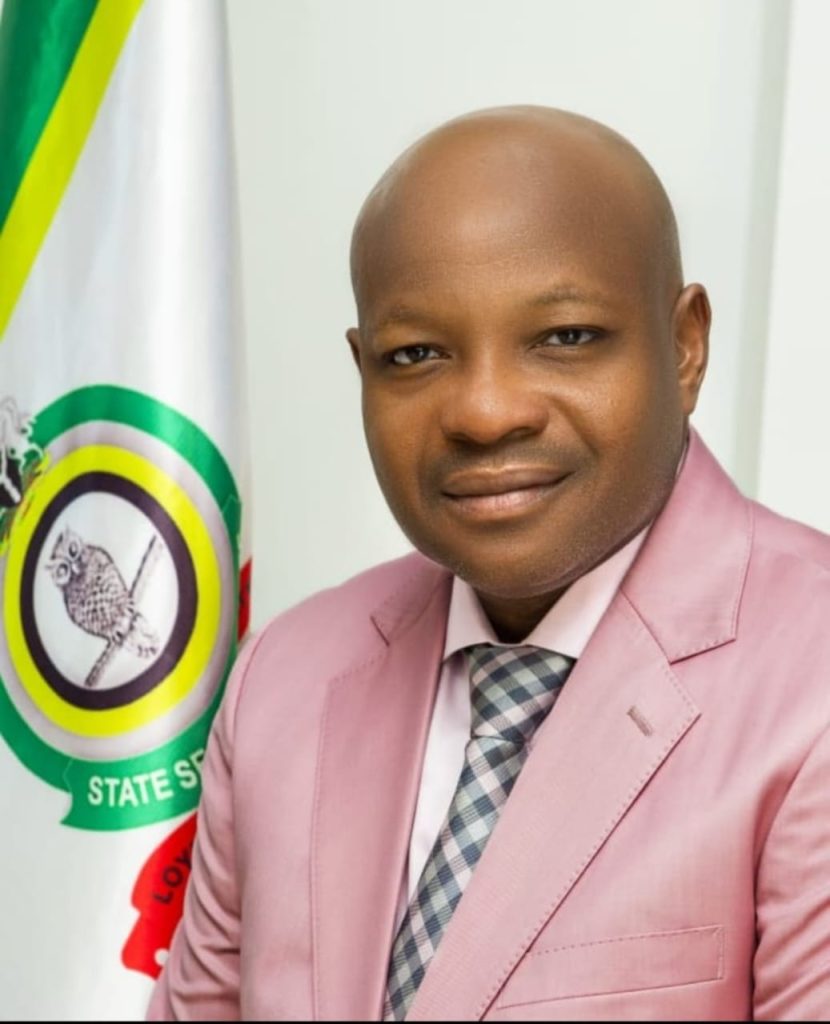
The appointment of Mr. Oluwatosin Adeola Ajayi as the Director-General of the Department of State Services (DSS) in August 2024 marked the beginning of a new era for the secret police, which members of the public then saw as operating beyond the rule of law. As the successor to Alhaji Yusuf Bichi, who led the DSS for six years under the administration of President Muhammadu Buhari, Ajayi’s appointment was seen as a square peg in a square hole, poised to align the agency’s operations with the imperatives of the nation’s democratic setting. Nearly two years since he became the DG, Ajayi has focused on operational shifts, including implementing institutional changes. Ajayi has turned the DSS into a security agency that has prioritised intelligence operations, with the secret police becoming more focused on intelligence-led operations, including building stronger ties with members of civil society to realise new essentials of a reformed security outfit.
Tackling The Past
Under the human rights reform policy introduced by the DSS boss, the agency publicly approved financial compensation for at least 13 people who were victims of wrongful detention, mistaken identity, or operational errors. Among those compensated was a Sokoto-based trader who was erroneously shot during a 2016 gunrunning raid in Jos. He was awarded ₦20 million, comprising ₦10 million court damages plus an additional ₦10 million goodwill payout, alongside lifetime free DSS healthcare.
An Abuja-based businesswoman, wrongfully arrested on oil bunkering suspicions during a raid, got compensated with the sum of N10 million. Five other individuals who were co-detained over the same oil bunkering investigation were awarded ₦10 million to share among themselves. In approving these rewards to compensate for wrongful treatment by the agency in the past, Ajayi was owning up to past mistakes and assuring Nigerians of the agency’s new resolve never to allow such mistakes to recur. In the past, the secret police were a metaphor for unconcealed coercion for the violation of human rights. The Ajayi-led DSS now operates within the confines of the law as it should be under a democratic setting.
Civil Relations
The DSS does not operate in exclusion of society. For the Service to succeed, encouraging collaborative relations with members of the public in the performance of its job is critical. Religion is becoming one of the nation’s fault lines, thereby widening the gulf of negative partisanship working against the country’s growth and unity among citizens. When Ajayi, the son of a Christian cleric, last year donated an Islamic school named Darul Ilm Centre for Islamic Studies, discordant tunes ripped through the airwaves, arguing that the DSS boss had no business donating Islamic schools to religious groups.
The centre, which provides a hybrid curriculum on Islamic knowledge, Western education, and vocational skills, is in the Danbushiya community, Millennium City of Chikun Local Government Area. With the support of Ajayi’s friends and allies, the school was built by the secret police boss to cater to orphans and other vulnerable people. Since the Islamic school was donated by the DSS boss, who is a Christian, the project was celebrated as an act of religious tolerance, peace-building, and national unity.
The secret police boss was not done, as he further donated a school named Kaduna Christian Academy, Sabon Tasha in Chikun LGA. Governor Uba Sani described the Academy as the best of ‘Non-Kinetic Warfare’, made possible through investing in a safe environment for youth education. The essence of the donated schools, according to Sani, is to counter the root causes of radicalisation and violent crime in violence-prone areas. The Minister of Defence, Gen. Christopher Musa (retd), who commissioned the project last month at the Kaduna Christian Academy, designated the academy as a “critical military asset without a single rifle”.
For an agency that once evoked fear on account of its past, the institutionalisation of periodic humanitarian outreaches to orphanages by Ajayi across the 36 states has gone a long way to engendering community-level intelligence gathering. Within less than two years of assuming headship of the agency, Ajayi ensured the recruitment of 27 orphans and other less-privileged members, providing them with the platforms to contribute their quota in the service of Nigeria.
More than anything, the DSS DG has transformed the traditionally strained relationship between it and the media. This singular feat has earned the DSS boss the ‘Man of the Year’ award from the Nigeria Union of Journalists (NUJ) in June 2026; Press Freedom Commendation by the International Press Institute (IPI), as well as the award of ‘Friend of the Media’ by the Broadcasting Organisations of Nigeria (BON), among other awards.
More On Prevention
In nearly two years as boss of the secret police, Ajayi has spearheaded a strategic shift that harps on intelligence-led and preventive security measures. Instead of turning the force into a retroactive force, the DSS is focused on neutralising perpetrators of violent crimes before they strike. Inter-agency collaboration has expanded tactical cooperation between the DSS, the Nigerian Armed Forces, and the Office of the National Security Adviser (ONSA). The fallouts of these collaborative endeavours, recently leading to the rescue of abductees in Oyo State, are linked to the intelligence framework built under Ajayi’s leadership.
Unlike in the past, when the DSS was too preoccupied with blowing its trumpet and making more noise than doing its job of securing the country, the DSS boss has closed the information directorate and only responds to issues when necessary. With vast field experience in the Niger Delta and many states in the North, Ajayi’s leadership of the secret police is intensifying efforts at combating economic saboteurs engaged in crude oil theft, pipeline vandalism, and activities of terrorists. Ajayi has refused to embrace the old style of indefinite detention, but has now resorted to legal fireworks for adjudication on matters handled by his agency’s investigators.
Nigeria is yet to defeat its many security challenges, but Ajayi’s headship of the secret police has largely succeeded in turning the tables on negative perceptions that the DSS is incapable of being reformed. More than any security agency in the country, Nigeria’s secret police has become friendlier, devoid of the excessive intimidation it was famed for in the past. That is the legacy of Ajayi, whose headship of the secret police, in collaboration with the nation’s armed forces, is leaving no stone unturned to smoke out perpetrators of terror from their hidden caves and make them face the full wrath of the law.
New divisions to be established in Makurdi, Ilorin, Jalingo, Benin City as President targets faster response to security threats
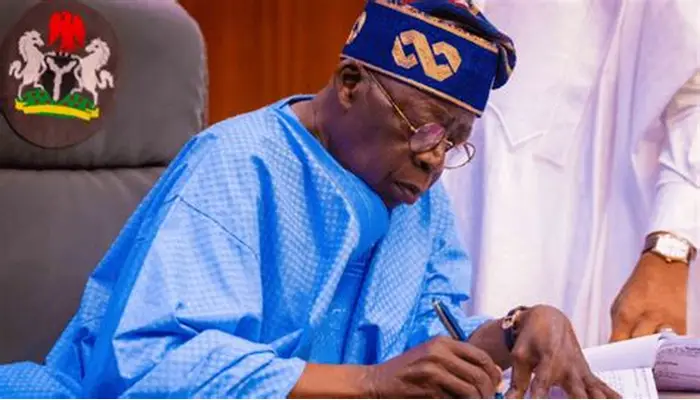
ABUJA — President Bola Ahmed Tinubu has approved a major restructuring of the Nigerian Army, expanding its operational divisions from eight to twelve and authorizing the recruitment of 28,000 additional personnel to strengthen national security.
The move, announced by the State House is described as a landmark decision aimed at improving command and control, decentralizing operations, and enhancing the Army’s capacity to tackle Nigeria’s evolving security challenges.
According to a statement by the President’s Special Adviser on Information and Strategy, Bayo Onanuga, the expansion builds on the administration’s sustained investments in the Armed Forces, including the acquisition of critical military platforms, improved troop welfare, and ongoing support for force modernization.
Under the new structure, the Nigerian Army will operate twelve divisions strategically positioned across the country. Four new divisional headquarters will be established in Makurdi, Ilorin, Jalingo, and Benin City.
The 12 Division Headquarters and their areas of responsibility are:
- 1 Division – Kaduna: Kaduna, Kano, Katsina, Jigawa
- 2 Division – Ibadan: Oyo, Osun, Ekiti, Ondo
- 3 Division – Jos: Plateau, Bauchi, Gombe
- 5 Division – Makurdi: Benue, Nasarawa, Kogi New
- 6 Division – Port Harcourt: Rivers, Akwa Ibom, Cross River
- 7 Division – Maiduguri: Borno, Yobe
- 8 Division – Sokoto: Sokoto, Kebbi, Zamfara
- 9 Division – Ilorin: Kwara, Niger New
- 10 Division – Jalingo: Taraba, Adamawa New
- 81 Division – Lagos: Lagos, Ogun
- 82 Division – Enugu: Enugu, Anambra, Abia, Ebonyi, Imo
- 83 Division – Benin City: Edo, Delta, Bayelsa New
The Presidency said the new divisions will strengthen border security, improve protection of critical national infrastructure, and ensure faster military response to emerging threats nationwide. It will also enhance counter-insurgency and internal security operations.
Implementation will be done in two phases. The first phase, covering the establishment of 5, 9, and 10 Divisions and the reorganization of existing formations, is to be completed by September 2026. The second phase, which includes the establishment of 83 Division in Benin City and further reorganization, is expected to be completed by December 2026.
President Tinubu commended the Chief of Army Staff, Lieutenant General Waidi Ibrahim Shuaibu, and all officers and soldiers for their dedication and professionalism in defending Nigeria’s sovereignty.
The President reaffirmed his administration’s commitment to continue investing in the Armed Forces to ensure they remain “adequately equipped, highly motivated, and fully capable of protecting the nation and guaranteeing the safety and security of all Nigerians.”
The announcement comes amid ongoing military operations against insurgency in the North-East, banditry in the North-West and North-Central, and other internal security threats across the country.


PDP REAFFIRMS ABSOLUTE CONFIDENCE IN CHIEF AONDOAKAA
NDVC Dismisses Claims Linking Amagbein to ADC, Reaffirms Support for Tinubu
DSS Untreads The Old Path
-
 News14 hours ago
THE MONEY THAT NEVER MOVEDHow Nigeria’s Expenditure Controls Prevented the PEAC/PFIPC Appropriation from Becoming Public Expenditure
-

 News16 hours ago
SECOND TERM IS NOT A BIRTHRIGHT: ALIA SET TO JOIN THE LIST OF GOVERNORS WHO FELL
-
Uncategorized3 hours ago
NDVC Dismisses Claims Linking Amagbein to ADC, Reaffirms Support for Tinubu
-
Uncategorized13 hours ago
DSS Untreads The Old Path
-
 News3 hours ago
PDP REAFFIRMS ABSOLUTE CONFIDENCE IN CHIEF AONDOAKAA
You must be logged in to post a comment Login