
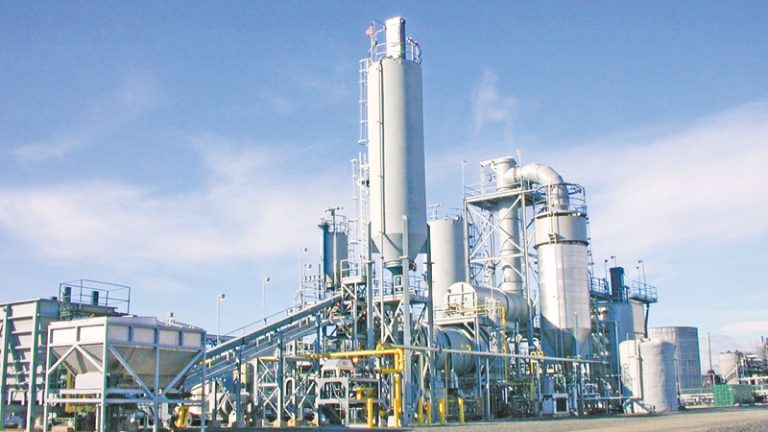

The next phase of the industrial revolution has begun. From renewable energy, clean technology, food security to green manufacturing in essential sectors like medicine, education and shelter, future-focused economies are investing in critical minerals and industries that will significantly contribute to the attainment of their macroeconomic objectives of productivity, economic dignity, job opportunities, high income, improved standard of living for the people, enhanced economic growth and balance of payment stability.
One key condition to measure Nigeria’s industrialisation is to determine our transformation away from an agricultural or resource-based economy towards an economy based on mass manufacturing and enhanced service sector. Available data suggest that the contribution of manufacturing to Nigeria’s GDP has continually declined for nearly four decades (meaning that Nigeria is less industrialised today than it was 40 years ago). Oil and gas as the dominant source of our revenue and export earnings connotes an abandonment of the drive towards industrialisation.
To accelerate industrialisation and unlock our economic potential beyond oil and gas, which accounts for over 90 per cent of export earnings and about 65 per cent of government revenue, Nigeria must go beyond talks to build an economy of improved commodities and increased its share of global manufacturing output. Notwithstanding the constitutional and structural contradictions in our framework, the national and subnational governments must actively promote industrial development beyond just “putting in place” enabling environments and conditions for industrialisation to creating a systematic approach to identify and nurture infant industries.
To nurture and support industries that focus on metals and solid minerals, oil and gas, construction, light manufacturing and services, the 2014 Nigerian Industrial Revolution Plan was designed as a policy framework for Nigeria to become a preferred source for supplying low and medium technology consumer and industrial goods domestically and locally, to create wealth, jobs and import substitution. Ten years after the policy was unveiled, the plan has not been implemented to achieve the target objectives. This is not far from the fact that we lack industrial revolution governance that can seriously define and give direction to Nigeria’s quest for industrialisation.
The first step in the right direction is to conquer procurement-and-contract corruption in the development sector. Inadequate infrastructure is the most pressing constraint on Nigeria’s industrialisation and unless money allocated to building roads, power projects, water and other enabling infrastructure is properly utilised, Nigeria can hardly achieve its industrialisation objectives. Contract and procurement fraud is estimated at N2.9 trillion between 2018 and 2020, which accounts for 10 per cent of the total budgetary allocations for that period. Nigeria needs adequate infrastructure and energy to power its industrialisation. If we reduce corruption, then such industrialisation-enabling policy frameworks like the Electricity Act will be fully implemented to ensure that relevant stakeholders (states, companies, and individuals, empowered by the Act to generate, transmit, and distribute electricity) do not only invest in power projects but also ensure corporate governance that will sustain a healthy energy ecosystem.
Another variable for Nigeria’s industrialisation is quality education. Almost all industrialised countries were able to harness education, research, technology, technical and vocational education as a tool for growth. Britain prioritised new scientific inventions by developing the steam engine. Germany and Japan focused on solid engineering education and technological development. Singapore shows Asia’s greatest success stories in transforming from a developing country to a modern industrial economy in one generation, and this was due to its investment in education.
Talks on Made-in-Nigeria will remain in the pipeline unless we get our politics right, to be able to prompt consistent industrialisation policies, provide good governance that will ensure macroeconomic stability, and make Nigeria’s desire a possibility. Nigeria has all the variables for industrialisation. The country needs leaders with a clear vision to know that its greatness cannot be achieved with foreign aid but with local productivity.