
Despite years of government-led poverty alleviation initiatives, hunger in Nigeria continues to worsen. The problem isn’t the absence of social interventions — it’s that they fail to address the critical challenges of food production and distribution.
In 2024 alone, an estimated 6.9 million more Nigerians fell into acute food insecurity, bringing the total to about 31.8 million. This figure points beyond economic hardship to the collapse of Nigeria’s food supply chain — broken by insecurity, poor infrastructure, and years of neglect in rural development.
Without fixing its food system, Nigeria cannot meaningfully tackle poverty. Hunger and poverty are deeply intertwined. Any plan that ignores how food is grown, stored, and delivered will inevitably fall short. In today’s Nigeria, efforts to reduce poverty without addressing rural insecurity and food distribution failures are bound to fail.
Smallholder Farmers: Feeding the Nation, Living in Fear
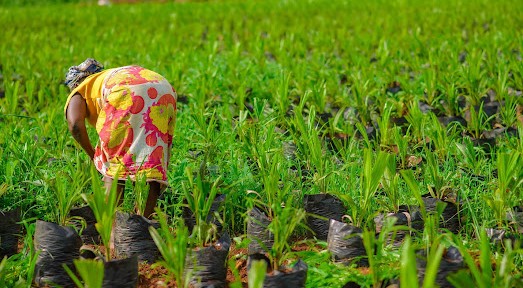
Smallholder farmers produce about 90% of Nigeria’s food, yet they are among the country’s poorest and most vulnerable citizens. Roughly 75% of rural Nigerians live below the poverty line, trapped by low yields, climate shocks, limited market access, and violence.
The collapse of rural security is a direct assault on Nigeria’s food economy. Regions once known as agricultural hubs — like Benue, Plateau, Kaduna, and Niger — have become hotspots of violence. Benue, the “Food Basket of the Nation,” is now marked by deadly attacks. This month alone, over 200 people were killed in Yelwata, while farmers across northern Nigeria have been displaced or killed. From 2020 to 2024, at least 1,356 farmers lost their lives to violence.
Farmers in states like Zamfara and Katsina are also forced to pay levies to armed groups — over ₦139 million in total between 2020 and 2024 — just to access their own fields. This climate of fear has deterred investment in rural agribusiness and stifled innovation critical to achieving food security.
On top of insecurity, climate change is making things worse. Flooding and drought, particularly in northern Nigeria, continue to destroy farmlands. In one year alone, floods ruined an estimated 180,000 hectares of farmland. With no disaster insurance or support systems, farmers are left in ruin, season after season.
When Food Doesn’t Reach the Table
Even when farmers succeed in growing food, much of it doesn’t reach consumers. Nigeria’s transport and storage systems are broken. Most rural roads are impassable, and insecurity on these routes further cripples food distribution.
Storage infrastructure is also lacking. Of the 55 million metric tonnes of food produced annually, around 40% is lost due to poor logistics, inadequate financing, and limited cold-chain facilities. Without proper storage, farmers are forced to sell at rock-bottom prices or risk losing their produce. For consumers, this means food scarcity, rising prices, and worsening inflation.
Social Welfare Alone Won’t Solve Hunger
Government poverty relief schemes like cash transfers and the Renewed Hope Initiative have provided temporary support, but they fall short because they don’t address the root causes of food insecurity. Cash assistance is of little help if food is unavailable or unaffordable. Without reliable local food production and distribution, social interventions can’t succeed.
A Way Forward: Rebuilding the Food System
Nigeria’s hunger crisis isn’t inevitable — it’s the result of policy failures. The country has enough land, people, and resources to feed itself. What’s missing is a food-focused development strategy.
The government must make food security central to its poverty reduction agenda. This means investing in rural roads, storage facilities, cold-chain systems, and securing farming communities. It means linking social interventions with food access — for example, combining cash transfers with food stamps or vouchers for local produce.
Farmer cooperatives should be strengthened through partnerships, affordable credit, insurance, and modern tools. Security must also be treated as an economic priority, with well-equipped agencies working to restore safety in rural areas. Food can’t thrive where fear reigns.
Only by rebuilding the food supply chain — from farm to table — can Nigeria hope to end hunger and lift millions out of poverty.