
By Adefolarin A. Olamilekan
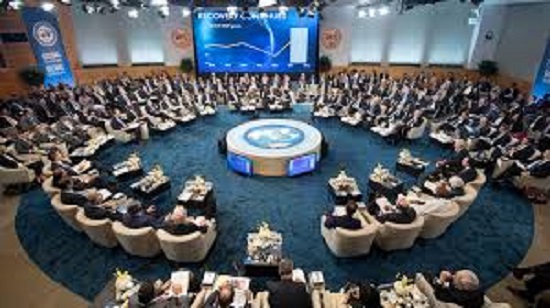
The announcement by the board of governors of the IMF on August 2, 2021 approving the Special Drawing Rights (SDR) $650 billion, which was delayed for more than a year by the intriguing international political economy of Donald Trump administration, but got the Joe Biden administration shore up for the plan this year. The United States, is the IMF’s biggest shareholder with a unique veto power, blocked the proposal last year under Donald Trump administration. We could think through the quick upturned of the United States earlier position. According, to IMF Managing Director Kristalina Georgieva in a statement said “the allocation is a significant shot in the arm for the world and, if used wisely, a unique opportunity to combat unprecedented crisis faced by countries during this period of corona virus pandemic. She added further that” the SDRs allocation will provide additional liquidity to the global economic system supplementing countries’ foreign exchange reserves”. Additional she maintained “that countries could use the space provided by the SDR allocation to support their economies and step up their fight against the crisis”.
Conversely, SDRs are to be distributed to countries in proportion to their quota shares in the IMF. The IMF chief satiated that “$650 billion is to enable countries to recover from the COVID-19 pandemic” .Interesting about “$275 billion of the new allocation would go to emerging and developing countries, of which low-income countries would receive about $21 billion”, according to the IMF. Fundamentally, Nigerians own allocation is $3.35 billion and that is about N2.4545 billion. By the same token, the IMF-SDRs allocation become effective on August 23 and the newly created SDRs will be credited to IMF member countries in proportion to their existing quotas in the Fund.
In retrospect, the SDR is an international reserve asset created by the IMF in 1969 to supplement its member countries’ official reserves. To date, about $943 billion has been allocated. The newly approved allocation is to address the long-term global need for reserves and help countries cope with the impact of the COVID-19 pandemic. The value of the SDR is based on a basket of five currencies – dollar, euro, renminbi, yen, and pound sterling. At the present, it has been transformed into a redistribution mechanism that compels rich countries to lend on demand to poor nations at a highly subsidized floating interest rate–the weighted average of the lowest short-term interest rates in the world.
Basically, the SDR was to become the primary reserve medium in the international monetary system. When the Bretton Woods system collapsed in 1971-73 and the world moved to a system of floating exchange rates, the prior rationale for SDR creation disappeared. As a way out, the IMF would print SDRs or “paper gold” and allocate them among its members. Meanwhile, member countries governments would agree to accept SDRs at a fixed rate of SDR 35 per ounce of gold. This became the tradition of IMF creating SDRs whenever there was deemed to exist a “long-term global need to supplement existing reserve assets.”
Deeply, for more than a four decade, the SDR Department at the IMF has been regarded has a back door to what could become open-end US aid–but aid unlike any other. “Aid to all nations from the oppressive and corrupt to the democratic and upright. Aid on demand”. Thus, it is measured as Aid disguised as continuous loans.
With the benefit of hindsight, the SDR Department in the IMF for many heterodox economists and political economist is an arcane system of financing that was designed to address a potential global shortage of international reserves.
Understandably, the amount allocated to Nigeria is as a result of the exchange rate of reference which is 0.702283 SDR to a dollar as of July 1, 2021, and Nigeria has N2.4545 billion SDRs. Looking back, in May 2020, the IMF disbursed the sum of $3.4 billion, one of the largest emergency supports, as Rapid Financing Instrument (RFI) to Nigeria. We must however, different the RFI from the SDR. Whereas, RFI fund was to support fiscal policy and mitigate corona virus impact on the country’s economy, especially as the country grappled with dwindling government revenue and economic crisis following the crash of crude oil prices on the international. The IMF-SDR fund is anticipated to help countries to plug external reserves holes and reduce reliance on both domestic and external facilities. The SDR go together with governance framework support and external reserves liquidity.
Reasonably, N2.4545 billion SDRs according to experts in their own right would help to stop external reserves gap and shrink dependence on both domestic and external facilities. However, addressing forex earnings obscurity that makes matters worse for the economy of the nation by IMF-SDR fund is not enough. It can’t plug external reserves holes or reduce reliance on both domestic and external facilities. The need for vigilance is our clamour to revamp various ‘damaged’ sectors commanding heights of the economy. The prevailing arguments and thoughts especially of heterodox economists has been inadequate attention, as regards the international economic policies and programmes, initiated and signed by the Nigerian state has had a profound effect in truncating the economic fortune of the once “giant of Africa.” Sadly, this has stalled the country’s economic growth and development perpetually.
We are going to end this piece from one of Nigeria’s brilliant minds summation. Foremost, economist, late Henry Boyo on how Nigeria should relate with the International Monetary Fund. As he recommends for “self-evident need reforms, which would improve fiscal discipline and reduce imbalance between our export and import values”.