
Opinion
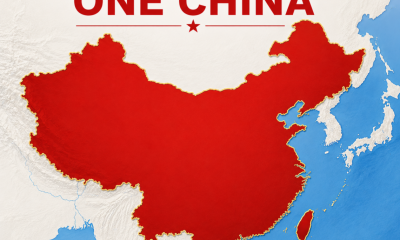
Chinese Miners Are Not the Architects of Nigeria’s Banditry: A Response to Farooq A. Kperogi

By Dr Austin Maho
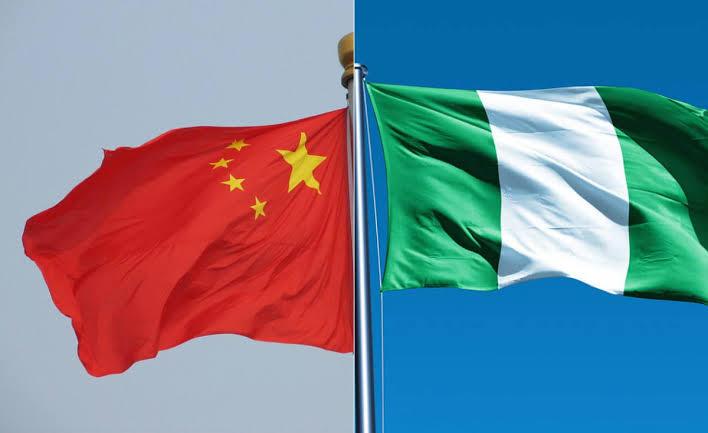
A recent article published by Farooq A. Kperogi in his syndicated weekly column, titled “How Chinese Miners Fuel Nigeria’s Terrorist Banditry”, raises an urgent question: What is the nexus between illegal mining and Nigeria’s security challenges?
It is a discussion Nigerians must have. However, going through the article, it quickly narrows into a familiar pattern: “Chinese miners fuel banditry”. The evidence cited does not support that causal leap. Worse, the framing obscures the real drivers of violence, ignores Chinese victims of the same crisis, and recycles a geopolitical cliche that paints Chinese investment as uniquely predatory. Nigerians deserve to know the truth, not create a foreign bogeyman to wish away a national crisis.
Blaming “Chinese miners” oversimplifies a complex crisis and risks xenophobic scapegoating of innocent foreigners.
1: Illegal mining is a symptom, not the disease. Banditry predates Chinese presence. Kperogi himself concedes that “illegal mining is not the sole driver of Nigeria’s insecurity.” That caveat should be the headline, not a footnote. Banditry in Zamfara exploded between 2011 and 2014, long before Chinese-linked companies became visible in the area. The 2019 Zamfara mining ban was imposed because bandit attacks were already rampant, not the other way around.
The roots are well documented: decades of state neglect, collapsed agricultural livelihoods, farmer-herder clashes exacerbated by climate stress, proliferation of small arms after Libya’s collapse, and the hollowing out of traditional conflict-resolution systems. In Niger State’s Shiroro LGA, communities were displaced by terrorists like Dogo Gide and ISWAP before any foreign company showed up. Mining did not create the terror. Terror created ungoverned space, and all kinds of actors, local and foreign criminals, rushed into the vacuum.
To say Chinese miners “fuel” banditry reverses cause and effect. As Engr. Adamu Garba Musa asked: “If bandits are disturbing people, how come the company is working successfully?” The answer is grim but obvious: companies survive by paying what villagers cannot – protection levies, extortion, coercion, shakedown or their investments go up in flames. This is not sponsorship. Conflating the two criminalises victims of coercion.
2: Chinese nationals are victims, not masterminds, of kidnapping and banditry. If Chinese-linked firms were financing bandits, why are Chinese citizens routinely kidnapped by those same bandits? The record is public:
-June 2022: Four Chinese workers abducted for ransom at a mining site in Shiroro, Niger State.
-January 2023: Two Chinese nationals kidnapped in Ogun State. One police officer killed during the attack.
-October 2023: Three Chinese expatriates taken in Osun State; millions allegedly paid for release.
-March 2024: A Chinese engineer abducted in Zamfara. Local police confirmed bandits demanded N100m.
August 2025: 2. Two Chinese miners killed in Kaduna when bandits attacked their site.
These are not isolated. The Chinese Embassy in Abuja has repeatedly issued security alerts and, in February 2026, called allegations of terror financing “completely baseless” while reaffirming “zero tolerance” policy toward its companies or citizens engaging in illegal mining abroad. It urged Chinese firms operating in Nigeria to strictly comply with Nigerian laws and regulations, and said the Chinese government supports legal enforcement by the Nigerian government against any individual or entity found violating those laws.
The statement also pushed back on narratives linking Chinese miners to banditry, noting that Chinese citizens have themselves been frequent victims of kidnapping and violent attacks at mining sites across Nigeria. The embassy called for objective, fact-based reporting rather than generalisations that stigmatise foreign investors. It reaffirmed China’s commitment to working with Nigerian authorities to promote lawful, orderly mining cooperation and to jointly safeguard security, adding that Beijing is willing to cooperate with Nigerian investigations and take action against any Chinese nationals proven to be involved in illegal activities.
No businessman kidnaps his own assets. The pattern is clear: Chinese firms, like Nigerian ones, operate in high-risk zones because minerals are there. They hire security, pay levies under duress, and sometimes lose staff. That makes them victims of state failure, not authors of it.
3: Narrowing it down to the “Chinese” label hides a Nigerian problem: elite complicity and regulatory failure. Every credible report Kperogi cites names the same prime mover: “politically connected Nigerians.” Dr. Maurice Ogbonnaya’s ISS work indicts “politically connected Nigerians”. The ENACT brief blames “Nigerians in high positions of authority”. The WikkiTimes investigation references licenses held by Nigerian companies, Eso Terra Investment Limited and Majelo Global Resources Limited.
In Nigeria’s mining sector, foreigners cannot hold titles directly. They partner with Nigerian license holders, who handle community relations, security, and politics. When WikkiTimes reports that “bandits were paid N3 million every week”, the question is: who negotiated that? Who knew the Dogo Gide faction’s account number? The fixers, facilitators, and profit-sharers are Nigerian. Chinese are mainly hired hands in the mines to provide their technical expertise and financing. Yet the headline becomes “Chinese Miners.” This is how structural corruption is laundered into ethnic outsourcing. We fire the cook and keep the menu.
4: “80 illegal” does not equal “80% Chinese”. The NEITI/ANEEJ report cited by Reuters says 80% of mining in the Northwest is illegal. It does not say 80% is Chinese. Artisanal and small-scale mining in Nigeria employs 500,000+ Nigerians, per the Ministry of Solid Minerals. They dig without licenses, sell to middlemen, and pay local chiefs. Chinese buyers are part of a long chain that includes Lebanese, Indian, Nigerian, and Togolese traders. Singling out one nationality distorts the narrative and leads to ethnic profiling.
Moreover, the same ministry Kperogi credits for reform has licensed Chinese firms that do operate legally. Examples abound: Segilola Gold in Osun, Ganfeng Lithium in Nasarawa, and others are publicly listed, pay taxes, royalties, and publish ESG reports. In February 2026, the ministry announced 388 new mineral buying centres to formalise trade. Many Chinese buyers have registered. The government’s own data shows a move toward compliance, not a conspiracy.
5: The geopolitical context: Who benefits when “China” is the villain? Kperogi’s piece lands in a crowded media ecosystem where “China in Africa” is shorthand for exploitation. Western outlets have run dozens of stories on Chinese illegal mining in Ghana, Zimbabwe, and DRC. Some are factual; many are thinly sourced. The pattern is to frame China as a unitary actor – “China” mines, “China” bribes, “China” funds terror – while Western firms are “companies” and Nigerian elites are “collaborators.”
That framing has costs. In 2023, a viral rumor that “Chinese miners were arming bandits” triggered attacks on Chinese workers in Zamfara. In 2024, the House of Reps had to debunk claims that Chinese firms were importing weapons. Narrative has body counts. Nigeria should not be a proxy in great-power competition. Our security analysis must be evidence-led, not geopolitics-led. If a Canadian or Australian firm paid bandits to access a site, we would call it what it is: corporate criminality under duress. We would not indict Canada.
6: What a serious policy response looks like – without xenophobia. Kperogi ends with six proposals. Most are sound. But they will fail if built on a faulty diagnosis. Here’s a refined version:
-Map the entire value chain, not just the foreign face. Publish beneficial owners, yes, including Nigerian PEPs. Name the local chiefs who collect surface rents, the DSS officers who escort minerals, and the customs agents who clear containers.
-Traceability must be nationality blind. Blockchain or paper, the standard should apply to every buyer: Chinese, Lebanese, Nigerian. The 388 buying centres are a start. Expand them.
-Prosecute the extorted and the extorter differently. A company that reports bandit levies to the NSA should be treated as a witness, not a sponsor. Create a safe harbour for firms that disclose payments under duress. That dries up terror financing faster than arrests.
-Secure mines the way we secure oil facilities. The reason bandits don’t tax oil fields is the Joint Task Force. The Mining Marshals arresting 350+ people is progress. Scale it, and embed military cover for legal sites.
-Diplomacy, not demagoguery. China has leverage over its nationals. In 2024, Beijing blacklisted 3 firms caught in Ghana’s galamsey. Nigeria should give the Chinese Embassy a docket of allegations and demand action. Public shaming without due process just drives illegality underground.
-Fix the livelihood crisis. Banditry pays because farming doesn’t. No amount of mining reform will work if 70% of Zamfara youth are jobless. Formalize artisanal miners into cooperatives, as Alake suggests. Give them equipment, not just arrests.
Nigeria’s minerals should be a blessing. Today they are a curse. But the curse is not Mandarin. It is impunity. It is the governor who takes a cut, the general who sells a license, the chief who rents his forest, and the bandit who taxes everyone.
Chinese firms that break the law should face the law. So should Nigerian firms. So should the officials who enable them. But to suggest that “Chinese miners fuel banditry” is to substitute a slogan for a strategy. It tells villagers in Shiroro that their enemy is a foreigner, not the governance void that left them defenceless.
Many Chinese nationals have been kidnapped, killed, and extorted in this crisis. They want what Nigerians want: roads without ambushes, sites without levies, contracts without bribes. An enabling environment for legal business is not a Chinese demand. It is a Nigerian right.
We should listen to Prof. Tade Aina and dig deeper. But let’s dig for the truth, not for a scapegoat. Banditry will end when the Nigerian state returns, with laws, with force, and with legitimacy. No embassy, East or West, can do that for us.
Dr Austin Maho is a member of the Nigerian Guild of Editors (NGE) and publisher of Daybreak Nigeria








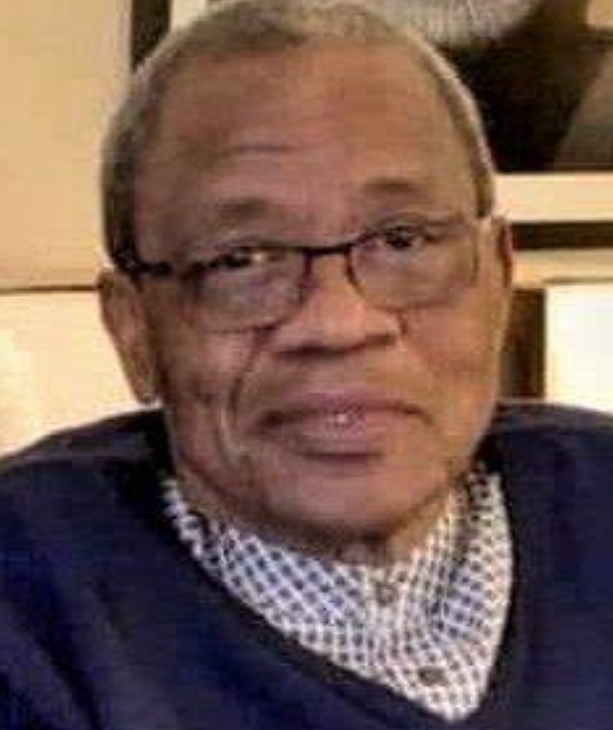
By Simon Reef Musa
One of the most discussed military rulers in Nigeria’s history, he rose to the nation’s pinnacle of power nearly 41 years ago, after dethroning the then Head of State, Major General Muhammadu Buhari, in a bloodless coup. The austere-looking Daura-born General failed to stave off further descent into despair and hopelessness; the military felt it had to intervene to end the 20-month regime, fraught with uncertainty. Given the public outcry, it became clear that the clouds were gathering for yet another coup aimed at salvaging what had remained of the country after the squandermania attitude of the sacked Second Republic politicians.
Despite a 1952 prediction by a seer, as disclosed by General Abdulsalami Abubakar, that young Babangida would become president, it took 32 years for the prophecy to be fulfilled. Unlike Shakespeare’s Macbeth, IBB, as he is popularly called, avoided violence and walked into power without bloodshed. He combined compassion and a love of humanity, which made him popular among officers and soldiers. He was born a leader, and his days in primary school demonstrated qualities that portrayed him as an altruistic leader with a charming character.
If he proved himself an unquestionable leader during his primary education in Minna, his time at the Provincial Secondary School, Bida, now renamed Government College, Bida, further shaped his character. Never a predictable student, young Ibrahim blended traits of rebellion and loyalty, with the latter earning commendation from the school authorities. He led junior students to revolt against the illegal law that forbade them from leaving the dormitories to escape the night heat.
Although he never earned grades of distinction, he was a very good student of English. That could explain his strong articulation as a conversationalist, a fascinating character that made him popular among his schoolmates. Ibrahim, the Mallam’s grandson, would eventually be appointed college head boy in recognition of his leadership qualities. Highlights of his time in Bida included the compromises he saw as necessary to navigate the challenges of serving as head boy. In Bida, the future president learned to harmonise differing opinions to build consensus. Sharpening his negotiation skills, young Ibrahim would walk the tightrope of leadership to survive the challenges.
Three years after his military training in Kaduna, he was sent abroad for further training, where he excelled. On his return to Nigeria, the January 1966 coup and the military-led insurrection that followed led to the Nigerian Civil War. Like his colleagues, Babangida had no choice but to join them in fighting for the country’s unity. He remembered how he dared the odds to save his friend and colleague, then Captain Garba Duba, amid enemy gunfire, which forced his unit to retreat. His love for his comrade-in-arms and the sheer determination proved him to be a consummate soldier who was never afraid to lay down his life for his friend.
If disobeying rules is what makes one great, the February 1976 coup led by Col Buka Suka Dimka turned the then-Colonel Babangida into a folklore hero. Unarmed and unruffled, he walked into the Radio House to meet the coup leader. Blessed with unprecedented articulatory prowess, Babangida left safely after Dimka urged him to drop his coup plan and surrender to the military authorities. He would later return to the Radio House under the strict instruction of the Chief of Army Staff, General Theophilus Yakubu Danjuma, to flush out the dissidents.
A strategist and humanist par excellence, General Babangida unleashed his altruistic leadership qualities on a nation with great potential but delivered so little to improve citizens’ living conditions. Babangida led an administration for eight years, now described as a profound period of transformational leadership and growth, with his era witnessing the assembling of the nation’s best brains and brawn to lift Africa’s giant from the labyrinth of underdevelopment. Beyond assembling the best intellectuals and technocrats to spearhead Nigeria’s development, his reign epitomised courage and conviction in turning the tables against forces militating against Nigeria.
The gap-toothed General from Minna was relentlessly determined to turn around the fortunes of a country many believed had become “God’s creation in the impossibility.” On his watch, Nigeria became a lab for solutions to make the nation work. From the economy to politics; from re-asserting the imperatives of making laws to galvanising the nation for a new democratic dawn, nothing was left untouched.
Demonstrating unwavering leadership committed to addressing the ills plaguing the country, the regime inaugurated a 17-member Political Bureau, led by Dr Samuel Joseph Cookey, to undertake a thorough analysis of Nigeria’s problems. Amid popular opposition to the International Monetary Fund (IMF) loan of N2.8 billion, the president hailed citizens for their opinion but quickly made it clear that the days ahead could prove extremely challenging. When he declared a 15-month State of Economic Emergency on 1st October 1985, it preceded the Structural Adjustment Programme (SAP), which banned imports like rice and maize to safeguard foreign exchange reserves.
Like the Yakubu Gowon-led administration, General Babangida embarked on infrastructure development and promulgated laws establishing institutions that have continued to define public service in the country. Some of his landmark projects and massive developments remain, including the nation’s capital, Abuja, made possible by his courage to relocate the nation’s capital from Lagos on 12th December 1991. This singular feat opened the nation’s capital to massive infrastructure development and energised efforts in building a capital befitting Africa’s giant.
In his administration’s attempts to rewrite Nigerian narratives, Babangida faced attempts to topple him. On his watch, two coups led by Mamman Vatsa and Gideon Orka were uncovered, with the brains behind them executed. Conspiracy theories were the usual game, but new narratives are beginning to put those theories as figments of imagination. One of them is Yakubu Mohammed’s revelation that the Newswatch magazine was never involved in investigating a drug peddler known as Gloria Okon. Before this disclosure, the popular angle to the story was that the Founding Editor-in-Chief of the Newswatch magazine was killed on account of the magazine’s probe of Okon. With one of the media platforms telling the world that it was involved in any investigation, the entire conspiracy fell flat, thus exposing the alleged investigation as untrue.
Since General Babangida turned 80 in 2021, I have had the rare privilege of visiting him many times in his Minna Hilltop residence. Over 33 years after he left power, his home has become a Mecca of sorts for many citizens trooping in for consultation. IBB’s home has become the most visited place for shakers and movers in Nigerian society, including those whose relationships with the former president have lingered. In IBB, you meet a former military leader whose compassion and large-heartedness to listen and intervene have become a wall of defence.
Through the years, the former president has never shied away from taking the blame for his government’s actions and decisions. He has continued to justify his government’s decisions on issues, including the June 12 crisis, which has been turned into a coercion for political negotiation. As the leader around which issues revolved, IBB preferred the annulment to save the country from the aftermath of revalidation of the June 12 poll.
Viewing leadership as a process that leads to either triumph or defeat, IBB stood firm in his conviction. No leader has done so much to open the democratic space. History has its own way of dressing vilified leaders in saintly clothes. Though General Babangida’s past will remain a subject of rancorous debate, citizens, surrounded by gnawing cases of misgovernance by succeeding governments, are gradually changing their perception of IBB’s place in Nigeria’s history. Though his critics have unceasingly unleashed acerbic vitriol on the former president, IBB himself has taken consolation in the words of James Truslow Adams: “There is so much good in the worst of us, and so much bad in the best of us, that it ill behoves any of us to find fault with the rest of us”.
Reaching the age of 85 is certainly a significant feat for a president whose towering courage and humanity are beyond doubt. He has served his country and continues to serve humanity in the best way he can. May abundant good health be your portion, and may the years ahead continue to strengthen you and renew your age in service for your country.
General IBB, Happy 85th birthday. Congratulations!
Simon Reef, an Abuja-based media practitioner, is a member of the Nigerian Guild of Editors (NGE)

By Ibrahim Sani Shawai
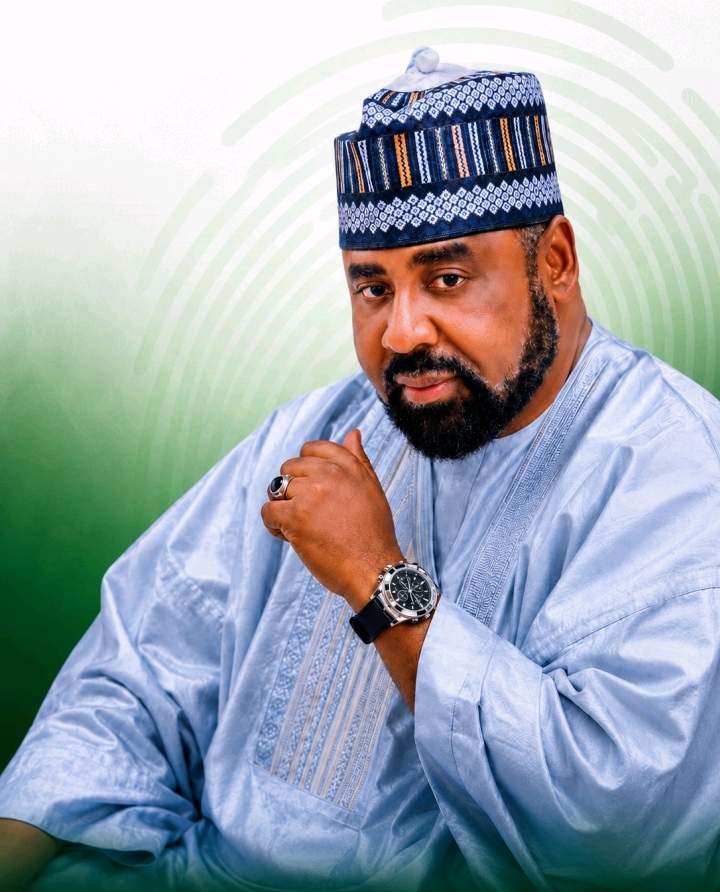
A spokesperson for Dr. Jamil Isyaku Gwamna, popularly known as Sardaunan Gombe, Ibrahim Sani Shawai, has declared that former Minister of Communications and Digital Economy, Prof. Isa Ali Ibrahim Pantami, is no match for Gwamna in the politics of Gombe State ahead of the 2027 governorship election.
Shawai, in a statement, argued that political strength goes beyond academic qualifications, social media popularity or securing a party ticket, saying sustained grassroots engagement, relationships and trust remain critical factors in electoral politics.
According to him, Gwamna has spent more than two decades building relationships and supporting individuals and communities across Gombe State. “Serious politics is built over time through people, relationships, structures, sacrifice, trust and sustained engagement with the grassroots,” he said.
Shawai claimed that Gwamna’s political network cuts across youths, women, business communities, traditional and religious groups, professionals, retired public servants and other residents of the state. He further claimed that more than 1,300 volunteer youth and women groups currently support the Sardauna movement across Gombe State, alongside networks of businesspeople, retired civil servants, community stakeholders and other organised groups.
The spokesperson also pointed to recent political realignments and alleged defections into the All Progressives Congress (APC) and towards Gwamna’s political movement as evidence of growing support for his principal.
He described the network as the product of years of political engagement rather than a structure created solely for an election. “Leadership requires the ability to build relationships, maintain friendships, accommodate differences and inspire loyalty,” Shawai said. He added that Gwamna’s experience in both the private and public sectors had equipped him with knowledge of governance and corporate management.
According to him, Gombe State needs a leader capable of managing government, attracting investment, creating opportunities and strengthening institutions while consolidating the achievements of Governor Muhammadu Inuwa Yahaya. Shawai maintained that Gwamna’s political experience, grassroots network and record of engagement positioned him strongly ahead of the 2027 contest.
Disclaimer: The claims about the size of Gwamna’s support groups, political realignments and his comparative strength against Pantami are attributed to his spokesperson and are not independently verified.

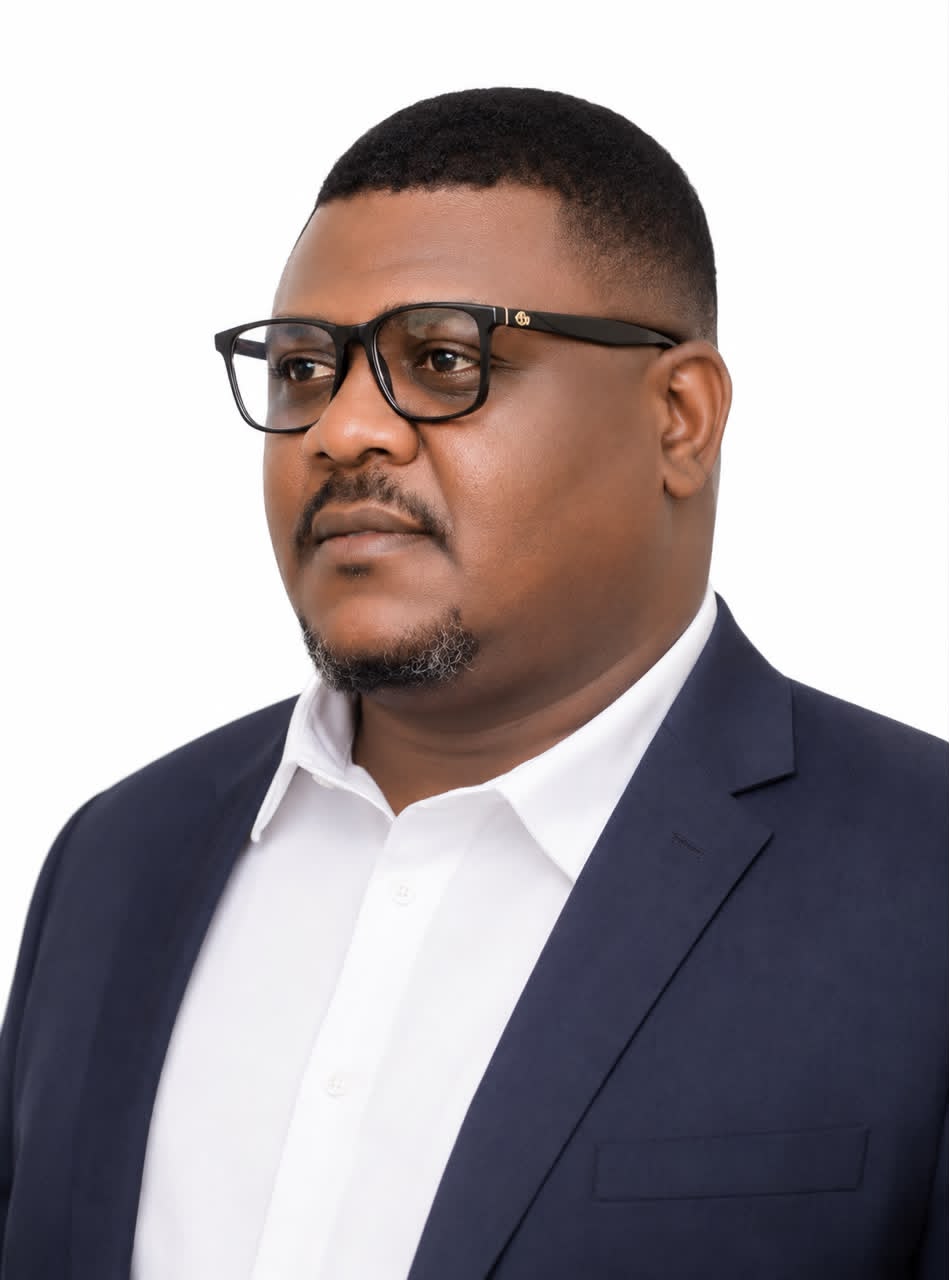
NIGERIA BELONGS TO ALL OF US
I have written this open letter to His Eminence, Alhaji Muhammad Sa’ad Abubakar III, CFR, mni, Sultan of Sokoto and President-General of the Nigerian Supreme Council for Islamic Affairs, with profound respect for his office and for the historic institution he represents.
This is not an attack on Islam, neither an attack on Christianity.
Also, It is not an attempt to diminish the historical importance of the Sultanate, rather, it is a sincere contribution to a conversation I believe Nigeria must have with greater honesty, courage and intellectual maturity:
What does equal citizenship mean in Nigeria?
Our country has a complex history involving kingdoms, caliphates, indigenous political systems, colonialism, amalgamation, independence, religion, ethnicity and competing political traditions.
But after all that history, one question remains fundamental:
Who does Nigeria belong to? My answer is simple:
Nigeria belongs to all Nigerians.
I am publishing this letter openly because I believe conversations of this magnitude should not be confined to private rooms.
I hope it reaches His Eminence.
More importantly, I hope it reaches Nigerians—Muslims and Christians alike—who believe that our future must be built on equal citizenship, mutual respect, constitutional democracy and a shared sense of belonging.
I invite people to read this letter in that spirit.
Not as a provocation or as a religious argument. But as an invitation to think.
AN OPEN LETTER TO HIS EMINENCE, ALHAJI MUHAMMAD SA’AD ABUBAKAR III, CFR, mni
SULTAN OF SOKOTO AND PRESIDENT-GENERAL, NIGERIAN SUPREME COUNCIL FOR ISLAMIC AFFAIRS
Your Eminence,
OUR HISTORY MUST BE REMEMBERED HONESTLY—BUT IT MUST NOT BECOME A CLAIM ON THE FUTURE
Nigeria’s history contains great Muslim civilisations and political institutions.
Kanem-Bornu, the Hausa states and the Sokoto Caliphate represent important chapters in the history of the territories that eventually became Nigeria.
The Sokoto Caliphate, in particular, became one of the most influential Islamic political formations in West Africa.
That history deserves recognition and respect.
But history presents us with an important question:
Does historical political authority confer permanent political ownership?
I believe the answer must be no.
The British colonial conquest and occupation of the territories that now constitute Nigeria occurred over decades, with the conquest of the Sokoto Caliphate culminating in 1903. The Northern and Southern Protectorates were subsequently amalgamated in 1914, and Nigeria achieved independence in 1960.
Whatever political arrangements existed before colonial consolidation, the Nigeria that emerged as a modern sovereign state ultimately became a constitutional republic in which citizenship could not legitimately be based upon the political history of one religion, ethnic group, kingdom or region.
Nigeria became something larger than all of those histories.
It became a country.
And that country belongs equally to the Muslim, the Christian, the adherent of another faith, and the citizen who professes no religion.
Your Eminence, Nigeria’s Constitution does not establish either Islam or Christianity as the religion of the Nigerian state.
Section 10 provides that:
“The Government of the Federation or of a State shall not adopt any religion as State Religion.”
Section 38 protects freedom of thought, conscience and religion.
Section 42 further provides constitutional protection against discrimination on the basis of religion, among other grounds.
These provisions are not merely legal technicalities. They represent an important national compact.
They establish principles of religious neutrality, religious freedom and equal citizenship.
They tell every Nigerian that his or her fundamental rights cannot legitimately depend upon belonging to the “right” religion.
That principle protects Muslims from Christian majoritarianism just as it protects Christians from Muslim majoritarianism.
And therefore, defending constitutional religious neutrality is not an attack on Islam neither an attack on Christianity.
It is protection for both.
THE DIFFICULT QUESTION OF POLITICAL SYMBOLISM
Your Eminence, this is where I believe our national conversation requires greater intellectual honesty.
A political arrangement can have two realities simultaneously:
its strategic reality and its symbolic reality.
Strategically, politicians may see a particular political ticket as an effective coalition, an electoral calculation, a mechanism for consolidating support or a means of improving political cohesion.
But citizens may interpret exactly the same arrangement symbolically.
They may ask:
Who is represented?
Who is included?
Who is excluded?
What does this say about the distribution of power?
What does this mean for people like me?
This distinction became particularly visible in Nigeria’s debate over the Muslim-Muslim presidential ticket.
Some citizens saw strategy while others saw symbolism.
Some saw political competence, Others saw the possibility of religious exclusion.
Both reactions can exist simultaneously.
A mature democracy must therefore be capable of understanding not only what a political arrangement is, but also what people believe that arrangement means.
This is not an argument against Muslims occupying political office nor should it be an argument against Christians occupying political office.
It is an argument for understanding the enormous responsibility that comes with political symbolism in a deeply religious society.
Political leaders must therefore understand that electoral strategy does not exist in a vacuum. Every political decision is interpreted through the lived experiences, fears, hopes and historical memories of the citizens who encounter it.
That is why responsible leadership requires both strategic intelligence and sensitivity to political meaning.
The Muslim citizen must not feel like a tolerated Nigerian, neither should the Christian.
This is perhaps the most important principle I wish to communicate.
A Christian should never have to feel that his citizenship is conditional upon political accommodation by Muslims. A Muslim should never have to feel that his citizenship is conditional upon political accommodation by Christians.
Neither should have to prove that his loyalty to Nigeria is greater than his loyalty to his faith.
Both should be able to say:
“Nigeria is my country, and nobody needs to give me permission to belong here.”
That is the Nigeria we should be building.
Your Eminence, traditional and religious leaders occupy a unique position in Nigerian society.
Political leaders come and go.
Governments change.
Political parties rise and fall.
But institutions such as the Sultanate carry historical memory.
That gives your words a different weight.
When a politician speaks about religion, Nigerians may suspect political calculation but when a respected religious leader speaks about coexistence, citizenship and national unity, the message can carry a moral authority that politics often cannot achieve.
This is why I believe the Sultanate has an extraordinary opportunity.
Not merely to speak for Muslims, But to speak to Nigeria.
To say clearly that the greatness of Islam in Nigeria does not require the political diminishment of Christianity. And equally, that the flourishing of Christianity in Nigeria does not require the political diminishment of Islam.
The strength of one faith should not require the weakness of another.
The security of one community should not depend upon the insecurity of another.
And the political advancement of one Nigerian should never require the political humiliation of another Nigerian simply because of religion.
WE SHOULD MOVE BEYOND THE COMPETITION FOR RELIGIOUS OWNERSHIP OF NIGERIA
There is a dangerous psychological temptation in deeply divided societies.
Each community begins to measure its security by the amount of power the other community possesses.
Then politics becomes a permanent struggle for religious arithmetic.
Who has the President?
Who has the Vice President?
Who controls the security institutions?
Who appoints judges?
Who controls the legislature?
Who controls the governors?
Who controls the economy?
And eventually, citizens stop asking the most important question:
Does the country work for everyone?
That is where we must break the cycle.
Nigeria cannot become great by producing a permanent contest between Muslim political power and Christian political power.
It can become great when both communities begin demanding something larger:
competent political power exercised for the common good.
The ultimate measure of political leadership should not be the religion of the person holding office.
It should be the quality of governance, the protection of citizens, the fairness of institutions, the security of communities and the opportunity available to every Nigerian.
PERHAPS OUR GREATEST NATIONAL TEST IS NOT RELIGIOUS DOMINANCE—BUT MUTUAL TRUST
Your Eminence, I believe Nigeria’s deepest problem is not simply that Muslims distrust Christians or Christians distrust Muslims.
It is that decades of political competition, violence, injustice, insecurity, corruption and unequal experiences of citizenship have created an enormous deficit of trust.
Religious suspicion is often the language through which that distrust expresses itself.
Therefore, if we want to defeat religious tension, we must do more than preach tolerance.
We must build institutions that make tolerance unnecessary as a condition of citizenship.
A Nigerian should not need to be tolerated.
He should simply be equal.
A Christian should not need a Muslim’s permission to belong.
A Muslim should not need a Christian’s permission to belong.
Our common citizenship should be the foundation upon which our religious differences are accommodated—not the other way around.
Your Eminence, I respectfully propose that Nigeria’s most respected Muslim and Christian leaders begin a different kind of conversation.
Not another conference where speeches are made and photographs taken.
But a serious national dialogue around five questions:
- What does equal citizenship actually mean in Nigeria?
- How should religious diversity influence political representation without becoming a mechanism for religious entitlement?
- How do we distinguish legitimate political strategy from symbolism that creates unnecessary fear or exclusion?
- How can traditional and religious institutions help rebuild trust between communities?
- What constitutional, institutional and political reforms are necessary to ensure that no Nigerian believes the country belongs more to another citizen than to himself?
These are difficult questions. But perhaps Nigeria has spent too many decades avoiding difficult questions because they are uncomfortable. And perhaps the price of that avoidance is becoming too high.
Your Eminence, history gives leaders a choice.
Every generation inherits history. But every generation also decides what to do with it.
We can use history as a weapon or wisdom
We can teach our children that Nigeria is a battlefield between religious communities.
Or we can teach them that Muslims and Christians inherited a complicated country together and have the responsibility to make it work together.
We can continue competing over who has the greater historical claim.
Or we can build a country where historical claims do not determine the value of a citizen.
I respectfully believe the latter is worthy of the office you occupy.
The greatest legacy of a historical institution is not merely that it preserves the memory of what once was.
It is that it helps a nation decide what it can become.
My final appeal Your Eminence, I do not ask you to abandon Islam.
I ask you to help Nigerians understand that Islam does not need Nigeria to belong exclusively to Muslims for Muslims to belong completely to Nigeria.
And I would say the same to Christian leaders:
Christianity does not need Nigeria to belong exclusively to Christians for Christians to belong completely to Nigeria.
The future must therefore be bigger than both arguments.
Nigeria must belong to Nigerians.
Not to Muslims.
Not to Christians.
Not to Hausa, Yoruba, Igbo, Tiv, Fulani, Igala, Idoma, Nupe, or any other ethnic nationality.
Not to the North.
Not to the South.
Not to one historical institution.
To all of us.
That, in my humble view, is the foundation upon which a truly united Nigeria can eventually be built.
I respectfully submit this thought to Your Eminence—not as an accusation, but as an invitation to a deeper national conversation.
May our religious differences become a source of moral strength rather than political division.
May our history become a source of wisdom rather than entitlement.
May our political differences never become a justification for denying one another’s citizenship.
And may the Nigeria we leave our children be a country in which neither Muslim nor Christian ever has to ask:
“Does this country belong to me?”
Because the answer should always be:“Yes. It is your country too.”
With profound respect,
Dr. Mike Achadu
A Nigerian Citizen


ADP Presidential Candidate Aliyu Bin Abbas Signs National Peace Accord

Kefas Urges Church Leaders to Defend Truth and Promote Peace in Taraba

Kaduna Police to Hold Three-Day Youth Engagement Programme on Crime and Drug Abuse
-
 News20 hours ago
BUDGET OFFICE OF THE FEDERATIONRESPONSE TO THE 2026 U.S. DEPARTMENT OF STATE FISCAL TRANSPARENCY REPORT ON NIGERIA
-
 News22 hours ago
Beyond the ECOWAS–AES Divide: Rethinking Regional Cooperation, Peace and Security in West Africa
-
 News22 hours ago
Tinubu Committed to Transforming Nigeria’s Electricity Sector, Says Power Minister
-
 Crime18 hours ago
NDLEA Arrests Alleged Cocaine Trafficking Kingpin at Lagos Airport
-
 News22 hours ago
Mangu Killings: ADC Governorship Candidate Calls for Immediate Security Action
-
 News22 hours ago
Tinubu Urges Politicians to Avoid Divisive Politics Ahead of 2027 Elections
-
 News22 hours ago
Delta to Train 1,000 Youths in Agribusiness to Boost Agriculture
-
News12 hours ago
24 Bandits Killed As Army, DSS, Vigilantes Foil Mass Kidnap in Katsina Community, Rescue Victims
You must be logged in to post a comment Login