
By Joyce Remi-Babayeju
The Minister of Humanitarian Affairs and Poverty Reduction, Dr. Bernard Doro, has called for a unified humanitarian poverty reduction response system in Nigeria.
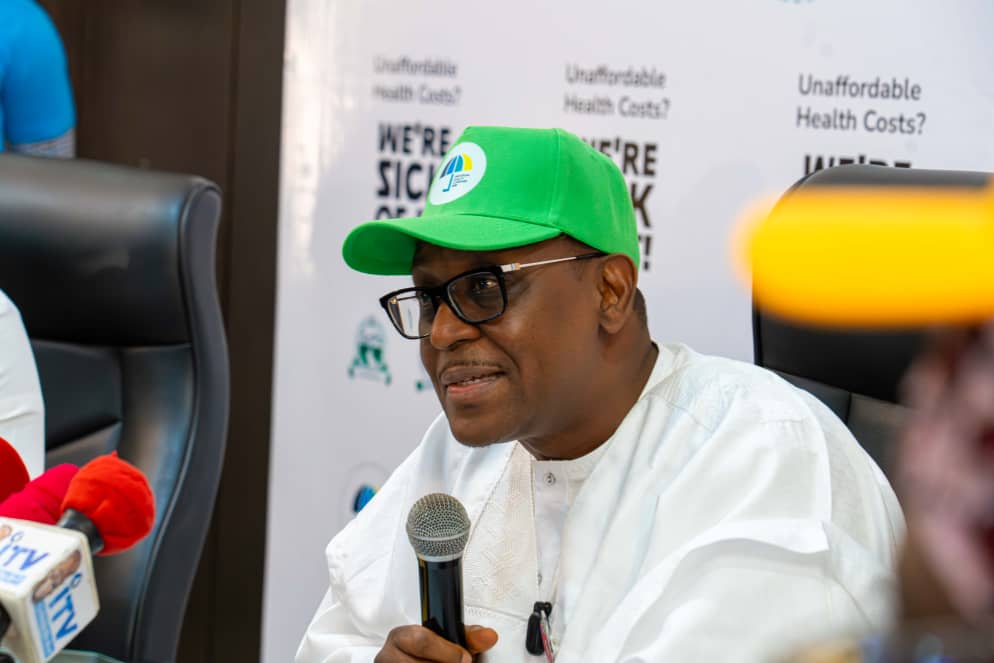
Doro made this known during a one-Day High-Level Multi-Stakeholder Dialogue on Strengthening Sub-National Ownership and Results-Based Financing (RBF) for Humanitarian and Development Interventions in Nigeria, held on Monday in Abuja.
The dialogue was organised by the Ministry of Humanitarian Affairs and Poverty Reduction, facilitated by the European Union.
Speaking at the meeting, Dr. Doro emphasized the need for states to bear the primary operational responsibility for coordinated delivery of first-line humanitarian responses in the face of recurrent flooding, insecurity, population displacement, and rising socio-economic vulnerabilities.
He also noted that sub-national ownership is no longer optional but an imperative for states and Local Government Areas (LGAs) to possess the contextual knowledge and proximity required for timely, effective, and sustainable interventions.
The minister highlighted key objectives of the dialogue to include reinforcing the operational mandates of state ministries of humanitarian affairs and poverty reduction through improved budgeting.
“Strengthened preparedness systems, enhanced emergency response coordination, and full integration of humanitarian planning into state development frameworks.”
“Building consensus on practical, state-led first-line response mechanisms, including early warning and early action models, motivation protocols for local governments, and structured coordination among State Emergency Management Agencies (SEMAs) and community-based responders.”
“Deepening understanding and application of Results-Based Financing (RBF) to support domestic resource mobilization, improve accountability, and link programme financing to measurable outcomes across humanitarian and poverty reduction initiatives.”
The minister further unveiled a key policy direction of the ministry, including the establishment of the “One Humanitarian, One Poverty Reduction System,” a National platform designed to track and harmonize all humanitarian and poverty reduction interventions across government, development partners, CSOs, and the private sector.
According to him, the system will enhance transparency, provide real-time data, enable evidence-based decision-making, and eliminate duplication, while anchoring results-based financing on verifiable outcomes.
Furthermore, he emphasized that progress in humanitarian response, social protection, and poverty reduction can be achieved through a collective determination and sustained commitment for a sustained and measurable impact on the lives of Nigerians.
In his remarks, the Minister of Budget and National Planning, Alh. Atiku Bagudu underscored the urgent need for cooperation across all tiers of government to achieve the humanitarian action, social protection, and poverty reduction in line with the mandate of the ministry’s policy.
He disclosed that the government has created reforms for increased fund inflows to states and LGAs to strengthen humanitarian and social sectors, supported by the National Development Plan and the Renewed Hope Development Agenda.
Earlier, the Permanent Secretary, Federal Ministry of Humanitarian Affairs and Poverty Reduction, Mr. Olubunmi Olusanya, urged states to leverage on the upcoming National Council on Humanitarian Affairs and Poverty Reduction slated for January 2026, for increased resources in response to Nigeria’s growing humanitarian needs.
The European Union Head of State Human Development, Ms. Leila Ben Amor Mathieu, reaffirmed the European Union’s commitment to supporting Nigeria’s humanitarian and development priorities.
End