
Politics
From Revolution to Rejuvenation: 105 Years of the Communist Party of China and Lessons for Africa

By Prof Mukhtar Imam
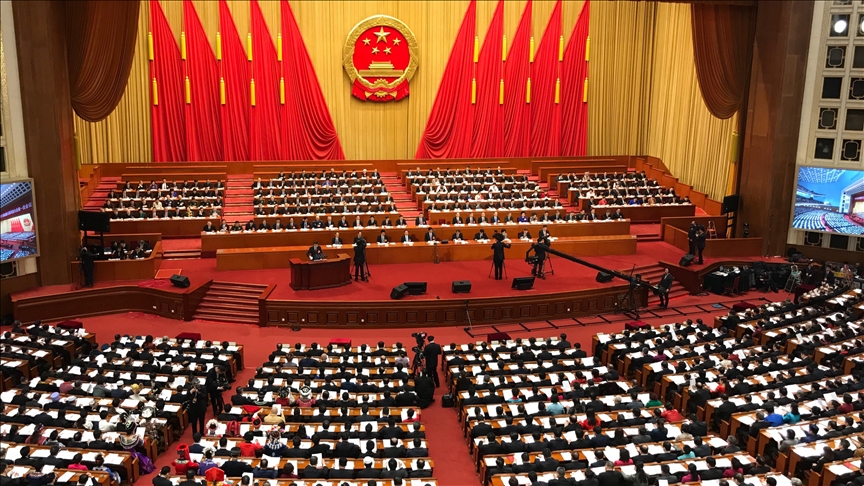
In the annals of modern history, few political organizations have transformed a nation as profoundly as the Communist Party of China (CPC). As the Party marks 105 years since its founding in 1921, the occasion offers more than a celebration of longevity; it invites reflection on one of the most remarkable national transformations the world has ever witnessed. From a war-ravaged, impoverished, semi-colonial society to the world’s second-largest economy and a leading technological, industrial, and geopolitical power, China’s rise under the leadership of the CPC stands as one of the defining stories of the twenty-first century. The scale, speed, and sustainability of China’s transformation are without historical precedent. No country in recorded history has lifted hundreds of millions of people out of poverty, built world-class infrastructure across a continental-sized nation, emerged as a manufacturing powerhouse, and become a major force in global governance within such a relatively short period. The CPC’s 105-year journey is therefore not merely China’s story; it is a chapter in world history whose implications continue to shape the international order.
When thirteen delegates gathered in Shanghai in July 1921 to establish the Communist Party of China, few could have predicted the magnitude of what would follow. China at the time was a fragmented nation suffering from foreign domination, internal strife, economic backwardness, and political instability. The newly founded Party had fewer than sixty members and faced formidable challenges. The decades that followed were marked by struggle, sacrifice, and revolution. The Party survived political persecution, civil war, and foreign invasion, most notably during China’s resistance against Japanese aggression. In 1949, under the leadership of Mao Zedong, the CPC led the establishment of the People’s Republic of China, bringing an end to a century of humiliation and national fragmentation. The creation of the People’s Republic laid the foundation for national sovereignty, territorial integrity, and state-building. Yet China remained economically poor and technologically underdeveloped. The greatest chapter of China’s transformation was still to come.
Reform and Opening-Up: The Turning Point
The watershed moment arrived in 1978 when China embarked on the policy of Reform and Opening-Up under the leadership of Deng Xiaoping. Recognizing that economic modernization was essential to national rejuvenation, the CPC introduced market-oriented reforms while maintaining political stability and strategic state guidance. The results were extraordinary. Over the following four decades, China achieved economic growth on a scale never before witnessed. Entire cities emerged from farmland. Special Economic Zones attracted foreign investment. Manufacturing capacity expanded exponentially. China integrated into global trade networks and eventually became the world’s factory. Perhaps the most remarkable achievement was poverty alleviation. According to international development institutions, China succeeded in lifting more than 800 million people out of extreme poverty—a contribution accounting for the majority of global poverty reduction during the period. This accomplishment alone would place China’s development experience among the greatest achievements in human history. The transformation was visible everywhere: modern highways stretching thousands of kilometers, high-speed rail networks connecting distant provinces, ports handling massive volumes of global trade, and urban centers becoming hubs of innovation and entrepreneurship.
The Rise of a Technological Powerhouse
China’s rise has not been confined to manufacturing and infrastructure. Under the CPC’s long-term development strategy, the country has steadily moved up the value chain, becoming a leader in science, technology, and innovation. Today, China is at the forefront of artificial intelligence, quantum computing, telecommunications, renewable energy, electric vehicles, e-commerce, and digital finance. Chinese companies compete globally in sectors once dominated exclusively by Western firms. The country’s space program offers another striking example. From launching its first satellite in 1970 to operating its own space station and conducting ambitious lunar exploration missions, China has demonstrated capabilities that place it among the world’s leading space powers. These achievements reflect a governance model that combines strategic planning, substantial investment in research and development, and the mobilization of national resources toward long-term objectives.
A New Model of Development
One of the most debated aspects of China’s rise is the development model that underpins it. For decades, conventional wisdom suggested that modernization required adopting Western political and economic institutions wholesale. China’s experience challenged this assumption. Instead, the CPC pursued what it describes as “socialism with Chinese characteristics”—a model that combines market mechanisms with strong state coordination, long-term planning, and political continuity. While opinions differ regarding the transferability of this model, few dispute its effectiveness in delivering economic growth and developmental outcomes within the Chinese context. The Party’s ability to formulate and pursue long-range national strategies stands out as one of its distinguishing characteristics. Initiatives such as the Five-Year Plans, the Made in China strategy, rural revitalization programs, ecological modernization efforts, and technological self-reliance initiatives demonstrate a governance approach focused on continuity and strategic execution.
China’s Global Footprint
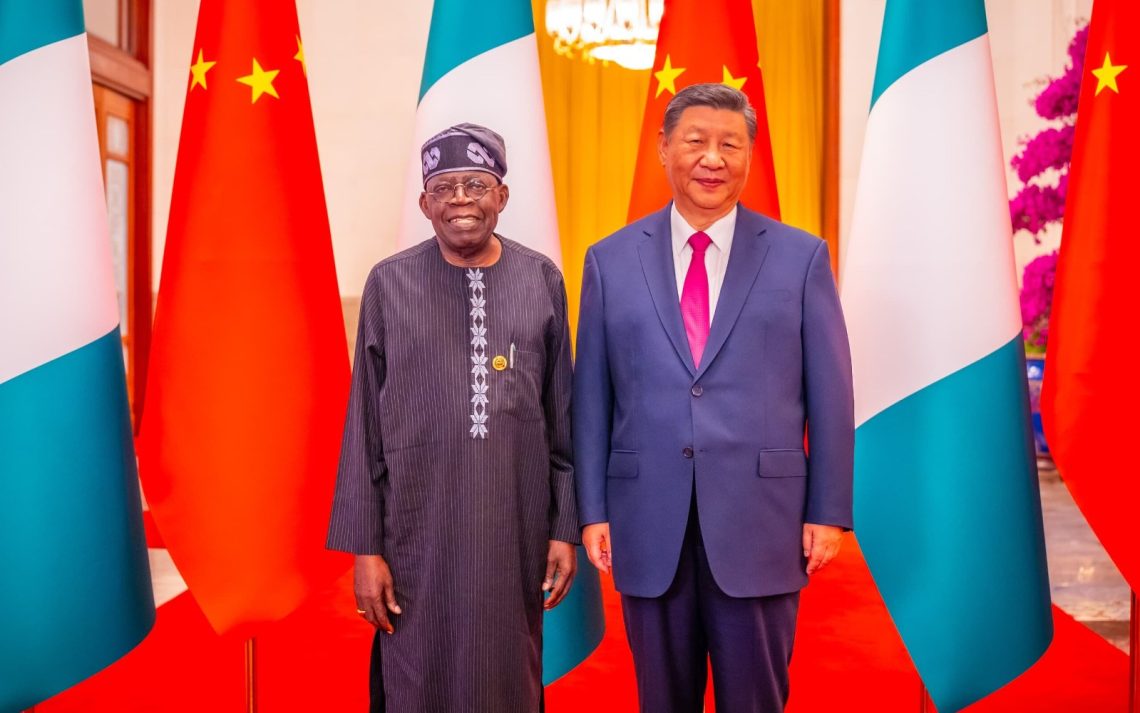
As China’s economic strength expanded, so too did its international influence. Today, China is a major trading partner for more than 140 countries and regions. It plays a central role in global supply chains and contributes significantly to international economic growth. The Belt and Road Initiative has become one of the most ambitious infrastructure and connectivity projects in modern history, linking Asia, Africa, Europe, and Latin America through investments in transportation, energy, and digital infrastructure. For developing nations, particularly in Africa, China’s rise offers both opportunities and lessons. Chinese investments have contributed to roads, railways, ports, industrial parks, and energy projects across the continent. Beyond infrastructure, China’s development trajectory has encouraged many countries to reconsider assumptions about modernization, industrialization, and state capacity. The relationship between China and Africa has become increasingly strategic. African leaders often point to China’s experience as evidence that rapid development is achievable through focused leadership, infrastructure investment, human capital development, and long-term planning.
The Uncommon Nature of China’s Transformation
What makes China’s rise truly exceptional is not simply the magnitude of its achievements but their timing and scale. Historically, great powers emerged over centuries. Britain’s rise unfolded across the Industrial Revolution and the expansion of its empire. The United States became a global superpower through a process spanning more than a century. China’s ascent, by contrast, has occurred largely within a single generation. Within less than fifty years, China transformed from a predominantly agrarian society into an advanced industrial and technological power. The speed of this transition is unparalleled. Besides, China’s rise occurred despite significant obstacles: vast population pressures, regional disparities, external geopolitical challenges, global financial crises, and periodic economic disruptions. Yet the country maintained developmental momentum while continuously adapting its policies to changing domestic and international realities. This capacity for adaptation may be one of the CPC’s most important strengths. Over 105 years, the Party has demonstrated a remarkable ability to evolve—from revolutionary movement to governing party, from central planner to market reformer, and from national liberation force to steward of a modern global power.
Lessons for the Developing World
The CPC’s 105-year journey offers valuable lessons for developing countries seeking economic transformation. First, national development requires strategic vision that extends beyond electoral cycles and short-term political considerations. Second, infrastructure matters. Roads, railways, power generation, ports, and digital connectivity are not luxuries; they are prerequisites for industrialization and competitiveness. Third, investment in education, technology, and human capital is indispensable for long-term growth. Fourth, state capacity remains crucial. Effective institutions capable of implementing policies consistently are often the difference between aspiration and achievement. Finally, development is not accidental. It requires disciplined leadership, coherent planning, and sustained commitment over decades.
Looking Ahead
As the Communist Party of China enters its second century, it faces new challenges. Economic restructuring, demographic shifts, technological competition, environmental sustainability, and complex geopolitical dynamics will test the Party’s governance capabilities. Yet regardless of future uncertainties, one fact remains undeniable: the CPC has overseen one of the most extraordinary national transformations in human history. From the small gathering of revolutionaries in Shanghai in 1921 to leading a nation that now stands at the center of global affairs, the Party’s 105-year journey represents a story of resilience, adaptation, and ambition. Whether viewed through the lens of economics, politics, development, or international relations, China’s rise under the CPC remains one of the defining phenomena of the modern era. The significance of this achievement extends far beyond China’s borders. It challenges established assumptions, reshapes global power dynamics, and offers a powerful reminder that nations can dramatically alter their destinies through vision, discipline, and sustained effort. As the world reflects on the CPC’s 105 years of existence, it is not merely commemorating the longevity of a political party. It is acknowledging the architect of one of the greatest transformations ever witnessed in the history of nations.
Professor Imam is a senior research fellow at the Nigeria National institute of Security Studies, Abuja, Nigeria


By Abigail David
The All Progressives Congress (APC) has scheduled Saturday, August 22, 2026, for its primary elections to select candidates for four restored State House of Assembly constituencies and legislative bye-elections across five states.
The party announced the timetable in a statement signed by its National Organising Secretary, Sulaiman Argungu, and released on Wednesday.
The primaries will cover three restored constituencies in Delta State — Abraka, Isoko North II and Ughelli South II — and Yagba West II in Kogi State.
The exercise will also produce APC candidates for legislative bye-elections in Gombe, Bauchi, Delta and Kano states.
According to the timetable, the sale of expression-of-interest and nomination forms will run from August 18 to 20, while the submission deadline is August 20.
Screening of aspirants, publication of results and screening appeals will take place on August 21, ahead of the primaries on August 22. Election appeals are scheduled for August 24.
The APC fixed the expression-of-interest fee for State House of Assembly aspirants at N1 million and the nomination fee at N5 million, while House of Representatives aspirants will pay N1 million and N9 million respectively.
Female, youth and physically challenged aspirants are required to pay the expression-of-interest fee and 50 per cent of the prescribed nomination fee.
The timetable follows the Independent National Electoral Commission’s restoration of the four previously suppressed constituencies after court judgments.
SEO Keywords:

By Abigail David
Natasha Osawaru, wife of Nigerian singer Innocent Idibia, popularly known as 2Baba, has been appointed Minority Leader of the Edo State House of Assembly.
Osawaru, who represents Egor Constituency, was announced as the new minority leader during Monday’s plenary following a reshuffling of the Assembly’s principal leadership positions.
Her emergence followed her defection from the Peoples Democratic Party to the National Democratic Congress in May 2026.
A statement from her Media and Strategic Communications Directorate said the reshuffle reflected new alignments among lawmakers and party caucuses in the Assembly.
Osawaru previously served as Deputy Majority Leader. She has focused on grassroots development, legislative debates, and youth and women empowerment during her time in the Assembly.
Reacting to her new position, Osawaru thanked the Assembly leadership, her colleagues and constituents.
She described the appointment as a responsibility rather than a title, pledging to promote accountability, effective representation and the development of Edo State.
Her emergence places her in a key opposition leadership role in the Edo State House of Assembly.

By Abigail David
A security expert in Katsina State, Ibrahim Katsina, has urged politicians and their supporters to embrace peaceful campaigns and focus on issues ahead of the 2027 general elections.
Katsina, a former Special Adviser on Security Matters to ex-Governor Aminu Masari, made the call in an interview with Channels Television in Katsina on Monday.
He urged political parties and candidates to promote their manifestos rather than resort to violence, intimidation, hate speech or other actions capable of creating tension.
“As the 2027 electioneering campaign draws closer, my advice to politicians is that they play according to the rules of the game in order not to overheat the polity,” he said.
Katsina also called on the Independent National Electoral Commission and security agencies to sanction political actors who incite violence or engage in thuggery.
On security, he commended the improvement recorded in Katsina State, attributing it to collaboration between the government and security agencies.
He expressed optimism that ongoing operations would further reduce insecurity before the 2027 elections, while stressing that citizens also have a role to play in maintaining peace.
“Security is everybody’s business. When we unite against terror, we will succeed,” he said.
Katsina also cautioned Nigerians against glorifying criminal activities on social media, saying such narratives could encourage criminals and undermine public confidence in security efforts.


Kefas Urges Church Leaders to Defend Truth and Promote Peace in Taraba

Kaduna Police to Hold Three-Day Youth Engagement Programme on Crime and Drug Abuse

FUL Matriculates 900 Postgraduate Students, Reaffirms Commitment to Research
-

 News17 hours ago
BUDGET OFFICE OF THE FEDERATIONRESPONSE TO THE 2026 U.S. DEPARTMENT OF STATE FISCAL TRANSPARENCY REPORT ON NIGERIA
-

 News19 hours ago
Beyond the ECOWAS–AES Divide: Rethinking Regional Cooperation, Peace and Security in West Africa
-

 News20 hours ago
Tinubu Committed to Transforming Nigeria’s Electricity Sector, Says Power Minister
-

 Crime16 hours ago
NDLEA Arrests Alleged Cocaine Trafficking Kingpin at Lagos Airport
-

 News20 hours ago
Mangu Killings: ADC Governorship Candidate Calls for Immediate Security Action
-
 News19 hours ago
Tinubu Urges Politicians to Avoid Divisive Politics Ahead of 2027 Elections
-

 News20 hours ago
Delta to Train 1,000 Youths in Agribusiness to Boost Agriculture
-
News9 hours ago
24 Bandits Killed As Army, DSS, Vigilantes Foil Mass Kidnap in Katsina Community, Rescue Victims
You must be logged in to post a comment Login