
By Israel Adamu, Jos
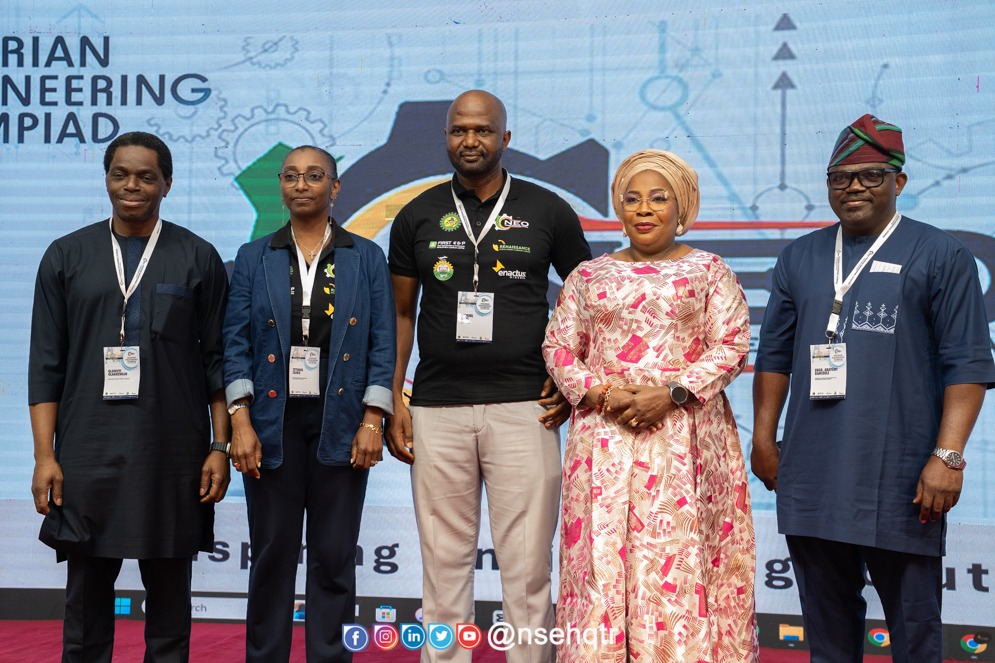
The Nigerian Society of Engineers (NSE) has restated its commitment to strengthening engineering education by deepening collaboration between academia and industry to foster meaningful national development. NSE President, Margaret Oguntala, made this known on Thursday in Abuja during the inauguration of the maiden Nigerian Engineering Olympiad (NEO).
The Olympiad is a national initiative designed to identify, train, and commercialize engineering talent in tertiary institutions. It focuses on solving critical national challenges in infrastructure, manufacturing, energy transition, sustainability, and digital technology. The programme aims to develop a new generation of job-creating engineers, problem solvers, and globally competitive innovators.
The event was organized by Enactus Nigeria in partnership with the NSE, the Nigerian Content Development and Monitoring Board (NCDMB), Renaissance Africa Energy Company (RAEC), and First Exploration and Petroleum Development Company (FIRST E&P).
In her keynote address, Oguntala said that innovation is central to engineering advancement and national growth. She emphasized that world-changing inventions—from the steam engine to artificial intelligence—began as ideas turned into action.
“As the foremost engineering professional body, NSE believes that the ideation of new ideas is critical for professional development and community impact,” she said. “Nigeria is brimming with creative minds in our universities. NEO offers a dynamic platform for students to unleash their innovative capacity and thrive.”
Oguntala, who also chairs the NSE Council, called on government agencies, academic institutions, industry leaders, and the media to prioritize support for NEO to ensure its long-term growth and national impact.
In his remarks, the Executive Secretary of NCDMB, Omatsola Ogbe—represented by Abayomi Bamidele, Director of Capacity Building—commended the initiative for aligning with the Federal Government’s drive for indigenous innovation and industrial competitiveness. He noted that ongoing NCDMB programmes in petroleum engineering, robotics, digital technology, and advanced technical disciplines would complement the Olympiad’s objectives.
Ogbe highlighted a pressing skills gap, citing industry surveys that show about 79 percent of engineering graduates lack practical, industry-aligned competencies. He warned that this deficit contributes to a shortage of qualified local engineers, reliance on expatriates, and worsening brain drain.
“Nigeria has a population exceeding 237 million, nearly half of West Africa, yet only about five percent of our engineering graduates are industry-ready at graduation,” he said. “This Olympiad provides a structured pathway to identify and support young innovators who can design solutions to national challenges.”
Enactus Nigeria Country Director, Michael Ajayi, stressed that meaningful national impact depends on strong collaboration between government, the private sector, and civil society. He noted that the Olympiad would help students apply classroom knowledge to real-world problem-solving and support them in building engineering-driven enterprises capable of generating jobs and wealth.
The Nigerian Engineering Olympiad will run a seven-month cycle featuring regional competitions, intensive mentorship, prototype development, and a national grand finale scheduled for April 2026.
The event also featured goodwill messages from the Minister of Youth Development, Ayodele Olawande—represented by Tech Adviser Ebiho Agun—and Dr. Adebisi Osim, President of the Association of Professional Women Engineers of Nigeria. The occasion concluded with the unveiling of the Olympiad website and a call to action for nationwide participation.