
Uncategorized
Step-up Nigeria Renews Call For Whistleblower Protection Law in Nigeria


By Achadu Gabriel, Kaduna
Group, ‘Step Up Nigeria’ has renewed calls for the enactment of a comprehensive Whistleblower Protection Law in Nigeria, urging the Federal Government to provide stronger legal framework to safeguard citizens who expose corruption, misconduct, and unethical practices.
The call was made during a media roundtable organized by Step Up Nigeria in partnership with the Platform to Protect Whistleblowers in Africa (PPLAAF) as part of activities commemorating the 2026 World Whistleblower Day Art and Media Competition.
Speaking at the event, the Director of Programmes at Step Up Nigeria, Mrs. Feranmi Iyanda, expressed concern over the continued absence of a dedicated legal framework protecting whistleblowers in Nigeria despite the existence of a whistleblower policy introduced in 2016.
According to her, the lack of statutory protection exposes individuals who report corruption and wrongdoing to intimidation, victimization, and retaliation.
“Everything we are advocating here is for the law to protect whistleblowers. We want to have a whistleblower protection law in Nigeria”, she said.
“There is currently no whistleblower protection law that clearly mandates protections for whistleblowers in Nigeria. Across the entire African continent, only eight countries have enacted whistleblower protection laws, which shows there is still significant work to be done,” she said.
The media roundtable brought together anti-corruption advocates, media practitioners, civil society stakeholders, students, and young creatives to discuss the importance of whistleblowing, transparency, accountability, and citizen participation in strengthening democratic governance.
Representing the Independent Corrupt Practices and Other Related Offences Commission (ICPC), Mr. Suleiman Achile, Deputy Director of the Civil Society Mobilisation Unit, highlighted ongoing efforts by the Commission to build a culture of integrity among young Nigerians.
Speaking through Dr. Babasola Oluwasina, Deputy Director of the Education Department, Achile explained that the Commission has established Anti-Corruption Clubs in secondary schools and Student Anti-Corruption Vanguards in tertiary institutions across the country.
“The ICPC has developed several youth engagement programmes focused on integrity and accountability. At the secondary school level, we have Anti-Corruption Clubs, while in tertiary institutions we have Student Anti-Corruption Vanguards.
“These initiatives are designed to equip young people with the values of honesty, integrity, and accountability so they can become responsible citizens and ethical leaders wherever they find themselves,” he said.
He further noted that the Commission is implementing the National Ethics and Integrity Policy as part of broader efforts to strengthen ethical standards and promote responsible conduct across all sectors of society.
A major highlight of the event was the 2026 World Whistleblower Day Art and Media Competition, which provided a platform for young Nigerians to use creativity and storytelling as tools for advocacy.
According to the Communications Manager of Step Up Nigeria, Dr. Shekwogaza Kure, the competition was designed to amplify youth voices and encourage conversations around whistleblower protection, anti-corruption, transparency, accountability, and responsible citizenship.
“The competition was created to provide young Nigerians with a platform to use art and media as instruments for social change. It encourages critical conversations around whistleblowing, transparency, accountability, and the urgent need for stronger legal protections for whistleblowers in Nigeria,” Kure stated.
He disclosed that the competition attracted 172 entries from across the country, comprising 111 male participants and 61 female participants, demonstrating growing youth interest in governance and anti-corruption advocacy.
“Winners emerged from various categories including music, skits, poetry and spoken word, artwork, and digital media.
“The overall winners received cash prizes of ₦500,000 each, while runners-up received ₦200,000 each in recognition of their outstanding advocacy contributions”, he stated.
The category winners included Gilbert Owan (Skits), Damilola Akinfolarin (Music), Anita Nwokoji (Poetry and Spoken Word), Moses Sodipo (Artwork), and Oguche Onuche.
Speaking on behalf of the winners, Anita Nwokoji urged Nigerians to reject silence in the face of corruption and wrongdoing.
“Wrongdoing is wrongdoing, whether it occurs in the workplace, in our communities, in schools, religious institutions, or any other environment. People must be willing to speak up whenever they witness corruption or misconduct,” she said.
Participants at the roundtable emphasized that corruption is not limited to government institutions alone but can exist in homes, businesses, schools, religious organizations, and communities. They stressed that promoting integrity and accountability requires collective action from all citizens.
The event concluded with renewed commitments from civil society organizations, media professionals, youth leaders, and anti-corruption advocates to continue championing whistleblower protection reforms and fostering a culture of transparency and accountability across Nigeria.
The World Whistleblower Day Art and Media Competition forms part of Step Up Nigeria’s broader mission to empower citizens, especially young people, to become active champions of integrity, good governance, and social accountability.
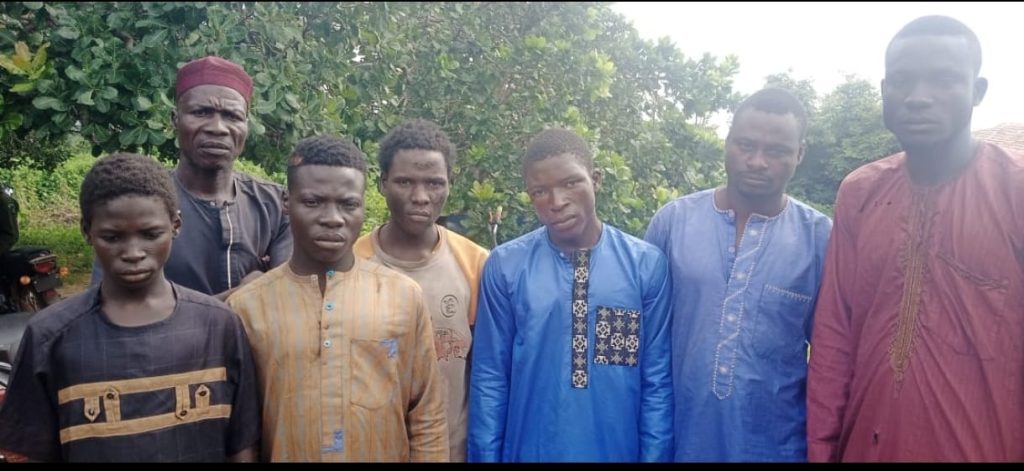
An intelligence-led operation by operatives of the Department of State Services (DSS) has led to the elimination of three suspected bandits and rescue of nine of their victims during a fierce gun battle in Ekiti Local Government Area of Kwara State.
The victims, it was leant, included farmers seized from their farmlands and others who had earlier been abducted in neighbouring Ekiti State.
They regained their freedom after the kidnappers were forced to flee under heavy gunfire, abandoning their captives.
The operation, which also involved the Kwara State Forest Guards, local hunters and vigilantes, was carried out in the Obbo Aiyegunle, Ejiu Ora and Osi axis of Ekiti LGA bordering Ekiti and Kwara States.
Speaking on Wednesday, Chief Press Secretary to the chairman of Ekiti LGA Prince Dada Sunday, confirmed the operation to journalists.
He said intelligence gathered by security agencies led to the successful rescue mission.
According to the chairman, the kidnappers, numbering more than 10, had assembled victims abducted from different locations before they were overwhelmed by the security operatives.
He disclosed that one of the victims sustained serious head injuries after he was cut with a machete while resisting abduction.
One of the rescued victims, Umaru Muazu of Obbo Aiyegunle, recounted their ordeal, saying armed men suddenly emerged and seized him and his son.
“They came from nowhere and pointed a gun to my head. Four of them took me and my son. They also took my friend’s motorcycle before marching us into the bush,” he recounted. Another rescued farmer, Ibrahim Danga, said the victims had been held captive before security operatives arrived and engaged the kidnappers.
A member of the Kwara Forest Guards, Owolabi Adebayo, confirmed that the operation was intelligence-driven.
“We neutralised three of them and rescued nine victims. They were heavily armed and possessed different types of firearms. We need more operational equipment, including body armour, binoculars, night vision goggles, walkie talkies and ammunition to effectively confront them,” he declared.
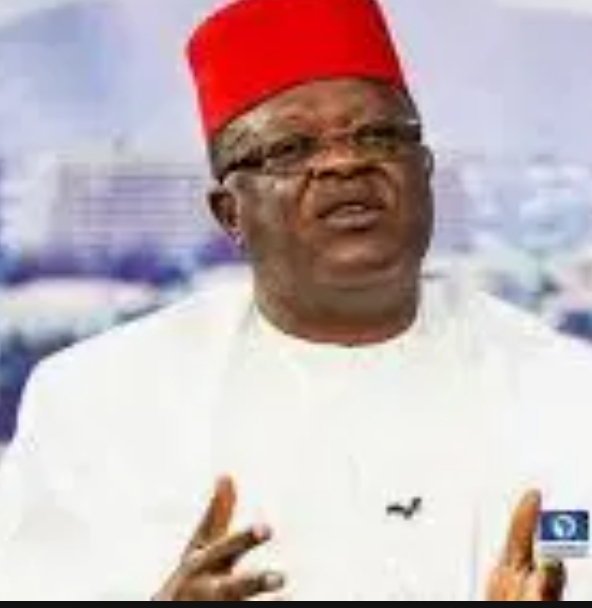
The Minister of Works, Senator Dave Umahi, has expressed confidence in the timely completion of the Lekki 7th Axial Road project following an inspection of ongoing works in the Lekki Corridor of Lagos.
The road, located behind the Dangote Refinery, is a major cargo evacuation route for the Lekki Deep Sea Port. It also links the Lekki industrial axis with the Sagamu corridor, making it a strategic project for port operations, industrial development and national logistics.
During the inspection, Umahi expressed confidence in China Harbour Engineering Company Limited (CHEC), the project contractor, citing the company’s successful delivery of the Lekki Deep Sea Port as well as the quality of work observed on the ongoing Makurdi to Enugu road reconstruction and expansion project.
He instructed that the roadbed filling works for Project Lot One must be completed by the end of April, directing the project team to increase resource input and intensify tangible on site works to meet the deadline. He stressed the need for adequate deployment of manpower, equipment and materials to ensure steady progress.
The Minister noted that the 7th Axial Road is designed to work alongside other key infrastructure projects in the area, including the Coastal Road, Dangote Road and the Lekki Port. According to him, the project will improve cargo movement, reduce pressure on existing road networks and strengthen the Lekki corridor as a major transportation and industrial hub when completed.
Umahi also called for strict compliance with environmental and safety standards, urging relevant agencies to ensure that construction progresses steadily without compromising ecological protection.
The project contractor, China Harbour Engineering Company Limited, assured the Minister of its commitment to delivering the road on schedule. A representative of the company said resources have been scaled up on site, with strong emphasis on safety, quality control and environmental protection.
He added that the road, when completed, will play a key role in easing port congestion and unlocking significant economic benefits for Lagos and the country.
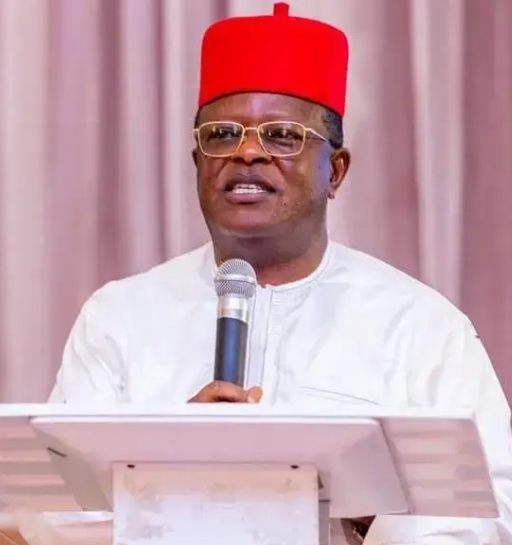
The Minister of Works, Engr. Dave Umahi, has praised China Harbour Engineering Company (CHEC) for its exceptional expertise and professionalism in reconstructing and expanding the Maraba-Keffi Road. During a visit to the project site over the weekend, Umahi commended the quality and timely progress of the completed sections, noting that CHEC has set a high standard for other contractors to follow.
Umahi advised the CHEC team to maintain the high standards and strict compliance that have characterized their work so far, particularly now that the project has entered its critical and final phase. He emphasized the importance of enhancing safety management and quality control to ensure the project’s successful completion.
The minister stated that although the contract completion date is June 2026, given the project’s importance to public transportation, he hopes CHEC will optimize its construction plan and resource allocation to strive for the overall handover by the end of February 2026, enabling the road to be fully open to traffic, thereby promoting regional socio-economic development and improving the convenience of public life.
Umahi assured CHEC that all funding issues would be resolved and the Federal Ministry of Works would expedite procedures to promptly settle all approved Interim Payment Certificates (IPCs). He also committed to ensuring that the contractor receives full project payment in a timely manner upon completion, securing the smooth conclusion of the project.
The Minister’s visit was aimed at assessing the project’s progress and urging CHEC to maintain its high standards and pace to deliver a quality road infrastructure that meets the needs of the people.


ACF Mourns Former Minister Abubakar Alhaji, Pays Tribute to Sardaunan Sokoto

Kano Assembly Begins Four-Day Legislative Retreat to Strengthen Governance

Northern Christian Leader Urges Kaduna Politicians to Avoid Divisive Politics Ahead of 2027
-
Uncategorized23 hours ago
Lekki 7th Axial Road: Umahi commands CHEC, confident of timely delivery
-

 News21 hours ago
Umahi Tours Lekki Corridor’s 7th Axial Road Project, Praises CHEC’s Progress
-
Uncategorized23 hours ago
Umahi hopes CHEC to complete road project ahead of schedule
-
Uncategorized18 hours ago
DSS, Forest Guards Kill Bandits In Gun Battle, Rescue Nine Abducted Victims in Kwara
-
 Business17 hours ago
JUST IN: Otedola buys N222bn additional First HoldCo shares to boost stake
-
 Business and Economy17 hours ago
2026 Budget: FG Agencies Allocate Nearly N400bn to Community Projects
-
 News3 hours ago
Gov. Ododo Urges Nigerians in Diaspora to Support Tinubu’s Reforms, Invest in Kogi
-
 News3 hours ago
PAAU Launches Solar-Powered Campus Tricycle Shuttle Service in Anyigba
You must be logged in to post a comment Login