
Uncategorized
The Quiet Restoration of the Attorney General of Federation’s Office

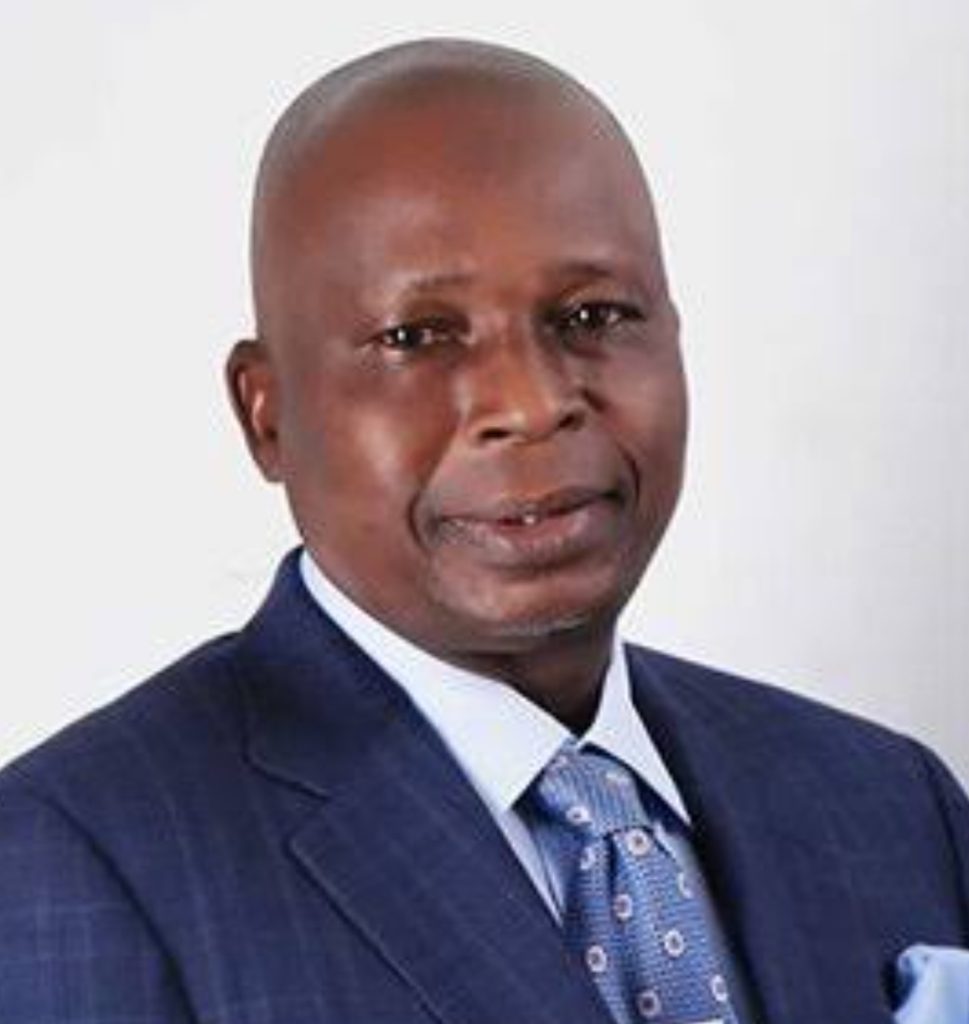
By Lemmy Ughegbe, Ph.D
For years, the office of the Attorney General of the Federation (AGF) found itself at the centre of controversies that often overshadowed its constitutional importance. Debates raged over whether the office should be separated from that of the Minister of Justice. Critics lamented what they perceived as creeping politicisation, while public confidence in the office steadily eroded.
Today, however, something remarkable appears to be happening. Quietly and without fanfare, the dignity and prestige of that office are being restored. Much of the credit for this belongs to Prince Lateef Olasunkanmi Fagbemi (SAN) whose stewardship as Attorney General of the Federation and Minister of Justice has been marked not by noise, but by professionalism, restraint and a profound respect for the institution he leads.
Against this backdrop, the relative calm that has characterised Fagbemi’s tenure should not be mistaken for inactivity. Far from it. Perhaps his most consequential intervention has been the legal battle for local government autonomy.
For decades, local governments existed largely at the mercy of state governments, with allocations often subjected to varying degrees of control and interference.
Under Fagbemi’s watch, the Federal Government took the politically risky decision of approaching the Supreme Court to challenge the practice.
The resulting judgment, which affirmed the financial autonomy of local governments, may eventually rank among the most important constitutional decisions of the Fourth Republic.
Whatever difficulties may arise in implementation, the case represented a bold attempt to deepen grassroots democracy and strengthen constitutional governance.
In fairness, the AGF has done his bit.The law has spoken. The Supreme Court has pronounced itself in clear and unambiguous terms. The responsibility now shifts from the courtroom to politics and governance.
It is now up to President Bola Ahmed Tinubu to demonstrate the political will required to ensure obedience to the judgment and guarantee that local governments receive their allocations directly from the Federation Account.
History may ultimately judge the case not by the brilliance of the legal arguments that secured victory, but by the fidelity with which the judgment is implemented.
After all, court judgments derive their true value not from the eloquence of their pronouncements, but from the willingness of governments to obey them.
Equally significant has been the increasing emphasis on terrorism prosecutions. For years, Nigerians demanded not merely arrests but convictions. After all, the true test of criminal justice is not simply the apprehension of suspects. It is securing convictions through due process.
The successful prosecution of those responsible for the horrific Owo Catholic Church massacre demonstrated that counterterrorism does not end on the battlefield. It ends in the courtroom.
Security victories are ultimately consolidated through convictions. In this regard, the Ministry of Justice under Fagbemi has played an indispensable role.
Another example of measured leadership emerged during the controversy surrounding the prosecution of minors arrested in connection with the EndBadGovernance protests. Public outrage followed the arraignment of visibly malnourished children on treason charges.
Rather than dig in, the AGF intervened, demanded the case file and subsequently directed that the charges be discontinued. It was a reminder that prosecutorial powers are not merely instruments of punishment. They are also instruments of justice. At a time when emotions were high, the AGF chose restraint over vengeance and compassion over rigidity.
Perhaps equally noteworthy is what has not happened. Unlike previous eras when Attorneys-General frequently found themselves at the centre of public controversies and institutional confrontations, Fagbemi has largely allowed the courts and the law to speak.
He has conducted himself with the restraint, dignity and professionalism expected of the nation’s chief law officer.
Indeed, one of the most striking features of his stewardship has been his evident determination to distance both himself and his office from the temptations of partisan politics.
He has neither sought political relevance nor attempted to transform the office into a platform for political grandstanding.
That distinction matters.
Because the office of the AGF is too important to become merely another political office.
Indeed, for years, legal scholars and public affairs commentators vigorously debated whether the office of the AGF should be separated from that of the Minister of Justice.
The argument was driven largely by concerns that the fusion of both offices often created tensions between professional legal responsibilities and partisan political considerations.
Successive controversies involving some occupants of the office only strengthened calls for such constitutional surgery.
Curiously, the intensity of that debate has diminished considerably under the stewardship of Prince Lateef Olasunkanmi Fagbemi.
Perhaps this is because public confidence has gradually been restored through the conduct of a quintessential gentleman who has approached the office with restraint, professionalism and dignity.
His tenure serves as a reminder that institutions do not always fail because of their design.
Sometimes, they fail because of the character of those entrusted with them.
And sometimes, what appears to require constitutional amendment merely requires the right occupant.
That, perhaps, is one of the quiet but profound lessons of the present stewardship.
No AGF can satisfy everyone.
Nor should any public official be insulated from criticism.
But criticism should not prevent recognition where recognition is deserved.
Perhaps the greatest achievement of the current AGF lies not in any single case.
It lies in restoring dignity and prestige to an office whose credibility had, at different times, come under strain.
Politics rewards noise. History rewards results.
And while it may still be too early to deliver a definitive verdict on his tenure, there are sufficient indicators to suggest that Prince Lateef Olasunkanmi Fagbemi is attempting something increasingly rare in Nigerian public life.
He is placing institution above personality.
Process above spectacle.
Law above politics.
That, in itself, is worthy of notice.
Because in a country often distracted by noise, quiet reforms can sometimes become the most enduring legacy of all.
And perhaps that is the quiet restoration of the AGF’s Office.
Dr Lemmy Ughegbe, FIMC, CMC
lemmyughegbeofficial@gmail.com
WhatsApp ONLY: +2348069716645

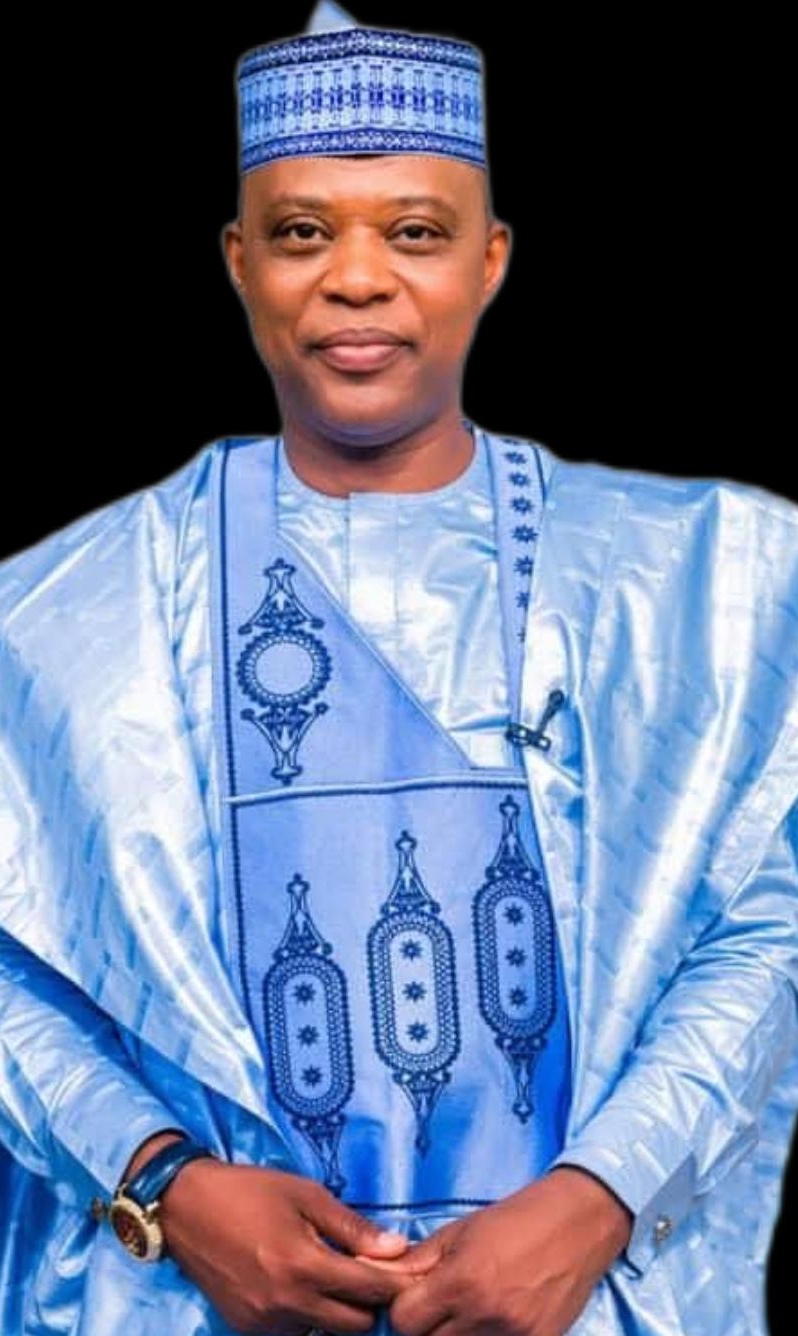
By Jabiru Hassan
The Presidential Candidate of the Action Democratic Party (ADP), Ambassador Aliyu Bin Abbas, yesterday participated in the historic signing of the first Peace Accord organised by the National Peace Committee at the International Conference Centre, Abuja.
Ambassador Aliyu Bin Abbas commended the committee for the timely initiative and reaffirmed his unwavering commitment to peaceful, credible, transparent and violence-free elections in 2027.
He urged all political leaders, candidates and supporters to embrace issue-based campaigns, respect democratic values and reject violence, hate speech and intimidation.
“No political ambition is worth the blood, peace and future of Nigeria. We may contest against one another, but we must never become enemies of Nigeria.”
He called on Nigerians, especially the youth, to participate actively and peacefully in the democratic process and vote for leadership that will unite and transform the nation.
News
24 Bandits Killed As Army, DSS, Vigilantes Foil Mass Kidnap in Katsina Community, Rescue Victims

At least 24 bandits were killed on Tuesday after soldiers of the Nigerian Army, operatives of the Department of State Services (DSS), Katsina Community Watch Corps foiled an attempt to mass-kidnap persons in Gidan Bawa village, Kandarawa Ward, Bakori Local Government Area of the state.
According to a security source, the operation followed sustained intelligence which uncovered plans by about 40 gunmen loyal to notorious bandit kingpin, Isiya Kwashen Garwa, to invade the village and abduct many residents, especially women and children.
The plot, sources said, was intended to replicate the mass abduction of residents of Woro community in Kwara State, ostensibly to embarrass the government.
Acting swiftly on the intelligence, DSS operatives mobilised the Community Watch Corps, and the Civilian Joint Task Force (CJTF) from Guga camp, and ambushed the bandits.
The source disclosed that the joint security operatives neutralised 24 bandits and rescued the abducted villagers.
Security operatives also recovered 19 stolen cattle from the community during the raid.
The source added that there were ongoing efforts to track down the fleeing bandits.

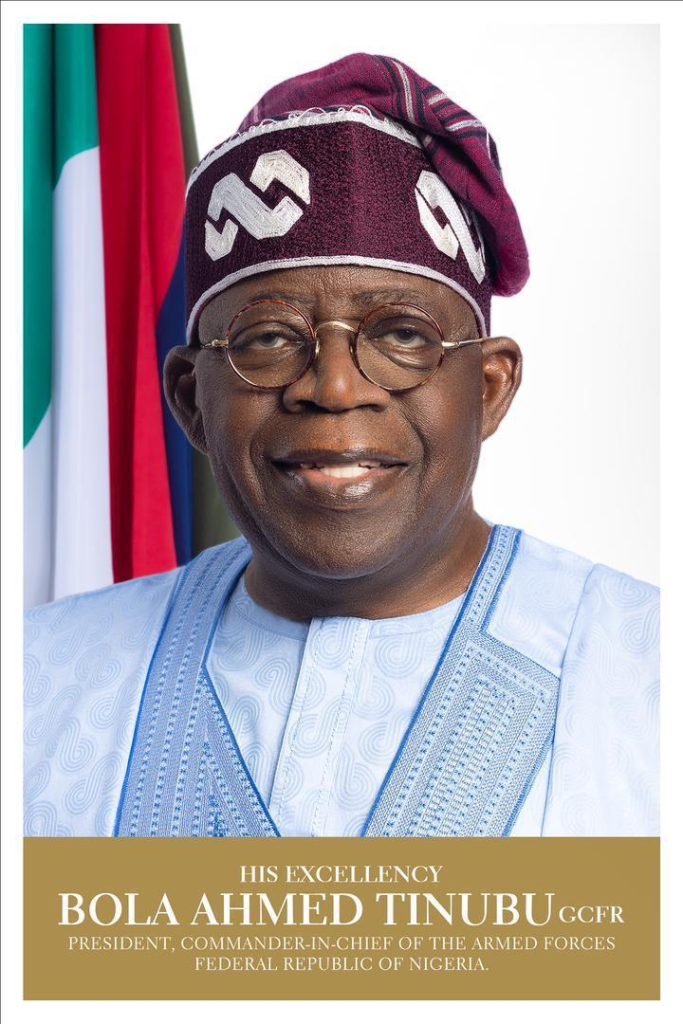
Stephen Olufemi Oni, Ilorin
President Bola Ahmed Tinubu has charged Nigerian universities to move beyond the traditional focus on awarding degrees and reposition themselves as centres of innovation, practical skills, research and national development.
The President gave the charge on Tuesday in Ilorin, Kwara State, while declaring open the 37th Annual Conference and General Assembly of the Committee of Vice-Chancellors of Nigerian Universities (CVCNU), held at the University of Ilorin.
Represented by the Minister of State for Education, Professor Suwaibat Saidu Ahmad, President Tinubu said the country could not achieve sustainable economic transformation without corresponding investment in human capital.
He described universities as critical partners in the Federal Government’s development agenda, stressing that they must produce graduates capable of responding to the realities of a rapidly changing global economy.
“Universities are more than institutions where degrees are awarded. They are centres of knowledge creation, innovation, critical thinking, entrepreneurship, cultural development and national transformation,” he said.
According to him, Nigerian universities must produce graduates who are not only academically sound but also innovative, ethical, digitally competent, entrepreneurial, adaptable and capable of solving real-world problems.
He challenged university authorities to reconsider the quality and relevance of graduates being produced, particularly in an era dominated by artificial intelligence, automation, biotechnology, data science, renewable energy and advanced manufacturing.
“The question before us is no longer simply whether our universities are producing graduates. The more foundational question is: what kind of graduates are we producing? How effectively are our universities preparing them to contribute to Nigeria’s economic and social transformation?” he asked.
Tinubu said his administration was pursuing reforms aimed at improving the quality, relevance, accessibility, affordability and accountability of tertiary education.
He explained that the Federal Ministry of Education was implementing the Nigerian Education Sector Renewal Initiative, with particular attention to institutional governance, quality assurance, research and innovation, digital transformation, skills development and stronger university-industry linkages.
The President also called for stronger practical training in Nigerian universities, noting that academic knowledge must be complemented by hands-on experience.
He disclosed that the government had begun reviewing curricula, particularly in agriculture, to shift the emphasis from theory to practical training.
“We are moving away from 70 per cent theory and 30 per cent practical to a robust 80 per cent practical and 20 per cent theory,” he said.
He added that accreditation requirements would now compel universities, faculties and departments of agriculture to establish partnerships with relevant industries, while students would be expected to undertake industrial attachments throughout their academic programmes.
According to him, the same approach would gradually be extended to other disciplines through the review of the Core Curriculum and Minimum Academic Standards (CCMAS).
Tinubu further urged vice-chancellors to strengthen research partnerships with government, industry, development partners and communities so that research findings could be transformed into products, services, policies, technologies and practical solutions to national challenges.
“Nigeria cannot become a globally competitive economy by relying primarily on the consumption of knowledge generated elsewhere,” he said.
“Our universities must become powerful engines of research, innovation, technology development and entrepreneurship.”
The President also emphasised the importance of effective university governance, urging vice-chancellors to strengthen accountability, improve institutional planning and deploy public resources prudently.
He noted that vice-chancellors were not only academic leaders but also managers, employers, financial stewards, community leaders and strategic partners in national development.
“Leadership, vice-chancellorship, is not about research. It is about administrative skills. It is about the ability to manage both research and humans at the same time,” he said.
On graduate employability, Tinubu said universities must ensure that their curricula reflected the changing demands of the labour market.
He urged institutions to strengthen internships, entrepreneurship programmes, work-based learning and university-industry partnerships, saying graduates should leave university not merely as job seekers but as value creators, innovators, entrepreneurs, professionals, researchers and responsible citizens.
The President also highlighted student welfare and access to education, saying government interventions, including the Nigerian Education Loan Fund, were designed to reduce financial barriers and expand access to tertiary education.
He, however, stressed that financial support must be accompanied by quality academic programmes, adequate infrastructure, effective student services and safe and inclusive learning environments.
Tinubu called for collective action among government, universities, students, academics, the private sector, development partners, professional bodies, regulators, alumni and communities to transform the nation’s university system.
He said the 37th CVCNU conference presented an opportunity for university leaders to move beyond identifying challenges and develop practical solutions capable of strengthening Nigeria’s higher education system.
The President commended the CVCNU for sustaining the annual platform for dialogue and collaboration and congratulated the University of Ilorin for hosting the conference.
He declared the conference officially open, urging participants to use the gathering to build a more competitive, innovative, inclusive and responsible university system.
Meanwhile, the Kwara State Government called for university reforms that would produce tangible benefits for communities rather than recommendations that would remain on government and institutional shelves.
Representing Governor AbdulRahman AbdulRazaq at the conference, the Commissioner for Education and Human Capital Development and Supervising Commissioner for Tertiary Education, Dr Lawal Olohungbebe, welcomed the vice-chancellors to Kwara State and described the University of Ilorin as one of the state’s greatest educational assets.
He said the state government recognised the importance of tertiary education but stressed that meaningful reform must begin from the basic education level.
Olohungbebe said the state introduced the KwaraLEARN programme to strengthen supervision and improve teaching and learning in public primary schools, particularly in rural communities.
“With KwaraLEARN, we are able to supervise every teacher in the class. Who is in the class, who is not in the class, and not just being in the class. What are you doing in the class?” he said.
According to him, strengthening basic education would help prepare children before they eventually enter universities.
He also praised the University of Ilorin for hosting the conference, describing the gathering of vice-chancellors as a major opportunity for knowledge-sharing and policy development.
Olohungbebe said the experience represented by the university leaders in attendance was enormous, noting that their collective years of experience could be deployed to address Nigeria’s educational challenges.
He urged participants to ensure that the outcomes of the conference translated into practical interventions that would have direct impact on communities.
“We look forward to having fruitful deliberations, and not just the ones that will end up on the shelves, but the ones that will end up in our communities, making a local impact and international relevance,” he said.
The 37th CVCNU conference brings together vice-chancellors and other stakeholders in Nigeria’s university system to deliberate on the future of tertiary education and strategies for strengthening the sector amid rapid technological, economic and social changes.


Women Must Become Co-Creators of Prosperity, Minister Says

Bella Okagbue Breaks Silence on Sheggz Breakup, Addresses Marriage and Engagement Plans

Bitcoin Surges Above $77,000 on US Crypto Policy Optimism
-
News21 hours ago
Gov Sule Commends DSS, Other Security Agencies Over Rescue of Kidnapped Victims in Nasarawa State
-
 Business11 hours ago
Gov Kefas Launches Youth Enterprise Fund, Empowers Over 200 Taraba Youths With N500,000 Each
-
 News5 hours ago
Women Must Become Co-Creators of Prosperity, Minister Says
-
News11 hours ago
Bandits Attack Kaduna Millennium City, Kill Vigilante, Abduct Woman, Son
-

 Metro plus5 hours ago
46 Bodies Recovered After Sokoto Boat Accident
-

 News5 hours ago
WAEC releases 2026 WASSCE certificates on digital platform
-
 Entertainment5 hours ago
Bella Okagbue Breaks Silence on Sheggz Breakup, Addresses Marriage and Engagement Plans
-
 Business5 hours ago
Bitcoin Surges Above $77,000 on US Crypto Policy Optimism
You must be logged in to post a comment Login