
China’s Two Sessions are the country’s most significant annual political gatherings, where key policies, economic targets, and long-term strategies are outlined and approved.
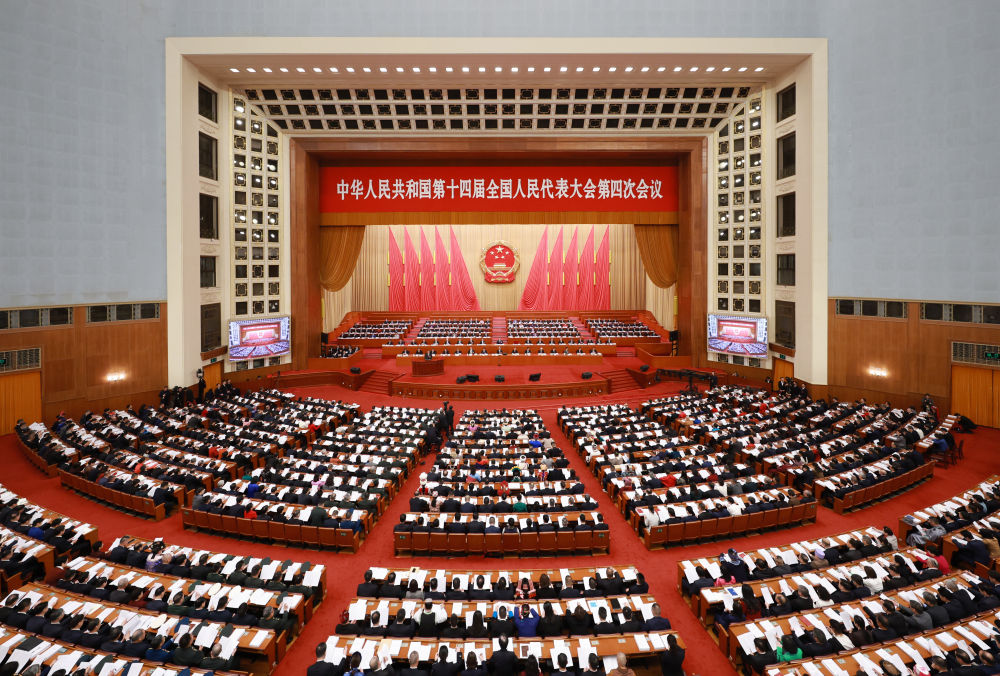
Held every March in Beijing at the Great Hall of the People, they bring together thousands of delegates from across the nation, including mainland China, Hong Kong, and Macau.
The Two Sessions consist of two parallel meetings:
-The Chinese People’s Political Consultative Conference (CPPCC): This is the top political advisory body, with over 2,000 members from diverse sectors, including non-Communist Party figures, business leaders, academics, celebrities, and representatives of various social groups. It provides recommendations and discusses policy ideas but holds no formal legislative power. The CPPCC session typically opens first (in 2026, it began on March 4).
-The National People’s Congress (NPC): This is China’s top legislature, with nearly 3,000 deputies. It is the highest organ of state power, responsible for approving laws, the budget, personnel appointments, and major plans. The NPC session opened on March 5, 2026.
Premier Li Qiang delivered the key Government Work Report on March 5, reviewing the previous year’s performance and setting the agenda ahead.
Why the 2026 Two Sessions Matter
The 2026 Two Sessions hold substantial importance for the rest of the world because they reveal the strategic direction of the globe’s second-largest economy at a pivotal moment of geopolitical tension, technological rivalry, and economic rebalancing.
A key highlight of this year’s meeting is the approval of China’s 15th Five-Year Plan (2026–2030), which serves as a detailed blueprint for national development. This plan prioritizes technological self-reliance, innovation in cutting-edge fields such as artificial intelligence, quantum technology, nuclear fusion, semiconductors, advanced manufacturing, and humanoid robotics.
The 2026 Two Sessions provide the clearest window into how China intends to navigate an era of U.S. rivalry, technological decoupling, and global uncertainty. The policies ratified here will ripple through international markets, innovation landscapes, trade relations, and geopolitical stability for years to come, making these gatherings critical signals for businesses, governments, and investors everywhere.
Key Economic Targets and Signals for 2026
-Economic growth target of 4.5% to 5%
– Surveyed urban unemployment rate of around 5.5%;
– Over 12 million new urban jobs;
– CPI increase at around 2%;
– Personal income growth in step with economic growth;
– A basic equilibrium in the balance of payments;
– Grain output of around 700 million tonnes;
– A drop of around 3.8% in carbon dioxide emissions per unit of GDP
-The deficit-to-GDP ratio set at around 4%,
Broader Implications
The Two Sessions provide rare transparency into China’s leadership priorities under Xi Jinping. They signal policy continuity in pursuing self-reliance, high-tech leadership, and domestic consumption revival while navigating trade tensions and global competition.
For the world, these gatherings offer clues about China’s economic trajectory, trade stance, defense spending and approach to issues like Taiwan or technology competition. As the inaugural year of the 15th Five-Year Plan, 2026’s outcomes will shape China’s path toward becoming a global innovation powerhouse by 2030 and beyond.
In essence, the Two Sessions are less about debate and more about ratification, but they remain a critical window into the world’s second-largest economy and its strategic direction.