
By Joyce Remi Babayeju
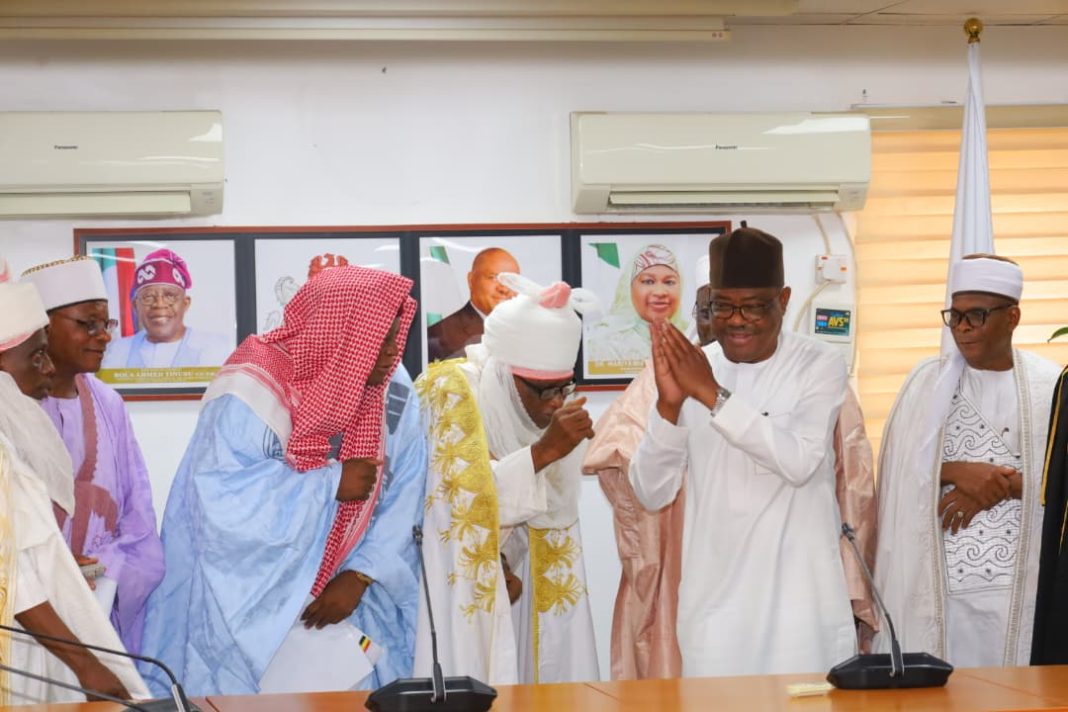
The FCT Minister, Barr. Nyesom Wike, has allocated land titles to FCT Council of Traditional Rulers, with a full waiver of Certificate of Occupancy ( C of O) and other land processing fees as
a way of strengthening ties between the government and indigenous communities.
Wike said that the gesture was a directive from President Bola Ahmed Tinubu, during a meeting with the traditional rulers in Abuja on Friday.
The minister stated that although the legal structure governing the FCT does not formally recognize ancestral ownership, the current administration acknowledges the historical presence and contributions of indigenous people.
“It will be unfair to ask you to go and look for money to pay for land you have occupied for generations,” he stated.
“We cannot deny the fact that there are indigenous people who were here before the creation of the FCT. The President said we must extend a hand of fellowship to you. If those who make peace cannot be appreciated with land, who should be?” he said.
The Minister commended the traditional rulers for their role in ensuring what he described as the most peaceful Area Council elections in the history of the FCT, noting that their cooperation has contributed significantly to stability in the territory.
Wike also promised the provision of utility vehicles to all traditional rulers in the FCT as a suportive measure towards sustaining peace and order in the territory.
He highlighted ongoing infrastructure development in satellite towns, including the dualization of the Airport–Kuje road, the Bwari–Zuba link road, Apo–Karshi road, and projects in Basan Jiwa, as well as the completion of the Arab Road network.
A major highlight of the event was the waiver of all land processing fees, which Wike described as a matter of fairness.
Responding on behalf of the Council, the Ona of Abaji, Adamu Baba Yunusa, who chairs the FCT Council of Traditional Rulers, expressed appreciation to President Tinubu and the FCT Minister for the gesture.
He assured of the continued support of traditional institutions for government policies and programmes aimed at sustaining peace and development in the territory.
End