
Opinion
From Chibok to Oriire: The Nationalization of Insecurity in Nigeria

Solomon Iliya Jeffrey
For many years, insecurity in Nigeria was often viewed through a regional lens. Terrorism was associated with the Northeast, banditry with the Northwest, and communal violence with specific localities. Citizens in relatively peaceful regions watched these developments from a distance, believing that the crisis belonged to “other people” and “other places. “Today, that assumption is becoming increasingly difficult to sustain.The recent wave of school abductions and kidnappings across different parts of the country suggests that insecurity is no longer a regional challenge but a national one.
From the abduction of schoolgirls in Chibok to the kidnapping of students in Dapchi and the recent attacks in Oriire, Nigeria is witnessing a disturbing pattern that raises critical questions about the country’s security architecture and collective response to violent threats.The tragic reality is that insecurity has gradually expanded beyond its original epicenters, reaching communities that once considered themselves insulated from such dangers. What was once perceived as a Northern problem is increasingly becoming a Nigerian problem.
The abduction of the Chibok schoolgirls in 2014 marked a turning point in Nigeria’s security history. The incident attracted international attention and exposed the devastating impact of insurgency on education and community life. Four years later, the Dapchi schoolgirls’ abduction reinforced concerns about the vulnerability of educational institutions to organized criminal and terrorist activities.
More recently, attacks on schools and communities in Oyo State and other parts of the Southwest have demonstrated that the threat is evolving geographically. The expansion of these incidents into regions previously considered safer has generated anxiety among citizens and renewed debates about the effectiveness of existing security measures.
One of the most dangerous consequences of insecurity is its impact on education. Schools are meant to be places of learning, development, and hope. When students, teachers, and parents begin to associate education with fear, the long-term consequences extend far beyond immediate security concerns.Parents may withdraw their children from school. Teachers may become reluctant to serve in vulnerable communities. Educational attainment may decline, and the nation’s human capital development may suffer. Ultimately, attacks on schools are attacks on the future of the nation itself.The growing spread of insecurity also highlights the dangers of political and regional polarization.
Too often, national tragedies are interpreted through ethnic, religious, or partisan lenses. Instead of viewing insecurity as a shared national challenge, some citizens respond selectively depending on where the incident occurs or which political actors are affected. Such attitudes only benefit criminal groups.Violent actors thrive when societies are divided. They exploit mistrust, political tensions, and institutional weaknesses. The failure of citizens to recognize their shared vulnerability can create conditions that allow insecurity to spread further.
Addressing this challenge requires more than military deployments alone. Intelligence gathering must be strengthened. Community policing initiatives should be expanded within constitutional frameworks. Local communities must be empowered to provide credible information to security agencies, while governments must invest in technology, surveillance systems, and rapid-response capabilities.
Equally important is the need to protect educational institutions through improved security infrastructure, emergency preparedness programs, and sustained investment in the Safe Schools Initiative. Nigeria cannot afford to normalize attacks on children and teachers.
The changing nature of insecurity also presents an opportunity for reflection. As attacks continue to occur across different regions, Nigerians must abandon the belief that security threats affecting one community are irrelevant to another. National security is indivisible. When one region becomes unsafe, the consequences eventually affect the entire country.The lessons from Chibok, Dapchi, and Oriire should not be forgotten. They remind us that insecurity evolves, adapts, and expands when left unchecked.
They also remind us that national unity remains one of the most powerful tools in confronting common threats.As Nigeria seeks solutions to its security challenges, one question remains worthy of continuous research, public discourse, and policy examination: Why do major waves of school abductions and attacks on educational institutions appear to intensify during politically sensitive periods, particularly in the years preceding national elections? Is this merely a coincidence driven by the strategic calculations of criminal groups seeking maximum attention and leverage, or are there deeper political, economic, social, and institutional factors that make such periods especially vulnerable to security breakdowns?
Until scholars, security experts, policymakers, and citizens can provide convincing answers, the question will remain open. What is certain, however, is that every child abducted, every teacher killed, and every school forced to close represents a failure that Nigeria cannot afford to normalize.The challenge before us is not simply to ask the question, but to ensure that future generations never have to ask it again.
Solomon Iliya Jeffrey is a serving corper at Institute for Peace and Conflict Resolution and can be reached via solomonjefferey24@gmail.com

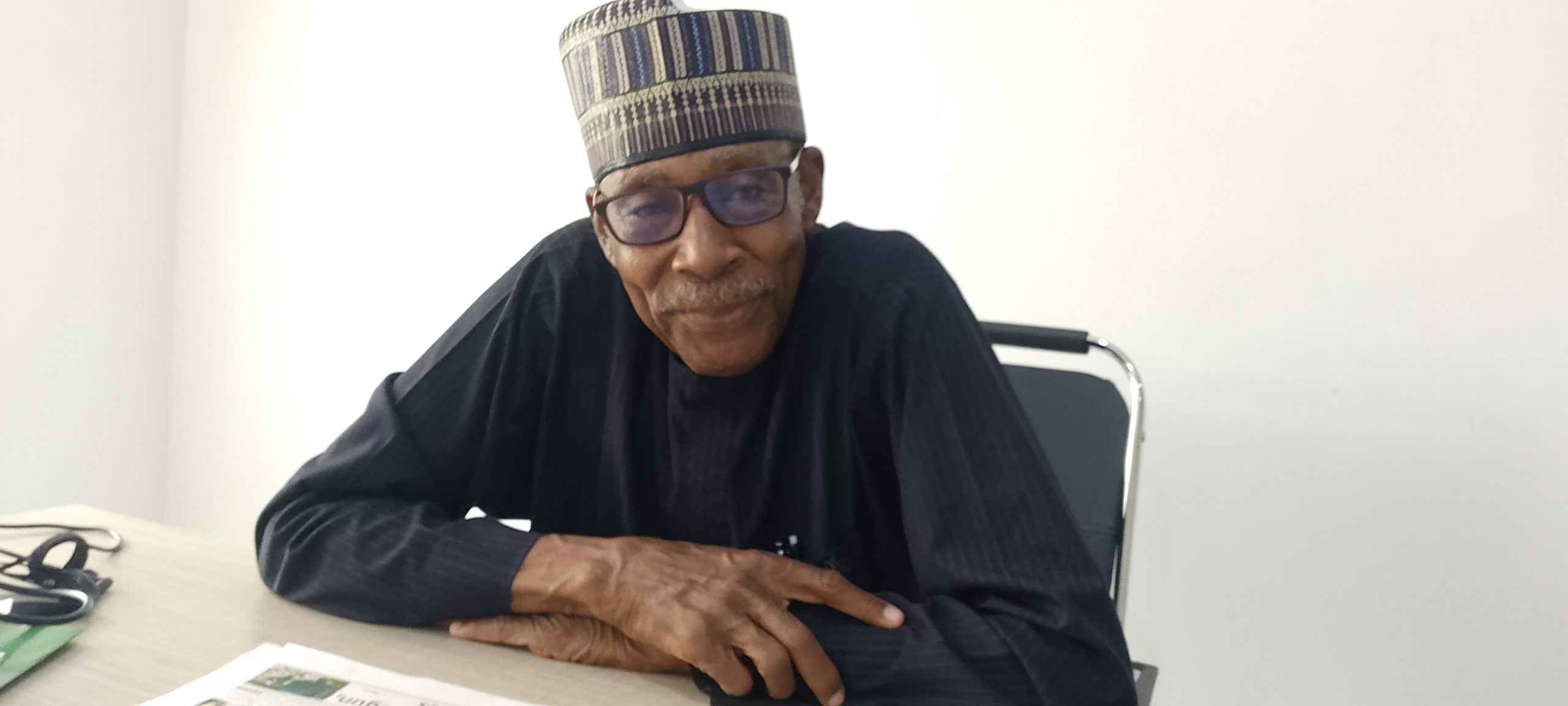
…As forum recounts real reasons in crisis
…Alleges leadership control, administrative mistakes, others
By Kaduna Correspondent
As the raging disputes in the Arewa Consultative Forum (ACF), the socio-cultural umbrella organization of northern Nigeria, has continue to deepened, allegations of leadership control tussle, administrative breaches, and mismanagement of about ₦4 billion endowment fund, amongst other reasons, have been enumerated.In this interview with our Kaduna State Correspondent, Gabriel Udeh, the National Publicity Secretary of the ACF, Prof. Tukur Muhammad-Baba, a retired professor of sociology, broke silence on the internal wrangling that recently led to the sealing of the Forum’s headquarters by police in kaduna.
Prof. Muhammad-Baba traced the crisis to attempts to usurp the powers of the National Executive Committee (NEC), disputes over tenure, and violation of the ACF constitution in the management of the Fund. He also spoke on the status of the suspended Board of Trustees Chairman, Alhaji Bashir Dalhatu, and the Forum’s position on insecurity in the North. Excerpts:
Q: Let’s know you fully and your position Sir?
A: Okay, I am Tukur Muhammad-Baba. I am a retired university lecturer. I am a scholar for life. That is, I am a professor of sociology. I was the former dean of the Faculty of Social and Management Sciences at the Federal University of Technology, Minna, among others, just before I retired. But basically, I am Tukur Muhammad-Baba. Currently, National Publicity Secretary of the Arewa Consultative Forum. I am a scholar by calling and a sociologist. Thank you so much.
Q: ACF is one of the most respected organizations in Nigeria. There are serious concerns about the recent crisis that went viral and led to police invasion. What are the real reasons ACF is neck deep in this crisis?
A: ACF is a foremost socio-cultural organization in the country. One reason it has retained credibility is because it is not ethnic-based, not religious-based. It’s political, but not partisan. We consult among various groups in the north to come up with a platform of common interest – roads, education, economic development. The north has over 300 ethnic groups. We are united by geography and sociology. For example, in Benue and in Kogi states, we have northerners who are Igbo. In Kwara state, we have northerners who are Yoruba. They are indigenous to the area. But like every modern organization, conflict is inevitable. It is how you handle disagreement that defines the organization. We’ve had personality differences over the years. If you ask me to summarize, the bone of contention is not so much ACF, it’s control of the ACF. Unprecedentedly, individuals emerged and want to control this organization in their own image. During the 25th anniversary, we launched an endowment fund for the first time because we realized there was too much political interference with governors’ contributions. The target was ₦100 billion. Pledges were about ₦7 billion, out of which a little less than ₦4 billion was generated.
Q: What exactly went wrong with the management of that fund?
A: The constitution is clear. There are five organs: Patrons, General Assembly, Board of Trustees, NEC, and NWC. NEC and NWC are the management. BoT is to advise and oversee. There has been a persistent attempt to usurp NEC’s powers by a functionary of BoT, in particular the then chairman, who assumed functions outside the constitution. The fund was moved out of Kaduna, against the constitution which says management must be at the head office. It was moved to a financial institution in Kano offering 8%. We had institutions offering 20% and 21%. By our calculation, we would have earned about ₦113 million in three months at 21%, but at 8% we earned just over ₦17 million. We also discovered part of the money was moved from one bank branch to another where an individual had a personal account, without EXCO approval, without the financial secretary or treasurer.
Q: There is also the issue of tenure of officers and leadership. What happened?
A: The constitution says the Secretary-General serves three years, renewable once. In 2023 there was a lacuna of 6-9 months with no NWC. The ex-Secretary-General continued. His letter of appointment for the second term said tenure begins from inauguration. But BoT said no, he had overstayed. Legal experts said the interim period cannot count. NEC was sidelined. We read in the papers that the SG was asked to go. Nobody wrote to NEC. The Leadership Selection Committee, which is ad hoc, had been in place for nine years. We told them they stood dissolved. They refused
.Q: The crisis led to the headquarters being sealed by police. How did that happen?
A: Disagreement over interpretation led some to invite police to seal the headquarters. It had never happened before. I told the media: when the police get bored of staying at the gate, they will leave. And within 10 days, they left. EXCO had to meet elsewhere. The chairman of BoT also intervened and said nobody should come to the meeting, but he has no power to do that under the constitution.
Q: What about Alhaji Bashir Dalhatu, the BoT Chairman? Is he still in office?
A: A petition was received that he was interfering in functions not his, moving money, and directing staff. The Code of Conduct Committee invited him. He refused to appear. The committee recommended suspension and forensic audit. EXCO endorsed it. Bashir Dalhatu was suspended as a member of ACF. By implication, he cannot be BoT Chairman because only a member can hold that position. The BoT should have appointed a new chairman. He has continued to act as if he is CEO. As of now, Bashir Dalhatu is not a member of ACF. He is a suspended member. Any action he takes as chairman is null and void.
Q: Some people are calling it fraud. Is it fraud or administrative mistake?
A: Fraud can only be established by proper investigation. It is under investigation. There is a forensic review going on. The Code of Conduct and Ethics Committee is still waiting to hear from those accused. What I can say now is there have been serious administrative lapses that violate the ACF Constitution. The money shouldn’t have been moved. The organization is losing money by keeping it at 8% instead of 20%. Whether there is fraud or not will be established after investigations.
Q: What is ACF’s position on the rising insecurity in the North?
A: Government seems more interested in politics than security. The most existential threat to Nigeria is insecurity: kidnapping, banditry, rape, inter-communal clashes. It’s not a question of capacity. Our armed forces are trained in the best military colleges worldwide. We think it’s a question of political will. Governors are chief security officers but have no control over police or military deployment. That’s a serious lacuna. We are also not in support of amnesty without accountability. You cannot have your sister raped and government surrenders your right to justice. We must decapitate these criminals and their enablers.
Q: Are there efforts to resolve the crisis?
A: Yes. Elders are intervening. Lawyers have submitted legal positions. We are hoping it will be resolved soon because the North needs to articulate its position within Nigeria. When we are united, ACF has been impactful. We reviewed the four tax bills and 80% of our recommendations were reflected. We galvanized opposition to military intervention in Niger Republic and to foreign military bases in Nigeria. Our position is simple:let everybody abide by the provisions of the constitution.
Opinion
From the Silk Road to the Sahara: Why the Dikwa–Gamboru/Ngala and Bama–Banki Roads Could Transform Africa’s Trade Future

By Mukhtar Imam
When historians recount the world’s greatest trade networks, two ancient corridors stand out. The first is the Old Silk Road, which connected China to Europe through an intricate web of commercial routes stretching from Beijing to the United Kingdom. The second is the Trans-Saharan trade route, the historic artery that connected West Africa with North Africa and the Mediterranean, making it one of the greatest engines of commerce on the African continent.
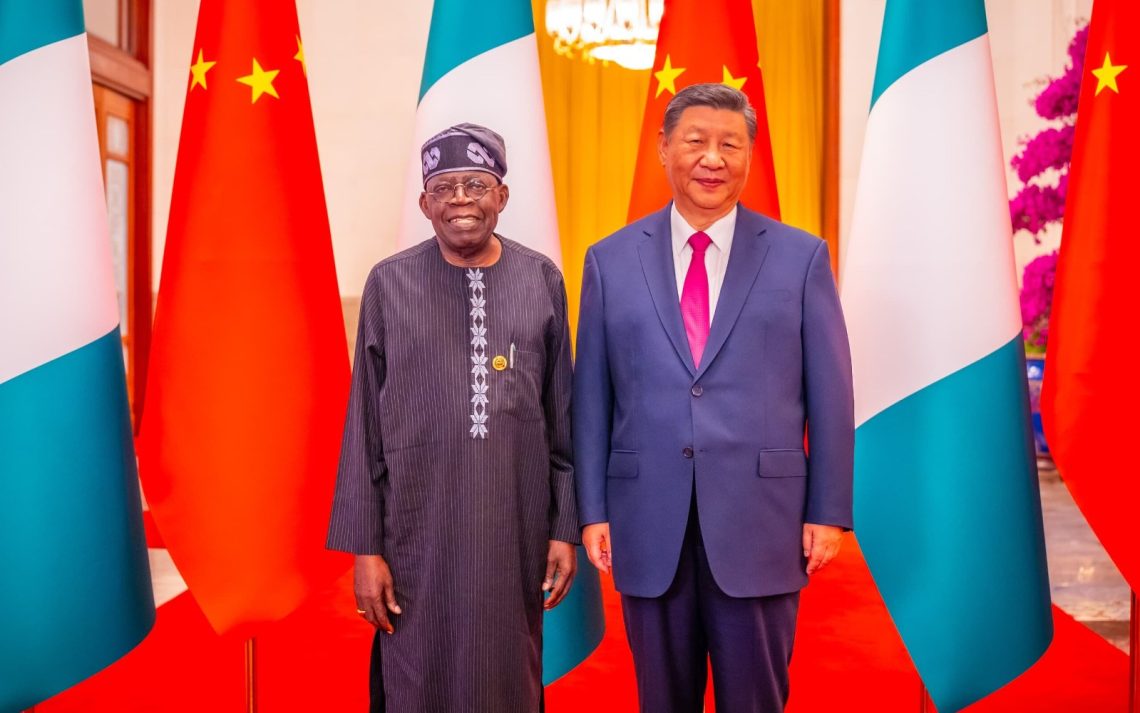
Today, China is writing a new chapter in economic history through President Xi Jinping’s Belt and Road Initiative (BRI), an ambitious programme that seeks to revive the ancient Silk Road by investing in roads, railways, ports, industrial parks, and logistics hubs across Asia, Europe, and Africa. The initiative is founded on a simple but powerful principle: connectivity drives prosperity. Nations linked by efficient transport infrastructure enjoy increased trade, greater investment, stronger regional integration, and sustained economic growth.
Nigeria now has an opportunity to embrace a similar vision within its own historical and geographical context.
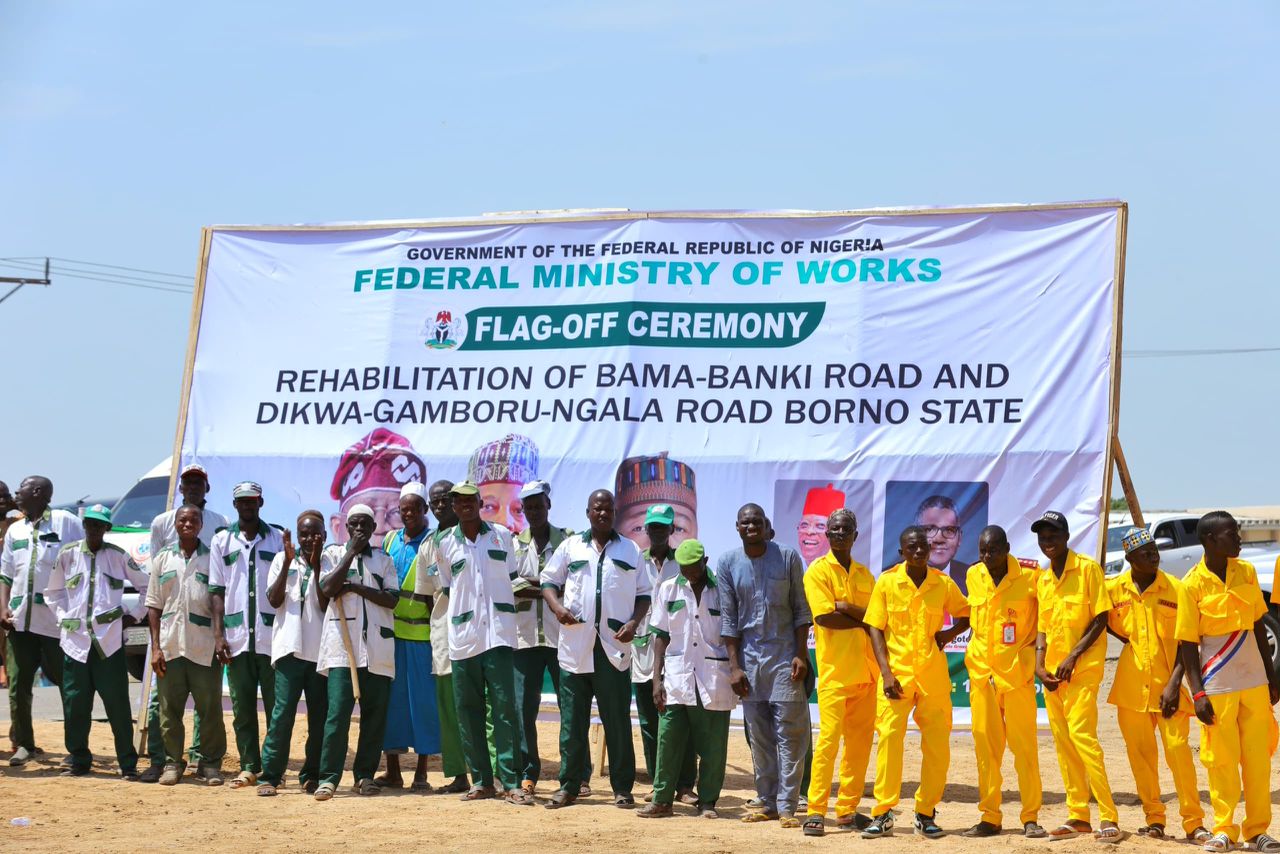
The ongoing construction of the Dikwa–Gamboru/Ngala and Bama–Banki roads in Borno State should not be viewed merely as infrastructure projects designed to improve transportation. Rather, they represent strategic economic corridors capable of reopening one of Africa’s oldest and most important commercial routes—the Trans-Saharan trade network.
For centuries, caravans traversed this route carrying gold, salt, leather, textiles, livestock, grains, and other valuable commodities between the kingdoms of West Africa and the markets of North Africa and beyond. These exchanges not only enriched economies but also facilitated the movement of knowledge, technology, religion, and culture across continents. The Trans-Saharan trade corridor became the second-largest historical trading network in the world, surpassed only by the ancient Silk Road.
Like the Belt and Road Initiative, the reconstruction of the Dikwa–Gamboru/Ngala and Bama–Banki roads is fundamentally about restoring connectivity. These roads reconnect Nigeria with Cameroon and neighbouring markets, creating vital gateways into the Lake Chad Basin and linking commercial activities across West and Central Africa. They also hold the promise of restoring trade flows that have been disrupted by years of conflict and insecurity.
The economic implications are enormous.
Efficient transport corridors reduce the cost of moving goods, improve access to domestic and international markets, attract private investment, encourage industrial development, expand agricultural value chains, and create employment opportunities. Border communities that once thrived as centres of commerce can once again become vibrant hubs of economic activity, while manufacturers, farmers, livestock traders, transporters, and exporters benefit from improved market access.
More importantly, infrastructure of this nature strengthens regional integration under the African Continental Free Trade Area (AfCFTA), positioning northeastern Nigeria as a strategic gateway for commerce between West, Central, and North Africa. As trade expands, so too does the potential for peace, stability, and shared prosperity.
China’s Belt and Road Initiative demonstrates what is possible when infrastructure is aligned with long-term economic strategy. By rejuvenating the Old Silk Road, China has created an extensive network of economic activities that spans continents, connecting Beijing with major commercial centres across Asia and Europe, ultimately reaching the United Kingdom. The objective extends beyond transportation; it is about creating interconnected economies capable of generating sustained growth and development.
The same philosophy can inspire Nigeria’s approach to rebuilding the northeast. The Dikwa–Gamboru/Ngala and Bama–Banki roads can become the backbone of a renewed Trans-Saharan economic corridor—one that restores the region’s historical significance while unlocking new opportunities for commerce, investment, and regional cooperation.
This vision, however, must extend beyond road construction. Modern border infrastructure, efficient customs administration, enhanced security, logistics parks, agro-processing zones, dry ports, and industrial clusters should accompany these transport corridors. Together, these investments would transform roads into engines of development rather than mere passageways.
History teaches that, great civilizations are built around great trade routes. The Silk Road transformed Asia and Europe. The Trans-Saharan trade route shaped the political and economic fortunes of Africa for centuries. Reviving this historic corridor through strategic infrastructure investment offers Nigeria an opportunity not simply to rebuild roads, but to reconnect economies, restore livelihoods, and reposition the country as a central player in continental trade.
The Dikwa–Gamboru/Ngala and Bama–Banki roads therefore represent something far greater than civil engineering projects. They are pathways to economic renewal, symbols of regional integration, and foundations for a more prosperous future. Just as the Belt and Road Initiative is breathing new life into the world’s greatest historical trade corridor, these roads can herald the renaissance of Africa’s second-greatest trading network—the Trans-Saharan route—and, in doing so, contribute meaningfully to the economic transformation of Nigeria and the African continent.
By Salihu Abdulhamid
As political consultations and alliances begin to emerge ahead of Nigeria’s 2027 general elections, discussions about the influence of political godfatherism are resurfacing in Kogi State. Although campaigns have not officially started, political observers say early alignments have renewed debate over how candidates may emerge and what this could mean for the state’s democratic process.
Godfatherism describes a political system in which influential figures use their networks, resources, and party influence to support candidates or shape political outcomes. While political mentorship is common in democratic systems, analysts argue concerns arise when elite influence is perceived to outweigh transparent party competition and voter choice.
Kogi State has witnessed several high-profile political transitions that have fuelled debate over the role of influential political actors. Following the death of governorship candidate Abubakar Audu during the 2015 election process, Yahaya Bello emerged as governor under decisions taken by the political party and the electoral authorities. The development generated national constitutional and political debate.
Similarly, the 2023 governorship election attracted attention after Ahmed Usman Ododo secured victory with the public backing of former Governor Yahaya Bello. Supporters described the transition as political continuity, while critics argued it highlighted the influence of powerful political actors in candidate selection.
Political analysts say the 2027 elections will test political parties’ commitment to transparent primaries, internal democracy and inclusive participation. They also note that electoral outcomes will depend on multiple factors, including candidate popularity, party organisation, voter behaviour and prevailing socio-economic conditions.
Observers say strong democratic institutions, credible elections and active citizen participation remain essential to ensuring that electoral outcomes reflect the will of voters.


PDP REAFFIRMS ABSOLUTE CONFIDENCE IN CHIEF AONDOAKAA
NDVC Dismisses Claims Linking Amagbein to ADC, Reaffirms Support for Tinubu
DSS Untreads The Old Path
-

 News17 hours ago
THE MONEY THAT NEVER MOVEDHow Nigeria’s Expenditure Controls Prevented the PEAC/PFIPC Appropriation from Becoming Public Expenditure
-

 News20 hours ago
SECOND TERM IS NOT A BIRTHRIGHT: ALIA SET TO JOIN THE LIST OF GOVERNORS WHO FELL
-
Uncategorized6 hours ago
NDVC Dismisses Claims Linking Amagbein to ADC, Reaffirms Support for Tinubu
-
Uncategorized16 hours ago
DSS Untreads The Old Path
-
 News6 hours ago
PDP REAFFIRMS ABSOLUTE CONFIDENCE IN CHIEF AONDOAKAA
You must be logged in to post a comment Login