
Uncategorized
Alleged Cybercrime: Sowore Sent Back to Kuje Correctional Centre

- By Gabriel Udeh
The Federal High Court in Abuja on Wednesday ordered that politician and online publisher, Omoyele Sowore, be sent back to the Kuje Correctional Centre until June 30 when his application for the setting aside the order of bench warrant and revocation of bail application would be considered.
On Monday, Justice Mohammed Umar, revoked the December 2025 bail he granted Sowore “based on self-recognition”, and ordered that the politician be remanded in Kuje Correctional Centre.
Before the revocation of the bail, Justice Umar had ordered Sowore to open his defence in a matter of alleged cybercrime brought against him by the Department of State Services (DSS).
At the resumed hearing of the matter, on Wednesday, Sowore’s lawyer, R. O. Adakonye, who stood in for Adeyinka Olumide-Fusika, SAN, informed the court that the matter was adjourned for hearing of their application to set aside the order of bench warrant and revocation of the bail of the defendant on account of his absence in court on 16th June, 2026.
The prosecution lawyer, A. T. Kehinde ,SAN, however, opposed the application filed by the defence. He told the court have he had filed a counter-affidavit urging the Court to refuse the application to set aside the order of bench warrant and revocation of bail against Sowore.
The judge, thereafter, adjourned the matter to June 30, 2026 for ruling on the application to set aside the order of bench warrant and revocation of bail application.
The defence lawyer begged the court to release Sowore to him, with a promise to bring the politician to court hon June 30. The judge declined the defence lawyer’s request and insisted that Sowore be taken back to Kuje Correctional Centre.
The DSS resorted to prosecuting Sowore for alleged cyber-bullying after several unsuccessful appeals to make him pull down posts he made on his “X” and Facebook accounts in August 2025, calling President Bola Tinubu a “criminal.”
Uncategorized
Oriire Kidnap: FG Arraigns Ansaru Commanders, Mahmuda, Abu Baraa and The Three New Suspects Arrested By DSS On Fresh Charges of Terrorism, Murder of Teachers

The Federal government, on Wednesday, arraigned two commanders of the Ansaru terrorist organization captured by the Department of State Services (DSS),
and their three foot soldiers, for terrorism, kidnapping and murder of two teachers of schools in Orire LGA of Oyo State.
The five suspects were arraigned before Justice Salim Ibrahin of the federal high Court, Abuja.
In August 2025, DSS operatives captured Mahmuda top commander, Abubakar Abba Mahmuda Abu Bara’a and his deputy, Abubakar Abbas aka Mallam Mahmuda Al-Nigeri.
According to security sources, after the capture, Ansaru made two attempts- one in December 2025, and another in February 2026, to free their commanders. However, the attempts were reportedly foiled by DSS intelligence to the state security council, after which the secret police continued to update intelligence on the group’s activities.
On May 15, 2026, several armed men belonging to Ansaru terror group stormed some schools in Oriire LGA of Oyo State, kidnapping 46 people made up of 39 students and seven teachers. Apparently, to mount pressure on government to release their two captured commanders in DSS’ custody, the terrorists killed two of the teachers.
On July 10, 2026, however, security forces from the DSS and the military, police and other security agencies, stormed the forest where the terrorists were holding the abductees, freeing the hostages.
During the rescue operation, DSS operatives captured three more members of the Ansaru terror organization- Abdulrazak Umar, Yunusa Musa, and Shamsu Adamu Sani.
On July 23, the three men pleaded guilty to concealing information regarding the Oriire school kidnapping and for membership in the proscribed Darul Salam/Ansaru group. They were promptly handed life imprisonment.
Relatedly, a Federal High Court in Abuja, last week, sentenced Mahmud Usman (Abu Bara’a) and his deputy Mahmud al-Nigeri, to life imprisonment after they both pleaded guilty to some charges in the 32-count charge of belonging to a terrorist organization, among other charges.
After the sentencing, feelers from the DSS suggested that the secret police was dissatisfied with the judgement and was going to appeal.
However, in a fresh twist, the DSS, on Wednesday, changed strategy, opting to arraign the terrorist commanders and three of their foot soldiers on fresh charges of terrorism, kidnapping and murder of persons in Oriire LGA.
Justice Salim adjourned the matter to September 24 for the commencement of trial. He ordered that the five suspects remain in the custody of the DSS.
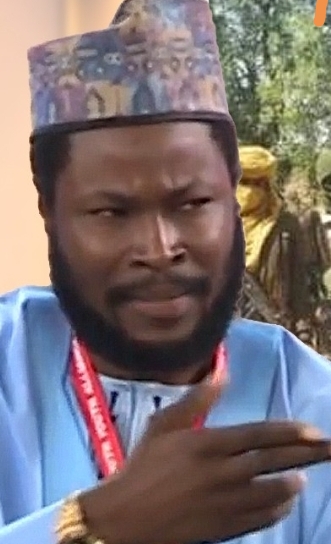
The Federal government, on Wednesday, arraigned President of the Borno State Youths Association (BOSYA), Samaila Ibrahim Kaigama, recently arrested by the Department of State Services (DSS), for terrorism.
Kaigama was arraigned before Justice Salim Ibrahim of the Federal High Court, in Abuja.
The self-styled youth president had during an interview session last week on Channels Television, admitted that he had discussions with Boko Haram terrorists on alleged ransom payments for victims they kidnapped.
Security sources disclosed that the secret police is in possession of rock-solid evidence of extortion of victims’ families by Kaigama.
Justice Ibrahim adjourned the matter to September 25, 2026, for the commencement of trial, even as he ordered that the youth president remain in the custody of the DSS.
Uncategorized
Sowore Backtracks on Bid To Invite DSS DG As Witness in Alleged Criminal Defamation Trial
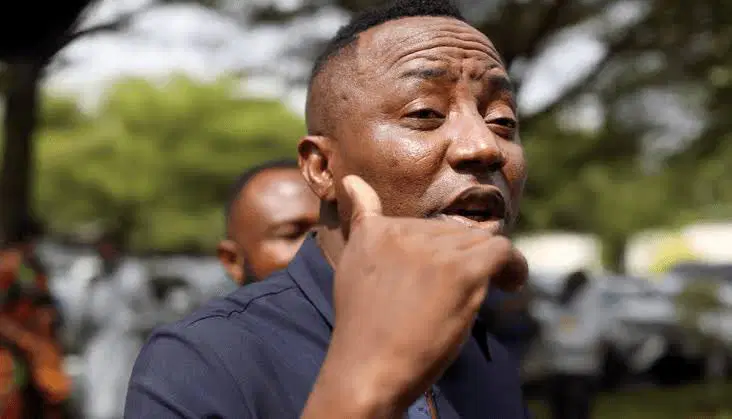
Online publisher and presidential candidate of the of the African Alliance Congress (AAC), Omoyele Sowore has jettisoned his plan to invite the Director General of the Department of State Services (DSS), Oluwatosin Adeola Ajayi, as his witness in his ongoing trial for alleged criminal defamation of President Bola Tinubu on social media.
Sowore, on Tuesday, told the Federal High Court in Abuja, that the evidence for which he had earlier subpoenaed the DSS boss could be obtained from any other official of the Service.
For the first time since the trial began, the Attorney General of the Federation and Minister of Justice, Prince Lateef Fagbemi, SAN, led the prosecution on behalf of the federal government.
The Chief law officer of the country had objected to the subpoena issued on the DSS boss on the ground that the document he was to give evidence upon was not authored by him but another person who had already testified in the matter.
He argued that the letter by the DSS advising Sowore to pull down the posts wherein he called President Tinubu a “criminal” had been tendered and admitted as exhibits twice by the same court, hence, no reason for it to be tendered the third time.
The AGF argued that the author of the letter, Mr. Uwen Davis had on July 22 testified for Sowore in the trial and that the document is already in the custody of the court.
Adeyinka Olumide Fusika, SAN, who appeared for Sowore, had objected to the appearance of the Attorney General in the matter on the ground that Akinlolu Kehinde, SAN, was the federal government lawyer in the court’s record.
The presiding judge, Muhammed Umar, adjourned the matter till Monday August 3 for continuation of defence by Sowore

Oriire Kidnap: FG Arraigns Ansaru Commanders, Mahmuda, Abu Baraa and The Three New Suspects Arrested By DSS On Fresh Charges of Terrorism, Murder of Teachers
Breaking: FG Arraigns ‘BOSYA President’ Kaigama For Terrorism

APC URGED TO UPHOLD AND RESTORE DANKAKA’S SENATORIAL CANDIDACY FOR KWARA SOUTH
-
 Politics15 hours ago
Uba Sani Picks Jerry Adams as Running Mate for 2027 Kaduna Governorship Election
-
 Sports15 hours ago
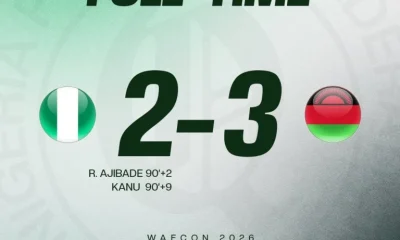
WAFCON 2026: Malawi Stun Super Falcons 3-2 in Historic Group C Upset
-
 News10 hours ago
Coalition Raises Questions Over Key Claims in Amachree’s Book
-
 News10 hours ago
2027: Sam Ode’s Pick, a Well-deserved Reward for Unalloyed Loyalty
-
 Business and Economy15 hours ago
FG Borrowing Exceeds 2024 Target by N4.79tn Amid Revenue Shortfall
-
Uncategorized3 hours ago
Breaking: FG Arraigns ‘BOSYA President’ Kaigama For Terrorism
-
Uncategorized3 hours ago
Oriire Kidnap: FG Arraigns Ansaru Commanders, Mahmuda, Abu Baraa and The Three New Suspects Arrested By DSS On Fresh Charges of Terrorism, Murder of Teachers
-
 Politics5 hours ago
APC URGED TO UPHOLD AND RESTORE DANKAKA’S SENATORIAL CANDIDACY FOR KWARA SOUTH
You must be logged in to post a comment Login