
Opinion
Insecurity and 2027: Can Nigerians Vote Safely?

By Shemudara Blessing Morayo
As Nigeria prepares for the 2027 general elections, concerns about insecurity have become central to discussions about democratic governance. Elections provide citizens with the opportunity to choose their leaders through a free, fair and credible process. However, the ability of Nigerians to exercise this constitutional right depends largely on whether voters, electoral officials and security personnel can participate without fear of violence or intimidation.
Nigeria’s security challenges have become increasingly complex over the past decade. The country continues to face insurgency in the North-East, banditry and kidnapping in the North-West, farmer-herder conflicts in parts of the North-Central, separatist agitations and attacks on public institutions in the South-East, as well as piracy, militancy and other criminal activities in the Niger Delta. Rising urban crime also poses challenges in several major cities.These overlapping threats have displaced communities, disrupted livelihoods and strained the capacity of security agencies. In some areas, insecurity has also affected education, healthcare and civic participation, raising concerns about the organisation of peaceful elections.
Electoral violence has historically been a recurring feature of Nigeria’s democratic experience. Since the return to civilian rule in 1999, some elections have been marred by voter intimidation, destruction of electoral materials, attacks on polling units and clashes between political supporters.
Although reforms by the Independent National Electoral Commission (INEC), including the use of the Bimodal Voter Accreditation System (BVAS) and electronic transmission of results, have strengthened aspects of the electoral process, technology alone cannot guarantee peaceful elections. Security remains fundamental to electoral credibility.One major concern ahead of 2027 is voter turnout. Citizens in conflict-affected communities may be reluctant to visit polling centres because of fears of attacks, kidnapping or violent confrontations. Internally displaced persons (IDPs) have also faced difficulties exercising their voting rights after being forced from their communities.
If insecurity persists, significant numbers of eligible voters could be unable or unwilling to participate, potentially affecting the inclusiveness and legitimacy of electoral outcomes. Democracy depends on broad participation, and any situation that discourages citizens from voting poses a threat to democratic consolidation.
The safety of electoral officials is another critical concern. Election administrators, ad hoc staff and logistics personnel are responsible for transporting sensitive materials and conducting elections across thousands of polling units. Insecurity can make these activities particularly difficult in remote and conflict-prone areas.
Delays, cancellations or suspension of voting in affected communities could increase political tensions and fuel allegations of voter suppression or electoral manipulation. This makes effective security planning essential. Political actors must also play their part. The use of armed groups, political thugs and criminal networks during election periods has historically contributed to violence. Hate speech, misinformation and inflammatory rhetoric can further deepen political divisions.
As political campaigns for the 2027 elections intensify, political parties and candidates must adhere to electoral laws, respect democratic norms and discourage their supporters from engaging in violence. Peaceful elections require not only effective security institutions but also responsible political leadership.The role of security agencies will be decisive. The Nigeria Police Force, Armed Forces, Department of State Services, Nigeria Security and Civil Defence Corps and other relevant institutions must work together to protect voters, electoral personnel and infrastructure before, during and after the elections. Their responsibilities should include intelligence gathering, threat assessment, crowd management and the protection of electoral facilities.
Professionalism, impartiality and respect for human rights will also be essential to maintaining public confidence in security operations. INEC must equally strengthen collaboration with security agencies and other stakeholders. Early risk assessments, contingency planning and sustained engagement with local communities can help reduce vulnerabilities in areas prone to violence.
Civil society organisations, religious leaders, traditional rulers, youth groups and the media also have important roles to play. Through voter education, peacebuilding, fact-checking and responsible reporting, these stakeholders can help counter misinformation and encourage peaceful participation.Technology presents both opportunities and challenges for election security. While digital innovations have improved aspects of voter accreditation and result management, social media platforms can also facilitate the rapid spread of misinformation and inflammatory content.
Unverified information circulating during elections can create panic and trigger unrest, particularly in communities already affected by insecurity. Government institutions, civil society organisations and technology companies should therefore promote digital literacy, fact-checking and responsible online engagement while respecting freedom of expression.
Whether Nigerians can vote safely in 2027 will ultimately depend on the willingness of all stakeholders to address insecurity proactively. Security agencies need adequate funding, training, equipment and intelligence capabilities to respond effectively to evolving threats.
Political leaders must prioritise national stability over partisan interests, while citizens should reject electoral violence and demand accountability from those seeking public office. Beyond election security, long-term investments in good governance, education, youth employment, poverty reduction and justice sector reforms are also necessary to address some of the structural conditions that contribute to insecurity.
Insecurity remains one of the major threats to Nigeria’s democratic future as the country approaches the 2027 general elections. However, the challenges are not insurmountable.Through coordinated security operations, credible electoral administration, responsible political conduct, active civic participation and sustained institutional reforms, Nigeria can create an environment where citizens are able to participate freely and safely in the democratic process.
The success of the 2027 elections should not be measured solely by the declaration of winners. It should also be judged by the extent to which eligible Nigerians can exercise their right to vote without fear. Ensuring electoral security is therefore not merely a security objective; it is a democratic imperative that will shape Nigeria’s political stability and democratic legitimacy for years to come.
Shemudara Blessing Morayo is a graduate of Veritas University, Bwari, Abuja, and is currently serving as a National Youth Service Corps (NYSC) member at the Institute for Peace and Conflict Resolution (IPCR). She can be reached at [shemudarablessing2002@gmail.com](mailto:shemudarablessing2002@gmail.com).



By Ibrahim Muhammad
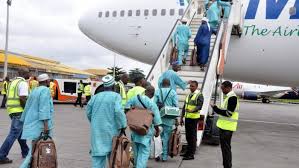
The introduction of new licensing and operational guidelines by the National Hajj Commission of Nigeria (NAHCON) signals a broader push to strengthen regulation of private Hajj and Umrah operators and improve accountability, service delivery and consumer protection.
The reforms come amid similar regulatory efforts in countries including Pakistan and Indonesia, where authorities have introduced stricter licensing, financial controls and operational requirements for private pilgrimage operators.
The guidelines are expected to address concerns over service standards, financial transparency and the activities of unlicensed operators in Nigeria’s Hajj and Umrah industry. In Pakistan, recent reforms require private Hajj operators to meet financial and corporate governance standards, undergo performance reviews and operate through a central digital platform for pilgrim registration, payments and quota management.
The framework also requires operators to meet minimum operational thresholds and comply with service agreements covering areas such as accommodation, transportation, medical support, refunds and consumer protection. Indonesia, meanwhile, requires private Hajj operators to obtain regulatory approval for proposed package costs and meet government standards on pricing and service delivery.
These developments point to a wider shift towards digital accountability, financial transparency and stronger oversight of private pilgrimage services. As NAHCON implements its new framework, stakeholders will be watching to see whether it improves service delivery, curbs unlicensed operations, promotes fair competition and creates a more sustainable environment for legitimate Hajj and Umrah operators.
Ibrahim Muhammad is the National Coordinator of Independence Hajj Reporters (IHR).
Part Two will examine the reforms and their implications for Nigeria’s private Hajj and Umrah industry.
…As forum recounts real reasons in crisis
…Alleges leadership control, administrative mistakes, others
By Kaduna Correspondent
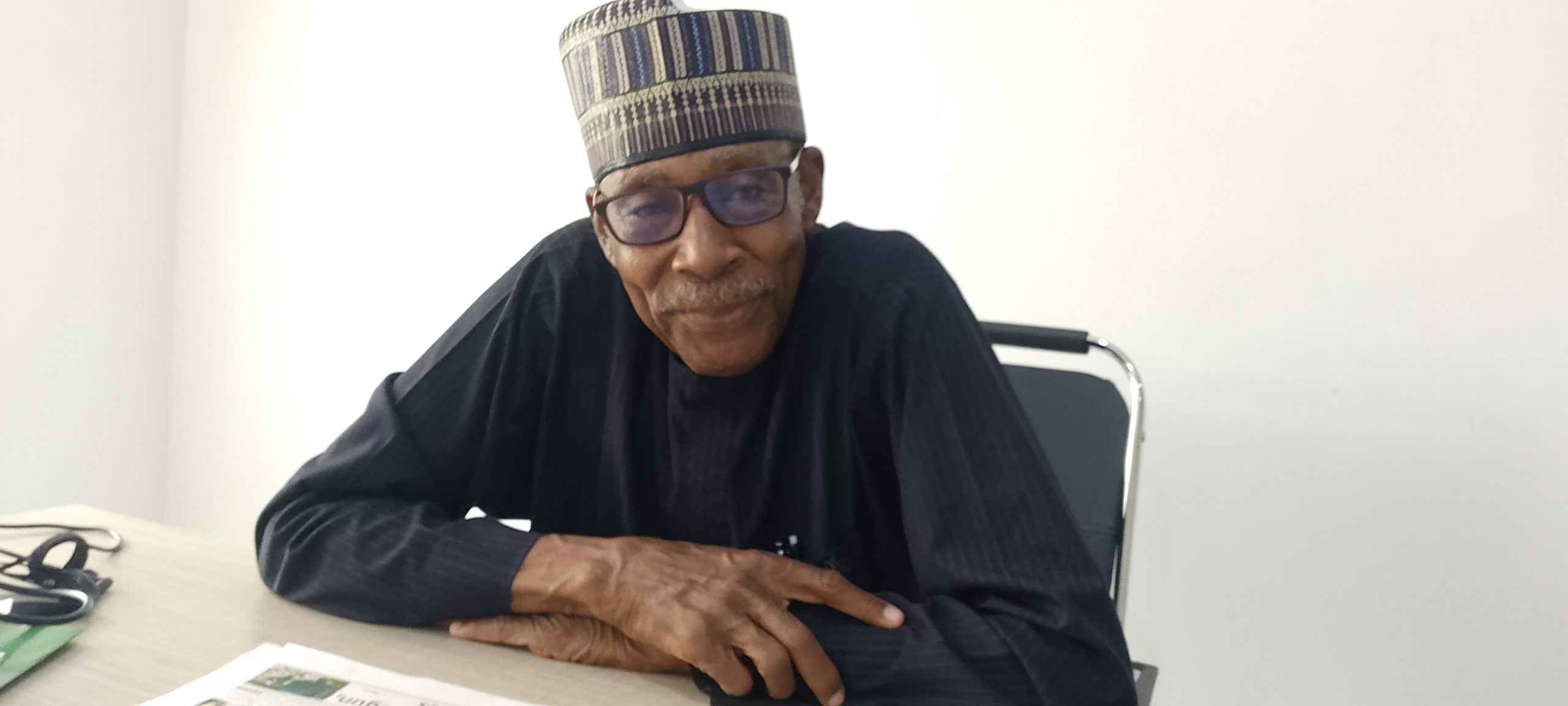
As the raging disputes in the Arewa Consultative Forum (ACF), the socio-cultural umbrella organization of northern Nigeria, has continue to deepened, allegations of leadership control tussle, administrative breaches, and mismanagement of about ₦4 billion endowment fund, amongst other reasons, have been enumerated.In this interview with our Kaduna State Correspondent, Gabriel Udeh, the National Publicity Secretary of the ACF, Prof. Tukur Muhammad-Baba, a retired professor of sociology, broke silence on the internal wrangling that recently led to the sealing of the Forum’s headquarters by police in kaduna.
Prof. Muhammad-Baba traced the crisis to attempts to usurp the powers of the National Executive Committee (NEC), disputes over tenure, and violation of the ACF constitution in the management of the Fund. He also spoke on the status of the suspended Board of Trustees Chairman, Alhaji Bashir Dalhatu, and the Forum’s position on insecurity in the North. Excerpts:
Q: Let’s know you fully and your position Sir?
A: Okay, I am Tukur Muhammad-Baba. I am a retired university lecturer. I am a scholar for life. That is, I am a professor of sociology. I was the former dean of the Faculty of Social and Management Sciences at the Federal University of Technology, Minna, among others, just before I retired. But basically, I am Tukur Muhammad-Baba. Currently, National Publicity Secretary of the Arewa Consultative Forum. I am a scholar by calling and a sociologist. Thank you so much.
Q: ACF is one of the most respected organizations in Nigeria. There are serious concerns about the recent crisis that went viral and led to police invasion. What are the real reasons ACF is neck deep in this crisis?
A: ACF is a foremost socio-cultural organization in the country. One reason it has retained credibility is because it is not ethnic-based, not religious-based. It’s political, but not partisan. We consult among various groups in the north to come up with a platform of common interest – roads, education, economic development. The north has over 300 ethnic groups. We are united by geography and sociology. For example, in Benue and in Kogi states, we have northerners who are Igbo. In Kwara state, we have northerners who are Yoruba. They are indigenous to the area. But like every modern organization, conflict is inevitable. It is how you handle disagreement that defines the organization. We’ve had personality differences over the years. If you ask me to summarize, the bone of contention is not so much ACF, it’s control of the ACF. Unprecedentedly, individuals emerged and want to control this organization in their own image. During the 25th anniversary, we launched an endowment fund for the first time because we realized there was too much political interference with governors’ contributions. The target was ₦100 billion. Pledges were about ₦7 billion, out of which a little less than ₦4 billion was generated.
Q: What exactly went wrong with the management of that fund?
A: The constitution is clear. There are five organs: Patrons, General Assembly, Board of Trustees, NEC, and NWC. NEC and NWC are the management. BoT is to advise and oversee. There has been a persistent attempt to usurp NEC’s powers by a functionary of BoT, in particular the then chairman, who assumed functions outside the constitution. The fund was moved out of Kaduna, against the constitution which says management must be at the head office. It was moved to a financial institution in Kano offering 8%. We had institutions offering 20% and 21%. By our calculation, we would have earned about ₦113 million in three months at 21%, but at 8% we earned just over ₦17 million. We also discovered part of the money was moved from one bank branch to another where an individual had a personal account, without EXCO approval, without the financial secretary or treasurer.
Q: There is also the issue of tenure of officers and leadership. What happened?
A: The constitution says the Secretary-General serves three years, renewable once. In 2023 there was a lacuna of 6-9 months with no NWC. The ex-Secretary-General continued. His letter of appointment for the second term said tenure begins from inauguration. But BoT said no, he had overstayed. Legal experts said the interim period cannot count. NEC was sidelined. We read in the papers that the SG was asked to go. Nobody wrote to NEC. The Leadership Selection Committee, which is ad hoc, had been in place for nine years. We told them they stood dissolved. They refused
.Q: The crisis led to the headquarters being sealed by police. How did that happen?
A: Disagreement over interpretation led some to invite police to seal the headquarters. It had never happened before. I told the media: when the police get bored of staying at the gate, they will leave. And within 10 days, they left. EXCO had to meet elsewhere. The chairman of BoT also intervened and said nobody should come to the meeting, but he has no power to do that under the constitution.
Q: What about Alhaji Bashir Dalhatu, the BoT Chairman? Is he still in office?
A: A petition was received that he was interfering in functions not his, moving money, and directing staff. The Code of Conduct Committee invited him. He refused to appear. The committee recommended suspension and forensic audit. EXCO endorsed it. Bashir Dalhatu was suspended as a member of ACF. By implication, he cannot be BoT Chairman because only a member can hold that position. The BoT should have appointed a new chairman. He has continued to act as if he is CEO. As of now, Bashir Dalhatu is not a member of ACF. He is a suspended member. Any action he takes as chairman is null and void.
Q: Some people are calling it fraud. Is it fraud or administrative mistake?
A: Fraud can only be established by proper investigation. It is under investigation. There is a forensic review going on. The Code of Conduct and Ethics Committee is still waiting to hear from those accused. What I can say now is there have been serious administrative lapses that violate the ACF Constitution. The money shouldn’t have been moved. The organization is losing money by keeping it at 8% instead of 20%. Whether there is fraud or not will be established after investigations.
Q: What is ACF’s position on the rising insecurity in the North?
A: Government seems more interested in politics than security. The most existential threat to Nigeria is insecurity: kidnapping, banditry, rape, inter-communal clashes. It’s not a question of capacity. Our armed forces are trained in the best military colleges worldwide. We think it’s a question of political will. Governors are chief security officers but have no control over police or military deployment. That’s a serious lacuna. We are also not in support of amnesty without accountability. You cannot have your sister raped and government surrenders your right to justice. We must decapitate these criminals and their enablers.
Q: Are there efforts to resolve the crisis?
A: Yes. Elders are intervening. Lawyers have submitted legal positions. We are hoping it will be resolved soon because the North needs to articulate its position within Nigeria. When we are united, ACF has been impactful. We reviewed the four tax bills and 80% of our recommendations were reflected. We galvanized opposition to military intervention in Niger Republic and to foreign military bases in Nigeria. Our position is simple:let everybody abide by the provisions of the constitution.
Opinion
From the Silk Road to the Sahara: Why the Dikwa–Gamboru/Ngala and Bama–Banki Roads Could Transform Africa’s Trade Future

By Mukhtar Imam
When historians recount the world’s greatest trade networks, two ancient corridors stand out. The first is the Old Silk Road, which connected China to Europe through an intricate web of commercial routes stretching from Beijing to the United Kingdom. The second is the Trans-Saharan trade route, the historic artery that connected West Africa with North Africa and the Mediterranean, making it one of the greatest engines of commerce on the African continent.
Today, China is writing a new chapter in economic history through President Xi Jinping’s Belt and Road Initiative (BRI), an ambitious programme that seeks to revive the ancient Silk Road by investing in roads, railways, ports, industrial parks, and logistics hubs across Asia, Europe, and Africa. The initiative is founded on a simple but powerful principle: connectivity drives prosperity. Nations linked by efficient transport infrastructure enjoy increased trade, greater investment, stronger regional integration, and sustained economic growth.
Nigeria now has an opportunity to embrace a similar vision within its own historical and geographical context.
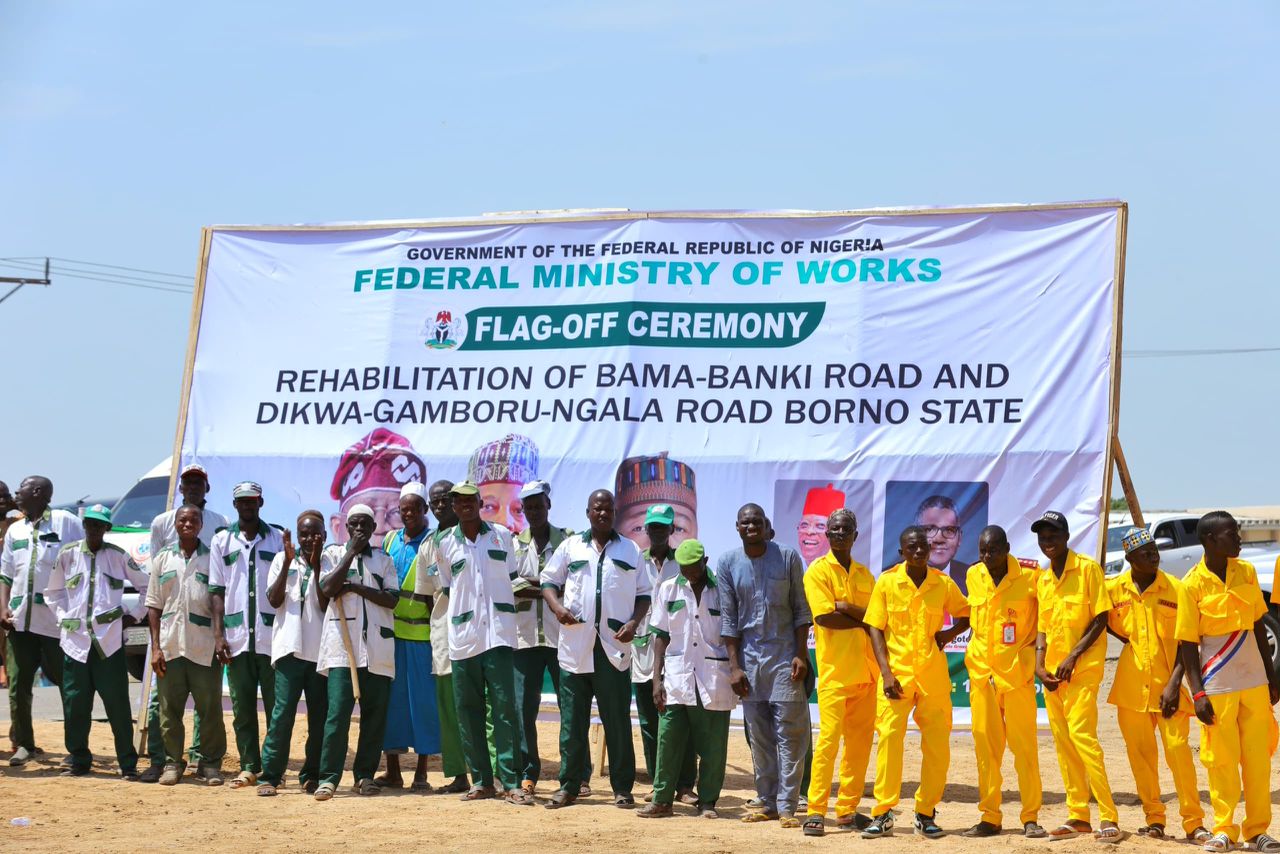
The ongoing construction of the Dikwa–Gamboru/Ngala and Bama–Banki roads in Borno State should not be viewed merely as infrastructure projects designed to improve transportation. Rather, they represent strategic economic corridors capable of reopening one of Africa’s oldest and most important commercial routes—the Trans-Saharan trade network.
For centuries, caravans traversed this route carrying gold, salt, leather, textiles, livestock, grains, and other valuable commodities between the kingdoms of West Africa and the markets of North Africa and beyond. These exchanges not only enriched economies but also facilitated the movement of knowledge, technology, religion, and culture across continents. The Trans-Saharan trade corridor became the second-largest historical trading network in the world, surpassed only by the ancient Silk Road.
Like the Belt and Road Initiative, the reconstruction of the Dikwa–Gamboru/Ngala and Bama–Banki roads is fundamentally about restoring connectivity. These roads reconnect Nigeria with Cameroon and neighbouring markets, creating vital gateways into the Lake Chad Basin and linking commercial activities across West and Central Africa. They also hold the promise of restoring trade flows that have been disrupted by years of conflict and insecurity.
The economic implications are enormous.
Efficient transport corridors reduce the cost of moving goods, improve access to domestic and international markets, attract private investment, encourage industrial development, expand agricultural value chains, and create employment opportunities. Border communities that once thrived as centres of commerce can once again become vibrant hubs of economic activity, while manufacturers, farmers, livestock traders, transporters, and exporters benefit from improved market access.
More importantly, infrastructure of this nature strengthens regional integration under the African Continental Free Trade Area (AfCFTA), positioning northeastern Nigeria as a strategic gateway for commerce between West, Central, and North Africa. As trade expands, so too does the potential for peace, stability, and shared prosperity.
China’s Belt and Road Initiative demonstrates what is possible when infrastructure is aligned with long-term economic strategy. By rejuvenating the Old Silk Road, China has created an extensive network of economic activities that spans continents, connecting Beijing with major commercial centres across Asia and Europe, ultimately reaching the United Kingdom. The objective extends beyond transportation; it is about creating interconnected economies capable of generating sustained growth and development.
The same philosophy can inspire Nigeria’s approach to rebuilding the northeast. The Dikwa–Gamboru/Ngala and Bama–Banki roads can become the backbone of a renewed Trans-Saharan economic corridor—one that restores the region’s historical significance while unlocking new opportunities for commerce, investment, and regional cooperation.
This vision, however, must extend beyond road construction. Modern border infrastructure, efficient customs administration, enhanced security, logistics parks, agro-processing zones, dry ports, and industrial clusters should accompany these transport corridors. Together, these investments would transform roads into engines of development rather than mere passageways.
History teaches that, great civilizations are built around great trade routes. The Silk Road transformed Asia and Europe. The Trans-Saharan trade route shaped the political and economic fortunes of Africa for centuries. Reviving this historic corridor through strategic infrastructure investment offers Nigeria an opportunity not simply to rebuild roads, but to reconnect economies, restore livelihoods, and reposition the country as a central player in continental trade.
The Dikwa–Gamboru/Ngala and Bama–Banki roads therefore represent something far greater than civil engineering projects. They are pathways to economic renewal, symbols of regional integration, and foundations for a more prosperous future. Just as the Belt and Road Initiative is breathing new life into the world’s greatest historical trade corridor, these roads can herald the renaissance of Africa’s second-greatest trading network—the Trans-Saharan route—and, in doing so, contribute meaningfully to the economic transformation of Nigeria and the African continent.


NAHCON’s New Hajj Guidelines Signal Shift Towards Tighter Regulation

Retired AIG Atayero Says Tinubu’s Security Reforms Yielding Results

Excellence International School Strengthens Global Partnerships, Targets World-Class Education
-
 News6 hours ago
Gombe Youths empowerment, My Top Priority – Dr Gwamna
-
 News4 hours ago
TCN Foils Theft Attempt, Recovers Transmission Tower Components in Bauchi
-
 News3 hours ago
Retired AIG Atayero Says Tinubu’s Security Reforms Yielding Results
-
 News3 hours ago
NEC Monitoring Committee Commends Taraba Projects, Hails Kefas’ Investments
-
 News3 hours ago
Excellence International School Strengthens Global Partnerships, Targets World-Class Education
-
 News4 hours ago
Minister Commends NCDMB for ICT Centre in Akwa Ibom School
-
Opinion3 hours ago
NAHCON’s New Hajj Guidelines Signal Shift Towards Tighter Regulation
-

 News4 hours ago
PAAU Alumni Dr Olowo Launches Accounting Research Centre, Digital Library
You must be logged in to post a comment Login