
Business and Economy
Nigeria Unveils Critical Minerals Roadmap to Boost Green Manufacturing, Industrial Growth


By Abigail David
Nigeria is seeking to harness its vast critical mineral resources to drive industrialisation and clean energy manufacturing following the unveiling of a new strategic roadmap aimed at promoting local value addition and attracting investment.
The roadmap, presented by the Council for Critical Minerals Development in the Global South to the Minister of Solid Minerals Development, Dr. Dele Alake, outlines strategies for leveraging the country’s lithium, copper and bauxite deposits to expand domestic manufacturing, mineral beneficiation and green energy production.
The report was presented on the sidelines of the 5th African Natural Resources and Energy Investment Summit (AFNIS 2026) as the Federal Government intensifies efforts to reduce raw mineral exports and develop integrated value chains that support job creation, industrial growth and the energy transition.
Receiving the report, Alake described it as a practical policy framework for aligning Nigeria’s clean energy goals with its mineral resources. He said the roadmap analyses domestic demand for solar photovoltaic systems, battery energy storage and electric vehicles alongside existing supply and trade patterns.
According to the minister, the findings confirm that Nigeria has the critical minerals needed to support its green energy ambitions while creating opportunities for local processing and manufacturing.
He added that the report would guide reforms aimed at strengthening mineral beneficiation, increasing local value addition and building stronger links between the mining and manufacturing sectors to ensure greater economic returns from the country’s natural resources.
The next phase of the initiative will focus on developing a mineral-to-manufacturing localisation roadmap, promoting South-South investment partnerships and expanding collaboration with local stakeholders to accelerate green industrialisation projects.
The initiative is expected to enhance Nigeria’s competitiveness in the global critical minerals market while supporting the Federal Government’s goal of transforming the mining sector into a major source of industrial growth, exports and non-oil foreign exchange earnings.
By Abigail David
The Federal Government exceeded its 2024 borrowing target by N4.79 trillion, raising total new debt to N12.62 trillion as lower-than-expected revenue widened the fiscal deficit, according to the Budget Office of the Federation.
The Fourth Quarter and Consolidated Budget Implementation Report for 2024 showed that borrowing surpassed the approved N7.83 trillion target by 61.2 percent. The fiscal deficit also rose to N13.51 trillion, above the budgeted N9.18 trillion, mainly due to revenue falling short of projections.
Although government expenditure reached N34.49 trillion, only slightly below the approved N35.06 trillion, total revenue stood at N20.98 trillion, about N4.89 trillion below target despite improving by 68.1 percent compared to 2023.
The report showed domestic borrowing met its target at N6.06 trillion, while foreign borrowing increased to N3.37 trillion, exceeding the budget by N1.60 trillion. The government also received N3.19 trillion in budget support that was not included in the original budget, contributing to the higher borrowing level.
Oil revenue remained below expectations as crude production and global oil prices underperformed budget assumptions. However, non-oil revenue exceeded projections, driven by stronger collections from Company Income Tax, Value Added Tax, Customs revenue and the Electronic Money Transfer Levy.
The report also indicated that Nigeria’s total public debt rose to N144.67 trillion by the end of 2024, with the debt-to-GDP ratio reaching 61.22 percent, above both the country’s 40 percent benchmark and the 56 percent threshold often used for comparable economies.
Economic analysts said the growing debt profile highlights the need for stronger revenue generation and prudent use of borrowed funds. While some experts warned that rising borrowing could increase debt servicing costs and inflationary pressures, others argued that debt remains sustainable if invested in productive infrastructure and projects that stimulate economic growth.
Business and Economy
Tinubu Says Economic Reforms Are Delivering Results as Deloitte Africa Backs Agenda

By Abigail David
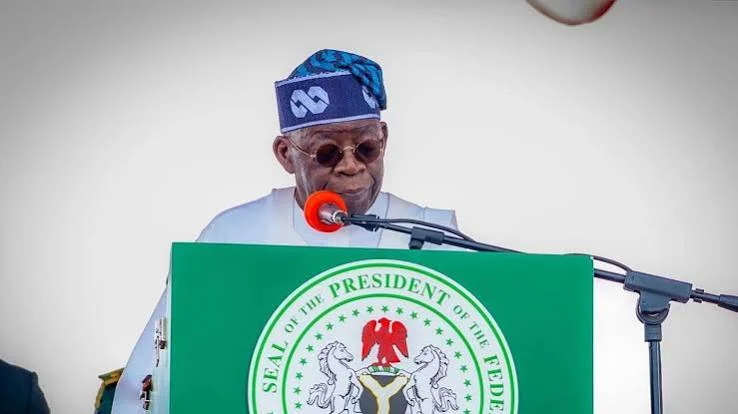
President Bola Tinubu says Nigeria’s economy is making “serious foundational progress” despite the challenges associated with the economic reforms introduced by his administration.
The President made the remarks while receiving a delegation from Deloitte Africa, led by its Chief Executive Officer for Africa, Ruwayda Redfearn, at the State House in Abuja, according to a statement issued on Wednesday by the Special Adviser to the President on Information and Strategy, Bayo Onanuga.
Tinubu acknowledged that the reforms had been difficult but said they were beginning to strengthen the country’s fiscal and revenue systems and lay the foundation for long-term economic growth.
“Yes, reforms are difficult, but they are working well. For the economy, Nigeria is making serious foundational progress,” the President said.
He also encouraged Deloitte to expand its investment in Nigeria by supporting youth development through training and employment opportunities.
Redfearn reaffirmed Deloitte Africa’s commitment to supporting the Federal Government’s reform agenda, stating that the firm’s local and global teams were ready to provide expertise to advance Nigeria’s economic transformation.
Also speaking, Deloitte West Africa Chief Executive Officer Yomi Olugbenro said the reforms had created a solid foundation but stressed the need to ensure their benefits reached ordinary Nigerians. He said the firm was prepared to leverage its global experience to support the country’s development.
The meeting was attended by the Minister of Finance and Coordinating Minister of the Economy, Wale Edun, Chairman of the Presidential Committee on Fiscal Policy and Tax Reforms Taiwo Oyedele, and the Executive Chairman of the Nigeria Revenue Service, Zacch Adedeji.
By Abigail David
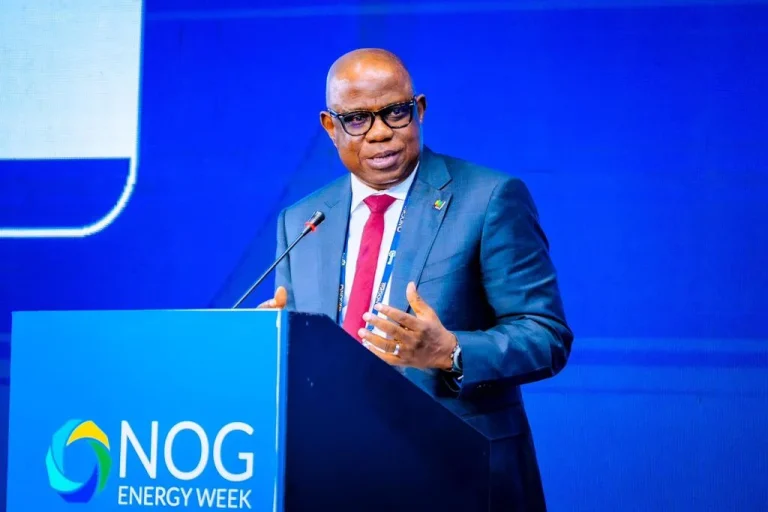
The Nigerian National Petroleum Company Limited (NNPC Ltd.) says it is repositioning itself beyond oil and gas production to become a platform that connects investment, technology, policy and talent to support sustainable energy development across Nigeria and Africa.
Group Chief Executive Officer Bayo Ojulari stated this while reflecting on the company’s participation at the 2026 Nigeria Oil and Gas (NOG) Energy Week, according to a statement issued on Monday.
Ojulari said NNPC Ltd.’s transformation is driven by a broader vision of creating long-term value through strategic partnerships and investment across the energy value chain.
“We no longer view NNPC Limited as merely an energy producer, but as an ecosystem builder, connecting capital, technology, policy, talent and markets to create lasting value for Nigeria and Africa,” he said.
He added that the company’s new direction would strengthen collaboration within the energy industry and contribute to Africa’s energy growth.
The 2026 NOG Energy Week brought together policymakers, regulators, investors, energy companies and technology providers to discuss investment opportunities, energy security, gas development and the future of Africa’s energy sector.
Since its transition into a commercially oriented company under the Petroleum Industry Act, NNPC Ltd. has continued to pursue operational efficiency and strategic partnerships as part of its long-term growth strategy.

Oriire Kidnap: FG Arraigns Ansaru Commanders, Mahmuda, Abu Baraa and The Three New Suspects Arrested By DSS On Fresh Charges of Terrorism, Murder of Teachers
Breaking: FG Arraigns ‘BOSYA President’ Kaigama For Terrorism

APC URGED TO UPHOLD AND RESTORE DANKAKA’S SENATORIAL CANDIDACY FOR KWARA SOUTH
-
 Politics16 hours ago
Uba Sani Picks Jerry Adams as Running Mate for 2027 Kaduna Governorship Election
-

 Sports15 hours ago
WAFCON 2026: Malawi Stun Super Falcons 3-2 in Historic Group C Upset
-

 News10 hours ago
Coalition Raises Questions Over Key Claims in Amachree’s Book
-
 News11 hours ago
2027: Sam Ode’s Pick, a Well-deserved Reward for Unalloyed Loyalty
-
 Business and Economy16 hours ago
FG Borrowing Exceeds 2024 Target by N4.79tn Amid Revenue Shortfall
-
Uncategorized4 hours ago
Oriire Kidnap: FG Arraigns Ansaru Commanders, Mahmuda, Abu Baraa and The Three New Suspects Arrested By DSS On Fresh Charges of Terrorism, Murder of Teachers
-
Uncategorized4 hours ago
Breaking: FG Arraigns ‘BOSYA President’ Kaigama For Terrorism
-
 Politics5 hours ago
APC URGED TO UPHOLD AND RESTORE DANKAKA’S SENATORIAL CANDIDACY FOR KWARA SOUTH
You must be logged in to post a comment Login