
News
EFCC Seeks Stronger Collaboration Among Anti-Graft Agencies to Tackle Procurement Fraud

By Francis Wilfred
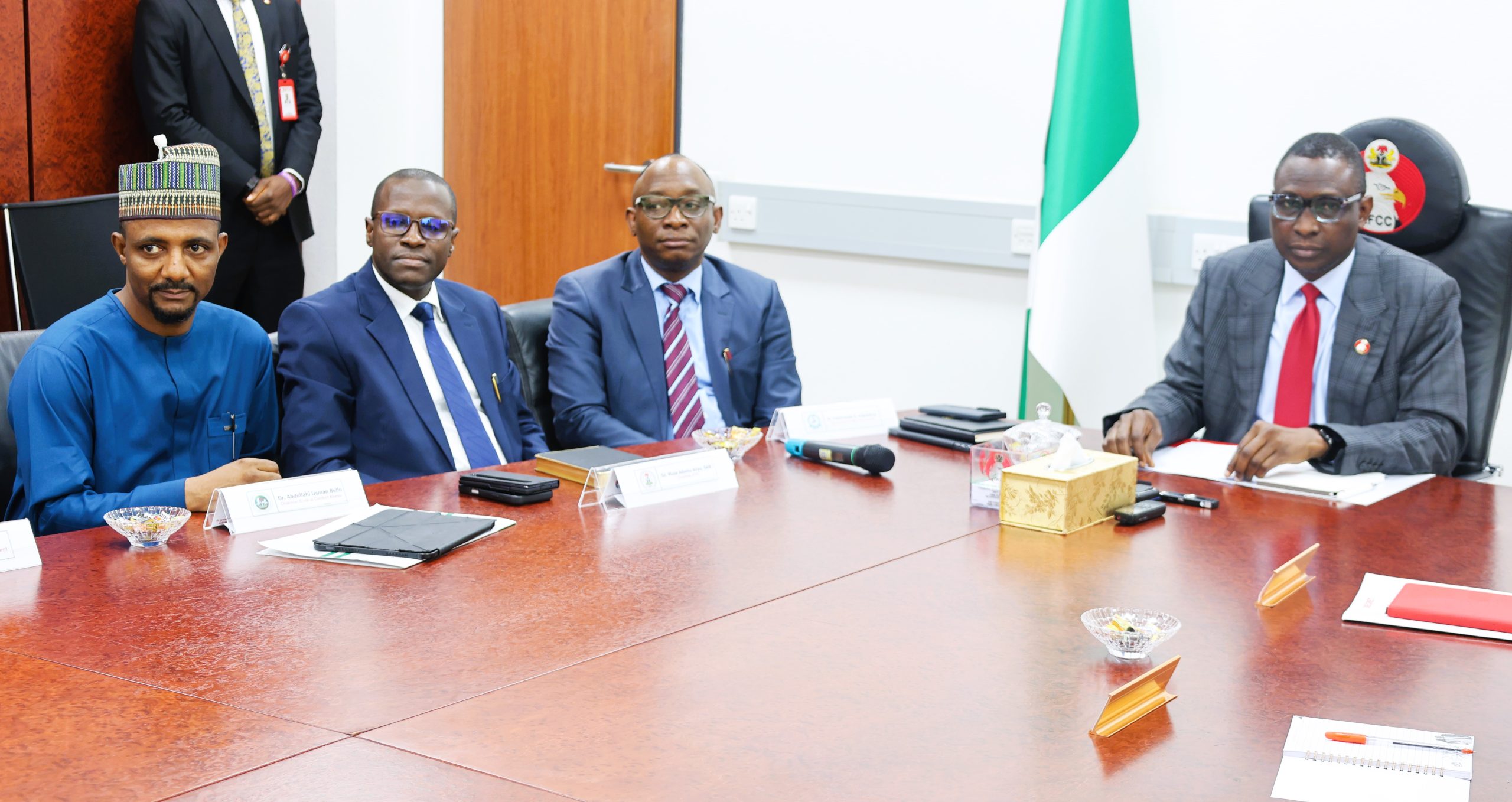
The Chairman of the Economic and Financial Crimes Commission (EFCC), Ola Olukoyede, has called for stronger collaboration among Nigeria’s anti-corruption agencies to combat procurement and contract fraud, which he described as the most significant source of public sector corruption in the country.Olukoyede made the call during a strategic roundtable meeting convened at the EFCC headquarters in Abuja on Wednesday.
The meeting brought together key anti-corruption stakeholders, including the Chairman of the Independent Corrupt Practices and Other Related Offences Commission, ICPC, Musa Adamu Aliyu; the Chairman of the Code of Conduct Bureau, CCB, Abdullahi Usman Bello; and the Director-General of the Bureau of Public Procurement, BPP, Adebowale Adedokun.
According to a press statement signed by the Head Media and publicity Dele Oyewale, the gathering was aimed at developing a more effective framework for collaboration and synergy among the EFCC, ICPC, CCB and BPP in the fight against corruption, economic crimes and financial misconduct.
Speaking at the meeting, Olukoyede stressed that procurement and contract fraud account for more than 80 per cent of corruption cases in the public sector. According to him, reducing such fraudulent practices would have a significant positive impact on the economy, healthcare, social development and public service delivery.
He noted that anti-corruption efforts should focus not only on prosecuting offenders after crimes have been committed but also on preventing fraud through stronger risk management systems. He explained that the BPP, as the regulator of public procurement processes, possesses technical expertise that law enforcement agencies require to effectively address procurement-related offences.
Olukoyede said closer cooperation between enforcement agencies and the BPP would help detect irregularities early, strengthen oversight mechanisms and reduce opportunities for corruption. He also observed that several provisions of the Public Procurement Act remain underutilised and could support anti-corruption efforts if fully implemented.The EFCC chairman further advocated joint investigations, collaborative monitoring of projects and enhanced information sharing among agencies.
He emphasized the importance of capacity building and proposed the development of a Standard Operating Procedure (SOP) to define the roles and responsibilities of participating institutions while ensuring confidentiality in information management.According to him, the agencies intend to hold similar meetings quarterly to review progress and strengthen their collective response to corruption.
Supporting the initiative, ICPC Chairman Musa Aliyu said greater cooperation among anti-corruption bodies would improve public confidence in the government’s anti-corruption campaign.
He noted that petitions relating to corruption are often submitted to multiple agencies, leading to duplication of efforts and inefficiencies.Aliyu called for the deployment of technology-driven solutions to facilitate information sharing and eliminate overlaps in investigations. He added that agencies should continue referring cases outside their statutory mandates to the appropriate institutions.
The CCB chairman, Abdullahi Bello, also highlighted the devastating impact of corruption on national development. He disclosed that trillions of naira have been lost to corrupt practices over the years and identified procurement fraud as one of the major challenges within the public sector. Bello stressed the need for stronger partnerships among the CCB, EFCC, ICPC and the Nigerian Financial Intelligence Unit (NFIU) to improve intelligence gathering and enforcement.
In his presentation, BPP Director-General Adebowale Adedokun underscored the importance of public procurement reforms. He warned that weak procurement systems often result in waste, cost overruns, abandoned projects, poor-quality infrastructure and widespread corruption.
Adedokun maintained that the most effective anti-corruption strategy is to establish procurement systems that prevent wrongdoing before it occurs. He identified legal and institutional reforms, governance and accountability, strategic procurement, digital procurement and improved market operations as critical pillars for strengthening transparency and efficiency in public procurement.
The meeting also examined challenges such as procurement without cash backing, abuse of procurement laws and deliberate violations of established procedures, with participants agreeing on the need for sustained collaboration to address the issues.


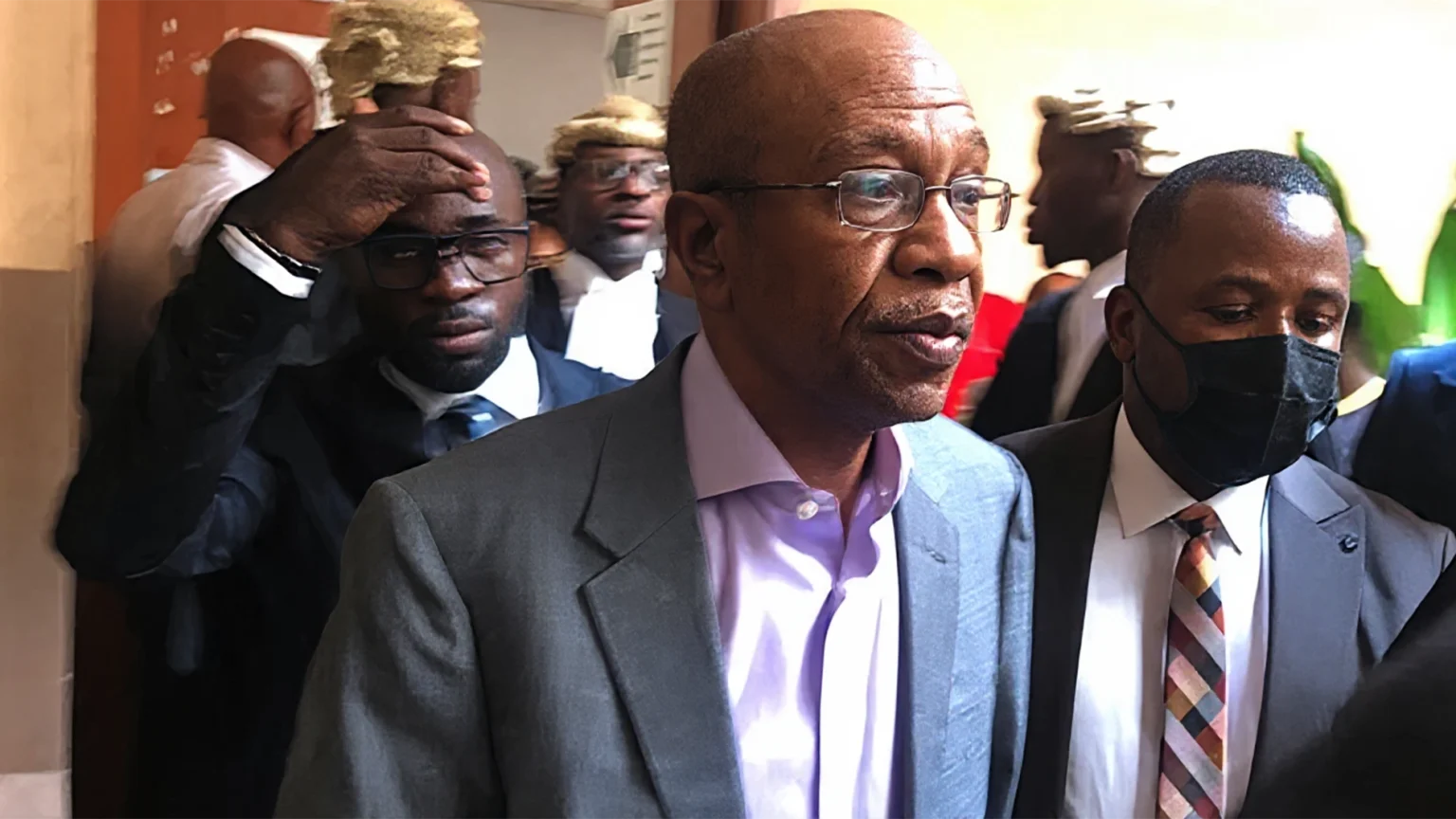






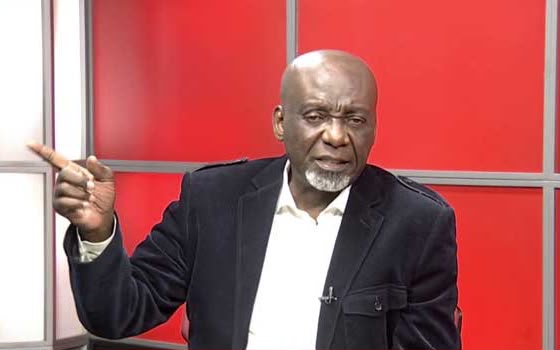
An amalgamation of civil society groups in Nigeria has expressed concern over claims attributed to former Assistant Director of the Department of State Services (DSS), Dennis Amachree, in his recently published book, Man’s Journey Behind the Shield.
In a statement jointly signed by Comrade Wale Adegoke, Convener, and Comrade Musa Abdullahi, Secretary, the groups said they found several assertions in the publication controversial and questioned what they described as the credibility of some of the narratives presented.
According to the groups:
“In the contemporary history of the Nigerian intelligence community, certain names continue to ring a bell. These include the late IGP M.D. Yusuf, Alhaji Umaru Shinkafi, Chief A.K. Horsfall, Alhaji Gambo Jimeta, General Aliyu Gusau, General Haliru Akilu, the late Rear Admiral Tunde Elegbede, Air Vice Marshal Idi Musa, Colonel A.K. Togun, Colonel Ibrahim Sabo, Colonel Isaac Nnona, Colonel J.K. Olu, Colonel C.K. Emein, the late CP Abubakar Tsav, Colonel M.I. Bawa, Major Shaibu Galma, among several others of blessed memory.
“These were thoroughly trained professionals who served Nigeria with patriotism, professionalism, integrity, and unwavering dedication to national service.”
The groups questioned what they described as Amachree’s attempt to place himself among some of Nigeria’s most prominent intelligence professionals, arguing that many former senior officers maintained strict professional ethics both during and after their years of service.
They further stated that, in their view, Amachree’s professional standing within the intelligence community did not place him in the same category as several former Directors-General and senior intelligence figures, including Peter Nwadua, Colonel Kayode Are, Major Emohe, and Afakriya Gadzama.
The groups also raised questions regarding Amachree’s account of his alleged involvement in investigations relating to claims surrounding the death of former Head of State, General Sani Abacha.
According to the statement:
“Firstly, he wrote about his role in the investigation of a woman who allegedly claimed that former Head of State, General Sani Abacha, died on top of her. As an Assistant Director posted to the Shangisha, Lagos State office of the DSS, far removed from both the Awolowo Road Annex and the Service Headquarters in Abuja, it raises legitimate questions regarding the extent of his involvement in such a nationally sensitive matter.”
The groups argued that the book did not sufficiently acknowledge the roles allegedly played by other senior intelligence officers and security agencies involved in investigations surrounding the death of a serving Head of State.
They also criticised Amachree’s comments regarding former Minister of Communications and Digital Economy, Professor Isa Ali Ibrahim Pantami.
According to the groups:
“Professor Pantami was never on the wanted list of any intelligence agency in Nigeria or elsewhere. He was equally never invited for questioning on account of his sermons or religious expressions.”
The groups contended that opposition to Pantami’s ministerial appointment was politically motivated and alleged that previous campaigns against him were intended to frustrate his emergence and growing political relevance.
They further argued that intelligence assessments are dynamic and subject to review in light of changing circumstances, citing practices in intelligence institutions across different countries.
The statement alleged that efforts to revisit issues surrounding Pantami were part of what the groups described as continuing attempts by his critics to undermine his reputation and political prospects.
According to the groups:
“Pantami’s political opponents are becoming increasingly uncomfortable with the goodwill and support he continues to enjoy as speculation grows regarding his possible participation in the 2027 Gombe State governorship election.”
The groups also accused Amachree of presenting what they described as a selective narrative in the book.
They questioned the absence of extensive discussion on issues such as the assassination of Rear Admiral Tunde Elegbede, the killing of Chief Harry Marshall, the controversy involving Pastor Ayo Oritsejafor’s aircraft during an arms procurement investigation, and the conviction of military officers linked to the diversion of arms from the Nigerian Army Ordnance Depot in Kaduna.
The groups further argued that the publication devoted significant attention to issues they considered less relevant to contemporary intelligence discourse, while paying insufficient attention to developments relating to Niger Delta militancy before and after the Presidential Amnesty Programme.
Concluding the statement, the groups described the publication as politically motivated and maintained that the references to both the late General Sani Abacha and Professor Pantami were unfair and provocative.
They also alleged that Professor Pantami remains the target of interests opposed to reforms and policies associated with his period in public office.
The groups urged Nigerians to critically assess the narratives contained in the publication and to consider what they described as the broader political context surrounding the issues raised in the book.

Solomon Semaka
In the history of Nigerian politics, loyalty is not a virtue to be assumed; it is a character forged in the fires of consistency, humility, and absolute dedication.
As the political landscape of Benue State shifts toward 2027, the toxic political ecosystem in Benue was saturated with intense speculation over whether Governor Hyacinth Alia would retain Dr. Sam Ode as his deputy for the 2027 Gubernatorial election.
Obviously, the choice of Right Honourable Sam Ode as the running mate to His Excellency, Governor Hyacinth Alia has effectively brought to a close the evil suspicions, shameless lies, envy and morbid ambitions surrounding the choice of who becomes the deputy to the Governor in 2027. The affirmation stands as a powerful testament to unwavering loyalty, and a well-deserved reward for unalloyed dedication and commitment.
In an era where political relationships are often transactional, the synergy between Governor Alia and Deputy Governor Ode proves that fidelity to a leader and a shared vision still yields the greatest dividends for governance.
The decision to retain Dr. Sam Ode is no doubt a verdict on loyalty, strategy, and trust. It closes several years of whispers, plots, and “poisonous enmity,” and opens a new chapter of heathy relationship that transcends politics.
This endorsement is, first and foremost, a moment to express profound gratitude to His Excellency, Governor Hyacinth Alia. By standing firmly with his deputy for the upcoming 2027 election, the governor has rewarded true loyalty and sent a clear message across the nation that trust and alignment in the executive chambers are sacrosanct.
As the American businessman Robert Bosch famously noted, “I would rather lose money than trust.” Governor Alia has demonstrated that a stable, unified leadership team is the ultimate foundation for the continued transformation of Benue State.
This strategic pick secures an unbreakable covenant with the people of Zone C. The entire Idoma nation and the surrounding local governments stand completely unified behind the Alia-Ode ticket. This is not just a political alignment; it is a total assurance of support from a region that recognizes when its interest is genuinely protected.
The people of Zone C pledges their total, unalloyed votes and structures to ensure a resounding victory, validating the mutual respect that defines the current administration.
Sam Ode is not a newcomer to the complex machinery of governance. His selection is rooted in decades of institutional experience, deep political wisdom, and a profound understanding of public administration.
Having served at various tiers of government, from local administration to national prominence, he possesses a rare, prudent grasp of state politics. As the philosopher Aristotle once observed, “He who cannot be a good follower cannot be a good leader.” Ode’s long-standing service to Benue State highlights his unique ability to balance administrative excellence with absolute submission to his principal’s executive vision.
In the history of Nigerian politics, the office of the deputy governor has frequently been marred by friction and unnecessary rivalry. Sam Ode breaks this mold completely, serving as the ultimate blueprint for deputy governors nationwide to emulate.
Dr. Sam Ode has masterfully balanced visibility with humility, ensuring his actions always amplify the governor’s achievements rather than overshadowing them. His conduct proves that a deputy can be highly competent, deeply influential, and entirely loyal all at the same time.
Prior to his venture into politics, Ode understands both the dynamics of power and the essence of unwavering loyalty. He gives his all to any cause he believes in without holding back, with sincerity and unshakable dedication.
Beyond his loyalty, Ode brings a wealth of invaluable attributes to the table: He seamlessly connects diverse ethnic and political factions across Benue’s distinct zones. As a grassroots champion, Ode maintains a direct, authentic heartbeat with the local communities, ensuring governance remains people-centered. His calm temperament and diplomatic acumen have quietly defused political tensions, keeping the administration focused on development.
As Benue marches confidently toward 2027, the Alia-Ode continuity represents stability, shared vision, and a prosperous future. It is a partnership built on solid rock, ready to lift the state to even greater heights.
Solomon Semaka is a public Affairs Commentator and Senior Special Assistant To The Executive Governor of Benue State on Civil Society and Strategic Engagements Office.


By Abigail David
The Federal Government has advised Nigerians seeking public sector employment to avoid common application mistakes that could reduce their chances of securing government jobs.
The guidance was published by the Federal Character Commission (FCC) in a public awareness notice on its website, urging applicants to follow official recruitment procedures and remain alert to fraudulent job offers.
According to the commission, many job seekers lose opportunities by failing to follow application guidelines, submitting inaccurate information or relying on unofficial recruitment sources.
Seven mistakes to avoid
The FCC identified the following common errors:
- Applying through unverified sources
- Paying someone to secure a government job
- Ignoring application requirements
- Missing application deadlines
- Providing incorrect or incomplete information
- Failing to prepare for aptitude tests and interviews
- Assuming every advertised vacancy is genuine
The commission warned applicants against using unofficial websites, social media posts or forwarded messages to obtain recruitment information, noting that fraudsters often create fake recruitment portals to deceive job seekers.
It also cautioned Nigerians never to pay anyone who claims they can guarantee employment in the public service, stressing that recruitment into government institutions follows established procedures.
Applicants were advised to carefully review eligibility requirements, including educational qualifications, age limits, professional certifications, work experience and all required documents before submitting their applications.
The FCC further encouraged candidates to apply well before deadlines, ensure all personal information is accurate and prepare adequately for subsequent stages of the recruitment process, such as aptitude tests and interviews.
Clarifying its role, the commission stated that it does not recruit employees into ministries, departments or agencies. Instead, it monitors compliance with the Federal Character Principle, while individual government institutions are responsible for conducting their own recruitment exercises.
The commission added that verified vacancies may be published on its recruitment platform, allowing applicants to access authentic information before applying through the relevant institution’s official recruitment channel.

Oriire Kidnap: FG Arraigns Ansaru Commanders, Mahmuda, Abu Baraa and The Three New Suspects Arrested By DSS On Fresh Charges of Terrorism, Murder of Teachers
Breaking: FG Arraigns ‘BOSYA President’ Kaigama For Terrorism

APC URGED TO UPHOLD AND RESTORE DANKAKA’S SENATORIAL CANDIDACY FOR KWARA SOUTH
-

 Politics16 hours ago
Uba Sani Picks Jerry Adams as Running Mate for 2027 Kaduna Governorship Election
-
 Sports15 hours ago
WAFCON 2026: Malawi Stun Super Falcons 3-2 in Historic Group C Upset
-

 News10 hours ago
Coalition Raises Questions Over Key Claims in Amachree’s Book
-

 News11 hours ago
2027: Sam Ode’s Pick, a Well-deserved Reward for Unalloyed Loyalty
-
 Business and Economy16 hours ago
FG Borrowing Exceeds 2024 Target by N4.79tn Amid Revenue Shortfall
-
Uncategorized3 hours ago
Oriire Kidnap: FG Arraigns Ansaru Commanders, Mahmuda, Abu Baraa and The Three New Suspects Arrested By DSS On Fresh Charges of Terrorism, Murder of Teachers
-
Uncategorized4 hours ago
Breaking: FG Arraigns ‘BOSYA President’ Kaigama For Terrorism
-
 Politics5 hours ago
APC URGED TO UPHOLD AND RESTORE DANKAKA’S SENATORIAL CANDIDACY FOR KWARA SOUTH
You must be logged in to post a comment Login