
Business
CBN bets on new FX rules to deepen market stability, transparency

By Abigail David
The Central Bank of Nigeria has unveiled the fourth edition of its Foreign Exchange Manual, introducing new rules aimed at improving transparency, strengthening compliance and enhancing efficiency in Nigeria’s foreign exchange market.
The revised manual, which took effect on June 1, marks the first comprehensive update since 2018 and forms part of the apex bank’s broader reform agenda to restore confidence and deepen liquidity in the foreign exchange market.
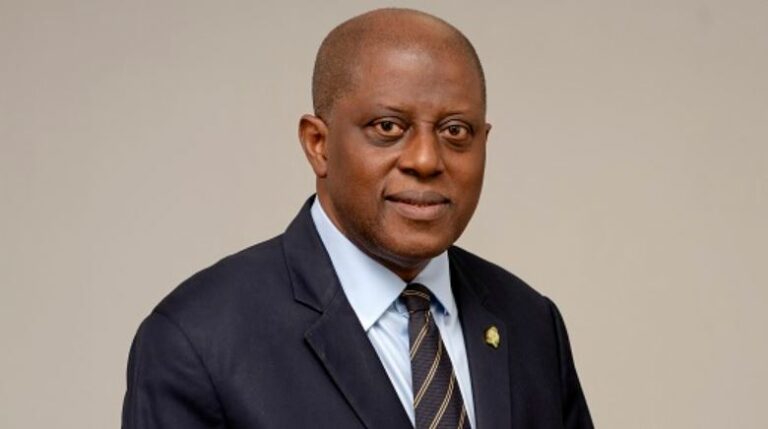
Speaking at the launch, CBN Governor, Olayemi Cardoso, said the review became necessary due to significant changes in global and domestic economic conditions over the past decade.
According to him, foreign exchange remains a critical driver of price stability, trade, capital flows and investor confidence, making a modern regulatory framework essential for market efficiency.
Cardoso noted that ongoing reforms in the foreign exchange market required a more coherent and forward-looking framework capable of addressing emerging realities.
The Deputy Governor in charge of Economic Policy, Muhammad Abdullahi, described the manual as part of a wider strategy initiated by the current leadership of the apex bank to improve transparency, strengthen market discipline and encourage participation through official channels.
Among the key changes introduced are the harmonisation of Personal Travel Allowance and Business Travel Allowance transactions with revised Bureau de Change guidelines, with 75 per cent of such transactions now to be processed electronically and only 25 per cent allowed in cash.
The manual also increases allowable advance payments for imports from 15 per cent to 30 per cent, a move expected to provide businesses with greater flexibility in settling transactions with foreign suppliers.
To encourage exports, the CBN has removed charges associated with processing Form NXP and introduced new provisions covering service exports, technology-sector remittances and transactions under the Pan-African Payment and Settlement System.
Other reforms include the introduction of Non-Resident Investment Accounts and Non-Resident Ordinary Accounts, as well as approval for foreign companies in the extractive sector to repatriate 100 per cent of export proceeds.
The apex bank also removed the mandatory Form A requirement for remittances through ordinary domiciliary accounts, although authorised dealer banks will continue to verify the legitimacy of transactions.
In addition, the revised guidelines permit tuition fee payments of up to $25,000 per semester for Nigerian students studying abroad and allow transfers between export proceeds domiciliary accounts and ordinary domiciliary accounts under specified conditions.
Commercial banks welcomed the reforms, describing them as a continuation of efforts to build a transparent and rules-based foreign exchange market.
Group Managing Director of United Bank for Africa, Oliver Alawuba, said the revised manual would reinforce transparency, ethical conduct, stronger documentation and improved oversight within the market.
Similarly, Group Managing Director of Access Holdings Plc, Roosevelt Ogbonna, said the framework would reduce ambiguity and promote market discipline among participants.
Representing the Minister of Finance and Coordinating Minister of the Economy, Taiwo Oyedele, Permanent Secretary for Special Duties, Mohammed Danjuma, described the manual as an important component of Nigeria’s economic reform agenda aimed at promoting macroeconomic stability and sustainable growth.
Analysts say the success of the revised framework will depend largely on consistent implementation, effective enforcement and sustained policy stability across the financial system.




By Abigail David
The Nigerian National Petroleum Company Limited (NNPC Ltd) has deployed more than 1,000 young professionals into its workforce following the successful completion of a one-year internship, training and evaluation programme.
The Group Chief Executive Officer of NNPC Ltd, Bayo Ojulari, announced the development in a post shared on the company’s official social media platforms, describing it as a significant milestone for the national energy company.
According to Ojulari, the new employees were selected after completing a rigorous programme that combined practical internships, intensive training and performance assessments.
He said the recruitment process reflected the company’s commitment to merit-based employment, stressing that competence and performance, rather than personal connections or background, determined successful candidates.
Ojulari noted that while the participants initially joined the organisation through offer letters, their permanent deployment was earned through consistent performance during the internship period.
He encouraged the newly deployed employees to contribute innovative ideas, take ownership of their professional development and actively support the company’s growth.
The NNPC chief also urged them to remember the opportunities they had received and, in the future, help create similar opportunities for others.
The deployment is part of NNPC Ltd’s ongoing efforts to strengthen its workforce and build capacity following its transition into a commercially driven national energy company under the Petroleum Industry Act.
The recruitment exercise began in July 2024 during the tenure of former Group Chief Executive Officer Mele Kyari.

Billionaire businessman Femi Otedola has increased his ownership in First HoldCo Plc after acquiring an additional 1.77 billion shares through his investment company, Calvados Global Services Limited.
According to a regulatory filing on the Nigerian Exchange (NGX), the transaction, valued at N222.20 billion, was completed on Thursday.
The latest purchase raises Otedola’s shareholding from 9.99 billion shares to 11.77 billion shares, increasing his stake in the financial institution from 21.96 percent to 25.88 percent.
The acquisition follows another major investment made on July 22, when Otedola purchased 706.13 million shares worth N77.58 billion, further strengthening his position as the bank’s largest shareholder.
With the latest transaction, his total investment in First HoldCo is now estimated at approximately N1.47 trillion, making him the institution’s single largest investor.
Under the Investments and Securities Act and the Securities and Exchange Commission’s merger and acquisition regulations, any shareholder who acquires 30 percent or more of the voting shares in a publicly listed company is required to make a mandatory takeover offer to other shareholders.
The increased investment comes weeks after First HoldCo became Nigeria’s most valuable listed banking stock by market capitalisation, surpassing Zenith Bank following sustained gains in its share price on the Nigerian Exchange.

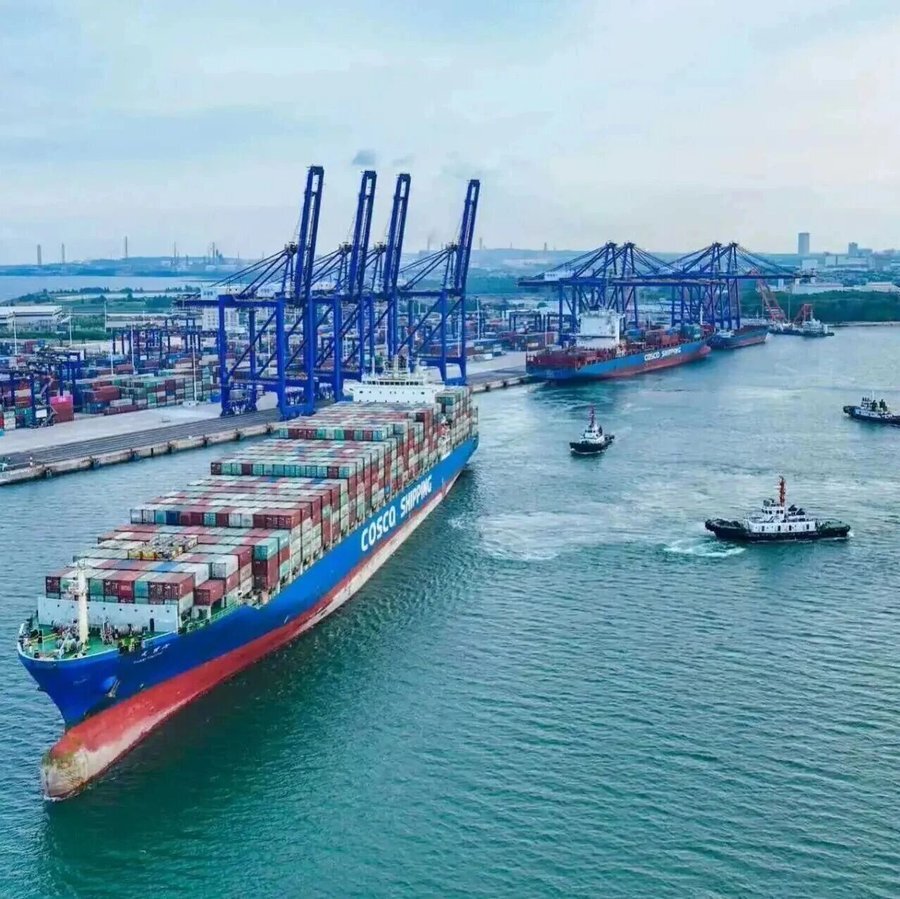
A Nigerian shipment of 252 metric tons of palm kernel shell activated carbon becomes the first cargo to enter the Hainan Free Trade Port under China’s newly expanded zero-tariff policy for African imports.
Haikou Customs confirmed on Wednesday that the consignment was the first to receive duty-free treatment since the new trade measure took effect on May 1, 2026.
The policy extends tariff-free access to goods imported from all 53 African countries that maintain diplomatic relations with China. The initiative is expected to strengthen trade between China and Africa by improving market access for African products, supporting industrial development and helping exporters navigate an increasingly protectionist global trading environment.
The expanded arrangement broadens China’s preferential market access for African exports. While 33 African countries classified as least developed nations have enjoyed duty-free treatment on all tariff lines since December 2024, the latest policy now covers the remaining 20 African countries through a preferential tariff scheme that will remain in force for an initial two-year period.
Chinese officials said the temporary arrangement is intended to facilitate negotiations on the proposed China-Africa Economic Partnership for Shared Development agreement. Once finalized, the agreement is expected to establish permanent institutional backing for the zero-tariff framework.
According to China’s Ministry of Commerce, the policy is designed not only to increase imports from Africa but also to stimulate greater investment in the continent’s manufacturing sector. By encouraging the flow of capital, modern technology, production equipment and management expertise, the initiative aims to expand local processing of African raw materials and increase the export of value-added products.
Officials believe the approach will contribute to a more balanced and sustainable trading relationship while creating new opportunities for African economies to move further up global value chains.
The development comes as economic ties between China and Africa continue to deepen. Data from China’s General Administration of Customs show that two-way trade reached an all-time high of 348 billion U.S. dollars in 2025. During the same period, Chinese imports from African countries rose by 5.4 percent year-on-year to 123 billion U.S. dollars, reflecting sustained growth in commercial exchanges between both sides.
The successful entry of the Nigerian shipment into the Hainan Free Trade Port is expected to encourage more African exporters to take advantage of the expanded duty-free access, opening new opportunities for trade, investment and industrial cooperation.


Group Lists Tinubu’s Achievements, Reaffirms Support For Renewed Hope Agenda

Group Rallies Support for Tinubu’s Renewed Hope Agenda, Lauds Gbajabiamila

APC North-West Begins 2027 Mobilisation to Boost Support for Tinubu
-
 News13 hours ago
Gov. Ododo Urges Nigerians in Diaspora to Support Tinubu’s Reforms, Invest in Kogi
-

 News13 hours ago
PAAU Launches Solar-Powered Campus Tricycle Shuttle Service in Anyigba
-

 News13 hours ago
Kano Assembly Begins Four-Day Legislative Retreat to Strengthen Governance
-

 News13 hours ago
Gwamna Scholarship Beneficiaries Back 2027 Governorship Bid, Pledge Support
-

 News13 hours ago
ACF Mourns Former Minister Abubakar Alhaji, Pays Tribute to Sardaunan Sokoto
-

 News8 hours ago
AONDOAKAA: THE MAN WHO KEEPS SURVIVING STORMS
-

 News6 hours ago
APC’s Substitution Storm: Can the ruling party survives the legal fireworks?
-

 News13 hours ago
Delta Government Rejects Political Violence Claims Over Attack on Governor’s Aide
You must be logged in to post a comment Login