
By Luo Lan, People’s Daily Overseas Edition
Various cities in China are trying to bring about changes in both the development and consumption of goods to lead enterprises and citizens to low-carbon consumption, guide them to consciously and willingly choosing environment-friendly products and services in all aspects of everyday life and avoiding waste, and encourage recycling.
Such active efforts made to realize the country’s goal of peaking carbon dioxide emissions before 2030 and achieving carbon neutrality before 2060 are making low-carbon consumption and lifestyle a new fashion trend in society.
A resident surnamed Wang who lives in Guangzhou, capital of south China’s Guangdong province, has a strong environmental awareness. She trys her best to commute by subway, bus, or bike, rather than a private car. She also replaced water, electricity, and gas devices in her house with energy-efficient ones.
Wang has exchanged such low-carbon activities for virtual “carbon coins” via a platform established by Guangdong province to encourage low-carbon lifestyle and reward small and micro firms, families, and individuals for low-carbon activities. “Carbon coins” can be used to buy commodities on the platform or donated to social welfare undertakings.
In 2015, the platform was piloted in cities of Guangdong including Guangzhou, Zhongshan, Dongguan, Shaoguan, Heyuan, and Huizhou. Users of the platform can log in their account through such channels as website, mobile phone app, and official WeChat account of the platform to exchange their low-carbon activities for “carbon coins” and coupons.
On March 12, 2021, China’s National Tree Planting Day, the platform combined game with green public welfare activities and promoted low-carbon lifestyle on game platforms with a large number of users.
To advocate low-carbon comsuption, the country needs a good environment created with society-wide efforts, in which governments and enterprises can play important roles.
East China’s Shanghai has been carrying out publicity activities on China’s National Low-Carbon Day every year to promote low-carbon lifestyle since China set the third day of its annual National Energy Efficiency Promotion Week as National Low-Carbon Day in 2013.
These activities covering many aspects of people’s daily life, such as clothing, food, housing, transport, and consumption have involved businesses, schools, office buildings, as well as enterprises and public institutions.
In September 2020, Beijing Municipal Commission of Transport and Beijing Municipal Ecology and Environment Bureau joined hands with Chinese mapping service providers Amap and Baidu Map to launch incentive measures to stimulate green travel.
People who use the apps of Amap and Baidu Map to plan routes or navigate for trips made by bus, subway, bike, or on foot can get virtual “carbon energy” after they finish their trips. The “carbon energy” can be converted into rewards.
As of February 2021, the daily number of active users in the green travel campaign had grown to about three million, and the accumulative amount of carbon dioxide emissions reduced because of the incentive measures, had reached 23,800 tons.
Enterprises, as the providers of products and services, haven’t lagged behind in the nationwide efforts to advance low-carbon consumption.
In the country’s catering industry, tradtional Chinese food restaurants and Western fast-food chains have rolled out small servings of food and joined the country’s “Clear Your Plate” campaign one after another to stem food waste.
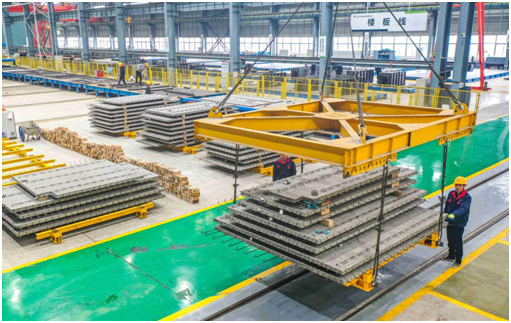
Companies in the construction industry and home appliance sector have actively developed energy-efficient appliances and buildings in a bid to contribute to the reduction of carbon emissions.
New services and products constantly launched by China’s ride-sharing service providers, including carpooling, have effectively improved the utilization ratio of vehicles.
In addition, more and more e-commerce platforms, take-out platforms, as well as logistics service providers have worked together with upstream and downstream firms to try to lower the carbon emissions of individuals through ways including simplifying packaging, adopting recyclable packaging, and reducing the use of disposable plastics.
Experts pointed out that to realize the goal of peaking carbon dioxide emissions before 2030 and achieving carbon neutrality before 2060 means a widespread and profound systematic social and economic reform.
As a part of the systematic social reform, encouraging a green and low-carbon lifestyle represents one of the important measures for achiving the goal, according to experts.