
In an era when sub national governments are increasingly competing for global attention, foreign direct investment, and strategic partnerships, development narratives have evolved beyond policy documents, official statistics, and ceremonial commissioning of projects.
Today, states are defined as much by how governance is felt at the grassroots as by how it is articulated in government circles. Investors, development partners, and even tourists are paying closer attention to social stability, community engagement, youth inclusion, and the everyday lived experiences of ordinary citizens.
Within this changing global and national context, Nasarawa State is gradually shaping a development narrative that emphasises peace, inclusion, and grassroots participation. Beyond government-led initiatives, individuals and community-based foundations are playing increasingly visible roles in projecting the state’s image.
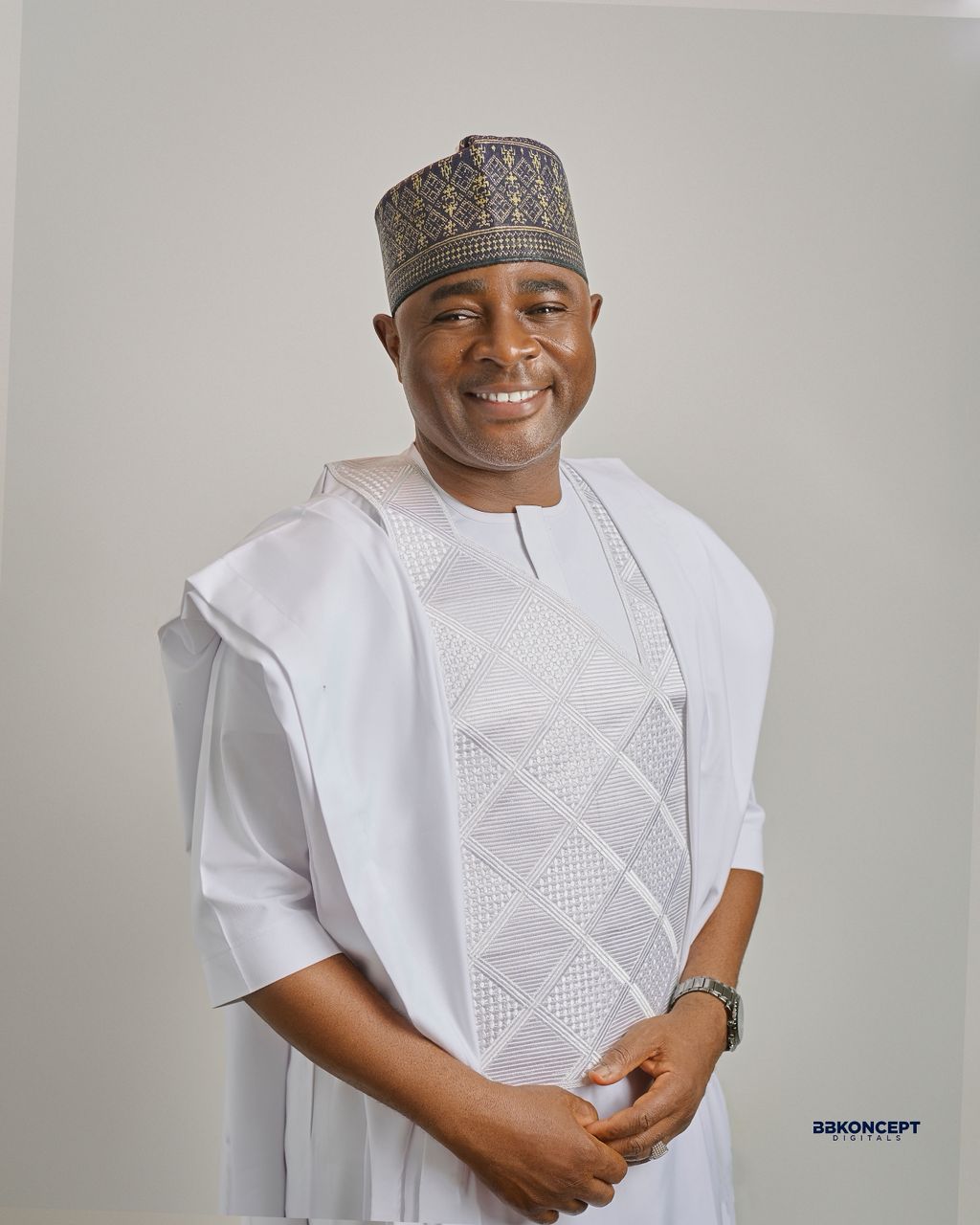
One such figure is Alhaji Dr. Muhammed Musa Maikaya, philanthropist, grassroots mobiliser, and founder of the Maikaya Development Foundation, whose sustained humanitarian and community-driven interventions are contributing to how Nasarawa is perceived within and outside Nigeria.
From rural communities in Toto, Awe, Doma, and Karu Akwanga, Wamba, Obi, Kokona Nasarawa to urban centres such as Lafia, Maikaya’s activities reflect a consistent belief that development must begin with the people, align with their realities, and empower them to become stakeholders in progress.
Through sports development, youth empowerment, educational support, health interventions, renewable energy support, and continuous engagement with traditional and community institutions, his initiatives are gradually reinforcing Nasarawa’s image as a peaceful, organised, and people-oriented state.
For Maikaya, grassroots development is not a political catchphrase but a guiding philosophy shaped by lived experience. Speaking during the finals of a grassroots football tournament organised by the Maikaya Development Foundation in Toto Local Government Area, he articulated a principle that has come to define his engagements across the state.
“Development is more encompassing if it reaches the grassroots. When villages, youths, women, and the vulnerable are carried along, development becomes a lot more meaningful, inclusive, and sustainable,” he said.
This philosophy has translated into a steady stream of community-focused initiatives. Football tournaments, skills acquisition programmes, educational support schemes, medical and humanitarian outreaches, and youth engagement forums supported by the foundation have become recurring features across Nasarawa State.
While many of these interventions are modest in scale, their cumulative impact has been significant, building trust between communities, strengthening social cohesion, and projecting Nasarawa as a state where development is people-centred.
Among the various tools deployed by Maikaya, sports, particularly football, has emerged as a powerful platform for grassroots mobilisation and unity. Football competitions organised across local government areas often draw teams from diverse ethnic, religious, and political backgrounds, creating spaces for interaction, dialogue, and mutual respect.
Observers note that these tournaments help reduce youth restiveness, promote discipline and teamwork, and foster a shared sense of identity among young people. Beyond their immediate social benefits, the competitions attract visitors from neighbouring states, thereby subtly expanding Nasarawa’s visibility and reputation.
A community leader in Toto, Alhaji Sani Abdullahi, described the impact as far-reaching. “What Maikaya is doing through sports goes beyond entertainment. He is uniting communities, engaging our youths positively, and showing outsiders that Nasarawa is peaceful and organised. This is the kind of exposure money alone cannot buy,” he said.
Beyond sports and mobilisation, the humanitarian footprint of the Maikaya Development Foundation has expanded steadily in recent years, touching key sectors such as education, health, energy, and community infrastructure. These interventions reflect an understanding that development is multi-dimensional and that social welfare must go hand in hand with economic and physical infrastructure.
In the education sector, the foundation has provided financial support to over 2,000 tertiary students from Nasarawa State over some few years, easing the burden of tuition, accommodation, and learning materials for indigent students. Beneficiaries say the support has helped many of them remain in school at a time when economic pressures are forcing some students to drop out.
The foundation has also demonstrated a strong commitment to inclusion by extending scholarship support and learning materials to students living with disabilities. This intervention has been widely commended by education advocates as a step toward ensuring that vulnerable groups are not excluded from opportunities for personal and professional growth.
In the health sector, Maikaya’s foundation, working in collaboration with relevant state institutions, enrolled more than 700 vulnerable residents across the 13 local government areas of Nasarawa State into the State Health Insurance Scheme. The beneficiaries, largely women, children, and persons living with disabilities, now have access to basic healthcare services that would otherwise be beyond their reach.
Health professionals and community leaders note that such interventions reduce preventable deaths, improve productivity, and contribute to overall social stability, key indicators often assessed by development partners and investors.
Community infrastructure has equally benefited from the foundation’s interventions. In Toto Local Government Area, the donation of a 500KVA transformer significantly improved electricity supply, boosting small-scale businesses, artisanship, and household activities.
Residents say the improved power supply has enhanced commercial activities and reduced reliance on expensive alternatives.
Similarly, in Karu Local Government Area, Maikaya donated high-powered solar energy systems to the building materials market situated in Mararaba to support it’s community facilities. The intervention not only improved access to clean and reliable energy but also highlighted the growing relevance of renewable energy solutions in grassroots development.
Traders at the Mararaba Building Materials Market, including the market chairman, Sir Christopher Ibeh, expressed profound appreciation for the donation of high-powered solar energy systems by Alhaji Dr. Muhammed Maikaya.
Speaking during the commissioning of the project, Sir Ibeh highlighted the dramatic transformation the market has experienced since the installation of the solar-powered lights. According to him, areas that were once shrouded in darkness after sunset, making them unsafe and discouraging for traders and buyers alike, are now brightly illuminated.
“The lights have not only enhanced visibility but have also instilled a renewed sense of confidence and security among the traders and their customers. He said.
Many traders echoed Sir Ibeh’s sentiments, noting that the market, which previously became almost deserted in the evenings, now thrives late into the night.
The improved lighting has enabled vendors to extend their trading hours, attract more buyers, and significantly reduce incidents of theft and other security concerns that were common in the past.
Several traders emphasized that beyond the physical illumination, the gesture represents a broader commitment to community development and grassroots empowerment, explaining how targeted interventions like this can improve livelihoods and foster economic growth at the local level.
Analysts note that such projects, though community-based, contribute to a broader narrative of sustainability and innovation qualities increasingly associated with states seeking global relevance.
Acknowledging Government Efforts on Security and Infrastructure, at several public engagements, Maikaya has been deliberate in acknowledging the role of the state government in creating an enabling environment for grassroots initiatives.
He has openly commended Governor Abdullahi Sule for prioritising security across Nasarawa State, particularly noting the relative peace and improved security situation in the state.
According to him, sustained security efforts by the government have been critical in allowing community programmes, sporting events, and humanitarian outreaches to take place without disruption.
Maikaya has also praised the administration’s infrastructure drive across the three senatorial zones, citing landmark projects such as the Lafia, Akwanga, and Keffi flyovers, as well as ongoing efforts to connect rural communities through road construction and rehabilitation.
“These projects are opening up communities, improving mobility, and strengthening economic activities. When rural and urban areas are equally connected, development becomes more inclusive,” he noted.
One of the most striking elements of Maikaya’s grassroots engagement is his consistent focus on youth empowerment. In a state where young people constitute a significant proportion of the population, initiatives that promote skills development, sports, mentorship, and entrepreneurship are increasingly seen as strategic investments rather than short-term interventions.
Through organised sports, training programmes, mentorship platforms, and community engagement, youths are presented not as liabilities but as partners in development and future leaders.
Importantly, Maikaya has repeatedly emphasised that all interventions carried out through the Maikaya Development Foundation are funded entirely from his personal resources. He has never held any political office, nor occupied any public position of responsibility at the state or federal level.
He has also never executed government contracts or benefited from government patronage in any form. According to him, the Foundation’s activities are driven purely by a sense of civic duty and personal conviction that meaningful development should not wait for public office or political advantage.
“Everything we do is from personal sacrifice and commitment to the people,” he has stated on several occasions, stressing that service to humanity should stand independent of power, privilege, or access to government resources.
A Lafia-based political analyst, Dr. Emmanuel Tsoho, explained the broader implication, “When youths are empowered and meaningfully engaged, it sends a strong signal about the future of a state.
It reflects energy, innovation, and sustainability, qualities that investors and development partners look for.”
Several beneficiaries of Maikaya-supported initiatives have since become informal ambassadors of Nasarawa, sharing their experiences during inter-state competitions and on social media platforms.
A young footballer from Doma captured this shift in perception.“When teams come from other states and see our organisation and support, they respect Nasarawa. It changes how people see us,” he said.
Community elders argue that humanitarian interventions and youth engagement efforts contribute directly to social stability, an essential foundation for development and external engagement.
“Peace and care for the people are the strongest advertisements of any state,” a traditional ruler from Awe observed. “When communities are stable and people feel supported, outsiders feel confident to come, invest, and partner.”
Such sentiments align with Maikaya’s belief that development must be holistic, addressing social welfare alongside infrastructure, governance, and economic growth.
In today’s interconnected world, state branding is no longer the exclusive preserve of government institutions. Foundations, private citizens, and community leaders increasingly play complementary roles in shaping public perception.
Through sustained grassroots engagement, Maikaya has become one of several actors projecting Nasarawa’s story of peace, potential, and people-focused development. Social media posts, news reports, and word-of-mouth accounts of his initiatives are gradually shaping how the state is viewed beyond its borders.
A Lagos-based businessman who attended a football tournament in Toto reflected on this evolving image.
“I used to think Nasarawa was quiet and underdeveloped. What I saw here changed my mind. There is organisation, talent, and a strong sense of community. It made me see the state differently,” he said.
As conversations about development and leadership continue within Nasarawa State, observers note that grassroots-driven initiatives such as those championed by Maikaya complement broader government efforts. They help bridge gaps, strengthen community trust, and reinforce the idea that development is a shared responsibility.
By aligning humanitarian action with community needs and acknowledging existing government structures, such initiatives contribute to continuity rather than division, cooperation rather than competition.
In marketing Nasarawa State through action rather than rhetoric, Maikaya is strengthening community bonds while contributing to a broader narrative of a state steadily positioning itself for relevance on the globe.