
By Milcah Tanimu
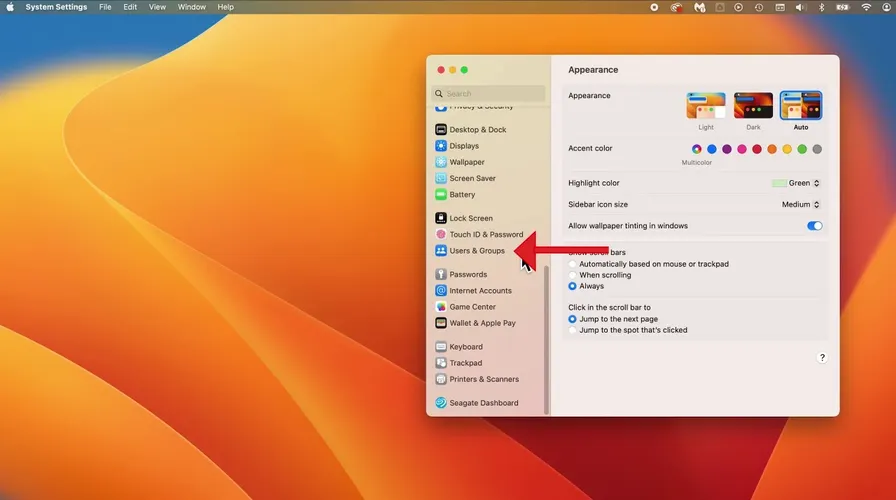
In the realm of cybersecurity, it’s crucial to safeguard your privacy, especially on shared Mac computers. CyberGuy is here to demonstrate how you can employ a “Guest User” to bolster your online security.
Have you ever thought of websites as online real estate, each with its unique digital address? Just like houses in a neighborhood, these addresses signify a sense of place and identity on the internet.
Most internet users are acquainted with domains like “.com,” “.org,” and “.net” – they are akin to the bustling main streets in our global digital city. However, if you venture into the quieter alleys, you’ll come across domains like “.uk” for the UK, “.ca” for Canada, and ‘.au’ for Australia. Each of these represents a country’s distinct digital territory.
In the United States, we have “.US” – the digital address that should symbolize the nation’s online presence. Despite its patriotic connotations, recent research suggests that it might not be the safest corner in the virtual world we call the internet.
Surprisingly, many “.US” domains are registered by foreign entities lacking a legitimate connection to the U.S., using them to deceive and harm unsuspecting internet users.
So, what should represent the United States and its citizens online is, in fact, being exploited by cybercriminals for launching phishing, malware, and spam campaigns.
Unpacking the Domain Basics
Before delving into the matter at hand, let’s start with the fundamentals. Every website has a domain name, essentially its online address.
While “.com” is universally recognized, country-specific domains like “.US” are meant to signify a website’s association with a specific country. This association typically implies authenticity and trustworthiness, or so one would assume.
Why the Suspicion Surrounding ‘.US’
In a surprising turn of events, the “.US” domain, which you’d expect to be one of the safest corners of the internet, has become a hotspot for malicious actors.
The statistics are alarming. Out of six million phishing reports, 30,000 are directly linked to the ‘.US’ domain. The irony is that this domain is theoretically under the watchful eye of U.S. government regulations.
Imagine establishing an exclusive club with a strict guest list, only to leave the back door slightly ajar. That’s essentially what the “.US” domain has become.
Officially, it’s intended for U.S. citizens, entities, or those genuinely connected to the country. However, a closer look reveals that not everyone is rigorously verifying these credentials.
How Scammers Exploit the ‘.US’ Domain Extension
Whether through registration oversights or insufficient periodic verifications, these loopholes are a goldmine for scammers. They infiltrate, set up dubious operations, and start using a “.US” domain as if they were U.S. citizens or entities.
Comparing ‘.US’ to Other Countries in Terms of Security
When you juxtapose the ‘.US’ domain with its global counterparts, the contrast is striking. Take Germany’s “.de” domain, for instance; it records significantly fewer instances of phishing.
Meanwhile, countries like Hungary, New Zealand, and Finland have tightened their grip on their respective country domains, implementing stricter controls. This commitment to safety has paved the way for a more secure online environment, leaving the “.US” domain somewhat in the shadows in terms of security.
Guardians of the ‘.US’ Domain: Are They Doing Enough?
GoDaddy holds the official registrar role for the “.US” domain, courtesy of a contract with the National Telecommunications and Information Administration (NTIA). However, this doesn’t mean GoDaddy is responsible for all “.US” domains used for phishing or other malicious purposes.
Some experts have criticized GoDaddy’s management of the “.US” domain, claiming they aren’t doing enough to verify customer identity and location or enforce terms of service against phishing, malware, and other abuses.
GoDaddy maintains that they take abuse reports seriously and have tools and procedures to combat such attacks. They also assert compliance with the “.US” nexus requirements, which restrict registrations to parties with a connection to the United States.
We reached out to GoDaddy for a response but received no reply before our deadline.
Staying Safe in the Digital Neighborhood
While the “.US” domain may have its dark corners, street smarts can help you navigate the online world safely. Here are some steps to ensure you don’t end up on the wrong side of the digital tracks:
1. Verify before Clicking: Before clicking on any link or visiting a website, especially from unsolicited emails or messages, scrutinize the URL. If it seems suspicious or contains strange characters or misspellings, steer clear.
2. Check SSL Certificates: Trustworthy websites have secure connections indicated by a padlock symbol in the address bar or URLs starting with “https://.” Avoid sharing personal information if you don’t see the “s.”
3. Regular Updates: Keep your computer, smartphone, and software up-to-date, as many updates focus on security and patching vulnerabilities that hackers might exploit.
4. Employ Antivirus Protection: Install reliable antivirus software on all your devices to detect malware, warn against clicking malicious links in phishing emails, and protect against hacking.
5. Use Identity Theft Protection: Consider identity theft protection services to monitor your personal information and receive alerts if it’s being misused on the dark web.
6. Strengthen Passwords and Use 2-Factor Authentication: Avoid using the same password across multiple platforms, employ a password manager, and enable two-factor authentication for added security.
By following these guidelines, you can enhance your online safety and avoid falling victim to cyber threats.