
China, Pakistan Unveil Five-Point Initiative for Peace in Gulf and Middle EastBeijing – China and Pakistan have jointly called for an immediate ceasefire in the ongoing conflict in the Gulf and wider Middle East region, urging all parties to prioritise dialogue and diplomacy over military escalation.
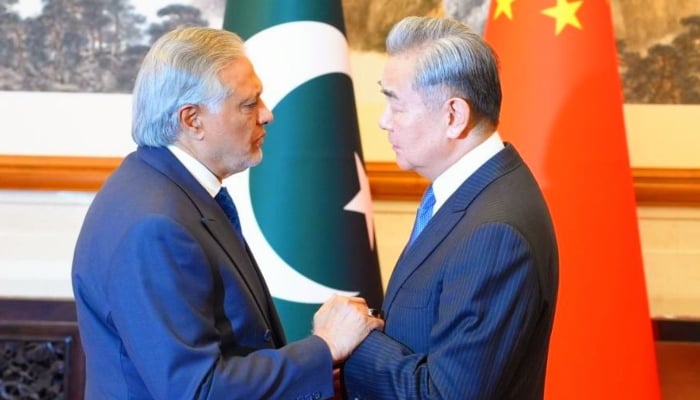
The proposal was announced following a high-level meeting on Tuesday, 31 March 2026, between Member of the Political Bureau of the CPC Central Committee and Chinese Foreign Minister, H.E. Mr. Wang Yi, and Pakistan’s Deputy Prime Minister and Foreign Minister, Senator Mohammad Ishaq Dar, in Beijing.
The two sides reviewed the volatile situation in the Gulf and Middle East and put forward a Five-Point Initiative aimed at restoring peace and stability. The initiative comes amid heightened tensions, including disruptions in the Strait of Hormuz, following military actions involving Iran, the United States, and Israel that began in late February 2026.
Here are the key elements of the joint proposal:
I. Immediate Cessation of Hostilities
China and Pakistan demanded an immediate end to fighting and called on all parties to make utmost efforts to prevent the conflict from spreading further. They stressed that humanitarian assistance must be allowed unimpeded access to all war-affected areas to alleviate civilian suffering.
II. Commencement of Peace Talks
The two countries urged the start of peace negotiations as soon as possible. They emphasised the need to safeguard the sovereignty, territorial integrity, national independence, and security of Iran and the Gulf states. “Dialogue and diplomacy is the only viable option to resolve conflicts,” the statement noted. China and Pakistan expressed support for relevant parties to initiate talks, with all sides committing to peaceful resolution of disputes and refraining from the use or threat of force during negotiations.
III. Protection of Non-Military Targets and Civilians
The initiative called for strict observance of the principle of protecting civilians in armed conflict. Both nations urged an immediate halt to attacks on civilians and non-military targets. They demanded full adherence to International Humanitarian Law (IHL) and a stop to strikes on critical infrastructure, including energy facilities, desalination plants, power stations, and peaceful nuclear infrastructure such as nuclear power plants.
IV. Security of Shipping Lanes
Highlighting the strategic importance of the Strait of Hormuz — a vital global route for goods and energy supplies — China and Pakistan called for the protection of ships and crew members in the strait and its adjacent waters. They urged parties to allow the early and safe passage of civilian and commercial vessels and to restore normal navigation through the strait as quickly as possible.
V. Primacy of the United Nations Charter
The two sides advocated for genuine multilateralism and the strengthening of the United Nations’ central role. They called for efforts to conclude an agreement establishing a comprehensive peace framework for lasting peace, grounded in the purposes and principles of the UN Charter and international law.
Chinese Foreign Minister Wang Yi reportedly welcomed Pakistan’s mediation efforts, describing them as being in the common interest of all parties. The initiative is described as open, with China stating that all countries and international organisations are welcome to support or participate in it.
Pakistan has been actively engaging in diplomatic shuttles in recent weeks, including hosting talks with counterparts from Saudi Arabia, Egypt, and Türkiye, as part of broader efforts to de-escalate the Iran-related crisis.