

By Abu Jemimah Lami
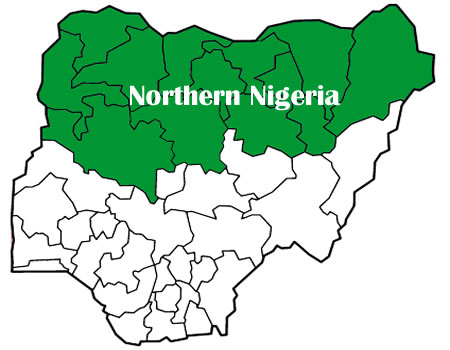
Addressing the unending killings in northern Nigeria requires far more precision and honesty than the usual policy language suggests. The reality is that the problem is not just a lack of effort, but a mismatch between the nature of the threat and the type of responses being deployed. Treating banditry, insurgency, and communal violence as one single problem has led to blunt, often ineffective solutions. What is needed is a layered approach that targets each driver of violence differently, while fixing the structural weaknesses that allow them to persist.
The conversation of job creation must moved beyond vague promises of “empowerment.” The type of jobs matters. In many of the affected northern regions, especially in the North-West and North-Central, the recruitment pool for bandits and militias is largely made up of young men with low education, strong familiarity with rural terrain, and limited access to formal employment. This means job creation must be local, practical, and immediate.
Large-scale public works programs, such as road construction, irrigation systems, and rural housing, can absorb thousands of these youths quickly. These are not just jobs; they also restore state presence in abandoned areas. Agro-processing hubs are another critical opportunity. Instead of focusing only on farming, the government and private sector should invest in value chains like rice milling, dairy processing, leather production, and grain storage. Northern Nigeria already has the raw materials; what is missing is the infrastructure to turn them into stable income. Even livestock transformation, modern ranching, veterinary services, and feed production, can directly reduce farmer–herder conflict while creating employment tied to the realities of the region.
Equally important is the informal and cross-border economy. Many of these violent networks thrive because they are embedded in profitable illicit trade routes, arms, gold, cattle, and fuel. A more honest strategy would not only crack down on these routes but also formalize parts of them. Creating regulated grazing corridors, licensed mining clusters, and monitored trade hubs can redirect economic activity away from criminal control. Without replacing the economic incentives that sustain violence, security operations will only treat the symptoms.
On intelligence, Nigeria has historically leaned too heavily on reactive and centralized systems. What is urgently needed is a fusion of human intelligence (HUMINT) and signals intelligence (SIGINT), but with a clear priority on community-based human intelligence. Most attacks in rural areas are not as invisible as they appear; communities often have early warning signs, strange movements, unfamiliar faces, patterns of reconnaissance, but there is little trust or structure to report this information safely. Building local intelligence networks means working with community leaders, hunters’ groups, and even repentant ex-fighters, not as ad hoc informants but as part of a protected and incentivized system. This requires trust, and trust requires accountability; when communities provide information, they must see results.
At the same time, signals intelligence needs to be far more tactical. Bandits and insurgents use mobile phones, radios, and increasingly simple digital tools to coordinate attacks and track targets. Intercepting communications, mapping movement patterns, and using geospatial surveillance (including drones) should be focused on specific hotspots rather than spread thinly across the country. Intelligence should not just gather information; it must drive rapid, localized response. A delay of even one hour often makes the difference between a foiled attack and a massacre.There is also a difficult but necessary conversation about deterrence and state credibility.
In many affected areas, armed groups operate with a sense that there will be little or no consequence. Arrests are rare, prosecutions even rarer, and convictions almost nonexistent. This creates a cycle where violence becomes a low-risk, high-reward activity. Strengthening the justice system, mobile courts, fast-track prosecution for violent crimes, and witness protection, is just as important as deploying soldiers. Without visible consequences, no security strategy will hold.
Another overlooked dimension is the fragmentation of security responsibility. The current centralized policing structure is overstretched and often disconnected from local realities. Carefully designed state or community policing models, properly regulated to prevent abuse, could improve response times and intelligence gathering. However, this must be accompanied by strict oversight to avoid turning local forces into ethnic militias.
Finally, the government must rethink how it measures success. Too often, success is defined by the number of operations conducted or weapons seized, rather than by whether communities can sleep safely at night. Security should be measured in terms of reduced attacks, safe return of displaced persons, and restoration of local economies. Anything less is an illusion of progress.The unending killings in northern Nigeria persist not because solutions are unknown, but because they have not been applied with enough specificity, coordination, and political will. What is required now is not just more action, but smarter action, grounded in the lived realities of the affected regions and sustained long enough to break the cycle of violence.
Abu Jemimah Lami is a graduate of History and International Studies from IBB University, Lapai, and a Corps Member serving with the Institute for Peace and Conflict Resolution (IPCR), Abuja. She can be reached via jemimahabu36@gmail.com.