
Daybreak Nugeria Editorial Board
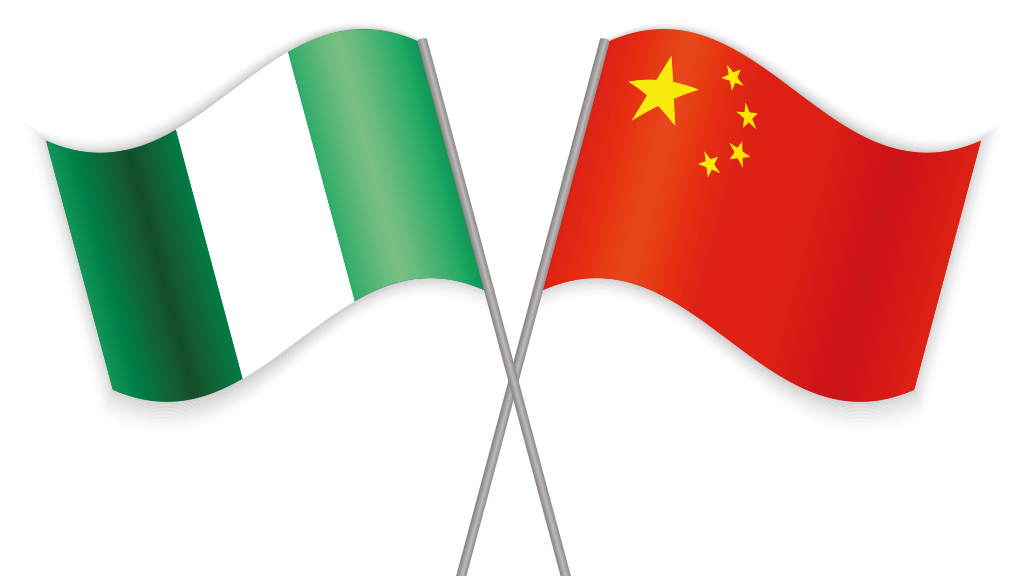
Nigeria as a nation is endowed with numerous potentials. However, Nigeria has struggled since the dawn of its democratic era in 1999 to achieve sustainable economic growth and development. Comparative, China which was once an impoverished nation like Nigeria has since the late 1970s, consistently set itself on the path of economic prosperity and as of today, risen to become the second largest economy in the world and a global power in international affairs.
As Nigeria endeavours to accelerate its trajectory towards social growth and economic development, it is imperative and justifiable to look beyond our borders for inspiration. One nation that obviously comes to the fore because of its remarkable economic transformation and great feat in lifting over 800 million of its citizenry out of abject poverty in four decades is the People’s Republic of China. It is therefore justifiable to draw lessons from China’s enviable transformation.
In the first place, Nigeria stands to benefit a lot, if it learns from and emulates the exemplary leadership style of governance exemplified by Chinese leaders. China’s visionary leadership style has demonstrated so much strength in its unrelenting commitment to policy formulation, policy implementation and achieving development targets and goals. Unlike China, Nigeria leaders since independence and particularly in the last nine years have not been creative, innovative and people centered.
For instance, in an uncontrollable spasm of parapraxis, President Bola Tinubu pronounced the end to fuel subsidy and announced the unification of foreign exchange. These draconian policies have not only worsened the living conditions of Nigerians but have also dragged millions of ordinary folks below the poverty line.
In a similar vein, President Bola Tinubu within two weeks of assuming office, hurriedly signed the ill-advised Student Loans Scheme, only to withdraw it and signed a reviewed one which still did not address the critical issues of ”tuition fees” and education funding in Nigeria. There were also other embarrassing gaffes such as the announcement and withdrawal of the 10,000 to 15,000 dollars expatriate employment levy, the announcement that the United Arab Emirate has lifted its visa ban on Nigerians and the controversial presidential waiver invoked by the President in awarding the 15 trillion naira Lagos-Calabar Coastal highway project contract whose routes have been changed twice within a month.
These continued policy flip flops and policy summersaults will not do this country any good. The leaders of Nigeria must as a matter of urgency adopt China’s leadership governance system to foster growth and economic prosperity.
Secondly, Nigeria can learn from China’s anti-corruption campaign which has zero tolerance for corruption. Corruption is the bane of Nigerian society. In the words of David Cameron, the former Prime Minister of the United Kingdom, in 2016, ” the leaders of Nigeria are fantastically corrupt and Nigeria is possibly one of the most corrupt countries in the world”.
In Nigeria, corruption originated from the leaders. On a daily basis, billions and billions of our common patrimony are being stolen and embezzled in various ways, particularly through the awards of contracts and procurements. A plethora of such corruption cases exist, including that of the former Accountant-General of the Federation, Ahmed Idris, the former Governor of the CBN, Godwin Emefiele, the former Minister of Aviation and Aerospace Development of Nigeria, Hadi Sirika, former Minister of Petroleum Resources, Diezani Allison-Madueke, the ex-EFCC Chairman, Ibrahim Magu, the claim by JAMB in 2018 that 36 million naira was swallowed by snakes, the alleged corruption scandal against the suspended Minister of Humanitarian Affairs and Disaster Management, Beta Edu and even the controversial presidential waiver foisted by President Tinubu in awarding the 15 trillion naira Lagos-Calabar Coastal highway project contract to Gilbert Chagoury’s company, a company in which the President’s first son Seyi Tinubu is alleged to sit on the board.
Even the anti graft agencies set up by the government such as the EFCC, ICPC, the Code of Conduct Bureau, the NDLEA, the Nigerian Police Force among others, to fight corruption are being manipulated by corrupt leaders. No country can grow, let alone develop with these humongous amounts of looting of its national treasury.
Thirdly, Nigeria can emulate China’s Economic Diversification model. Under the visionary and innovative leadership of Xi Jinping, China has become a global production and manufacturing hub. Through a well thought out diversification strategy and reducing its dependence on a single industry, the one time impoverished Chinese nation has transformed into a global economic powerhouse. Nigeria too must genuinely diversify its economy, graduating beyond crude oil dependence to agriculture, manufacturing and mass production.
Fourthly, Nigeria should leverage China’s Belt and Road Initiative (BRI) which has connected many different economies and enhanced seamless trade among many nations of the world to develop and modernize its infrastructures, particularly in Power, Transportation and generate employment for its ever teeming population.
Lastly, Just as China, Nigeria should prioritise investment in Human Capital Development. The Nigerian Government, particularly the sub-nationals should invest judiciously in education, vocational training and health care. These will help create the prerequisite highly skilled workforce that will help drive production, innovation, accelerated growth and economic development of the country.
In conclusion, we are of the conviction that Nigeria can and will benefit tremendously from China’s development experience. This, we strongly believe is certainly achievable by ensuring that leadership across board is thorough, purposeful and exemplary, eradicating corruption or curtailing it to the bearest minimum at all levels of government, systematic and judicious diversification of the Nigerian economy, drawing from the ever increasing opportunities provided by China’s Belt and Road Initiative(BRI) and above all, by prioritising investments in Human Capital Development. Just as China, Nigeria can achieve its full potential and against all odds, lift its more than 133 million citizenry from multidimensional poverty and achieve an endearing economic prosperity.