
Honey is a natural sweetener, and you might expect bacteria to thrive on its sugary goodness. Yet, honey stands out as remarkably resistant to spoilage. What gives it this powerful ability to stay fresh?
Most sweet treats and spreads have a shelf life — just one careless dip of a dirty spoon, and you’re likely to find mould or bacteria taking over. But honey defies this norm. Even after years in storage, it stays edible. While it may crystallize and turn thick or grainy, it doesn’t spoil. The secret lies in its unique chemistry and the way honeybees craft it.
When food spoils, it means microorganisms — like bacteria, fungi, or mould — have claimed it. Preservation methods such as drying, heating, refrigerating, pickling, or sealing in jars are all designed to block these tiny invaders, which thrive in moist, oxygen-rich environments at moderate temperatures.
Despite our best efforts, most preserved foods eventually succumb to these organisms. Who hasn’t unearthed a long-forgotten jar from the back of the fridge, only to find a furry layer of mould inside?
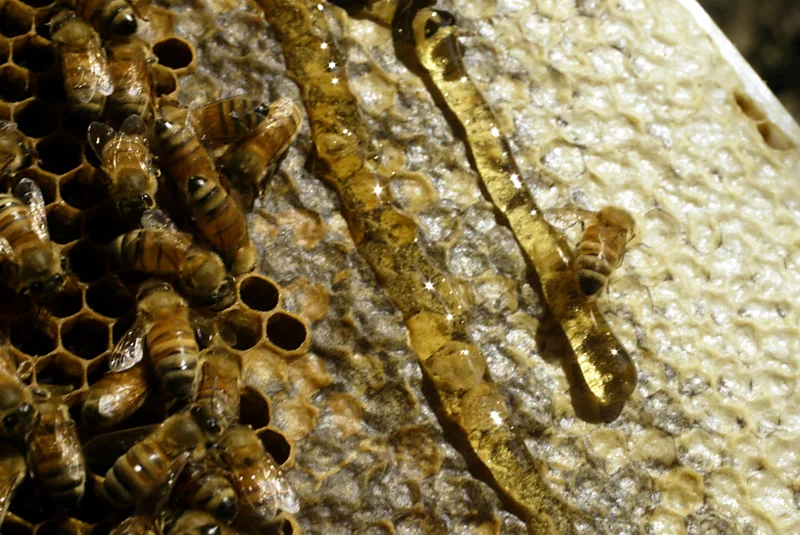
But honey is different. Bees create honey by transforming flower nectar — initially a watery, sugary liquid that would seem perfect for bacteria. The bees remove much of the water, add enzymes that increase the nectar’s acidity, and break down complex sugars. They store this mixture in honeycomb cells and fan it with their wings to evaporate more water.
The result? A dense, low-moisture substance with just 15–18% water. The sugar concentration is so high that microbes can’t survive, and the acidity further discourages growth. Sealing honey in a jar removes oxygen — adding yet another barrier.
Scientists call this state “low water activity.” It’s a tried-and-true method of food preservation. As long as the water in honey stays bound to sugar molecules, spoilage organisms can’t flourish.
That said, honey isn’t invincible. Once you open the jar, air and contaminants can find their way in — especially if you’re using a spoon that’s already been licked. But under the right conditions, honey’s natural chemistry keeps it safe and sweet for years.
Interestingly, if you intentionally add water and yeast, you can ferment honey into mead — a delicious transformation that many would welcome on a warm afternoon.