Business and Economy
FG Debt Repayments Exceed Budget by Nearly N2tn in First Nine Months

By Abigail David
The Federal Government spent N12.63tn on debt-related obligations between January and September 2025, exceeding the prorated budget allocation of N10.74tn by N1.90tn, according to the third-quarter Budget Implementation Report released by the Budget Office of the Federation.
The report showed that debt servicing accounted for the bulk of the expenditure, rising to N12.52tn against a budget provision of N10.45tn, resulting in an overrun of N2.07tn or 19.8 per cent.
A breakdown of the figures revealed that domestic debt servicing consumed N6.23tn, surpassing its allocation by N832.42bn, while foreign debt servicing reached N6.30tn, exceeding the budget by N1.24tn.
The data further indicated that debt servicing alone absorbed 67.2 per cent of the Federal Government’s retained revenue of N18.63tn during the period. When sinking fund payments are included, debt-related obligations accounted for about 67.8 per cent of total revenue.
This means that for every N100 earned by the Federal Government, about N67 was used to service debts, leaving only N33 for salaries, capital projects, overheads and other government obligations.
The report also highlighted a significant revenue shortfall, with actual revenue of N18.63tn falling N12.03tn below the projected N30.67tn for the first three quarters of the year.
In the third quarter alone, government revenue stood at N7.70tn, representing a shortfall of N2.52tn from the quarterly target of N10.22tn. The Budget Office attributed the underperformance largely to weaker-than-expected oil revenues despite improvements in non-oil collections.
Rising debt obligations continued to constrain capital spending, with only N3.10tn released for capital projects during the period, compared to a budgeted N17.58tn. Debt-related payments were therefore more than four times the amount spent on infrastructure and other capital investments.
The report warned that the high debt service-to-revenue ratio was limiting fiscal space and underscored the need for stronger revenue mobilisation and expenditure reforms.
Meanwhile, Finance Minister, Taiwo Oyedele, said the government is exploring options to refinance expensive debt and secure additional funding to address the country’s budget deficit.
Speaking in an interview with Bloomberg TV, Oyedele said favourable market conditions and higher crude oil prices present an opportunity for Nigeria to access financing at better terms.
He added that discussions were ongoing with the World Bank and other multilateral institutions, while investor confidence had improved following recent economic reforms.
Economists have urged the government to reduce dependence on borrowing by expanding revenue sources, implementing tax reforms, selling non-strategic public assets and increasing private-sector participation in infrastructure financing.

Business and Economy
Tinubu Says Economic Reforms Are Delivering Results as Deloitte Africa Backs Agenda


By Abigail David
President Bola Tinubu says Nigeria’s economy is making “serious foundational progress” despite the challenges associated with the economic reforms introduced by his administration.
The President made the remarks while receiving a delegation from Deloitte Africa, led by its Chief Executive Officer for Africa, Ruwayda Redfearn, at the State House in Abuja, according to a statement issued on Wednesday by the Special Adviser to the President on Information and Strategy, Bayo Onanuga.
Tinubu acknowledged that the reforms had been difficult but said they were beginning to strengthen the country’s fiscal and revenue systems and lay the foundation for long-term economic growth.
“Yes, reforms are difficult, but they are working well. For the economy, Nigeria is making serious foundational progress,” the President said.
He also encouraged Deloitte to expand its investment in Nigeria by supporting youth development through training and employment opportunities.
Redfearn reaffirmed Deloitte Africa’s commitment to supporting the Federal Government’s reform agenda, stating that the firm’s local and global teams were ready to provide expertise to advance Nigeria’s economic transformation.
Also speaking, Deloitte West Africa Chief Executive Officer Yomi Olugbenro said the reforms had created a solid foundation but stressed the need to ensure their benefits reached ordinary Nigerians. He said the firm was prepared to leverage its global experience to support the country’s development.
The meeting was attended by the Minister of Finance and Coordinating Minister of the Economy, Wale Edun, Chairman of the Presidential Committee on Fiscal Policy and Tax Reforms Taiwo Oyedele, and the Executive Chairman of the Nigeria Revenue Service, Zacch Adedeji.
By Abigail David
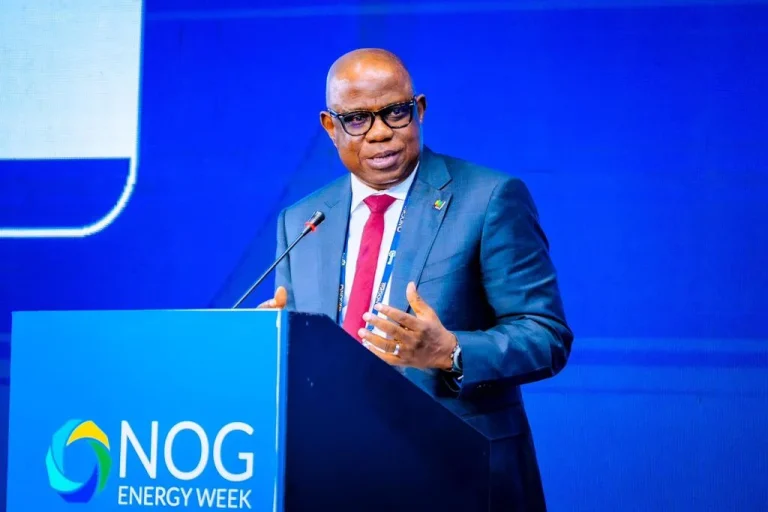
The Nigerian National Petroleum Company Limited (NNPC Ltd.) says it is repositioning itself beyond oil and gas production to become a platform that connects investment, technology, policy and talent to support sustainable energy development across Nigeria and Africa.
Group Chief Executive Officer Bayo Ojulari stated this while reflecting on the company’s participation at the 2026 Nigeria Oil and Gas (NOG) Energy Week, according to a statement issued on Monday.
Ojulari said NNPC Ltd.’s transformation is driven by a broader vision of creating long-term value through strategic partnerships and investment across the energy value chain.
“We no longer view NNPC Limited as merely an energy producer, but as an ecosystem builder, connecting capital, technology, policy, talent and markets to create lasting value for Nigeria and Africa,” he said.
He added that the company’s new direction would strengthen collaboration within the energy industry and contribute to Africa’s energy growth.
The 2026 NOG Energy Week brought together policymakers, regulators, investors, energy companies and technology providers to discuss investment opportunities, energy security, gas development and the future of Africa’s energy sector.
Since its transition into a commercially oriented company under the Petroleum Industry Act, NNPC Ltd. has continued to pursue operational efficiency and strategic partnerships as part of its long-term growth strategy.
Business and Economy
Breaking: Senate Rejects Motion to Probe Alleged ₦1.3bn PFIPC Budget Allocation
By Abigail David
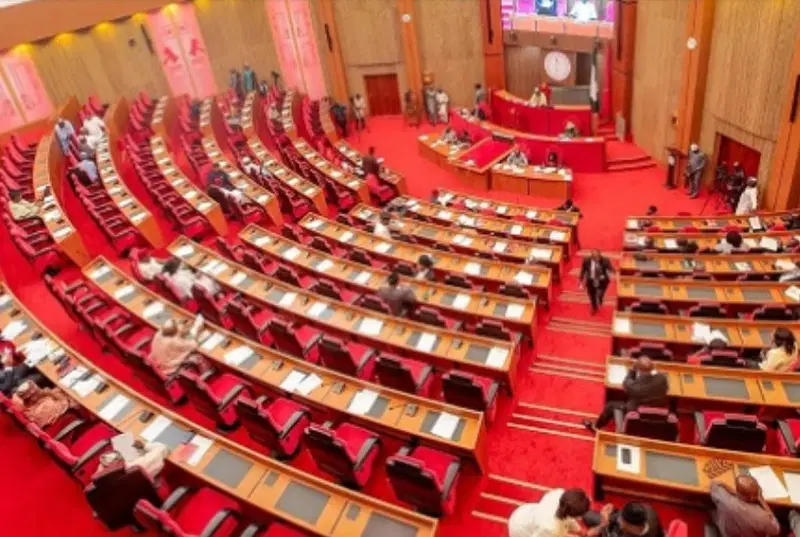
The Senate of Nigeria on Wednesday rejected a motion seeking a comprehensive investigation into the budgetary allocation, operations and controversy surrounding the purported Presidential Foreign Intervention Promotion Council (PFIPC).
The motion was sponsored by Senator Suleiman Kawu, who raised the matter during plenary under the Senate Standing Orders.
Kawu argued that the controversy surrounding the PFIPC threatened the integrity of the Senate, the credibility of the National Assembly and the legislature’s constitutional oversight and appropriation responsibilities.
He called on the Senate to condemn the alleged administrative lapses or fraudulent actions that led to the inclusion of the purported council under Budget Code 0111062001 in the 2026 Appropriation Act.
The lawmaker also sought a probe into how the budgetary allocation of ₦1,302,978,784 was proposed, scrutinised and approved, the officials and agencies responsible for its inclusion in the national budget, and whether any funds had been released or spent under the budget line.
However, the Deputy President of the Senate, Barau Jibrin, who presided over the session, declined to allow debate on the motion.
Jibrin said the Executive had already taken action on the matter, noting that President Bola Ahmed Tinubu had directed the Independent Corrupt Practices and Other Related Offences Commission (ICPC) to investigate the alleged scandal.
He urged senators to allow the Executive’s investigation to run its course rather than commence a separate legislative probe.


BREAKING: Mary Habila was like a daughter to me, Umahi breaks silence

Court stops APC, INEC from altering Benue APC primary winners
Alleged Cybercrime : Court Gives Sowore Final Warning to Conclude Defence or Be Foreclosed
-

 News12 hours ago
CACOL Commends EFCC, Judiciary Over Final Forfeiture of 48 Properties Linked to Ex-AGF Malami
-
 News12 hours ago
Gov. Yusuf Reaffirms Commitment to Kano Development Blueprint, Urges APC Executives to Strengthen Grassroots Mobilisation
-
 News12 hours ago
Gov. Agbu Kefas Seeks Reconciliation, Urges Party Members to Close Ranks After Primaries
-
 News23 hours ago
Court Orders Final Forfeiture of 48 Properties Linked to Ex-AGF Abubakar Malami
-
News12 hours ago
Ododo Launches Massive Security Operation to Rescue Abducted Principal, Students, NECO Official
-

 Entertainment23 hours ago
Davido Reveals Five Items He Never Travels Without, Says Wedding Ring Is Most Precious
-
 News12 hours ago
Gov. Yusuf Rewards APC Grassroots Supporters With 1,540 Plots, ₦100 Million Ahead of 2027
-

 Entertainment23 hours ago
Bella Shmurda Alleges $4 Million Property Fraud, Seeks Legal Redress
You must be logged in to post a comment Login