
Uncategorized
Mohammed Idris: The Image Maker, Shaping Nigeria’s Public Narrative

By Sampson Ikemitang
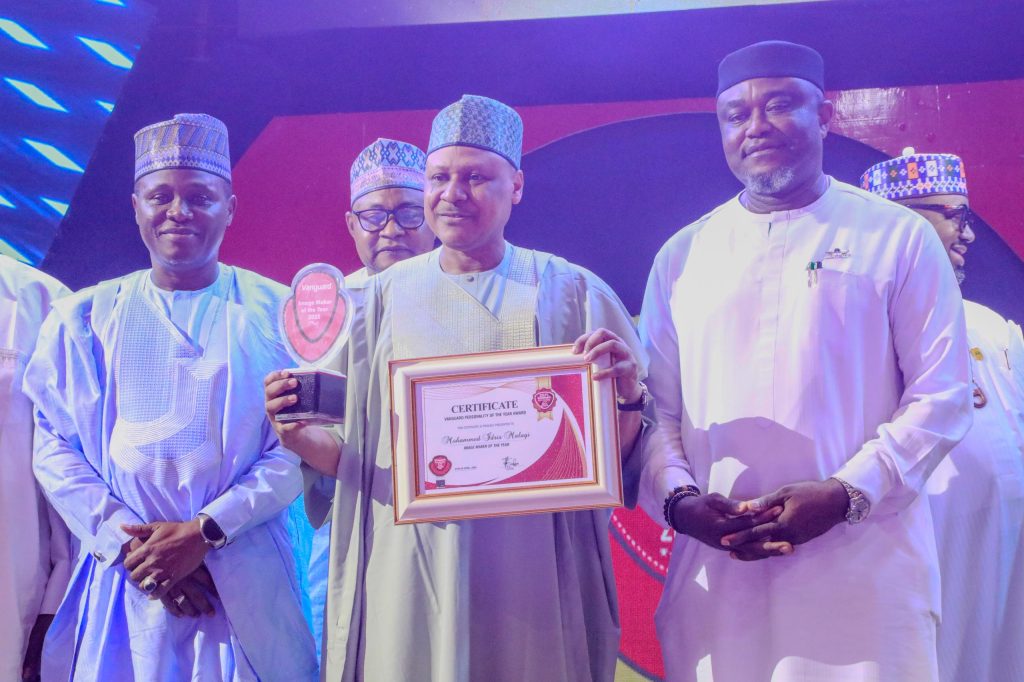
In a political climate where public trust in government communication is constantly tested, Mohammed Idris has emerged as one of the most visible voices defending transparency, accountability, and strategic public messaging in Nigeria. His recent recognition as recipient of the Image Maker Award 2026 by the Vanguard Media Limited underscores not only his growing influence in national communication apparatus but also the evolving role of image management in governance.
The award, presented during the prestigious Vanguard Media Award held at the Eko Hotel & Suites in Lagos, celebrated Idris’ efforts in strengthening communication between government and the citizenry during a period of sweeping economic reforms by the Bola Ahmed Tinubu led administration. It is needless to say that these reforms have come under serious public scrutiny.
For Mohammed Idris, however, the recognition appears to symbolise more than personal achievement. It represents a philosophy of governance anchored on clarity, credibility and trust. “Communication must not only inform but also build trust,” Idris declared while receiving the award.
From Media Entrepreneur to Government Communicator
Before assuming office as Nigeria’s Minister of Information and National Orientation, Mohammed Idris built a formidable career in media and public relations. He is the founder and publisher of Blueprint Newspaper, Chairman of Bifocal Group, and owner of Abuja-based WE 106.5 FM. His extensive background in Journalism and strategic communication, undeniably, positioned him for the demanding task of managing government Information machinery in a rapidly changing media environment.
His transition from a media proprietor to chief government spokesperson reflects a broader trend in Nigerian governance, where communication expertise has become increasingly vital in shaping public discourse and engendering public confidence.
Observers are of the opinion that Idris assumed office during one of Nigeria’s most turbulent reform periods, in the nation’s history. These reforms range from fuel subsidy removal, foreign exchange restructuring, and fiscal policy adjustments. There is no denying the fact that the reforms have triggered widespread debates, economic pressure, and heightened expectations from the citizenry. In that atmosphere, communication became as important as policy itself.
The Burden of Explaining Reform
Since assumption of office as the Information and National Orientation’s Minister, Idris has consistently emphasised openness and continuous engagement with Nigerians. According to him, government cannot succeed in silence. As such, his ministry has sought to bridge the gap between government’s policy and public understanding through regular media briefings, town hall engagements and coordinated messaging across multiple platforms.
While supporters have argued that Idris communication strategy has brought greater structure and consistency to federal messaging, critics however, have maintained that effective communication must also be matched by visible improvements in citizens’ living conditions. Yet, even critics acknowledge that Minister Idris has remained one of the administration’s most accessible public voices.
At the Vanguard ceremony recently, it will be recalled that Idris described the award as “a testament to the trust we strive to build with every Nigerian”. In fact, that statement highlights the central challenge of his office, thus, persuading Nigerians to trust difficult reforms in uncertain times.
Rebranding Governance through Transparency
Perhaps, one of the defining characteristics of Idris’ tenure has been his repeated emphasis on transparency and accountability. He has maintained that accurate and timely information dissemination is sine qua non not only for governance but also for national security and social stability.
This approach, no doubt, reflects a growing realization within government circles that communication failures can quickly escalate into public distrust. To this end, Minister Idris has championed collaboration between government agencies, security institutions and media organisations to ensure timely, well-coordinated and credible public information dissemination.
The Information Minister’s communication strategy also appears deeply rooted in empathy. For instance, during discussions on economic reforms, he has consistently stressed the need to explain policy decision in ways and manners citizens can understand, while acknowledging the temporary hardships being experienced by some Nigerians.
Why the “Image Maker Award” Matters
In Nigerian political culture, image management is often viewed with scepticism, sometimes, dismissed with a wave of the hand as mere propaganda. But the Image Maker Award signals a more nuanced recognition, the ability to shape national perception responsibly during periods of socio-economic transformation.
For Mohammed Idris, the award came at a defining moment. Nigeria’s reform agenda will remain a subject of debate even as public confidence in government owned institutions continues to fluctuate. In such scenarios, the role of communication extends far beyond publicity –it becomes a tool for national cohesion and development.
The Vanguard honour therefore acknowledges Idris’ role in navigating one of the country’s most sensitive assignments –managing public understanding in a reform-driven administration.
Beyond the AwardDespite the recognition, Minister Idris has insisted that the honour is “not an endpoint, but a call to do more for the Nigerian people”. That statement may ultimately determine how posterity will judge his tenure as the Information’s Minister.
While it is instructive to note that Awards celebrate moments, public trust, on the other hand, is built over time. For Mohammed Idris, the real test lies ahead, sustaining credibility in a political landscape where narratives shift quickly and the citizenry increasingly demand authenticity over rhetoric.
In a nation where communication can influence stability, shape policy acceptance, and define leadership perception, Mohammed Idris has positioned himself as more than just a government’s spokesperson. He has undoubtedly, become one of the pivots of Nigeria’s public narrative in an era driven by reforms.
Ikemitang writes from the Federal Ministry of Information and National Orientation, Abuja.
Uncategorized
Alleged Cybercrime : Court Gives Sowore Final Warning to Conclude Defence or Be Foreclosed
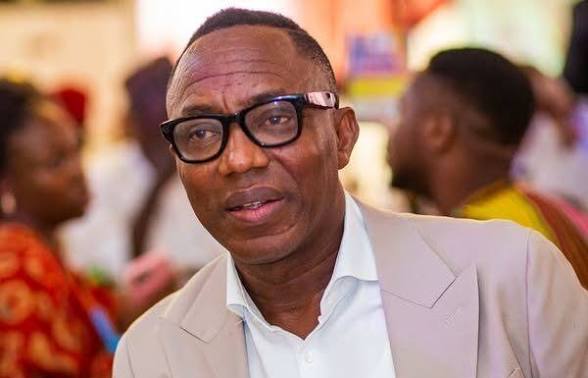
The Federal High Court in Abuja, on Thursday, handed a final warning to online publisher and presidential candidate of the African Action Congress (AAC), Omoyele Sowore, to conclude his defence, or be foreclosed.
Justice Mohammed Umar gave the warning after lawyer to the Department of State Services (DSS) Akinlolu Kehinde, SAN, made an oral application shortly after Sowore sought an adjournment over his lead counsel’s absence.
The DSS is prosecuting Sowore for criminal defamation, incitement, and for allegedly cyber-bulling President Bola Tinubu by calling him a “criminal” in posts he made last September on his “X” and Facebook accounts.
When the case was called on Thursday, even though Sowore was present in court, no lawyer appeared for him.
When Justice Umar inquired about Sowore’s counsel, he responded that his lead lawyer, Mr Adeyinka Olumide-Fusika, SAN, travelled to the United Kingdom (UK), a move he said the court is aware of.
Sowore told the judge that his lawyer advised him to inform the court that “he will not be available for today’s hearing and he will like to handle this case because he is a skillful lawyer.”
When asked if he wanted to proceed with his defence, Sowore requested an adjournment.
“I will urge your lordship to adjourn the matter because it is a serious case and I will need lawyer to defend me,” he said.
The defendant also applied to make another application.
At this point, the judge told Sowore that if he applied to make another application other than the issue of adjournment, that would mean that he had decided to represent himself in court.
“If you want to take up the case let us know. If you have any application to make, it means you are planning to defend yourself…If you are making an application, it means you are telling this court that you are taking over the defence on your own,” the judge said.
Responding , however, counsel to the DSS drew the attention of the court to what he called the 11th time Sowore would be applying for an adjournment in the course of his defence.
“With respect, this matter came up on July 13, 2027, and the defence counsel made an application for adjournment and the court adjourned to today because of the fact that their next set of witnesses are subpoenaed witnesses and your lordship signed the subpoena.
“This same excuse was given that the lead counsel was absent at the last adjourned date and this court said that the absence of lead counsel cannot stop this proceeding.”
Kehinde also argued that there was a subsisting order of the court that the trial is to be conducted on a day-to-day basis.
The senior lawyer submitted that it was crystal clear that Sowore was not ready to proceed with his defence.
He, therefore, applied that his defence be foreclosed.
“I urge your lordship, in the interest of justice which is a three-way traffic; justice for the prosecution, the defence and the society, to foreclose the defence and make a consequential order accordingly,” he applied.
Ruling, Justice Umar said he would give Sowore the last opportunity in the interest of fair hearing.
“I have heard the application of the defendant, seeking for adjournment of the case on the basis that his lead counsel was not in court.
“The defendant cleary stated that this is a serious matter of which the lead counsel needs to give serious attention to same.
“I equally listened to counsel to the prosecution that this is the 11th adjournment and that the defendant’s defence should be foreclosed.
“Fair hearing demands that all parties be heard and defendant presents his defence before court,” he said.
The judge said while the court cannot force the defendant to defend himself, he would concede to Sowore’s application for adjournment.
Justice Umar, however, warmed that if he failed to continue with his defence on the next adjourned date, his defence may be foreclosed.
The judge adjourned the matter until July 22 for definite continuation of defence.
However, shortly after the ruling, Sowore appealed to the judge to direct applied for his international passport be temporarily released to enable his children in the United States attend to some emergencies.
Justice Umar directed him to file a formal application and that the prosecution respond before his decision.
Uncategorized
Court Denies Bail To Man Arrested By DSS For Planning Multiple Attacks On Abuja Schools

The Federal High Court in Abuja has denied bail to a man arrested by the Department of State Services (DSS), for allegedly planning multiple attacks on several schools in the Federal Capital Territory (FCT).
Justice Joyce Abdulmalik denied John Jude Agbo bail after the prosecution presented a fourth witness and, thereafter, closed its case against him.
Agbo faces terrorism and cybercrime charges for allegedly planning to harm the schools, their students and teachers.
Ruling on the defendant’s bail application, the trial judge held that there was no evidence to show that Agbo would not jump bail. The judge ordered that he be remanded in the custody of the Nigerian Correctional Service (NCS).
Earlier, the witness, a DSS officer, told the court how his team investigated Agbo and some of his collaborators. This, said the witness, included analyzing the messages they sent the schools they planned multiple attacks on, if the schools didn’t drop off huge sums of money at specified locations.
The witness tendered an audio-visual recording of Agbo’s interview session, which was admitted in evidence and played in open court. Thereafter, the prosecution formally closed its case.
The judge adjourned the matter until September 24 for Agbo to open his defence.

. We build spaces that inspire communities – Lubasch
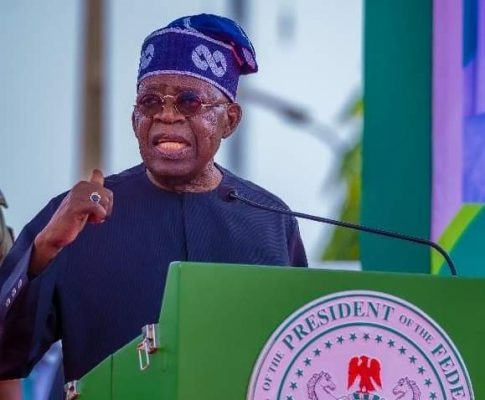
President Bola Ahmed Tinubu and the Minister of the Federal Capital Territory (FCT), Barr Nyesom Wike, Thursday night commended Julius Berger Nigeria Plc for the successful transformation of the iconic Abuja City Gate, describing the project as a symbol of national renewal, unity and urban modernisation.
The newly remodelled monument was inaugurated in Abuja, Thursday at a ceremony attended by top government officials, with President Tinubu represented by the First Lady, Senator Oluremi Tinubu as part of activities marking the third anniversary of the Tinubu administration and the 50th anniversary of the Federal Capital Territory.
Speaking at the commissioning, the President described the Abuja City Gate as one of Nigeria’s most recognisable landmarks and a vital symbol of the nation’s identity. He stated that the remodelling project reflects the administration’s commitment to building a capital city that matches Nigeria’s status and aspirations.
According to him, the upgraded City Gate provides visitors with a befitting first impression of Abuja and showcases the nation’s commitment to excellence in public infrastructure. He noted that the redesigned facility, complete with a striking water fountain representing the 36 states and the Federal Capital Territory, now stands alongside notable landmarks in major cities around the world
For his part, Wike applauded Julius Berger for delivering a project that has significantly enhanced the appearance and prestige of the nation’s capital. He disclosed that the City Gate had suffered years of neglect before the intervention, adding that its transformation was inspired in part by the First Lady’s concern about the state of the iconic structure.
According to FCT Minister, after First Lady Oluremi Tinubu proposed the need to upgrade the City Gate, Julius Berger developed the design and carried out the construction work, transforming the long-standing monument into a modern landmark.
Specific contributions attributed to Julius Berger according to the Minister include: designing the remodelling concept for the gateway after receiving the project brief from the FCT Administration, executing the reconstruction and beautification works, including the upgraded architectural features and landscaping, installing the iconic water fountain system, which symbolises Nigeria’s 36 states and the Federal Capital Territory, delivering ancillary infrastructure, such as surrounding public spaces, parking areas, and other visitor-friendly amenities incorporated into the upgraded site and completing the project within the timeline set by the FCT Administration, enabling its commissioning during activities marking the third anniversary of the Tinubu administration and the FCT’s 50th anniversary.
To preserve the facility’s new outlook, Wike announced that the FCT Administration would sign a Memorandum of Understanding with Julius Berger for the maintenance of the monument. He explained that the arrangement would ensure the infrastructure remains in excellent condition and does not fall back into neglect.
Beyond the physical upgrade, Wike said plans are underway to further develop the surrounding area with support facilities, including car parks, restaurant spaces and public conveniences. He added that the site is expected to become a recreational and tourism destination where residents and visitors can relax, take photographs and host social events.
Others who spoke in the same vein were; the Minister of State for the FCT, Dr Mariya Mahmoud who described the remodelled City Gate as a powerful symbol of the transformation taking place in the nation’s capital, adding that, the project represents a new era of infrastructural renewal, urban rebirth and national pride; and the Acting Executive Secretary of the Federal Capital Development Authority (FCDA), Richard Dauda, who noted that the Abuja City Gate remains the city’s most iconic landmark and a recognizable symbol of Abuja both within Nigeria and internationally, adding that, the monument continues to reflect the hospitality, unity and aspirations of the nation.
In his speech, the Managing Director of Julius Berger Nigeria PLC, Engr. Dr. Peer Lubasch, reaffirmed the company’s commitment to national development, saying that Julius Berger has remained a trusted partner in Nigeria’s growth journey for more than six decades.
For over 60 years, Julius Berger has been a proud partner in Nigeria’s growth. We do not just build structures; we build spaces that inspire communities, he stated.
Reflecting on the significance of the landmark, Lubsch described the Abuja City Gate as much more than a concrete structure, recalling that it was originally erected in 1991 during the administration of former military president, General Ibrahim Babangida, to mark the historic relocation of Nigeria’s capital from Lagos to Abuja.
Noting that the monument has since become one of the most recognisable symbols of the nation’s capital, welcoming residents, visitors and dignitaries arriving in Abuja, the Managing Director added that passing beneath the iconic arches, alongside the display of the Nigerian flag and the national Coat of Arms, remains a powerful reminder of the country’s strength, diversity and shared heritage.
He further revealed that the company played a key role in the construction of the original monument decades ago and considered it a privilege to return and undertake its modern transformation, explaining that the objective of the project was to preserve the historical identity of the City Gate while upgrading it into a contemporary public space capable of serving future generations.
Our goal was simple: preserve its proud history while upgrading it into a modern space for the future, he said.
The successful completion of the project further reinforces Julius Berger’s reputation as one of Nigeria’s leading engineering and construction companies. The remodelling of the Abuja City Gate not only restores a historic national monument but also strengthens Abuja’s image as a modern capital city capable of rivalling major global destinations.


BREAKING: Mary Habila was like a daughter to me, Umahi breaks silence

Court stops APC, INEC from altering Benue APC primary winners
Alleged Cybercrime : Court Gives Sowore Final Warning to Conclude Defence or Be Foreclosed
-

 News12 hours ago
CACOL Commends EFCC, Judiciary Over Final Forfeiture of 48 Properties Linked to Ex-AGF Malami
-
 News12 hours ago
Gov. Yusuf Reaffirms Commitment to Kano Development Blueprint, Urges APC Executives to Strengthen Grassroots Mobilisation
-

 News12 hours ago
Gov. Agbu Kefas Seeks Reconciliation, Urges Party Members to Close Ranks After Primaries
-
 News23 hours ago
Court Orders Final Forfeiture of 48 Properties Linked to Ex-AGF Abubakar Malami
-
News12 hours ago
Ododo Launches Massive Security Operation to Rescue Abducted Principal, Students, NECO Official
-

 Entertainment23 hours ago
Davido Reveals Five Items He Never Travels Without, Says Wedding Ring Is Most Precious
-
 News12 hours ago
Gov. Yusuf Rewards APC Grassroots Supporters With 1,540 Plots, ₦100 Million Ahead of 2027
-

 Entertainment23 hours ago
Bella Shmurda Alleges $4 Million Property Fraud, Seeks Legal Redress
You must be logged in to post a comment Login