
Opinion
The Future of Multilateralism: China’s Contribution to a More Equitable Global Order

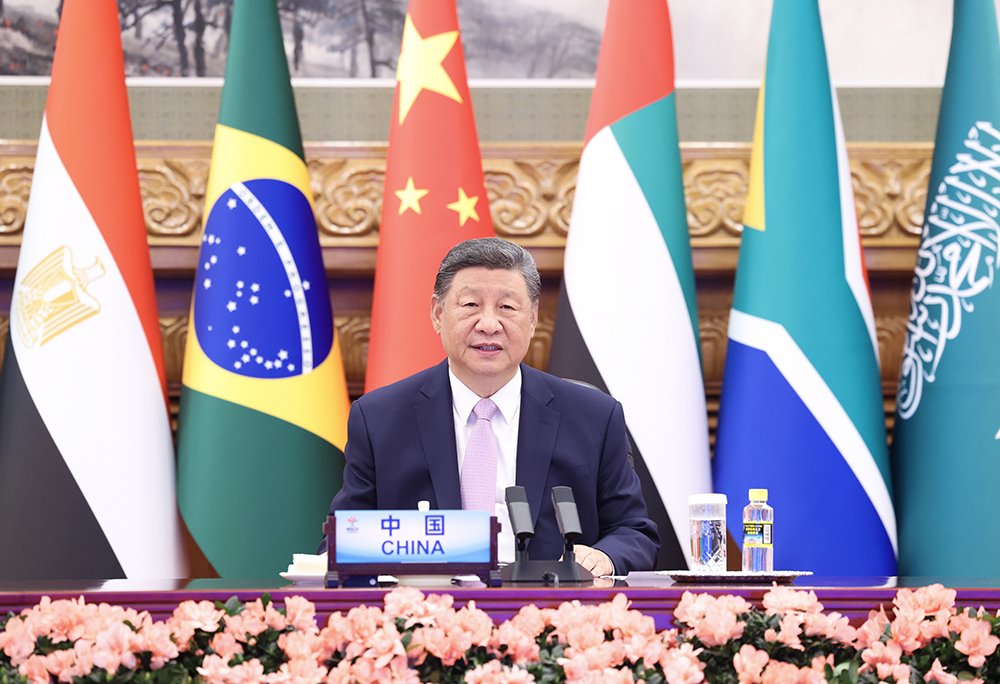
By Professor Udenta O. Udenta
The June 2026 publication of ‘More Just and Equitable Global Governance: China’s Principles, Proposals and Actions’ by the State Council Information Office of the People’s Republic of China represents one of the most consequential contributions to contemporary debates on the future of international governance. At a time when the international system is increasingly strained by geopolitical rivalries, widening inequalities, persistent development deficits, climate challenges, and growing dissatisfaction with existing global institutions, the white paper offers a comprehensive critique of the prevailing order while advancing an alternative vision anchored on sovereign equality, multilateral cooperation, international law, and inclusive development.
Far from being a mere diplomatic statement, the document is a carefully articulated philosophical and policy framework that seeks to address the growing disconnect between twenty first century realities and institutions largely shaped by the power configurations of the post Second World War era. Its central proposition is both simple and profound: a stable and sustainable international order can only emerge when all nations, regardless of size or economic strength, possess a meaningful voice in shaping the rules that govern humanity’s collective future.
The significance of this white paper lies not only in what it says about China’s global ambitions, but also in what it reveals about the changing aspirations of the Global South. For decades, developing nations have sought a more representative international system capable of reflecting their demographic, economic, and political importance. China’s call for a more just and equitable model of global governance therefore resonates beyond Beijing, finding increasing support among countries that perceive existing institutions as insufficiently responsive to their interests and developmental priorities.
Whether one agrees entirely with China’s prescriptions or not, the white paper raises questions that can no longer be ignored: Can global governance remain legitimate if large segments of humanity remain underrepresented in decision making? Can international stability endure when economic benefits and political influence are concentrated within a narrow circle of states? By confronting these questions directly, China has placed itself at the centre of an emerging global conversation about fairness, representation, and shared prosperity, offering a vision that many regard as an important step toward a more balanced and democratic international order.
The international order stands at an inflection point. The institutions that have underpinned global governance since the conclusion of the Second World War are confronting challenges of legitimacy, representation, and effectiveness unprecedented in recent decades. Economic power has dispersed across continents, new centres of influence have emerged, and the aspirations of developing nations have grown increasingly difficult to ignore. Yet many of the mechanisms through which global affairs are managed continue to reflect the geopolitical realities of a bygone era.
It is within this context that China’s vision for a more just and equitable system of global governance has attracted increasing attention. More than a mere diplomatic proposition, it represents an attempt to re-imagine how international relations, economic development, and multilateral cooperation should function in an increasingly interconnected world.
The central premise is deceptively simple: a world that has fundamentally changed requires institutions capable of changing with it.
The Imperative of Reform
One of the most compelling arguments advanced by China is that the architecture of global governance no longer adequately reflects contemporary economic realities.
Emerging economies now account for a substantial share of global growth, trade, industrial production, and innovation. Countries across Asia, Africa, Latin America, and the Middle East have become indispensable contributors to global prosperity. Nevertheless, decision making within many international institutions remains disproportionately concentrated among a relatively small number of advanced economies. Such asymmetry inevitably raises questions concerning legitimacy.
A governance system derives its authority not solely from historical precedent but from its capacity to represent the interests of those it seeks to govern. As global economic gravity shifts, demands for greater representation become not merely desirable but unavoidable.
China’s advocacy for reform within institutions such as the United Nations, the International Monetary Fund, and the World Bank reflects this broader concern. The objective is not the dismantling of the existing order but its adaptation to contemporary realities.
Economic Development as a Pillar of Global Stability
Perhaps the most distinctive feature of China’s approach lies in its insistence that development occupies a central place within global governance. For decades, international discourse has often prioritised political frameworks whilst treating economic transformation as a secondary concern. China’s experience suggests the opposite. Sustainable governance, social stability, and national resilience are difficult to achieve in the absence of broad based economic development.
This philosophy is reflected in the Global Development Initiative, which seeks to place poverty reduction, infrastructure development, food security, digital transformation, and sustainable growth at the heart of international cooperation.
The underlying logic is difficult to dismiss. A society burdened by unemployment, inadequate infrastructure, and chronic underdevelopment is unlikely to enjoy long term political stability. Economic empowerment is not merely a development objective; it is a governance imperative.
For Africa, where infrastructure deficits and development financing gaps remain significant obstacles, this perspective carries particular relevance.
The Belt and Road as Economic Diplomacy
No discussion of China’s vision for global governance can be complete without reference to the Belt and Road Initiative. Often misunderstood solely as an infrastructure programme, the initiative represents a broader exercise in economic diplomacy. Through investments in transportation networks, energy infrastructure, ports, railways, and industrial corridors, it seeks to enhance connectivity between nations and facilitate economic integration.
Critics have raised legitimate concerns regarding debt sustainability, project transparency, and geopolitical influence, yet it is equally undeniable that the initiative has provided many developing countries with access to infrastructure financing that might otherwise have remained unavailable.
From China’s perspective, economic interdependence promotes stability, reduces barriers to development, and creates shared prosperity. Whether one accepts this argument in its entirety or not, the initiative has unquestionably altered the landscape of international development finance.
Sovereignty and Strategic Autonomy
Another cornerstone of China’s approach is its emphasis on sovereign equality. In an era characterised by sanctions, geopolitical rivalries, and competing ideological narratives, China consistently advances the principle that nations should retain the freedom to determine their own developmental pathways without external coercion. This principle resonates strongly throughout much of the Global South.
Many developing countries possess historical memories of colonial domination, foreign intervention, and externally imposed policy prescriptions. Consequently, calls for mutual respect, non interference, and sovereign autonomy find a receptive audience.
The challenge, naturally, lies in ensuring that such principles are applied universally rather than selectively. Nonetheless, the emphasis on sovereign equality remains a significant feature of China’s diplomatic engagement.
Security Through Cooperation
Economic development alone cannot sustain global order. Stability also requires security. Recognising this reality, China has advanced the Global Security Initiative, which advocates cooperative security arrangements, dialogue based conflict resolution, and the rejection of Cold War mentalities.
The proposal rests upon the premise that security should be indivisible. In other words, one nation’s security should not be achieved at the expense of another’s insecurity.
While critics debate the practical implications of this doctrine, its broader philosophical foundation reflects a growing recognition that contemporary security challenges, from terrorism and cyber threats to regional conflicts and transnational crime, demand collective rather than unilateral responses.
Civilisational Pluralism in a Multipolar Age
A particularly intriguing dimension of China’s vision is its emphasis on cultural and civilisational diversity. Through the Global Civilization Initiative, China argues that no single civilisation possesses a monopoly on wisdom, modernity, or governance. Different societies, shaped by distinct histories and traditions, should be permitted to pursue development models suited to their unique circumstances.
This proposition challenges assumptions that political and economic progress must necessarily follow a singular template. Whether one agrees with this view or not, it raises important questions about the relationship between governance, culture, and national identity in an increasingly multipolar world.
The Rise of the Global South
Perhaps nowhere is China’s influence more visible than in its engagement with the Global South. Its support for the expansion of BRICS, advocacy for increased African representation within international institutions, and efforts to amplify the voices of developing nations all reflect a broader strategic objective: the creation of a more inclusive international order.
This does not imply the replacement of one hegemon with another. Rather, it suggests a gradual diffusion of influence across a wider spectrum of states. The aspiration is a world in which global governance is shaped not by a narrow concentration of power but by a broader coalition of stakeholders whose interests reflect the diversity of humanity itself.
The Ultimate Test
The enduring significance of China’s principles, proposals, and actions lies not in the rhetoric surrounding them but in the questions they compel the international community to confront. Can institutions designed for the twentieth century effectively govern the twenty first? Can economic development be elevated from a peripheral concern to a central pillar of global governance? Can sovereignty, cooperation, and mutual respect coexist within an increasingly interconnected world? Can developing nations secure a greater voice in shaping the rules that govern global commerce, finance, and diplomacy?
These questions transcend China itself. They speak to the future of international legitimacy, economic justice, and political stability. Whether China’s vision ultimately succeeds remains uncertain. History teaches us that every rising power combines idealism with strategic interest. China is unlikely to prove an exception. Yet the broader debate it has invigorated is both necessary and timely.
A more just and equitable global order will not emerge through declarations alone. It will require institutions capable of adapting to new realities, economies committed to shared prosperity, and diplomacy rooted in genuine inclusiveness. In that respect, the conversation is no longer about China’s future role in the world. It is about the kind of world the international community wishes to build.
Professor Udenta O. Udenta is a Nigerian scholar, literary theorist, and public intellectual known for his contributions to critical theory, political economy, and African cultural studies. He has been an influential voice in progressive intellectual discourse in Nigeria, consistently engaging questions of governance, ideology, and development within the African context.










By Salihu Abdulhamid
As political consultations and alliances begin to emerge ahead of Nigeria’s 2027 general elections, discussions about the influence of political godfatherism are resurfacing in Kogi State. Although campaigns have not officially started, political observers say early alignments have renewed debate over how candidates may emerge and what this could mean for the state’s democratic process.
Godfatherism describes a political system in which influential figures use their networks, resources, and party influence to support candidates or shape political outcomes. While political mentorship is common in democratic systems, analysts argue concerns arise when elite influence is perceived to outweigh transparent party competition and voter choice.
Kogi State has witnessed several high-profile political transitions that have fuelled debate over the role of influential political actors. Following the death of governorship candidate Abubakar Audu during the 2015 election process, Yahaya Bello emerged as governor under decisions taken by the political party and the electoral authorities. The development generated national constitutional and political debate.
Similarly, the 2023 governorship election attracted attention after Ahmed Usman Ododo secured victory with the public backing of former Governor Yahaya Bello. Supporters described the transition as political continuity, while critics argued it highlighted the influence of powerful political actors in candidate selection.
Political analysts say the 2027 elections will test political parties’ commitment to transparent primaries, internal democracy and inclusive participation. They also note that electoral outcomes will depend on multiple factors, including candidate popularity, party organisation, voter behaviour and prevailing socio-economic conditions.
Observers say strong democratic institutions, credible elections and active citizen participation remain essential to ensuring that electoral outcomes reflect the will of voters.
By Amjad M. Nyei
I studied in China from 2008 to 2016, attending universities in Jiangxi and Hubei Provinces—two regions closely associated with the Chinese Revolution that ultimately gave birth to the People’s Republic of China. Those eight years were both academically enriching and personally transformative. I witnessed firsthand the deep sense of patriotism among the Chinese people, as well as the respect they generally accorded to their governing institutions. Many of my classmates were committed members of the Communist Party of China (CPC) or actively participated in Party-related activities. The CPC’s presence was visible throughout university campuses. Red banners displaying educational slogans were common sights, carrying messages such as, “China’s Civilization Starts with Me,” “At the national level: Democracy, Civility, and Harmony; at the social level: Freedom, Equality, and Justice; at the individual level: Dedication, Integrity, and Friendliness.” These slogans constantly reminded citizens of their civic responsibilities while reinforcing the government’s commitment to national development and social cohesion.
One memorable experience during my stay in China was the celebration of the 60th anniversary of the founding of the People’s Republic of China at Nanchang University. The entire campus was filled with excitement, pride, and patriotism. Students devoted countless hours to rehearsing for the university’s grand gala, eager to contribute to the national celebration. On the evening of the event, the atmosphere was electric. The audience was treated to breathtaking cultural dances, moving poetry recitals, and theatrical performances depicting key moments of the Chinese Revolution. It was more than a celebration of history; it was a powerful expression of national identity and collective purpose. Witnessing such a profound display of unity and patriotism gave me a deeper appreciation of the values that have shaped modern China and continue to influence its remarkable development.
A party committed to state and its people has been diligently carrying out its responsibilities in spite numerous competing priorities.
A brief Historical Context and Modern Realities
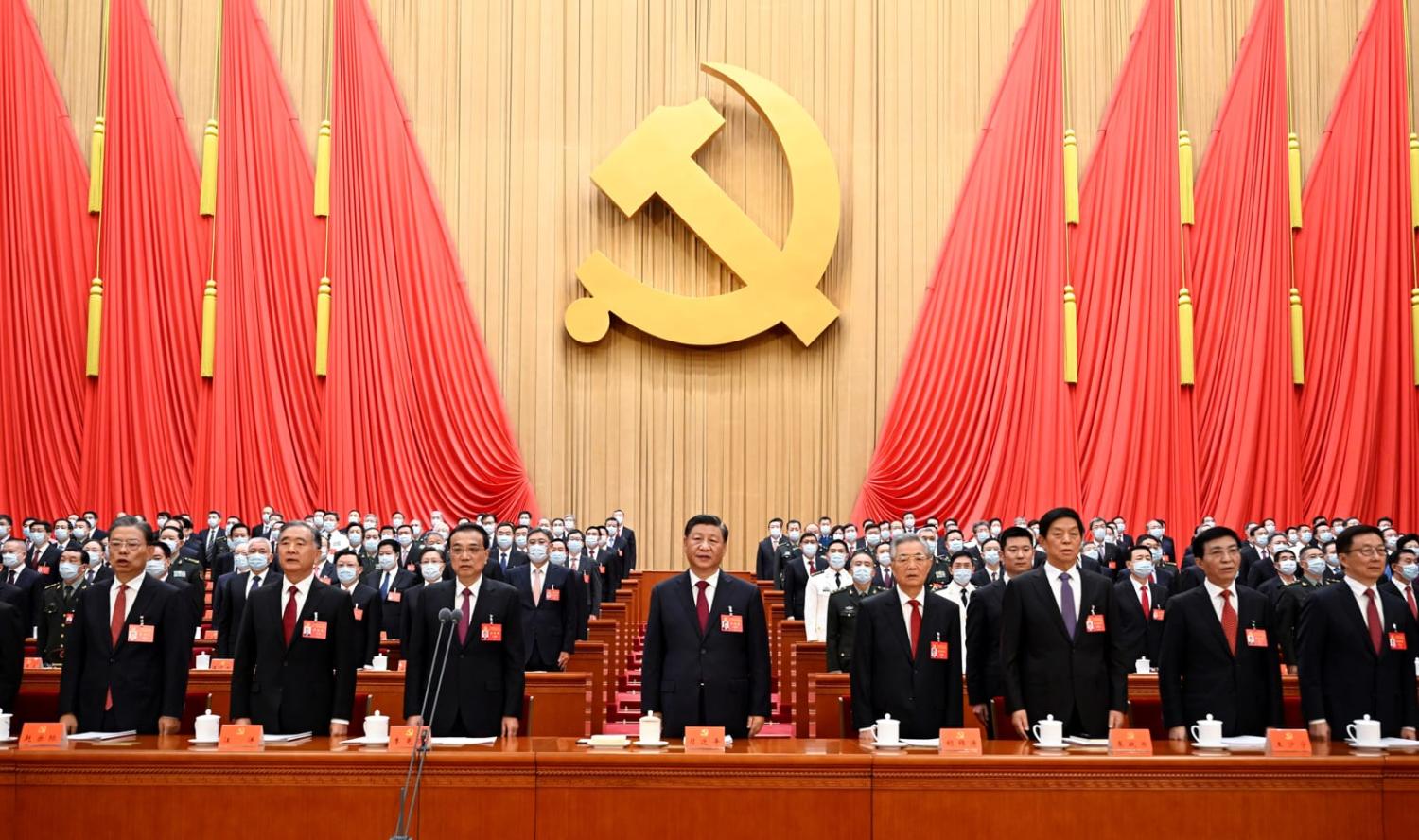
The Chinese Communist Party (CPC) is the largest and one of the most powerful political organizations in the world and has played a crucial role in initiating most of the major reforms in China, especially during the period after 1970. Political party system is imported to China; the CPC is a Chinese cultural product: it is an entirely different breed of political party from those in the West. However, since the 1970s, reforms and open-door policy, the CPC has been enabled to accommodate various elements of democracy. This is termed, democracy with Chinese characteristics.
Founded in 1921 in the eastern Chinese city of Shanghai, the CPC has gone through dramatic transformation in its century of existence. With an initial membership of 53 people, the party has survived the political onslaughts of the KTM in the 1920s and 1930s and expanded drastically in subsequent decades1. Under the astute leadership of leadership Mao Zedong, the CPC became the ruling party of the People’s Republic of China (PRC) in 1949.
The party can be credited for unification and sovereignty of the China- ending the decades-long warlordism and civil war; established a centralized state controlling the mainland. The CPC has pushed for institutional continuity- building durable party-state institutions, including, party committees, the People’s Liberation Army (PLA), and the bureaucracy which has governed a population over a billion for seven plus decades. More importantly asserting territorial integration has been of major achievement of the party, integrating (e.g., Tibet and Xinjiang) into the PRC control and negotiated the return of Hon Kong and Macau in 1997 and 1999 respectively.
Meanwhile, economic and transformation and development, as well as science and technology innovation has been on the double in China, all thanks to the intentional plans and reforms of the CPC. China has sustained rapid GDP growth and poverty reduction orchestrated through high-growth policies since the late 1970s that lifted hundreds of millions out of extreme poverty. Industrialization and urbanization coupled with infrastructure built out has been strongly emphasised and implemented through competent structures of the CPC. China’s development journey is inseparable from the Party’s leadership. Over the past century, the Party has consistently renewed and strengthened itself, enabling it to lead the Chinese people through revolutions, construction and reform, and to usher in the historic achievements and transformations of the new era.
The CPC in 1921 vs the CPC in 2026: a Journey in Time
The Communist Party of China (CPC) has undergone one of the most remarkable transformations in modern political history. Organised by a small group of intellectuals and revolutionaries, the Party emerged during a period of profound national crisis characterized by political fragmentation, foreign intervention, and socioeconomic instability. With fewer than one hundred members at its inception, the CPC was primarily concerned with promoting Marxist ideology and mobilizing support for revolutionary change. Its early years were marked by political struggle, organizational development, and efforts to establish itself as a viable force within a rapidly changing China.
By contrast, the CPC of 2026 stands is the governing party of the People’s Republic of China and one of the largest political organizations in the world, with a membership exceeding one hundred million. Over the course of a century of existence, the Party evolved from an underground revolutionary movement into a highly institutionalized governing body responsible for administering the affairs of a nation of more than 1.4 billion people. Through successive historical phases—including the revolutionary era, socialist construction, reform and opening-up, and modernization—the CPC has adapted its policies and structures to address changing domestic and international realities while maintaining its central leadership role.
The differences between the CPC of 1921 and that of 2026 extend beyond scale and political influence. The Party’s principal objective in 1921 was the pursuit of revolutionary transformation and the overthrow of existing political structures. In 2026, however, its responsibilities encompass economic management, technological innovation, environmental sustainability, social governance, national security, and international affairs. China’s emergence as a major global economic and diplomatic actor has significantly expanded the Party’s role, requiring it to navigate complex challenges associated with globalization, development, and geopolitical competition.
Despite these profound changes, certain elements of continuity remain evident throughout the CPC’s historical journey. The Party continues to emphasize national development, political stability, and the pursuit of long-term strategic goals. While the CPC of 1921 sought to transform China through revolution, the CPC of 2026 seeks to advance national rejuvenation through governance and modernization. The century-long evolution from a small gathering of revolutionary activists to the leadership of a global power illustrates not only the adaptability of the Party but also the broader transformation of China itself, making the CPC’s development one of the most significant political narratives of modern times.
Western scholarship False Prediction of the CPC
A substantial body of Western political science literature has, at different intervals, forecasted the potential collapse or fragmentation of the Communist Party of China (CPC). Among the most cited voices in this baseless discourse are Gordon G. Chang, David Shambaugh, Roderick MacFarquhar, and Susan Shirk. Though differing in analytical depth and predictive certainty, their works collectively reflect a recurring “fragility thesis” in China studies—namely, that the structural contradictions of governance, economic imbalance, and elite political stress could culminate in regime breakdown. Gordon G. Chang’s 2001 argument remains the most direct collapse prediction, asserting that China’s entry into global capitalism would destabilize the Party-state and lead to imminent systemic failure. In contrast, Shambaugh and Shirk adopt more cautious tones, emphasizing erosion, fragility, and governance strain rather than immediate collapse.
David Shambaugh’s 2015 essay “The Coming Chinese Crackup,” argues that the CPC had entered a late-stage decline characterized by ideological decay, elite disunity, pervasive corruption, and diminishing governance capacity. While he later moderated his claims, Shambaugh maintained that the Chinese political model was not guaranteed indefinitely and that internal contradictions could eventually overwhelm institutional control. Susan Shirk similarly highlights the paradox of a strong yet brittle state, arguing that China’s centralized authority coexists with deep structural vulnerabilities, particularly in bureaucratic accountability, corruption control, and crisis responsiveness. Her analysis frames China as a “fragile superpower,” suggesting that external strength may conceal internal institutional stress. In today’s China, however, it is difficult that these arguments would be sustained. There has been massive improvement in the fight against corruption since President Xi took the helm of power in China. The Party has disciplined millions of officials and high-ranking elites to ensure the elimination of institutional graft. China has the quickest crisis responsiveness amongst the UNSC members. The 2008 devastating earthquake in Sichuan and the rapid response to the 2020 COVID-19 virus are evidence of China preparedness to combat challenges both at home and abroad. This speaks contrarily to Western criticism.
Another western writer on the issue is Roderick MacFarquhar. His contributions are more historical and structural than predictive, focusing on elite politics, ideological struggle, and the volatility of Maoist governance—especially during the Cultural Revolution period. His work underscores how factionalism, ideological radicalism, and leadership instability have historically threatened systemic coherence within the CPC. While MacFarquhar does not explicitly predict imminent collapse, his analysis of recurring elite conflict and ideological turbulence is often incorporated into broader arguments about regime fragility and potential systemic breakdown.
Despite these influential arguments, the contemporary reality of China in 2026 presents a striking counterpoint. Far from collapse, the CPC remains the central governing institution of a highly consolidated political system and the steward of the world’s second-largest economy. China has achieved sustained industrial upgrading, technological advancement in sectors such as artificial intelligence and green energy and expanded global economic influence through initiatives such as the Belt and Road framework. Politically, the CPC has strengthened internal discipline through extensive anti-corruption campaigns and reinforced centralized leadership under President Xi Jinping. Globally, China has emerged as a major strategic actor shaping trade networks, infrastructure investment, and multilateral diplomacy. This trajectory does not suggest systemic fragmentation, but adaptive resilience and institutional consolidation.
The juxtaposition between collapse-oriented scholarship and China’s contemporary trajectory highlights a central tension in political discourse: the difficulty of projecting the party-state durability systems undergoing rapid transformation. The CPC’s continued survival and expansion of state capacity suggest a more glaring reality- i.e., the purposeful leadership and rejuvenation agenda of the party and government. Rather than collapsing under internal contradictions, the Chinese political system has demonstrated a capacity for adaptation, institutional learning, and reform. This divergence between prediction and outcome underscores the importance of distinguishing between structural vulnerability and actual regime performance in comparative political analysis.
Lesson for African Development and Political Leadership
The developmental track record of the Communist Party OF China (CPC) offers a significant comparative reference for understanding state-led transformation in the Global South. From its emergence in 1921 to its consolidation of power and subsequent economic reforms, the CPC has demonstrated how long-term political continuity can shape developmental outcomes. For many African states, which continue to grapple with colonial legacies, institutional fragility, and uneven economic growth, China’s experience presents both an analytical model and a policy reference point. Scholars of comparative politics often highlight the importance of governance structures in explaining divergent development paths between East Asia and Africa.
A central lesson from the Chinese experience is the role of state capacity and political stability in enabling sustained development. The CPC has maintained a strong, centralized governing structure capable of implementing long-term development strategies with relatively high policy continuity. This has allowed China to pursue infrastructure expansion, industrialization, and poverty alleviation programs over multiple decades without major disruption. In contrast, many African countries face challenges of policy discontinuity due to electoral turnover, bureaucratic inefficiency, and political instability, and most recently, the wave of military takeovers. All of these put together hinder long-term planning and implementation. Strengthening institutions that ensure continuity in development planning may therefore be a critical priority for governance systems in Africa.
Another important lesson lies in China’s strategic use of state-led market reforms. Rather than adopting a rapid transition to liberal market capitalism, the CPC implemented gradual economic reforms under strong political control, particularly after 1978. This hybrid model enabled China to integrate into the global economy while maintaining domestic political stability and directing investment toward priority sectors such as infrastructure, manufacturing, and technology. For African economies, this suggests that selective state intervention—particularly in strategic sectors—may complement private sector development rather than oppose it. However, such an approach requires effective institutions, competent bureaucracy, and mechanisms to reduce corruption and inefficiency.
In conclusion, the Communist Party of China experience offers both practical insights and normative challenges for African development and political leadership. It underscores the importance of political stability, strategic planning, and strong state institutions in achieving sustained economic transformation. Contrary to West political thoughts and arguments, the CPC has no internal risk of collapse but strong well and determination to provide the basic needs for the state and people. For Africa, the most productive lesson is not imitation of the Chinese model, but the selective adaptation of its developmental strengths in ways that align with local political realities and democratic aspirations. This 105th anniversary of the CPC, come with greater opportunity for broader cooperation and for China-Africa cooperation within the framework of FOCAC and the Belt and Road Initiative.
Long live the CPC and the People of China.
Amjad M. Nyei is a China-trained scholar

When we talk about security in Nigeria, the images that flash across our minds are almost always kinetic. We think of columns of military trucks kicking up dust in the Northeast, police checkpoints along our expressways, and bold newspaper headlines detailing the latest tactical operations against bandits and secessionists.
For decades, our national strategy has been to fight fire with fire. But as any fire chief will tell you, if you don’t douse the embers and fix the faulty wiring, the building will eventually catch fire again.This is exactly where the Institute for Peace and Conflict Resolution (IPCR) comes in.
Nestled in Abuja but operating silently across all six geopolitical zones, IPCR is Nigeria’s official peacebuilding think-tank. While our brave armed forces are trained to suppress violence after it erupts, IPCR is designed to stop it from happening in the first place.If we are ever going to break the cycle of insecurity in Nigeria, we must stop treating the IPCR as an obscure government agency and start positioning it as the ultimate focal point of our national security strategy.
Established in the year 2000 under the Ministry of Foreign Affairs, the IPCR is mandated to research the root causes of conflicts, provide policy roadmaps for the government, and directly intervene to broker peace.To understand why the IPCR is so vital today, look no further than its recent rollouts and strategic partnerships. The agency has been upgrading Nigeria’s National Conflict Early Warning System (NEWS). Think of this system as a digital weather forecast, but for human conflict. By monitoring structural triggers, such as local governance deficits, youth unemployment, and the intersection of transnational organized crime with community tensions, IPCR tries to alert authorities before minor disputes turn into bloody communal clashes.
The Director-General of the IPCR, Dr. Joseph Ochogwu, recently hit the nail on the head when he pointed out that armed groups and insurgencies do not thrive in a vacuum; they are funded by shadow illicit economies like weapons trafficking and resource smuggling.
The military might eliminate a criminal, but it cannot eliminate the broken system that breeds them. The IPCR’s job is to fix the system.Right now, there is a massive disconnect. The government often underfunds the IPCR in favor of hardware spending, and the average Nigerian on the street barely knows it exists. To change this and make the Institute the heartbeat of Nigerian peacebuilding, we need a deliberate, multi-pronged approach:
1. The Government Must Move IPCR to the “Inner Room” of Security Briefings
Currently, when the National Security Council meets, it is dominated by military commanders and intelligence chiefs. IPCR needs a permanent seat at that table. Its data-driven research and structural recommendations should form the baseline of national security policies. If the federal government relies on the IPCR to map “ungoverned spaces” and design local policing frameworks, we will spend far less money buying fighter jets and much more energy reinforcing community resilience.
2. Take Peace to the Streets (and Classrooms)
The IPCR cannot just be an Abuja-centric bureau of scholars. The Institute recently signed several strategic Memoranda of Understanding (MOUs) focused on peace education and youth empowerment. This needs to go viral. The School Track: Partnering with the Ministry of Education to inject conflict resolution modules into primary and secondary civic education. Imagine a generation of Nigerian kids taught how to mediate peer disputes instead of resorting to ethnic or religious slurs. The “Peace Ambassador” Network: Deploying IPCR-trained community mediators to every local government area (LGA) across the 36 states, serving as local watchdogs and grassroots peace brokers.
3. A Digital, Citizen-Centric Approach
Citizens need to feel like they are part of the peace process. IPCR should launch a highly accessible, anonymous citizen-reporting mobile app tied directly to its Early Warning System. If a farmer in Benue or a trader in Kaduna notices unusual movements or rising ethnic tensions, they should be able to report it directly to the IPCR. When citizens see that their tips lead to proactive dialogue rather than sudden military curfews, trust in the state will skyrocket.Peace is not the absence of conflict, but the ability to cope with it by peaceful means.
If we want a stable Nigeria, we must fund the peacebuilders at least as much as we fund the peacekeepers.We must face an uncomfortable truth: military action alone has not cured Nigeria’s security woes. It has only managed them. Real, lasting safety is built on a foundation of social justice, grassroots mediation, economic inclusion, and early intervention. IPCR holds the keys to this alternative kingdom. By backing the Institute with political will, adequate funding, and active citizen participation, Nigeria can finally shift its focus from fighting wars to winning a sustainable, lasting peace.


New NGO Launches in Uyo, Abuja, Makurdi to Drive Ethical Reorientation

ENGR. BELLO BABAYO BELLO FELICITATES VICE PRESIDENT KASHIM SHETTIMA ON RENOMINATION

Former Perm. Sec Ahmad Tijjani Abdullahi Commends Gov.Yusuf Over The Nomination Of Murtala Garo As Running Mate
-

 News23 hours ago
APC Members Petition Tinubu Over Plateau Assembly Primary, Seek Recognition of Declared Winner
-

 News23 hours ago
CHRAN Questions Akwa Ibom Government’s Flood Preparedness, Calls for Long-Term Control Measures
-

 Sports24 hours ago
Victor Osimhen Plans University Degree, Says Football Career Won’t Last Forever
-

 News7 hours ago
EFCC Arraigns CEO Over Alleged N16.8 Million Fraud in Enugu
-

 Metro plus24 hours ago
Eight Killed in Attack on Benue Community After Burial, Police Launch Investigation
-
 News4 hours ago
Former Perm. Sec Ahmad Tijjani Abdullahi Commends Gov.Yusuf Over The Nomination Of Murtala Garo As Running Mate
-

 Politics22 hours ago
APC Youth Group Alleges Plot to Substitute Benue Governorship Candidate
-

 News5 hours ago
Taraba Governor Agbu Kefas Swears In Political Appointees, Calls for Accountable Governance
You must be logged in to post a comment Login