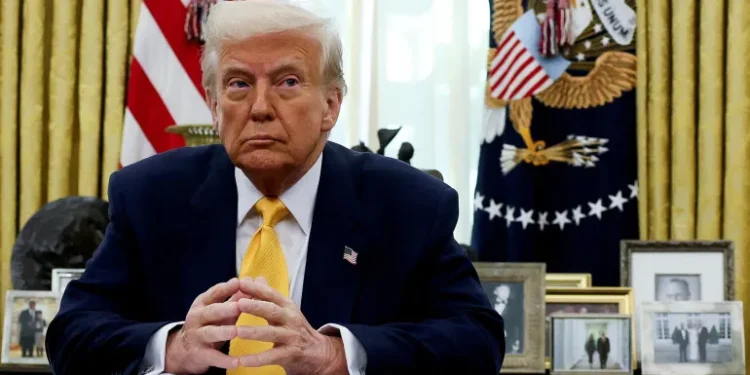

U.S. President Donald Trump has introduced a sweeping travel restriction policy, banning citizens from 12 countries and tightening entry protocols for seven others, citing national security and immigration enforcement concerns.
The new directive, set to take effect at 12:01 a.m. EDT on June 9, 2025, aims to address what the administration calls the “exploitation of the U.S. visa system” and the failure of certain nations to repatriate deportable nationals.
In a statement from the White House, Trump defended the decision as necessary to protect American citizens and uphold the integrity of the nation’s immigration system.
“Many of these countries have taken advantage of the United States by abusing our visa system and refusing to accept their deported citizens. As President, I must act to protect the national interest and security of the United States,” Trump said.
He added that countries open to enhancing cooperation in areas like identity verification and information sharing would find the U.S. willing to work with them.
12 Countries Hit with Full Travel Ban
The following countries are subject to a full travel ban under the new proclamation:
- Afghanistan – Governed by the Taliban; lacks reliable passport controls and shows high visa overstay rates (10% tourists, 29% students).
- Burma (Myanmar) – Visa overstay rates exceed 27% for tourists and 42% for students; limited cooperation with U.S. deportation efforts.
- Chad – Among the highest overstay rates: nearly 50% for tourists and over 55% for students.
- Republic of the Congo – High overstay rates (30% tourists, 35% students) and poor immigration compliance.
- Equatorial Guinea – Over 70% overstay rate for students and 22% for tourists.
- Eritrea – High overstay rates (20% tourists, 55% students); refusal to accept deported citizens and passport irregularities.
- Haiti – Overstays (31% tourists, 25% students), concerns over illegal migration, weak law enforcement, and security issues.
- Iran – State sponsor of terrorism; non-cooperation with U.S. deportation and security protocols.
- Libya – Terror activity, weak passport controls, and lack of functional government.
- Somalia – Considered a terrorist haven with no stable government or passport vetting process.
- Sudan – High visa overstay rates (26% tourists, 28% students); inadequate identity management.
- Yemen – Active conflict zone with no reliable government or passport authority; designated U.S. military operation area.
Seven Nations to Face Tightened Entry Screening
In addition to the full ban, citizens from the following seven countries will face enhanced visa scrutiny and entry restrictions:
- Burundi
- Cuba
- Laos
- Sierra Leone
- Togo
- Turkmenistan
- Venezuela
These nations have not met required U.S. standards for identity management and information sharing, according to the administration.
Ban to Remain Until Reforms Are Implemented
While acknowledging that some countries have made progress in reforming their immigration and security protocols, Trump warned that the ban will remain in effect for nations that continue to fall short.
“Some face serious challenges to reform. Others have taken meaningful steps and I commend them. But until all identified issues are resolved, my Cabinet has recommended conditional restrictions, which I have approved and implemented,” he said.
Background: A Policy Echoing 2017
This new measure is seen as an expanded version of Trump’s controversial 2017 travel ban, which targeted mostly Muslim-majority countries and was upheld by the Supreme Court in 2018 after intense legal scrutiny.
The current policy is informed by updated intelligence assessments and visa overstay data, aiming to avoid the legal and logistical chaos that followed the initial rollout in 2017.
What You Should Know:
- The ban is based on national security, visa overstay rates, and deportation non-compliance.
- Countries may be removed from the list if they meet U.S. security and cooperation benchmarks.
- Legal challenges are expected from immigration and civil rights groups.
This development signals a renewed hardline stance on immigration as the 2024 U.S. presidential election cycle continues to influence policy directions.
What you should know
This ban is a revival of Trump’s 2017 travel ban, which barred entry to citizens from seven mostly Muslim countries and faced multiple legal challenges before being upheld by the Supreme Court in 2018.
The current ban expands the list based on updated security reviews and visa overstay data.