
Business
BUA Cement approves ₦338.6bn dividend, targets 23 million tonnes production capacity

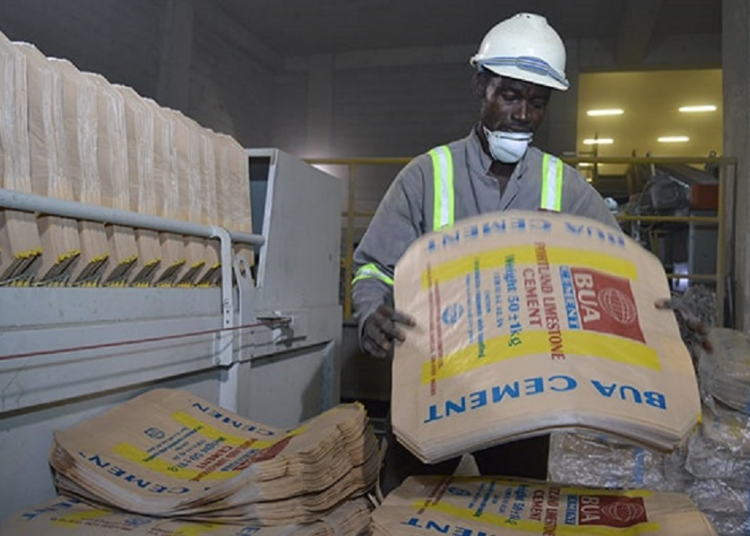
Shareholders of BUA Cement Plc have approved a final dividend of ₦10 per ordinary share for the 2025 financial year, amounting to a total payout of ₦338.64 billion.
The approval was granted at the company’s 10th Annual General Meeting held in Abuja, where it also unveiled plans to expand production capacity to 23 million metric tonnes annually by the end of 2027.
Chairman Abdul Samad Rabiu said the company delivered strong financial results despite economic pressures, recording revenue of ₦1.2 trillion in 2025, up from ₦876.5 billion in 2024.
Profit before tax rose by 367 per cent to ₦465.3 billion, while profit after tax climbed 381.7 per cent to ₦356 billion, reflecting what Rabiu described as improved operational efficiency, cost optimisation and stronger financial management.
On expansion, the company said construction of a new three-million-metric-tonne cement plant in Ososo is nearing completion.
Managing Director and CEO Yusuf Binji added that another production line is planned in Sokoto State, which will increase total capacity by six million metric tonnes per annum.
The company said the expansion projects are expected to strengthen domestic cement supply, create jobs and support infrastructure development across Nigeria.

By Abigail David
The Nigerian Communications Commission (NCC) says telecommunications operators have compensated more than 75 million subscribers for poor network service, marking one of the largest consumer redress initiatives in Africa’s telecom sector.
The disclosure was made in a communiqué issued after the commission’s 109th board meeting held on May 25, 2026. The compensation followed an NCC directive requiring mobile operators to automatically credit affected customers with airtime for service disruptions and substandard network performance.
According to the regulator, the compensation programme reflects significant progress in enforcing quality-of-service standards across the industry. The NCC, however, said it is independently verifying operators’ claims to ensure that all eligible subscribers receive the compensation due to them.
The commission also reviewed compliance by telecom infrastructure providers, including tower companies, directing them to fully implement network upgrade commitments funded through regulatory fines. It noted that while progress had been made, full compliance remained necessary to improve service quality sustainably.
The NCC identified infrastructure vandalism, growing data demand and limited fibre deployment as key challenges affecting the sector. It added that efforts to expand fibre networks and strengthen telecom infrastructure security are ongoing, including plans for a Communications Industry Security Trust Fund.
Nigeria’s telecom industry invested about N2.13 trillion in network infrastructure in 2025, with operators projecting an additional N1.86 trillion investment in 2026 to expand coverage and improve service delivery.

By Abigail David
The Nigerian Electricity Regulatory Commission (NERC) has commenced implementation of the Net Billing Regulations 2026, a policy that allows eligible electricity consumers with renewable energy systems to sell surplus power generated from their installations to electricity distribution companies (Discos).
The new framework is designed to encourage the adoption of renewable energy, attract private investment in power generation, and increase electricity supply through distributed generation.
In a public notice issued on Wednesday, NERC said the regulation enables eligible customers, referred to as “prosumers,” to generate electricity for their own consumption and export excess energy to the distribution network under a net billing arrangement.
According to the commission, participants must operate renewable energy systems with installed capacities ranging from 50 kilowatt peak (kWp) to 1.5 megawatt peak (MWp), making the scheme primarily suitable for medium- and large-scale consumers.
Under the arrangement, electricity generated from solar installations will first be used by the customer. Any excess power can then be supplied to the distribution network through bidirectional meters that record both imported and exported electricity.
NERC stated that exported energy will be credited based on tariffs approved by the commission, creating an opportunity for businesses and institutions with large solar installations to earn revenue from unused electricity.
The commission said the initiative aims to promote renewable energy adoption, improve energy security, encourage private sector participation in power generation, reduce greenhouse gas emissions, and support the integration of renewable energy into distribution networks.
Experts believe the scheme could benefit factories, universities, hospitals, shopping malls, telecommunications facilities, industrial estates, and other large organisations that often generate surplus solar power during periods of low demand.
To participate, customers must be connected to a Disco’s network, meet technical and regulatory requirements, obtain approval from their distribution company, sign a net billing agreement, and register with NERC.
Applicants will also undergo a technical feasibility assessment before approval. Successful participants will be provided with bidirectional metering infrastructure required for the programme.
The regulation comes as households and businesses increasingly turn to alternative energy sources amid persistent challenges in Nigeria’s electricity sector, including inadequate generation, transmission bottlenecks, and distribution constraints.
NERC said the framework is expected to unlock private investment in renewable energy while supporting Nigeria’s broader energy transition objectives.

By Abigail David
The Central Bank of Nigeria has unveiled the fourth edition of its Foreign Exchange Manual, introducing new rules aimed at improving transparency, strengthening compliance and enhancing efficiency in Nigeria’s foreign exchange market.
The revised manual, which took effect on June 1, marks the first comprehensive update since 2018 and forms part of the apex bank’s broader reform agenda to restore confidence and deepen liquidity in the foreign exchange market.
Speaking at the launch, CBN Governor, Olayemi Cardoso, said the review became necessary due to significant changes in global and domestic economic conditions over the past decade.
According to him, foreign exchange remains a critical driver of price stability, trade, capital flows and investor confidence, making a modern regulatory framework essential for market efficiency.
Cardoso noted that ongoing reforms in the foreign exchange market required a more coherent and forward-looking framework capable of addressing emerging realities.
The Deputy Governor in charge of Economic Policy, Muhammad Abdullahi, described the manual as part of a wider strategy initiated by the current leadership of the apex bank to improve transparency, strengthen market discipline and encourage participation through official channels.
Among the key changes introduced are the harmonisation of Personal Travel Allowance and Business Travel Allowance transactions with revised Bureau de Change guidelines, with 75 per cent of such transactions now to be processed electronically and only 25 per cent allowed in cash.
The manual also increases allowable advance payments for imports from 15 per cent to 30 per cent, a move expected to provide businesses with greater flexibility in settling transactions with foreign suppliers.
To encourage exports, the CBN has removed charges associated with processing Form NXP and introduced new provisions covering service exports, technology-sector remittances and transactions under the Pan-African Payment and Settlement System.
Other reforms include the introduction of Non-Resident Investment Accounts and Non-Resident Ordinary Accounts, as well as approval for foreign companies in the extractive sector to repatriate 100 per cent of export proceeds.
The apex bank also removed the mandatory Form A requirement for remittances through ordinary domiciliary accounts, although authorised dealer banks will continue to verify the legitimacy of transactions.
In addition, the revised guidelines permit tuition fee payments of up to $25,000 per semester for Nigerian students studying abroad and allow transfers between export proceeds domiciliary accounts and ordinary domiciliary accounts under specified conditions.
Commercial banks welcomed the reforms, describing them as a continuation of efforts to build a transparent and rules-based foreign exchange market.
Group Managing Director of United Bank for Africa, Oliver Alawuba, said the revised manual would reinforce transparency, ethical conduct, stronger documentation and improved oversight within the market.
Similarly, Group Managing Director of Access Holdings Plc, Roosevelt Ogbonna, said the framework would reduce ambiguity and promote market discipline among participants.
Representing the Minister of Finance and Coordinating Minister of the Economy, Taiwo Oyedele, Permanent Secretary for Special Duties, Mohammed Danjuma, described the manual as an important component of Nigeria’s economic reform agenda aimed at promoting macroeconomic stability and sustainable growth.
Analysts say the success of the revised framework will depend largely on consistent implementation, effective enforcement and sustained policy stability across the financial system.


BREAKING: First Batch of Nigerians Evacuated from South Africa to Arrive Lagos Thursday

NCC Says Telcos Compensate Over 75 Million Nigerians for Poor Network Service

Manchester United to Wrap Up Pre-Season with AC Milan Friendly in Poland
-

 News21 hours ago
Oyo Kidnap: Abducted Principal Denies Bandits Demanded Sharia Law
-

 News23 hours ago
Hon. Ja’afaru Yakubu Applauds China Harbour on Mararaba-Keffi Road Project
-

 News21 hours ago
Nigeria Weighs Sanctions Against South Africa Over Xenophobic Attacks
-

 News15 hours ago
Nwankwo Vows to Sustain APGA Legacy in Abia
-
News19 hours ago
Bandits Kill NSCDC Officer, Abduct Daughter in Fresh Attack on Kogi Community
-
 News13 hours ago
BREAKING: First Batch of Nigerians Evacuated from South Africa to Arrive Lagos Thursday
-

 News14 hours ago
Sheikh Gumi Defends Ibadan Visit, Says No One Can Restrict His Movement
-
Uncategorized19 hours ago
The Quiet Restoration of the Attorney General of Federation’s Office
You must be logged in to post a comment Login