
Business and Economy
PETROAN Urges Refiners, Importers to Cut Fuel Prices as Crude Oil Declines

By Abigail David
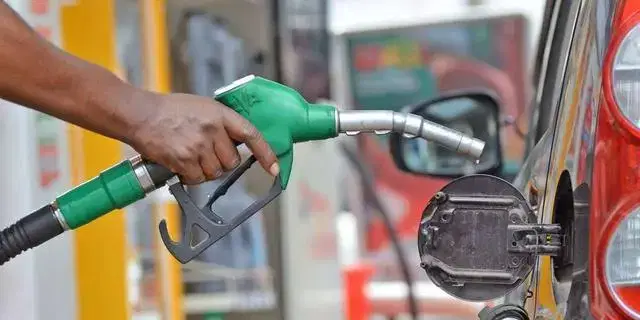
The Petroleum Products Retail Outlets Owners Association of Nigeria (PETROAN) has called on refiners, depot owners and fuel importers to reduce ex-depot and pump prices of petroleum products in line with the recent decline in global crude oil prices.
PETROAN National President, Billy Gillis-Harry, made the appeal in a statement issued on Friday in Abuja, saying lower crude oil prices should translate into cost savings for Nigerian consumers.
According to him, recent developments in the global oil market, including easing geopolitical tensions, have pushed crude oil prices downward, creating an opportunity for stakeholders in the downstream sector to adjust fuel prices accordingly.
Gillis-Harry noted that Brent crude has fallen to between 77 and 78 dollars per barrel following the ceasefire agreement between the United States and Iran and expectations of improved oil exports through the Strait of Hormuz.
He added that market analysts project Brent crude to trade between 75 and 82 dollars per barrel next week, while West Texas Intermediate (WTI) crude is expected to range between 72 and 79 dollars per barrel.
The PETROAN president attributed the decline in crude prices to the implementation of the U.S.-Iran peace agreement, increased crude exports from the Middle East and concerns over weaker global oil demand.
He, however, warned that renewed geopolitical tensions, supply disruptions or unexpected production cuts by the Organisation of the Petroleum Exporting Countries (OPEC) and its allies could reverse the downward trend.
Gillis-Harry expressed concern that the landed cost of imported petroleum products appeared to be lower than the prices offered by some domestic refiners, stressing the need for a more competitive downstream petroleum market.
He urged the Nigerian Midstream and Downstream Petroleum Regulatory Authority (NMDPRA) to continue issuing import licences to qualified marketers, arguing that increased competition would help moderate prices, discourage monopolistic practices and ensure a stable supply of petroleum products nationwide.
According to him, a competitive market remains one of the most effective ways to improve efficiency, lower costs and protect consumers, while encouraging industry players to align fuel prices with prevailing market conditions.

By Abigail David
The Nigeria Union of Petroleum and Natural Gas Workers has taken its campaign against casualisation to President Bola Tinubu, seeking his intervention to end the practice, particularly in the upstream sector of the oil and gas industry.
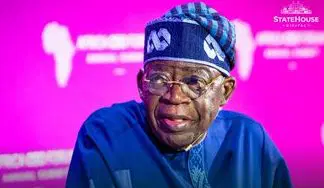
NUPENG National Executive President, Otunba Salimon Akanni Oladiti, raised the issue during a courtesy visit to the President at the State House, Abuja, on Wednesday. He urged Tinubu to use his good offices to stop the casualisation of workers in the sector.
For years, casualisation has remained one of the most contentious labour issues in Nigeria’s oil and gas industry. Workers’ unions have repeatedly clashed with employers over the widespread use of temporary and contract employment in a sector where job stability is critical to workers’ welfare.
Oladiti said the union had engaged some of the affected oil companies without achieving the desired results. He noted that NUPENG and the Petroleum and Natural Gas Senior Staff Association of Nigeria had tolerated the practice partly because of the enormous disruption industrial action could cause to the national economy.
“Your Excellency, our relationship with the International Oil Companies and the indigenous players in the upstream sector has been very cordial,” Oladiti said. “However, we want to seize this opportunity to bring to your attention an unhealthy trend we have been trying to correct with little to no success. It is the casualisation of workers, particularly in the upstream sector.”
Union warns of economic disruption risk
The statement captures the dilemma confronting the oil workers’ unions. While they are expected to defend the interests of their members, any prolonged industrial action in the petroleum industry could have consequences far beyond the workplace, potentially affecting fuel supply, transportation, electricity generation and government revenues.
“For a sector that is strategic and taken as the economic jugular of the nation, NUPENG and its counterpart, PENGASSAN, have been tolerating these unwholesome practices, knowing full well the enormous disruption that any industrial actions could cause to the economy,” Oladiti said.
However, NUPENG said its restraint should not be interpreted as acceptance of casualisation. “We have engaged the management of some of the affected companies without results. Mr. President, we urge you to use your good offices to stop casualisation of workers in our sector,” Oladiti appealed.
Union commends administration on infrastructure, CNG
Despite its demand for presidential intervention on casualisation, NUPENG’s presentation was not entirely critical of the administration. The union acknowledged what it described as positive interventions by the Tinubu administration, particularly in infrastructure and the energy sector.
“On behalf of the entire membership of NUPENG, I extend our warmest fraternal greetings,” Oladiti said. “We are deeply grateful for this audience, which underscores the importance of the relationship between the labour movement and the highest office in the land.”
The union commended the administration’s policies on road infrastructure, Compressed Natural Gas, gas-to-power initiatives and the revival of the country’s moribund refineries. Oladiti said the union had seen real progress in the rehabilitation of federal highways, making journeys safer for tanker drivers.
“In particular, NUPENG highlighted the 750-kilometre, six-lane Lagos-Calabar Coastal Highway and the 1,068-kilometre Sokoto-Badagry Superhighway, which will traverse seven states,” he said.
“For our members, a good road is the difference between arriving home safely and never arriving at all,” Oladiti said. “Every stretch of highway rehabilitated or constructed means fewer accidents, fewer spillages, fewer lives lost, and lesser stress for the men behind the wheel. Mr. President, that is a reform our members feel in their bones, and for it we say thank you.”
The union also welcomed the Federal Government’s shift towards gas-based energy and the promotion of Compressed Natural Gas as an alternative fuel. According to NUPENG, the CNG and gas-to-power initiatives could help reduce energy costs, stimulate industrial development and create employment.
“We recognize the strategic shift towards cleaner and cheaper energy sources,” Oladiti said. “The mobilization of billions of naira in private investments for CNG and the conversion of over 100,000 vehicles are milestones that we must build upon.”
Union seeks revival of storage infrastructure
NUPENG also welcomed the administration’s efforts to revive the Warri and Port Harcourt refineries through partnerships with Chinese firms. However, the union believes the revival of refining capacity should be matched by an equally ambitious effort to restore the country’s petroleum storage and distribution infrastructure.
Oladiti specifically drew attention to the deteriorating depots operated by the Nigerian Pipelines and Storage Company.
“Your Excellency, we want to humbly request that the same energy and drive to inject life back to the refineries be extended to the decaying Nigerian Pipelines and Storage Company depots of country,” Oladiti said. “We strongly recommend they can be handed over to private investors to manage under an equity arrangement.”
The union’s decision to take the casualisation issue directly to the President signals a desire to resolve the matter through government intervention rather than allowing it to escalate into another major industrial dispute. For NUPENG, the issue is not simply about employment contracts but about dignity, job security and the protection of workers in an industry the union describes as the country’s “economic jugular.”
By Abigail David
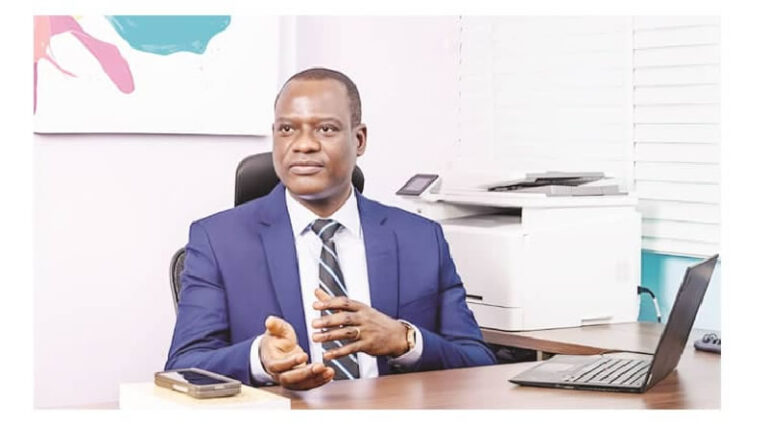
The Federal Government will not publish specific details of how it plans to spend funds drawn from its $5 billion financing facility with First Abu Dhabi Bank, Finance Minister Taiwo Oyedele has said.
Oyedele spoke on Wednesday during a media briefing in Abuja, where he defended the transaction and said it had received unnecessary scrutiny.
The government recently accessed about $1.5 billion, representing the first tranche of the $5 billion Total Return Swap facility approved by the National Assembly on March 31, 2026.
According to Oyedele, the facility was approved through due process and is intended mainly to refinance more expensive debt and reduce borrowing costs.
He questioned why the Abu Dhabi facility should receive special disclosure requirements compared with other government financing, including World Bank loans, Eurobonds and Sukuk.
Oyedele said the government was accessing the funds in phases to avoid paying costs on money that had not yet been spent.
He also explained that the facility carries a flexible interest rate, meaning Nigeria could benefit if global interest rates decline.
The minister acknowledged that the government is required to pledge securities worth about 133 per cent of the amount drawn as collateral.
The International Monetary Fund and Fitch Ratings have previously raised concerns about the transparency and debt risks associated with the financing structure.
Oyedele said the Ministry of Finance and the Debt Management Office would publish frequently asked questions on the transaction to address public concerns.
Business and Economy
Julius Berger recommits to enduring quality as Buguma-Degema-Abonnema Road is commissioned

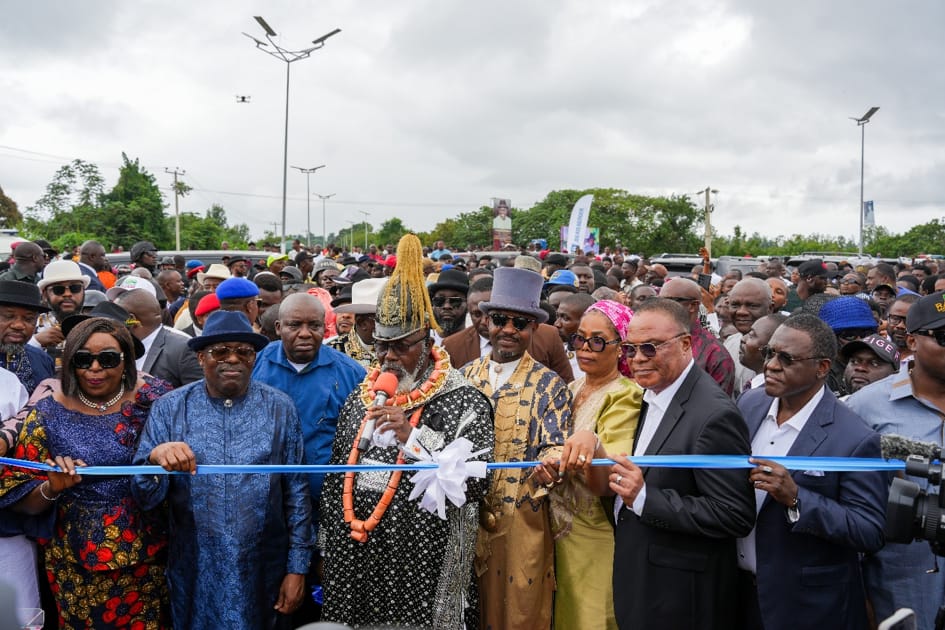
Julius Berger Nigeria Plc has reaffirmed its commitment to delivering infrastructure of enduring quality following the commissioning of the reconstructed Buguma-Abalama-Tema-Degema-Abonnema Road in Rivers State.
The landmark road project, which traverses the Asari-Toru, Degema and Akuku-Toru Local Government Areas, was formally commissioned on Monday amid jubilant celebrations by residents, traditional rulers, community leaders, government officials and other stakeholders, who turned out in large numbers to witness the historic event.
The atmosphere was reminiscent of a carnival as cultural groups dressed in colourful attire entertained guests with traditional music and dance performances. Cheers, singing and displays of gratitude echoed across the communities along the corridor as residents celebrated a project many described as transformative for the economic and social life of the area.
The commissioning was performed by the Amanyanabo and Paramount Ruler of Abonnema, His Royal Majesty King Dr. Disreal Gbobo Bob-Manuel II, marking the official opening of the vital transport link that is expected to significantly improve mobility, trade and access to economic opportunities across the region.
Speaking at the ceremony, the Director, Administration of Julius Berger Nigeria Plc, Dr. Abdulazziz Kaita, described the project as another demonstration of the company’s unwavering commitment to infrastructure development and engineering excellence.
“This project represents a significant contribution to the Rivers State Government’s infrastructure development agenda and will greatly enhance accessibility and connectivity among communities within the three local government areas,” Kaita said.
He noted that the successful completion of the road was achieved despite the exceptional circumstances surrounding the six-month period of Emergency Rule in Rivers State.
“The successful delivery of this project reflects the commitment, professionalism and efficiency of Julius Berger Nigeria Plc as a longstanding stakeholder and trusted partner in the infrastructural development of Rivers State,” he stated.
Reaffirming the company’s commitment to quality and sustainability, Kaita emphasized that Julius Berger remains focused on building infrastructure that delivers lasting value to communities.
“Over the years, Julius Berger has remained committed to delivering projects of enduring quality, applying the highest engineering standards and deploying the technical expertise and resources required to meet the expectations of our clients and the communities we serve,” he said.
Expressing confidence in the impact of the project, Kaita added: “We are confident that this road will enhance connectivity among the beneficiary communities, improve accessibility, stimulate economic activities and contribute positively to the overall development of Rivers State.”
According to him, Julius Berger remains proud to be associated with the state’s growth and development journey.
“Julius Berger Nigeria Plc remains proud to be associated with the development of Rivers State and remains committed to delivering sustainable infrastructure of the highest quality,” he said.
Governor Siminalayi Fubara, who attended the commissioning, commended Julius Berger for executing the project to the required standards and expressed appreciation to the host communities for their cooperation throughout the construction period.
Addressing the gathering, the governor highlighted the strategic importance of the road corridor and the transformative impact it will have on commerce and security in the area.
“This road is a critical gateway for the Abalama people and neighbouring communities. In the past, several challenges existed along this corridor, but today those concerns are being addressed. Goods and services can now move more freely, businesses can thrive, and our people can pursue opportunities that will improve livelihoods and positively impact their lives. I am truly delight


Women Must Become Co-Creators of Prosperity, Minister Says

Bella Okagbue Breaks Silence on Sheggz Breakup, Addresses Marriage and Engagement Plans

Bitcoin Surges Above $77,000 on US Crypto Policy Optimism
-
 News23 hours ago
Hon. Jafaru Yakubu Commends President Tinubu’s Approval of Mutum Biyu–Garba Chede Road Reconstruction
-
 News20 hours ago
7th China-Africa Media Cooperation Forum Opens in Beijing
-
News21 hours ago
ASUU Commends Kaduna Govt Over KASU Funding Amid Face-Off
-
 News23 hours ago
Kaduna varsity lecturers ready for talks with govt to avert strike
-
 Business and Economy24 hours ago
FG Won’t Publish Details of $5bn Abu Dhabi Loan — Oyedele
-
News17 hours ago
Gov Sule Commends DSS, Other Security Agencies Over Rescue of Kidnapped Victims in Nasarawa State
-
 Politics21 hours ago
Kwankwaso explains decision to run with Obi in 2027
-

 Sports22 hours ago
Premier League to crack down on set-piece grappling
You must be logged in to post a comment Login